Uncategorized

Four Rules for Living, #4, Don’t Be Attached to the Outcome

The anthropologist and spiritual teacher, Angeles Arrien, is credited with these four rules for living:  show up, pay attention, tell the truth, don’t be attached to the outcome.

***

Not one of these “Four Rules for Living” is easy.  Simple maybe, easy enough to understand (we think we understand, anyway), but not so easy to actually live.  If we are honest, and if we are looking to live a life based on our deepest self, we know these rules are not easy.  We find them challenging.  We know them to be a daily practice, a hard practice of letting go.  We know we do not choose to live our truest Self – instead, we fall into that Self, by letting go of ego.  Hard practice.  Hard – and life-giving, ultimately.

***

Don’t be attached to the outcome.

Now, this is a tough one! “Don’t be attached to the outcome.” Do your part, speak your truth –  and let it go. In other words, do your part and trust. In other words, do your part and watch what happens. In other words, do your part.

This matter of “letting go” is so often misunderstood. We do what we can. Sometimes what we choose to do will have noticeable results, and sometimes what we choose to do won’t make a significant ripple. What we “let go” of is our ego-involvement. “Let go” of controlling the outcome. Let go of your ego-attachment to what happens.

Fall into it.  Don’t swim against the tide of your ego.  Fall into it.  And what you will discover is this:  when you fall, you fall into your Self, your True Self, the Holy.

So much of life energy has been wasted – and destructive – by forcing itself on others.  Tribes force themselves on other tribes, nations on other nations.  We are critical of Russia’s military action in Syria; Russia is critical of the military action of the U.S. in Syria.  We see this waste of life energy in our own lives, in the lives of others, and we see this waste of life energy in the world.  And we know this:  life is not honored, truth is not honored, life is not nurtured by force.  And yet – we are all complicit in this waste of energy.  Not one of us is better than another.  We all act destructively, even doing so in the name of love, or honor, or nation, or religion.

If we’ve each done our work, the work of showing up, paying attention, and telling the truth, the possibility is that our work will succeed, although maybe not in the way we’ve imagined.

So often when we have ego-attachment to our actions and choices, we look for particular results. We think we’re in control, so if things go as planned, they’ll go the way we expect them to go. In that case, we also think we know what is the best way for things to work out.  We are strategists, and life does not allow for strategists!  To believe so is a kind of insanity!

Trust is the word here. Trust as a tree trusts the earth it stands on. Trust as if your life depends on trust. Trust as if you understand that all the control in the world, all the care-ful-ness in the world, cannot assure the results you want. Trust that there is Something or Someone or Some-Other out there that is in charge of the results.  And that Something or Someone or Some-Other is not only “out there,” but animating you, bringing you to life – as you let go of your attachment.

This is the hardest work in the world.  More than ever, our world needs  people who have grown up, who have done their real work – which is the work to become adult.  And that work is the work of letting go, of “don’t be attached to the outcome.”

Trust as a tree trusts the earth it stands on. “Don’t be attached to the outcome.”
Uncategorized

Taking the long view…

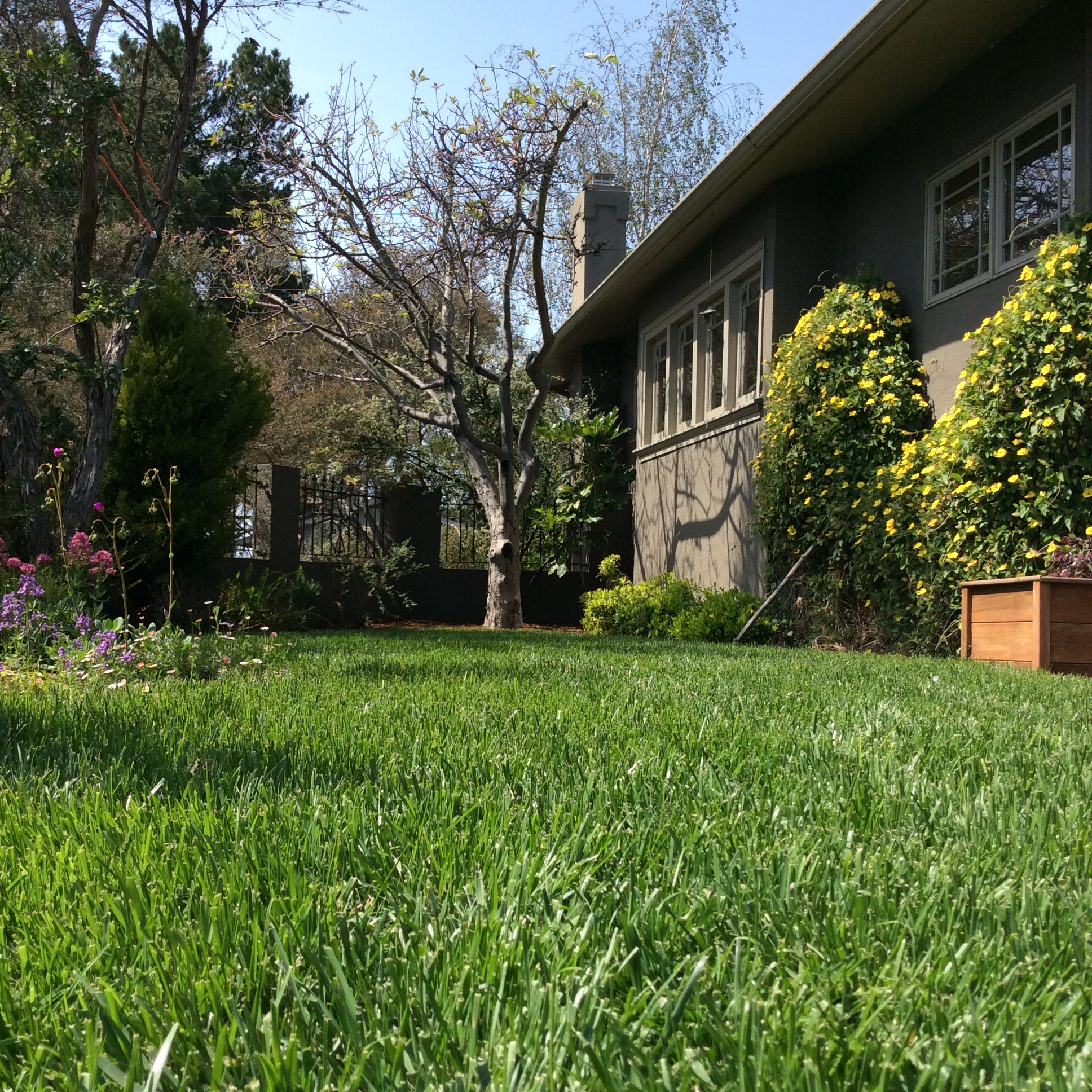
IMG_0634“The long view,”  from my camera…

These past few weeks, I have watched, as much of America and the world has watched, the aftermath of the death of a black man in police custody – in Baltimore, MD.  People have gathered in the streets to protest the death, and to bring the country’s – and the world’s – attention to the matter of racism and police use of force in the United States.  Having marched on many occasions in my lifetime, I am from a generation and a family of people who understood that sometimes the people must take to the streets to take back our democracy.  Like so many of us, I do not condone the violence that has erupted, the fires started in Baltimore, the reckless among the marchers.  But I also know that some things will happen, some people will not march peacefully; so many things in this situation – as in our lives – are out of control, and can become out of control.

Hopefully, the violent few will not stop the message of many from being communicated:  change is needed.

I especially appreciated the simple and clear statement made by David Brooks on the Public Broadcasting System New Hour last Friday, May 1:  “We know what the problem is:  we don’t know what to do about it.”  Hopefully, that is a statement of progress, a statement that those of us who are white are coming out of denial, that we realize that we are implicated in the systems, the structures that are our system, and that we also will be looked to for solutions for our part in these systems.  I pray that strong leadership will arise that will allow us as a country to confront the institutionalized racism that is in the fabric of who we are.

I was also touched by the interviews by members of the news media as they talked to people on their front porches in the neighborhoods directly connected to the violence that had broken out in the protests.  I heard the comments of an African American man who lives in the neighborhood where buildings had been burned:  “When I was young, the police walked on our street.”  He was remembering that there was a different relationship with the police in those days.

I remember those days, also, and I often think about how times were different then, in the 1950’s and early 1960’s.  I remember that we knew the names of the officers who walked down the streets of the city where I lived.  I know that we respected those officers.  I was a white girl, of course.  I was also raised in a generation – for good or not – that was expected to respect adults.  When I was with other children in the neighborhood, we knew each others’ parents, and we called them by their last name:  “Mrs. Smith.”  “Mr. Schmidt.”  When I look back now, I realize there were many things we did not talk about, that were an unconscious part of those streets and of the lives of the children who played there – domestic violence, drinking, sexual abuse.  We held adults and authority with respect, to be sure, and that has, like anything in life, positive and negative realities.

Something has been gained with our growing consciousness of the whole reality of life.  We know we cannot go back to those times, but those of us who have lived 5, 6, or 7 decades now have the ability to “take a long view of history.”  What happened to the neighborhoods we knew?  What happened to the semblance of safety we all had?  What happened to the days when children walked to school – safely, for the most part?  What happened to our innocence?  When did we stop treating one another with respect, the respect we give to another human being?

Was it as simple as the end of our naivete?  Was it the Watergate scandal?  Or Vietnam, and the lives of so many sacrificed in a war that was never really called a war?  Was it 2001?  Was it the resignation of the President?  We are the generations that remembers  the assassination of a young President whose election had brought many great hope.  We are generations that saw immediately and horribly the assassinations of a great civil rights leader and prophet, The Rev. Martin Luther King, Jr., and Bobby Kennedy, within a few months.  I remember my brother shouting from in front of the television that day:  “He shot him!”  Like millions of others, my brother had witnessed that moment, on live television.

What is the role of the Internet in all these changes, and the ability we have to see events as they happen, all witnesses to the world’s quickly changing borders and the identities of its people?

What do these things say about us as a people?

I don’t expect any of us to have the answers.  There are many among us who are looking for the answers in scholarly ways, searching through the annals of history for the answers.  Some simplicity (was life ever really simple?) seems to have been lost.  And there are many among us who are remembering with friends, and asking questions, talking, ruminating.

I also am not offering these thoughts as an exercise in nostalgia.  We are here, now, given our history, given our mistakes, given our greatness as part of the creation, and even given our questions.  This is who we are – and who we are not.

As I enter the Wisdom Years, I can see that those among us who have lived a long time have something that those younger folks among us do not have.  We have the scope of history, a scope that has driven us through tumultuous and rapidly changing times.  We also have the scope of our own histories, reflections on our own mistakes, some simple learnings, and we also have the ability to hold questions, to know that we do not have answers.  We are wise enough to know that the questions may be all we have.  We are people who can take the long view.

I am grateful for the life I’ve had.  I know I have had privilege  that I did not earn, by who I am, a white woman, an educated woman, a woman who has lived through times that women of no generation before has experienced.  I know my mother did not know the freedoms – internal and external – that I have had and yet, she, too, is part of this history.

I am also filled with questions.  I think we all are filled with questions.  It would not seem to be wisdom to strike out to make changes without deep considerations.  But we know change must happen.  Change means loss, and change means that something new is coming.

I am certain that others who are the elders are ruminating, also, and although not quickly coming up with answers, considering, turning history and the changes of history over in our hands, as one turns a rock over to see the other side.  Political correctness and opinions and views that we have held onto for so long don’t hold the answers we need, and I think they will have to be set aside.  How can we stop being so afraid of one another, how can we stop taking offense so quickly, how can we hold a space for answers, new answers, new behaviors, to take up space?

These are my questions, these are my wonderings, these are my considerations, not all stated here, but the crust of all that is churning in me as I face the Wisdom years.

What are yours?


Uncategorized

Some thoughts about death.


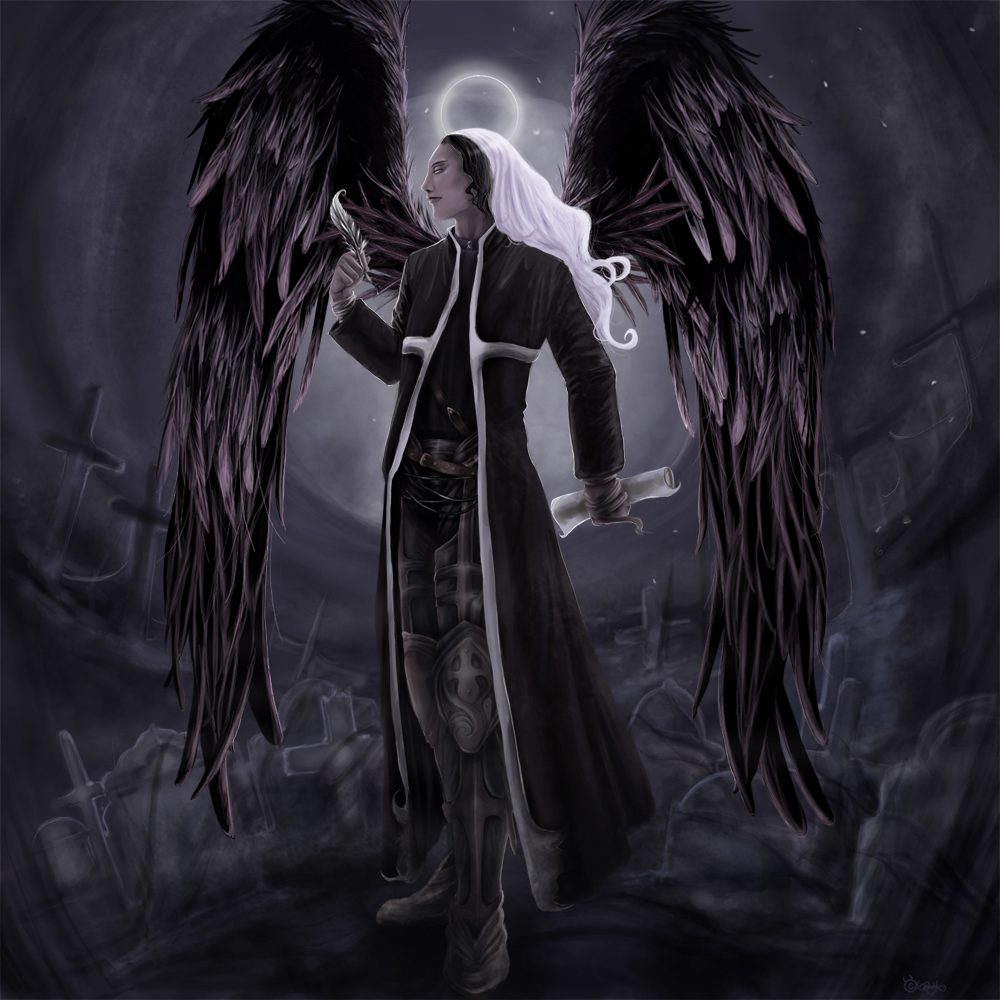
Azrael__Angel_of_Death_by_gaux_gauxAzrael, Angel of death in Jewish mysticism.

“Death is something we shouldn’t fear because, while we are, death isn’t, and when death is, we aren’t.”
― Antonio Machado

Oh, but yes, Antonio, we do fear death. We live our lives in fear of death, that great unknown. And each day is a death, the death of one moment to the next moment, this moment is dead, now, and this next, and now, and this, too…

Think about it:  our culture does everything in its power to avoid death.

Celebrities are forever young.  “50 is the new 40.”  We say someone has “passed away,” instead of saying:  “he has died.”  Our voices lower to a murmur when death is mentioned, as if it is something shameful.  Doctors rail us with promises that we need never age.  If only we eat right, if only we exercise enough, if only we learn how to handle our emotions enough, as long as we are happy enough… we will not – die?

But the wrinkles come, and with the wrinkles, wisdom.

As far as I know, there is no fear of death in faith.  And as far as I know, that there is no fear of death has nothing to do with what happens after we die.  As far as I can understand, there is no fear of death in faith because faith brings us into this present moment, this one moment given to live, to breath, to serve, to give thanks.  This is all there is.

And yet we are simply human, are we not?  We are simply human, given to fear and anxiety and anger and rage.  We are simply human, and so we do fear death.  The fear of death seems to be a part of life.

Still, some cultures seem more able to allow death to have a seat at the table.  In Mexico, The Day of the Dead brings all ages to graveyards, to eat and to dance and to walk and to be together, among the dead, for remembering, for honoring, as part of life.

No one wants a young person to die, and so we all grieve with the grieving mother.  It is true, a child should not die before the parent, this does seem unnatural to us, and it is a wound that no human being should be made to suffer.  And yet it is a wound that many suffer.  Death claims the young.

We have no freedom from death, as much as we want to run from it, to avoid it, to challenge it, to shake our fists at death.  We have no freedom from death.  Death is always with us, in this perfect, fleeting, precious moment.  Death is always with us.

Death is like the partner who walks with us, wherever we go.  “There she is, always following me around,” we might say.  And if we turn to look, to nod, to speak to her, she may have something for us, some wisdom, some honesty, some truth to add to our life. Can we embrace her?  Can we learn about her, walk with her a bit, learn from her, learn what it is that a final ending to what we know can mean for us now, those of us who walk among the living?

“Do not go gentle into that good night,
Old age should burn and rave at close of day;
Rage, rage against the dying of the light.” – Dylan Thomas

Do not go gentle, Dylan, but take a look, get to know that good night.

I think that part of wisdom is to begin to acknowledge death, that one who walks with us, wherever we go.  I see my friends growing older, some refusing to acknowledge that yes, “50 is not the new 40,”  that, “50 is 50,” and that is good.  And I see some of my friends growing older, knowing that as their health changes and as families grow older and move away, there is yet a beauty, a richness, an honor in accepting that “50 is 50,” and it is good.

You are going to die.  Now – how will you live?  – meb, 4/2015/Good Friday


Uncategorized

Don’t believe everything you think.

dont-believe-everything-you-think

That’s it. Great rule to live by. That’s all it is, complete wisdom in one sentence:

Don’t believe everything you think.

Maybe you’re like me. I have a busy, busy mind. My mind is interesting – yes, very interesting. Your mind is interesting, too. I guarantee that! I’m smart. I’ve known that since I was young. I’m sure you’re smart, too. Those things are true.

We honor the mind, our thinking mind, in our culture. If we think something, we believe it is true.  As human beings – as these wonderful works of wisdom – we limit ourselves by living within the cultural constraints of our minds. It is counter-cultural to open yourself to the wisdom that lives within you, within you and outside of the limitations of your thinking, even your best thinking.

Thinking can only take us so far – and there is so much farther to go!  Your body is a place of wisdom.  Begin to know your body’s wisdom by feeling your feelings.   When something happens to you, take a moment to experience that event in your body.  What are you feeling?  Breathe!  Breathe for a moment, and feel the breath in your body.  Now, what are you feeling?

As you practice this, you can begin to name your feelings.

A long time ago, someone asked about me:  “I wonder if she knows the difference between her thoughts and her feelings?”  I am grateful that I took notice of that comment.  Do I know the difference?  I do now.  From that moment on, I began to observe – to feel – my feelings.  That in itself is a journey.  When we begin to include our feelings in our answers, in our decisions, in our observations, we encounter another dimension of ourselves.  When we include our feelings, our perceptions deepen, our love deepens, our experience deepens.

Your body has a wisdom that your thinking mind cannot perceive.  In a way, your thinking mind is on one plane of existence.  The wisdom that is beyond your thinking mind has deep roots, roots in the earth.  The wisdom beyond your thinking mind perceives on many levels, levels that your thinking mind simply cannot conjure up!

If you are sad, feel sad.  That is practice.  If you are lonely, feel lonely.  That too, is practice.  If you are happy, feel happy.  That is practice.  From moment to moment, the practice of reaching beyond our thinking mind takes us into new territory.

A good parent teaches feelings to their child by mirroring those feelings.  When the baby cries, mom will say:  “oh, you are sad.”  Or she will say:  “you are angry that your plate fell on the floor.”  Dad will say to a toddler:  “you are frustrated because you can’t reach the ball.”  Sometimes, we have to mirror our own feelings to ourselves.  We have to begin again to learn about ourselves, and about our own perceptions of the world.

Maybe you’ll need help as you begin to discern your feelings.  Maybe a therapist can help, a professional who can ask you, again and again:  “So… how do you feel about that?”  Maybe a spiritual guide can teach you to listen to your body’s wisdom as much as your mind’s wisdom.  Maybe a 12 step meeting will be the place you begin to learn.

Each one of these places can be the doorway to growth, to growth in consciousness.

Such simple practice, to not believe everything you think!  And at the same time, such a deep, profound, ever-expanding practice.

For today:  don’t believe everything you think!  Give it a try!

Uncategorized

A Friend Returns – and Memories

life-and-friends

About 40 years ago, “Mike” was my supervisor at my first professional job. We were both in our 20’s, and although Mike was just a couple of years older than me, he always seemed so much older. Maybe it was his role; maybe it was my being so young, even too young for my age.  Mike was smart, and he was funny.  He was 40 years ago, and he is now.

I was involved in the evolving feminist movement of the time, and I brought my growing consciousness to my job.  I read every month’s issue of “Ms. Magazine” from cover to cover.  Now, young women do not realize what women of the last generation confronted; sometimes, when I remember or tell the stories of those times, it seems as if it cannot be true, as if those were ancient times instead of the 1970’s.  When I think about the treatment of women the world over, the wage inequalities in this country, the limited rights of women as human beings in other countries, I realize these are still ancient times.  We have a long way to go.  And that’s an understatement.

Because of my feminist consciousness, Mike said to me one day:  “You have to meet my wife.”  She worked in the same job as I did, in another office.  Many months later I was sent to that office to work for several days, and I met “Jane” for the first time.  I remember sitting across from her at her desk for a moment, the conversation beginning.  The conversation we began that day would continue until her death, in her early 50’s, over 10 years ago now.  I miss her every day.  Mike was right.  I did need to meet his wife.

Over the years, our lives evolved and changed, as lives do.  Mike and Jane moved away, to another state.  They had two children, two beautiful daughters.  I remained single until my 30’s.  Every few months, Jane would visit me for a weekend. She’d drive  to my apartment late Friday afternoon, arriving in the evening.  We’d sit in my living room, talk for hours, Jane smoking one cigarette after another.  At some point, we decided we were hungry, so we’d dress up, put on evening-out makeup, tell each other how wonderful we looked! – and go out to dinner, talking all the time.

What did we talk about?  What didn’t we talk about?  What do we talk about with those particular people who meet us on so many levels?  Still, when I think about Jane now, I realize our conversations were mainly about our thoughts, our thinking, our opinions, our politics, our ideas, our hopes.  We didn’t talk about feelings, or motives, or foibles.  We didn’t go to those darker, those deeper places in ourselves.  Now, I wish we had.  Now, I’m not sure Jane could go there at all, although she was one of the smartest people I’ve ever known.

Our lives unfolded in different ways.  We took different paths.  I moved across the country, went to seminary, married my beloved at 34, and stayed.  Jane and Mike divorced, although I remained friends with both through the years.  When Jane met her second husband, I liked him, too, and I was proud to be asked to officiate at their wedding.  Ten years later, Jane died of complications from surgery, after she developed lung cancer.  I saw Mike next at her memorial service.  He came up to me after to say:  “Jane would have liked it.”  I had my own grief, and I was grateful for his thoughtful comment, but we didn’t connect that day.

***

By that time, Mike had developed Parkinson’s disease, and it was hard to see him.  In my mind, we will always be young.  That’s something young people don’t know about – how “old folks” are never old, in their minds.  We seem to stay stuck at some age, some age we have always, will always be.  Some time, I’ll write about my “stuck” age.

Through the years, I heard about Mike from time to time. I heard about his new marriage through Jane.  I haven’t met his second wife, although they’ve been married for many years.  I expect that if I did know her, I’d like her, too.  I’m  connected with Mike and Jane’s daughters on social media, and I can see their mother in them, often.  I see her eyes, her expression, her look in the pictures of her grandchildren.  I look for her in them, in her daughters.  I can hear her in the musings her daughter posts.

***

Sometimes, social media can actually help people connect.  Not just through “selfies” or meaningless comments; in real ways.  But the real connection is still real because we are human beings, with feelings, and memories, and relationships, and lives. This past weekend, I saw a picture of Mike on social media, posted by one of his daughters.  I “liked” the photo.  Later that day, when I checked in again, I had a private message.  It was from Mike, and it had been typed by his daughter, who is his caregiver every other weekend.

We “old folks” know how to connect.  We know that connecting isn’t simply having hundreds of friends.  We know that connecting is something else, and we know when it’s there, and when it’s not.  And in that message, Mike connected.  He told me some things about his life now, with Parkinson’s.  He told me that there had been many changes in his life.  He told me a few things about what life is like for him, now. That message has stayed with me.  That message has reminded me of so many happenings, so many events, so many images that are a part of the fabric of my life, and have been for a long time.  That message brought me gratitude, a gift.   That message opened a door in my heart, one of many doors, an important, feeling-filled door.  Images arise, moments with Mike and with Jane, other moments with other friends, other connections, other times.

Sometimes, it’s just good to remember, and to be grateful.