Uncategorized

Meta

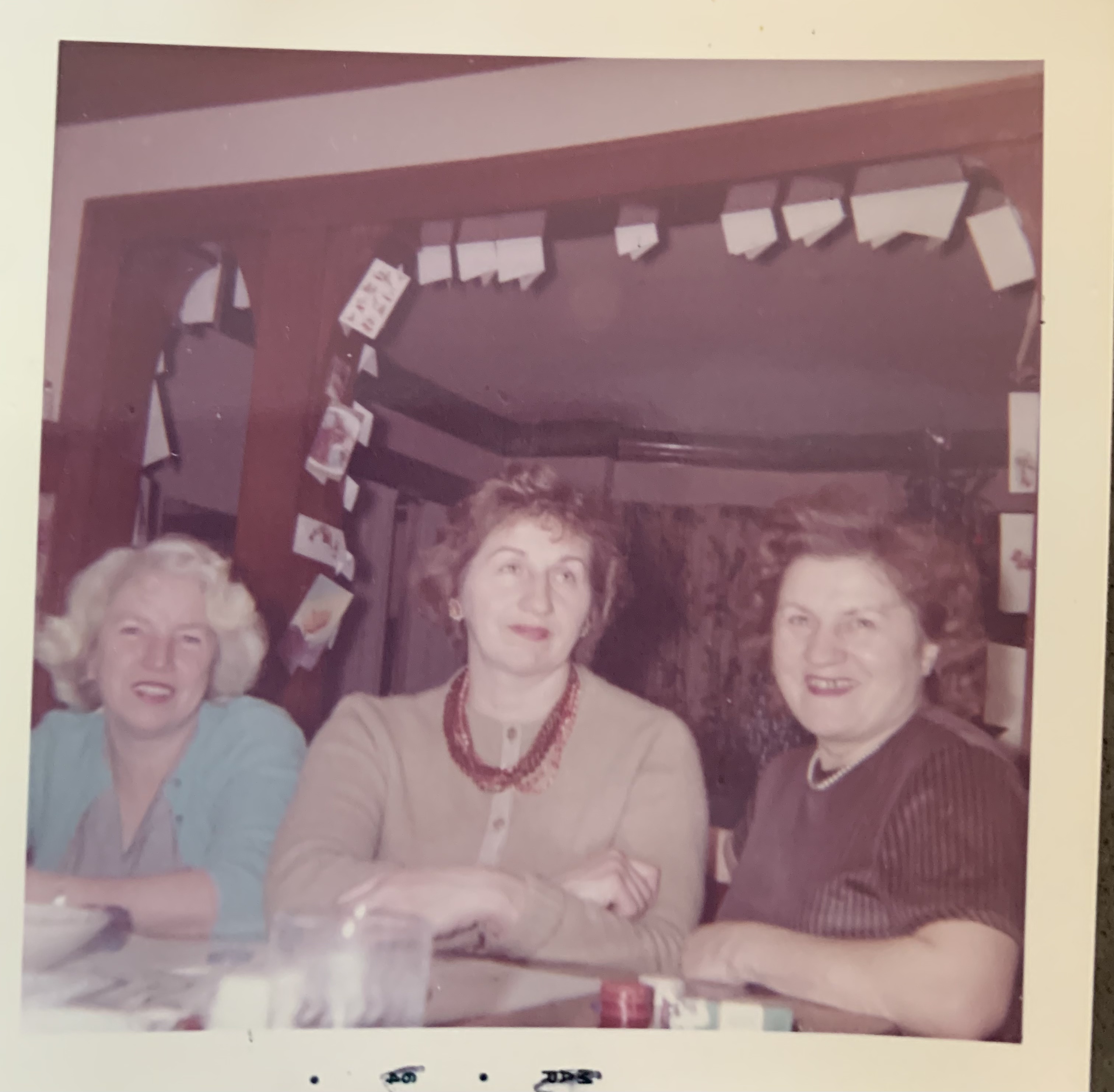
Meta was Mom’s good friend. Meta was married and had three sons: Martin, Chuckie, and Butchie. Butchie was my big brother Ronn’s age, and they were good friends.

Meta was always gray-haired. I think she had been gray-haired, from the time she was young. And Meta had a story attached to her. Meta and my Mom had been out at The Roof, a 40’s style dance hall in Milwaukee, the night my Mom met FRB, my Dad. I don’t know, but I think Meta was with my Mom so that my mother could go out with a friend, and not alone.

What I remember most about Meta is that she talked like a real Milwaukeean. That is: she said, “Aina,” a true Milwaukeeism. Those of us who grew up in Milwaukee in the 40’s, 50’s, and 60’s will know that word. In other places, it goes by “so” or, in common language: isn’t it so?

And I remember Butchie, the youngest son, who had been in my life since the time I was little. In my mind’s eye, I can clearly see Butchie, who later became a Milwaukee Bus Driver. I stepped onto his bus on the 23 line on Fond du Lac Avenue one time!

In my memories, Meta comes with many questions. Where did she and my mother meet? What was she like? Was she quiet? Was she talkative? Did she engage with me, a little girl growing up around her? Was she proud of her boys? What was her life like – really like?

I love this photo of Meta, my Auntie Anne – my mother’s younger sister, and my Mom. I’d say it was from the late 1950’s (a wild guess). And who took the photo? I can see that this is our upper flat, Christmas cards taped to the archway between the living room and dining room, and the Christmas tree, partly showing itself in the background.

Uncategorized

what comes to mind

I walked under the railroad tracks at Fond du Lac Avenue and Burleigh Street on the North Side of Milwaukee from those neighborhoods of frame flats, home to two families, up and down, and into another world. I didn’t know it then, but the world I was walking in to when I came out from under the viaduct at 35th Street – across from Master Lock Company – would become my world. My world is different from the world I left in those rented houses. My world is different in so many ways.

I was introduced to other students, students who actually lived on the other side of the tracks, when I walked under those tracks. I was a student at Peckham Junior High School, and so were they, those other students. Many of them would become my friends. At least one teacher made the mistake of thinking I was one of those students, but I was always painfully aware that I was from the other side of the tracks. I never forgot that. I noticed the clothes my classmates wore. I knew that many of them came from families where at least Dad – and sometimes Mom, too – were educated beyond high school. Some of my classmates were the children of professional people. Maybe I felt shame among those students; I saw the differences between them and me, with raw clarity.

Something else happened when I walked under the railroad tracks. I was tracked into the college bound students, the smart kids, based on the IQ tests all students had dutifully taken during grade school. And that changed my life.

Some people along the way would become important to me, to my life. I would never forget their names, how they looked, things they said. For three years I sat behind Larry Atlas, who made me laugh, in English classes taught by Miss Ross. How old was she? As a student of middle school age, she certainly looked very old to me. She always wore black old-lady shoes, and she always wore a navy polka-dotted dress that hung long, between her knees and ankles. I’m pretty sure she went to the hairdresser once a week to get her hair done, cut and permed. I knew this: she was not cut from the same mold as the women I’d known up to then.

I’m grateful to have been educated by the teachers I was privileged to have in the Milwaukee Public Schools in the 1950’s and 1960’s. Not one of them knew it, but they changed my life, changed the trajectory of my life.

In Miss Ross’s class, we studied the American poets. Every week, we learned about a poet, read their poems, memorized a poem, and put our learning into a book of our own, poems carefully rendered in my own hand. I filled a pocket folder with sheets of paper that included carefully printed poems and pictures I’d cut from the magazines my mother received in the mail. Sometimes, I was called upon to stand in front of the class on Friday and recite the poem we’d been assigned to memorize that week. My own love of poetry was fertilized and grew in Junior High English Class taught by Miss Ross. I can still recite most of the poems I learned over those three years. I love to recite the poems I had memorized, so many years – so many decades – ago.

I learned to love poems then. I began to write my own poems then, too. Sometimes I still find a poem in my childlike handwriting, a few words of my own fashioned into my own poem. And sometimes – often – the words of a poem I memorized under the strong and wonderful guidance of Miss Ross comes to mind.

Reciting a poem from memory is a great joy – to me. Later, after Junior High, after High School, somewhere along the way of my now long life, I memorized “Twas’ the Night Before Christmas.” Every year, I make sure to break into a recital of the entire text for someone else’s enjoyment – and for my own enjoyment.

*

Jeff was the one who encouraged me, this past year, to have a collection of my own poems published. Without his kind encouragement, I expect I’d never have sent my poems out to be published. It’s an accomplishment of my life. Its genesis, I think, began on that walk under the viaduct at Fond du Lac Avenue and Burleigh Street, on the North Side of Milwaukee.

***

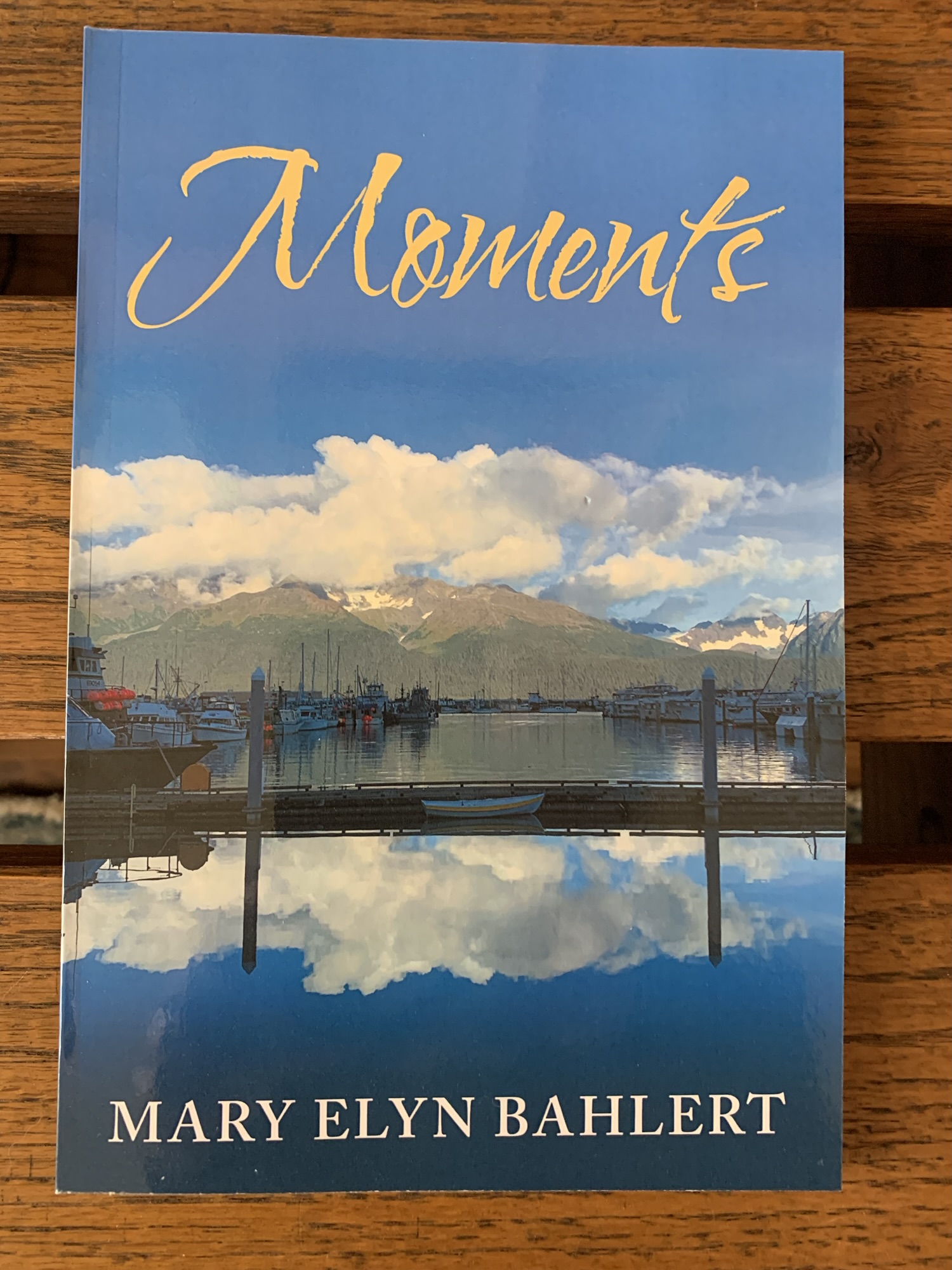
Moments, Mary Elyn Bahlert, Balboa Press, 2026. Available on Amazon.

img_3934
memories, remembering, Uncategorized

“That’s the fun of it!”

Mom liked to have fun. So did Daddy. In my Middle School years and beyond, while I was still at home, Mom would quickly clean the kitchen table after supper – we always had supper, except on holidays, when supper became dinner – and they’d get out the cards to play canasta all evening long, loudly calling to one another over the table.

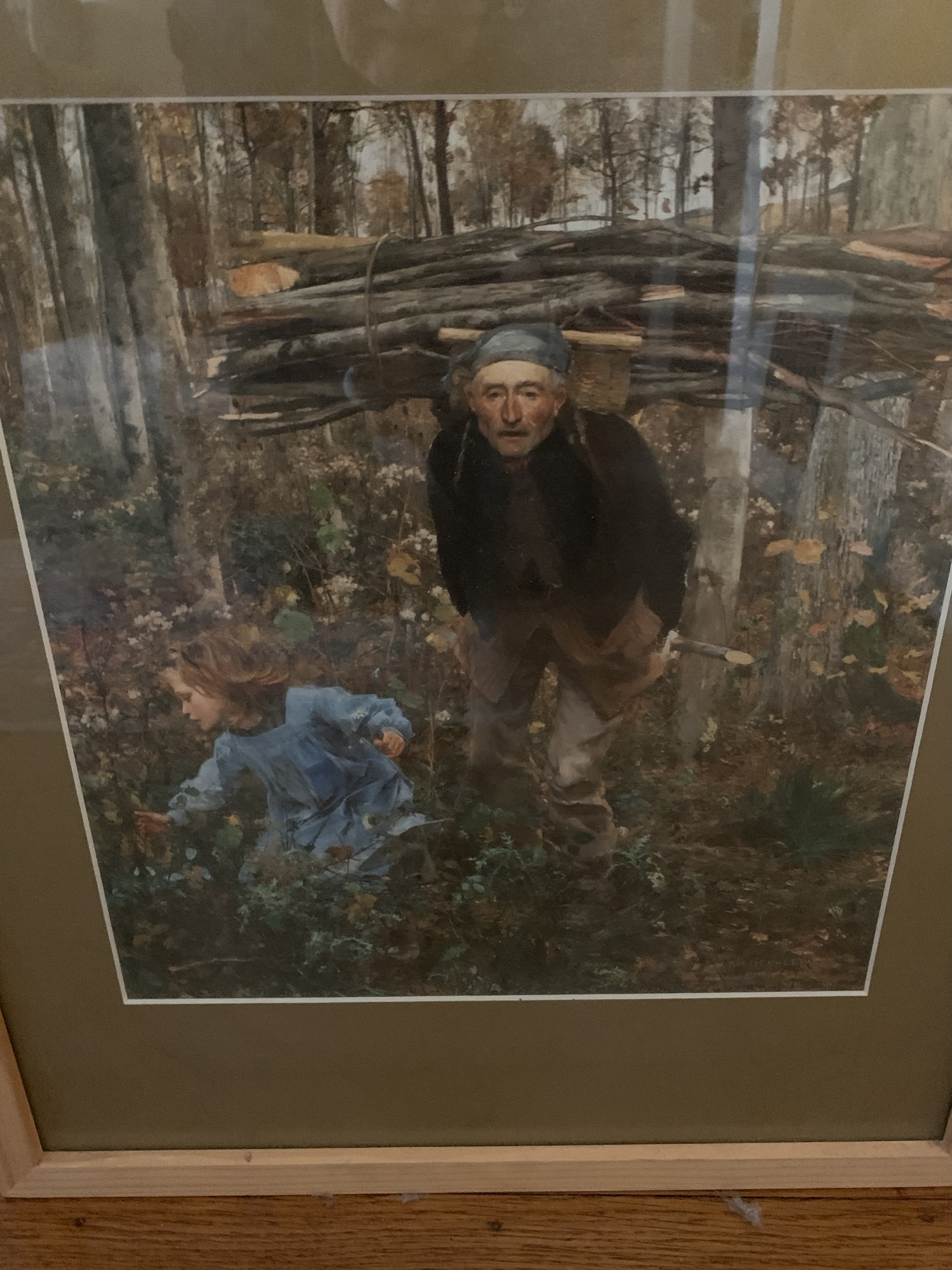
And it wasn’t until many years later that I learned the other things that Mom thought were fun. Volunteering at the hospital, where she made good friends among the other volunteers. Spending a whole day with me whenever I returned from moving West to Northern California. We’d spend the day driving around Milwaukee, looking again at the old neighborhoods on the North Side where we’d both grown up. Then we’d end up at the Milwaukee Art Museum, where Mom stood silently in front of her favorite painting -“Le Pere Jacques (the Wood Gatherer)”, looking closely, as if she was seeing it for the first time. We always had at least one meal out at a restaurant of our choosing. We had our favorites.

And Mom especially liked to bake. Every winter, in Christmas season, she’d bake the cookies we liked best – meringue dots filled with chocolate, Kris Kringles, sugar cookies in all shapes, carefully decorated and sprinkled with chocolate chips or plain cookies sprinkled generously with nonpareils. She loved to try new cookie recipes, too. She had her assortment of recipes – a collection of cookbooks across many years, holiday gifts from the Gas Company and Electric Company – and marked, with comments – i.e. “a favorite, try this one!” The comments were meant for me, for the time I’d be baking my own cookies at Christmas. An event that has never happened: ask my husband.

I’d add my own comments now: “I’m not a baker, but I’definitely try this if I was a baker!”

And Mom had her own way of talking about those days of playing Canasta, about the days of baking cookies to be enjoyed by the whole family: “That’s the fun of it.”

I’m a different temperament from my mother. Gratefully, my own path has taken me through University and Seminary, following the leading of my temperament. And so, my comment holds: “I’m not a baker.” Every year, though, I bake three kinds of pies – sour cherry, pumpkin, and apple – to contribute to the holiday feast at Norman Bahlert’s and Cheryl Rouse’s long table on Thanksgiving Day. Mom would be proud of me, I’m sure.

img_3909

My poor photo of a print of “Le Pere Jacques.” This print hung above the desk in my mother’s small room at Mathilda Brown Home in Oakland, 1998-2001.

Uncategorized

“Am I dying?!?”

I didn’t mean to frighten the man sitting on the hospital bed in the hospital room, when I opened the door. I was just there to do a good deed. I intended to visit with him for a few minutes, maybe say a prayer – if that’s what he wanted, and then I intended to make a mark next to the room number on the census sheet in my hand, to return it to my volunteer supervisor, a kind man with a calm manner.

All I said as I opened the door, was: “I’m a chaplain…” The man who sat on the bed was dressed in street clothes, probably waiting to be discharged that day. His back was to me. As I opened the door, I didn’t know what to expect. Sometimes the patient was in bed, actually asleep with the hospital sounds ringing loudly down the halls and into the room. Sometimes, there were doctors present, circled around the bed, speaking softly to the patient. Sometimes, a family member sat at the bedside. I could see the sheets and pillow stacked in a corner on the window seat, and I knew they’d spent the night in the room with the patient. I approached each room tentatively; an introvert, greeting strangers was not easy for me, although I had had the volunteer gig for a few years. When I entered, I always asked if they would like a prayer. Some did; some did not. In the Bay Area, it was common to receive a “no” to my offer.

Before COVID hit us all with a slam and locked down hospitals and businesses all over the country, I’d volunteered for a few years. I liked the gig, then. I was able to walk from home to Kaiser Hospital in Oakland, a nice walk of about 5 long city blocks. And I’d met a good friend, Cherynne, who was also a volunteer chaplain, a Jewish woman who read to each patient she visited from the Psalms. She and I had lunch together a few times. After COVID shut us down, she and I had met in Alameda to walk along the shore of San Francisco Bay, a nice outing for us and for her dog. I would miss her soon, when she sold her house in Alameda and moved to Bellingham, Washington, during the pandemic.

I was shocked that day, when the patient with his back to the door answered my “I’m a volunteer chaplain” with his fear-filled question: “am I dying!?” I think I answered him, meekly, quietly explaining that I visited everyone on the floor. I think I did; I’m not sure. The patient was shocked. I was shocked. A few minutes later, when I made my way to the nurse’s station, his nurse told me that I shouldn’t walk into rooms with closed doors. That’s not what my training as a volunteer had taught me. And I made sure I asked about that when I told my volunteer supervisor about the event. He listened quietly and nodded. Then he told me that it was ok to go into rooms whose patient had asked that the door be closed. Oh well.

I liked the chaplain gig well enough. I did it for a few years before COVID hit us all and forbid many things, including hospital visits by folks who were not patients. Sometimes, I’d say a prayer. Sometimes, after I’d said a prayer, the patient would continue to offer prayer. Some folks knew how to pray much longer than I did. Sometimes, I’d chat for a few moments with a patient who was sitting up in bed, and leave the room without a prayer. Sometimes, I’d leave a small Bible or a pamphlet that I’d picked up in the volunteer room. I liked the racial and ethnic diversity I encountered at Kaiser; it helped me to stay connected to the community, the community I often related to when I’d been Pastor in downtown Oakland for many years.

I liked the chaplain gig well enough, but it didn’t come easily to me. I preferred the pastor role I’d left behind at retirement. I preferred that role because I had a relationship with the person I was visiting. As their pastor, I could sit and talk for a few minutes, say a prayer, bring greetings from the folks at church. As a volunteer chaplain, I was “cold calling,” a role that did not come easily to me, a role that I ended soon after my encounter with the man whose face I never saw, but who made a memory for me.

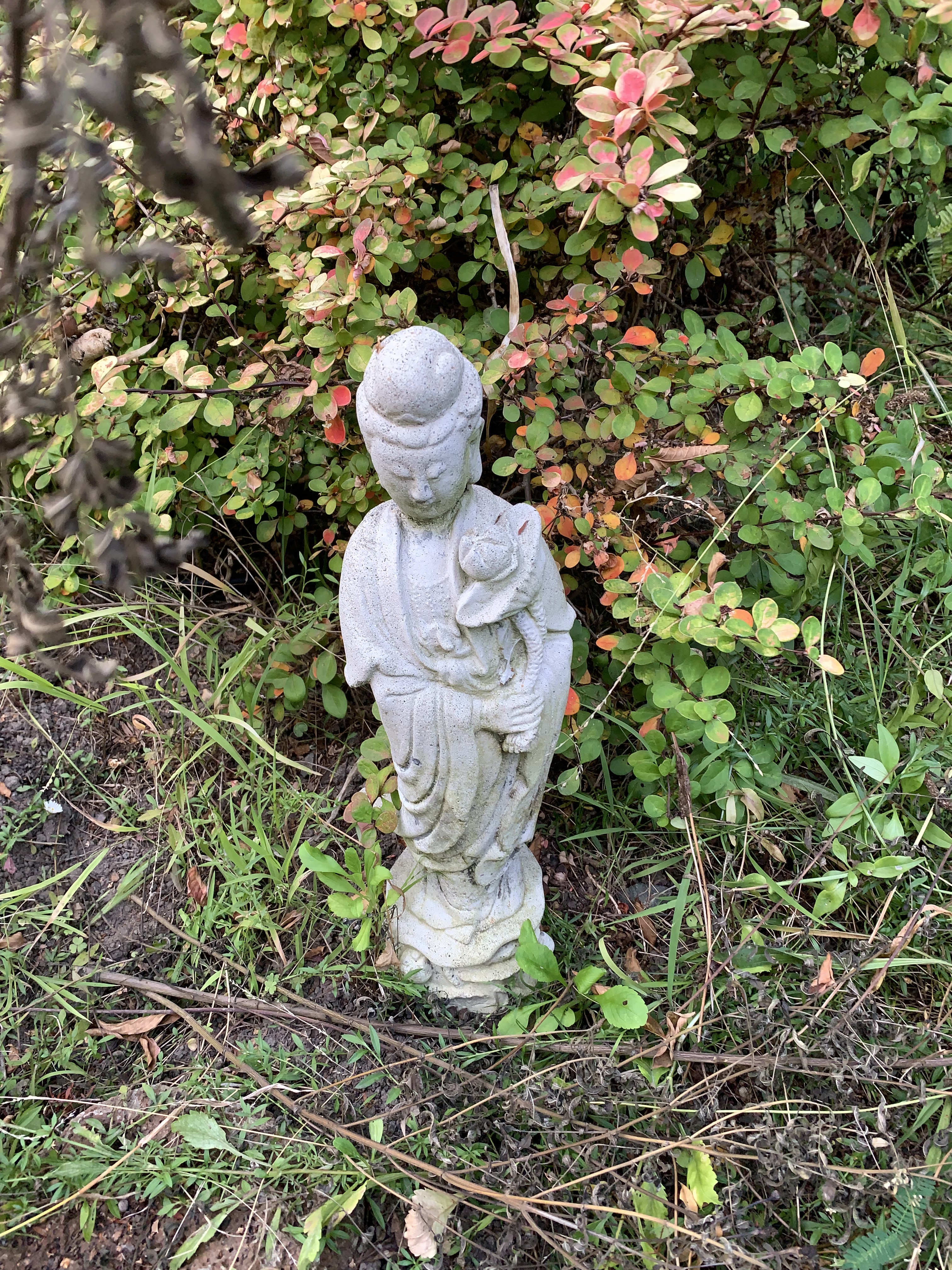
Quan Yin, quietly praying in my yard photo by Mary Elyn Bahlert, 9/2026

Uncategorized

Aretha, Diane, Dolly, Gloria

I wasn’t on a first name basis with them, but each of these women – Aretha, Diane, Dolly, Gloria – were important to my life. Of course I knew their names. Even if they didn’t know mine.

My heart longs some times for those long, humid days of summer. I was in my college years, studying at University of Wisconsin-Milwaukee, on the East Side of Milwaukee. By some act of grace I had my parents’ car – a 1967 Chevy BelAir Coupe – for the day, as long as I showed up at the gate of A.O.Smith at 3:30 pm to pick up Dad from work. I had some money of my own – enough to pay tuition for each semester, enough to buy books, and my own room at home. Suzie had moved out early, getting married as soon as she graduated from high school. I had some money of my own, and time of my own, too.

Those were days of luxury, although I didn’t know it then. I was a few years off from graduating. I was free – in a way I would never be free again. After my summer class at the University, I’d take the long way home, driving south along the shore of Lake Michigan, WNOV playing “sweet soul music” on the radio, turned up, and me – singing along.

I loved that soul music. And I knew all the words. And a favorite of mine was Aretha Franklin. She’ll always be a favorite; sometimes when I’m working in the kitchen, I’ll prop my iPad up to the wall and play old albums. I listen to Aretha’s strong, soul-filled voice again. And I’ll sing along, just like I did on those languid summer days in Milwaukee. Aretha had been in my life forever – it seemed to me.

We were guests of my long time friend Joanne – I’d meet Joanne a few years later in the Social Security Office in Green Bay – when news came on tv that Aretha had died. “Oh…” I let out a small groan. I watched the news clips, Aretha’s familiar face and sweet soul music on the screen. Her death felt like a personal loss to me, a slice of my own story, my own journey, dying along with her. I had particular images of her in mind; I’d read that she arrived at each performance of her long career with her purse, which she placed on the top of the piano – to make sure she’d get paid.

I won’t forget you, Aretha.

*

And there was Diane. I’d admired Diane Keaton since her breakout role in “The Godfather.” In my college years, I’d made a spring break trip to New York City, and my friend Vicki and I had second row seats to see “Hair” on Broadway. As part of the cast who threw off their clothes in the final scene of the production, Diane Keaton had come into public view – completely.

I kept up with Diane’s career. The Internet made that possible. I read about her private life; after a long life with various partners, she’d adopted two children of her own and she’d apparently taken to buying up real estate. Like so many admirers, I knew about these things.

I won’t forget you, either, Diane.

*

Dolly. Dolly Parton was admired – not only for her music, but for her big heart. To me, Dolly had a real, true presence. She never forgot where she had come from, from a poor family in the South, and a life she’d left behind when fame caught up with her. From time to time, I’ll watch her sing “Islands in the Stream” on youtube. Her glowing presence shows up, even years after she recorded the song. Her glowing, kind, generous, loving presence. I loved to read about Dolly’s life, how she gave books to kids who wouldn’t have a book. I watched again an interview with Barbara Walters, the differences between the two women visceral on the screen.

Dolly, Dolly, we miss you so.

*

Gloria. Gloria Steinem. From the time I purchased my first copy of Ms. Magazine while living in Green Bay, I’d known about Gloria and the others – the women who spoke up, the women who wrote, the women who lived their feminism. I admired them. I wanted to be them. In my own small way, I tried to leave my own imprint at work, where I worked among men who had not had a woman share their position, their rank, at work. Gloria’s work spoke to me. Her path opened the way for me – and millions of other women – to “raise their consciousness” – to become aware of the second-rate citizenship the women of the world lived – still live.

I knew then that my name would not change – ever – if/when I married. The idea that I’d have to have a partner who accepted that without question did not rise in me, although that’s the way life worked itself out.
Gloria’s work and Gloria’s voice gave me courage to face my life alone, to begin to trust myself, to see myself and other women in a new way. What I learned from Gloria’s modeling has never left me. I expect that how I live out my life has been shaped by Gloria and the others who had the courage to see things the way they were and to say: NO!

My own feminism is gentler now. I don’t know if Gloria’s feminism came to have a gentler edge. I expect that life’s unfolding brought something to her own journey, as it has to mine.

Thank you, Gloria. Thank you.

***

As I write, faces and feelings come to my mind about all the years that have passed since these women came into my life. And just like that – it seems – they are gone.

***