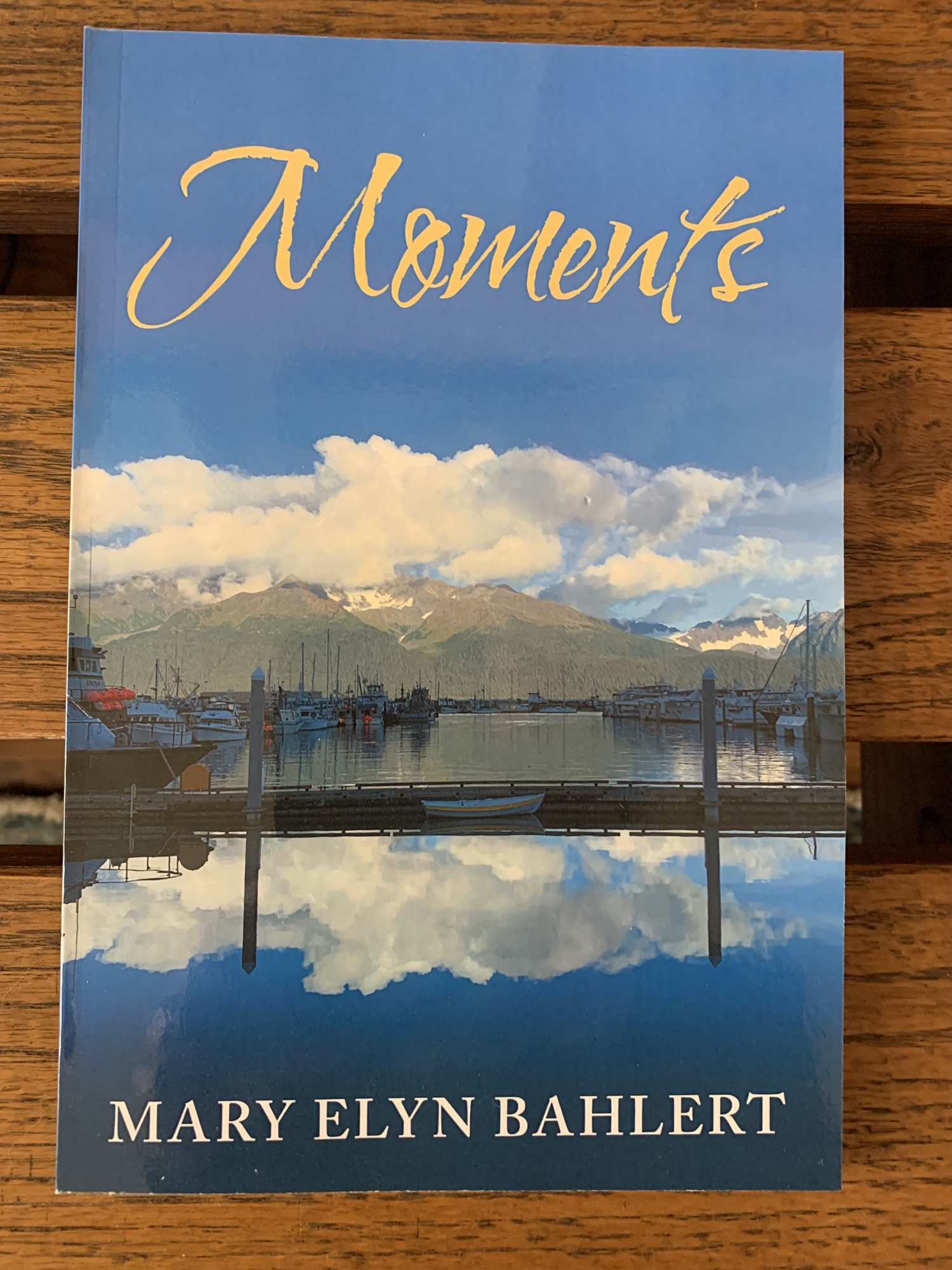
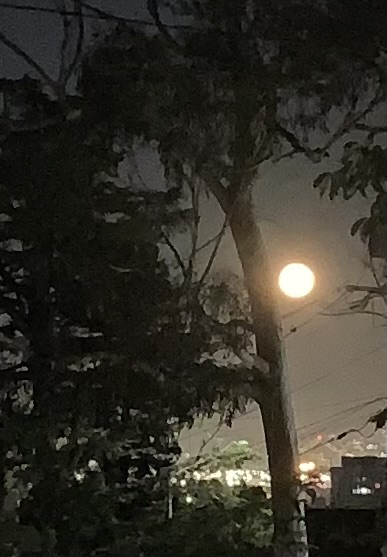
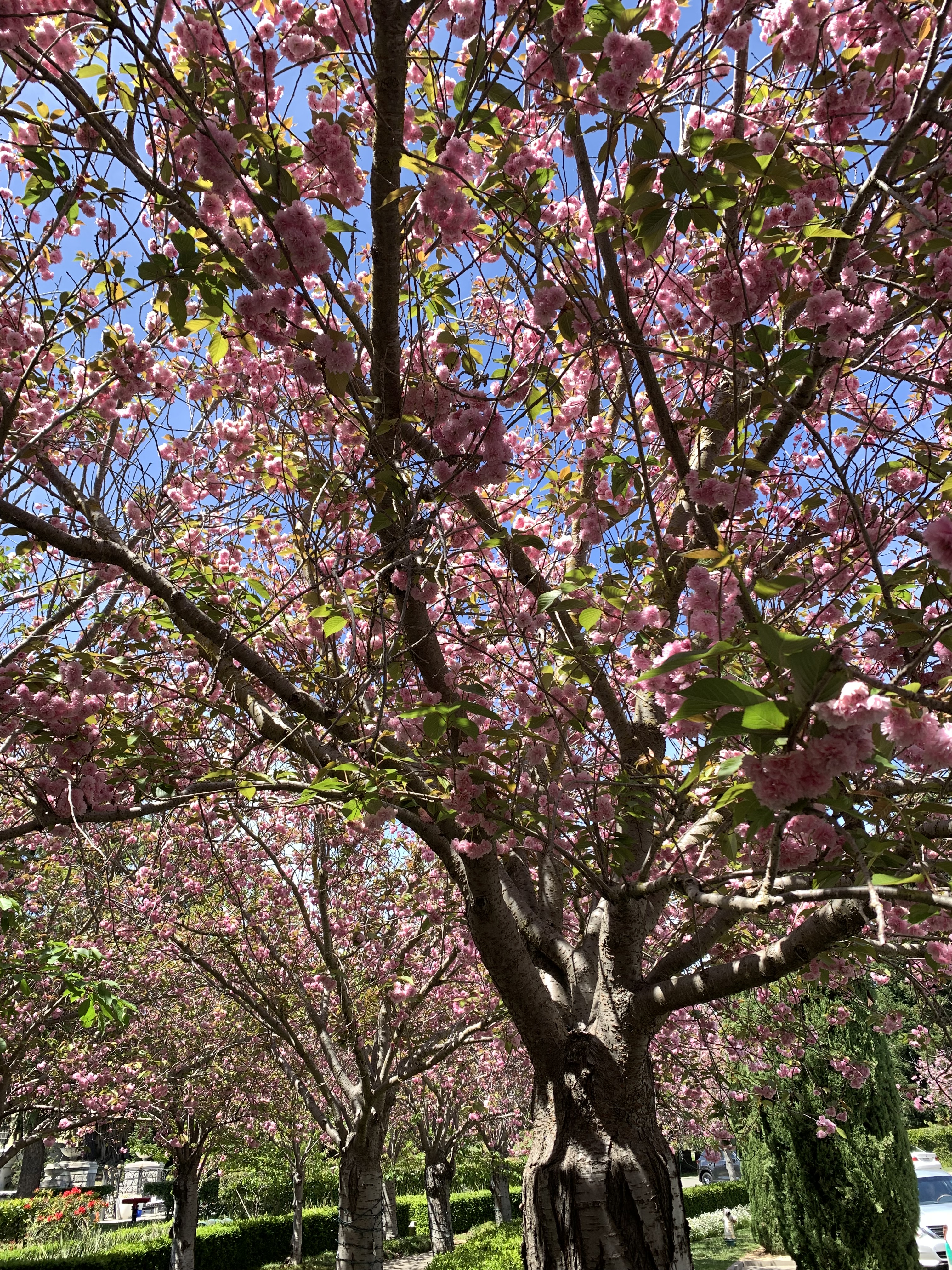
reflecting, wisdom

be here now

I had been meditating for several years. I had learned to meditate – been given a particular mantra by my teacher, a healer I’d studied with over the course of those years. She required that her students practice meditation, twice a day. I was faithful to my practice. In the morning, I’d meditate for the first time as I sat up in bed each day. In the afternoon, I’d often close the door of my office and sit in silence, repeating the mantra to myself, for 20 minutes.

At the time, I’d heard stories of the healer’s other students when we gathered. It seemed that out-of-this world, even strange experiences were common to them. I listened with interest. And I knew that I had not experienced any of those things. Was I doing something wrong? I didn’t think so. And I continued the practice, twice a day, morning and afternoon.

Jeff and I were traveling. We were staying in his mother’s house in Brookfield, in the room that Jeff and Randy had shared as boys. I woke up and lay in bed for a few moments. I sat up in the bed. Then – I sat in complete, utter silence. I didn’t hear the sounds of Jeff’s mother moving around in the house. I didn’t hear the distant sound of traffic along Capitol Drive – a major traffic artery that held bumper to bumper traffic each morning. I sat in a complete and total silence.

And then – my busy mind began its constant chatter – again. Monkey mind, it’s been called. I knew that mind well. By any name, it’s the way of minds, it seems.

*

As I continued to meditate faithfully, twice a day, another, more subtle movement of my mind became clear to me. I realized – a surprise to me that simply arrived – that I was fully present in my life. When I sat with someone, I was present to them. My mind was not planning what I needed to do next. I was not constantly worrying about the day’s events. I was present to the person I sat with.

Now that I’m retired, I no longer practice meditation – although I still know my mantra. From time to time, Jeff asks me to tell him my mantra – he knows that a rule I was given by my teacher was to never share my mantra with anyone else. EVER. And I haven’t.

But my busy mind – some have called it “monkey mind” – no longer rules my life, as it did for so many years. I’m sorry I acted on its foolishness when I was younger. I hope that some of the decisions I made were good!

A few years after I had retired from full time ministry, I was serving a small congregation alongside another pastor. We were each 1/4 time (figure that out! ). I preached every other week and kept in touch with parishioners and visited in hospitals when needed. It was an easy gig, and the particular people at the little church made it easy. They were a kind group of folks, and together with them and the other pastor, I negotiated a move to another congregation, and gave up the church building to a large group of Korean language people who still call the place their home.

Early one Sunday morning, I woke early, long before the alarm clock was set to go off. My busy mind – my “monkey” mind – was busy, turning over and over again some unfinished business of the last week. Then – I wish I’d known this was possible, long before this moment – I told myself I wasn’t going to do that anymore. My mind stopped. The thoughts that had seemed in control a few moments before were quiet.

And I have never done that again. Ever.

BE HERE NOW

What a joy to be present to life’s precious moments… photo by Mary Elyn Bahlert

reflecting

Me and Mister O’Reilly

Mr. O’Reilly was my Junior High Science teacher. I don’t remember much about him, except that he was old – most of my teachers were old by my standards… after all, I was in Junior High, and that he had gray hair and always wore a suit. Teachers dressed formally in those days. Other than the memory I’m about to share, all I remember about Mr. O’Reilly is that, on a warm, warm autumn day, when the windows of Peckham Junior High School were open to let in the clean, fresh air of the city, he sat at his desk, and – commenting on a fly that had flown into the window – told us a strange bit of information: if the fly were to land on a piece of food we were eating, whatever the fly had lit on before – the edge of a bedpan in a nearby nursing home, for example, and if said fly then landed on our hand, and if we did not wash our hands before we ate a meal – the germs that germy fly carried would transfer from the edge of the bedpan onto our food. And then into us/me.

Ugh. Enough of that memory – except to say: I’ve never forgotten that particular lesson. Wash your hands, people…

By the time I entered Junior High School, my school day began early and ended late in the afternoon. In Junior High I brought my lunch each day in a brown paper bag I carried along with my books. In each bag was a sandwich made with homemade bread, a piece of fruit, and maybe a sweet treat that Mom had baked. And by the time I entered Junior High, walked under the viaduct at 35th and Fond du Lac Avenue, I was in classes with young people who were, really, from the “other side of the tracks.” My classmates were no longer all the children of working class factory workers. My classmates often came from homes where Dad had a job that required a suit, and where Mom was not simply a housewife, but a woman who worked in an office, or who had been a nurse before she stayed at home, a home that the family owned.

And I was sensitive to all these things. I noticed.

One day, Mr. O’Reilly called my name as I passed him and another teacher, on my way to my assigned chair at a table in the cafeteria. I stopped in front of the tall teacher as he stood next to another teacher, a younger woman. They had been talking, and I somehow knew that they had been comparing the students they taught. Mr. O’Reilly – apparently to make a point – asked me where I lived. I understood completely in that moment that he expected me, a student of his in an accelerated program, to give him an answer other than the answer I gave: “I live on 28th and Locust.” Mr. O’Reilly looked at me with a surprised look on his face.

In Junior High, I was already sensitive to the homes and the kind of work my schoolmates’ parents had. I understood that I was not one of them. Later in college, I would take a class in the humanities about social class. In Junior High, I felt the tug of my difference, I saw the quality of the clothes my classmates wore – different from my often home-made clothes, and I expect I felt ashamed. I did not feel shame wash over me, wash over my body and mind as well as my emotions, in that moment in the school cafeteria, as I answered Mr. O’Reilly’s question. But I was keenly aware of what that moment was about.

In college, I would take a class about social class. These days, I’m rereading a text from that class: The Hidden Injuries of Class, Jonathan Cobb and Richard Sennet, 1972.

After my encounter with Mr. O’Reilly, I sat at the table with my friends and ate my lunch, ate my sandwich made of homemade bread. And I have never forgotten the sting of being from the other side of the tracks, for all the life of privilege I have lived.

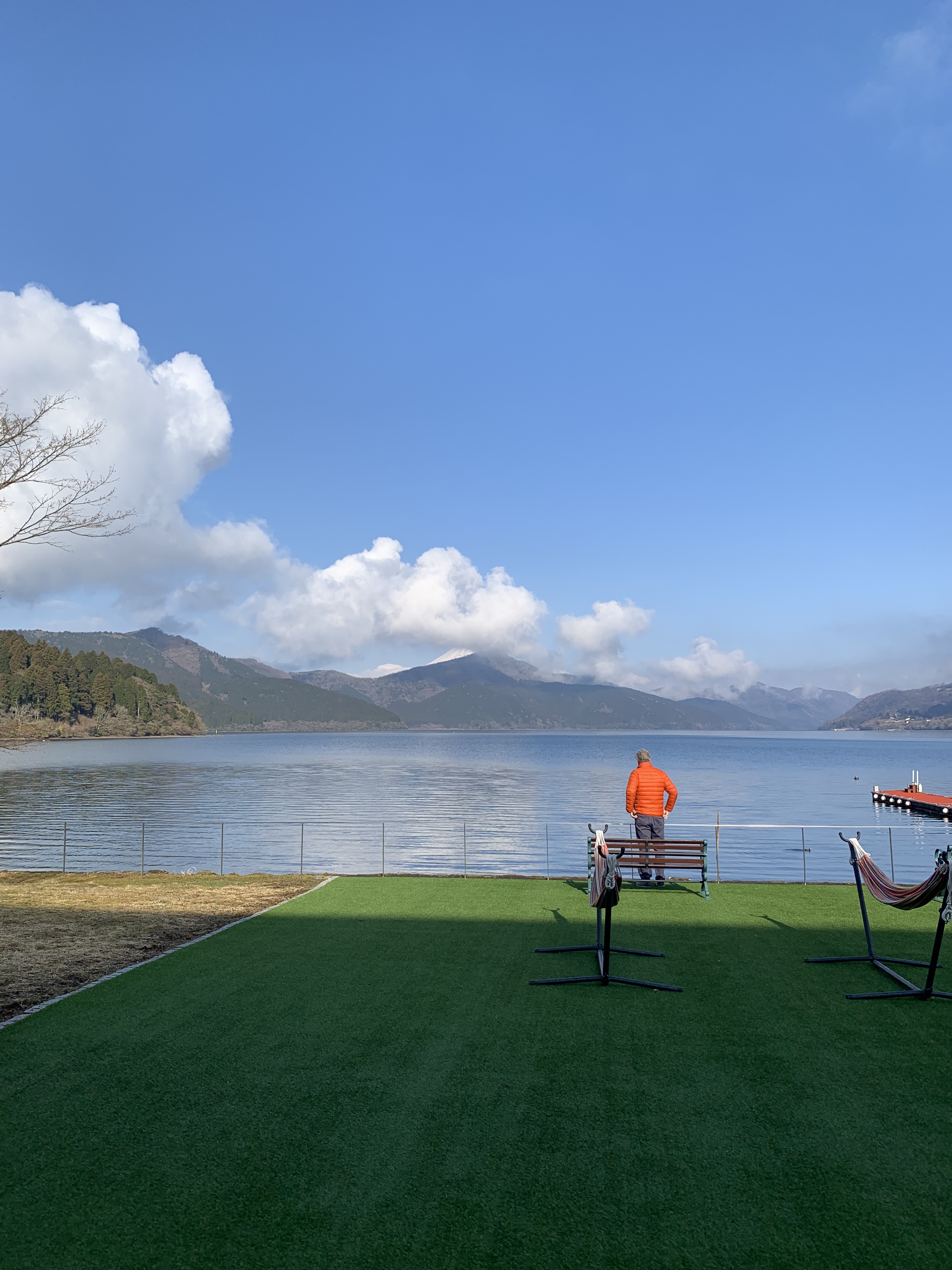
A view of Mt. Fuji from Hakone, Japan, 2026. That’s Jeff in the bright orange jacket, seeing “the shy one” as she chose to show herself to us before we left to travel to Kanazawa. My own photo.

poetry, remembering

I’m From…

I am from
frame flats with steep staircases, lining city streets.
Daddy’s eyes, sparkling. Momma’s worries.
Baby sister, big brother.

The smell of yeast bread as I climb the narrow steps,
cozy.
The smell of beer, always.
Cereal for breakfast,
peasant borscht for supper at five.
On the back porch, tracing Sputnik across the sky.

Shame: “we don’t say that.”

I am from
Steelworkers Union 19806,
bargaining rights and hoping for overtime.
Snow drifts. Winter winds. Slow springs, long-awaited,
lilacs in big dishes, coleus leaves, hollyhocks.

Moving – again.

I am from
up North and cooler by the Lake,
humid nights, thunderstorms crashing from west to east,
short, languid summers,
sheets fresh from drying in the sun.

I am from
hanging with the smart kids,
the Center Street library,
laughter, and lots of tears.
Anger that never cooled. Warm and loving folks.
Books. Books. Books.

Old World people and me –
tiptoeing into the New World.


“I am from,” Mary Elyn Bahlert, from Moments, published 2026

photo by Mary Elyn Bahlert, 12/2025

memories

how to say goodbye

I expect I’m not the only human who has wondered how to say what would be a last goodbye to someone they loved dearly. Even as a pastor, I wondered. I saw the faces of folks who would show up in church for worship in the days after they had said goodbye to the one person they loved and cherished the most. How did they say goodbye?

I remember one goodbye, in particular. In the weeks before my father – I called him FRB – died, his room at St. Joe’s Hospital on the North Side of Milwaukee was often filled with visitors. Friends of mine – Joanne, who he greatly loved – friends of my Dad and Mom, his sister Edna, who drove from Ellison Bay alone to say good-bye to her brother, and my uncles from the Bay Area of California, Pete and Johnny. I made a visit the few days before he died, and I was there as the room filled with people. My Dad was the extrovert in the family, but he didn’t talk much as he lay in bed, in his last days.

I knew I would not see him again when I left his hospital room that last time. My mother, sister and I had had an intimate moment with Dad as Mom – who rarely cried – cried out, “I love you so much!” I watched as FRB nodded.

Uncle Pete and Uncle Johnny had a flight to catch before mine. In my memory, the room was still full of people. I sat in the chair next to his bed. As Johnny and Pete left the room, Johnny stood at the end of Dad’s bed and said, “I don’t know when I’ll see you again, Frank.” A few hours later, it was my turn to go. How to say goodbye? I looked into my Dad’s eyes and said, “I don’t know when I’ll see you again, FRB.” Dad nodded as I walked out of that lonely hospital room.

I cried all the way home on the plane.

Richard – I called him Ricardo – Joanne, and my Dad in Milwaukee. Who took the photo?

memories, reflecting, Uncategorized

Downtown

“When you’re alone and life is making you lonely,
you can always go downtown
When you’ve got worries,
all the noise and the hurry seem to help, I know, downtown…”
Words and music, Tony Hatch, 1964

The words and music drop into my head and I can hear Petula Clark singing the melody of “Downtown” as I sit down to write, today. And I’m remembering the adventure of going downtown, along with a friend, during my high school years. That must be when I fell in love with cities.

Linda Andersen and I took the number 23 bus from the North Side of Milwaukee to 6th and Wisconsin Avenue on a Saturday afternoon, when we were juniors in high school. I’d known Linda since Junior High Days. Like me, she was a product of Milwaukee’s North Side, and like me, she was a student at Washington High School. Unlike me, Linda was an only child, and her mother worked – unusual for the kids in my working class neighborhood. Linda was a nice girl, quiet, smart. I liked her, although I have never counted her among my really good friends from that time. Even so, Linda was the friend who was with me when we had our adventure in downtown Milwaukee.

After we exited the bus at 6th and Wisconsin, we walked East along the street, whose sidewalks were still filled with busy, fast-moving folks in the 1960’s. We stayed along the South Side of Wisconsin Avenue and walked over the Wisconsin Avenue Bridge to the more upscale part of Wisconsin Avenue between the Milwaukee River and the shore of Lake Michigan. On the East side of the Avenue, the sidewalks were wider and the businesses more expensive; certainly I knew that my people would not shop in the stores there. On the North side of the street on Wisconsin Avenue stood the Pfister Hotel. To me, the Pfister was the place for rich people who came to Milwaukee to stay. Years later, on our wedding night in 1984, Jeff and I spent the night in the honeymoon suite at the top of the Pfister, looking out to the East from our room as snow fell over Lake Michigan; it was the first day of spring (Wisconsin-style).

We walked over the bridge and stopped to look at the Marine Bank – 111 East Wisconsin Avenue – newly built along the River. Next to City Hall, the Marine Bank was the tallest building in downtown. We were excited. We looked at each other and walked into the building. No one questioned our being there. We made our way to the elevator and hit the button for the 22 second floor. We had heard that coffee cost $ 5.00 a cup to drink at the restaurant at the top of the tower. We never got to verify that, however.

As soon as we’d made it to the top of the Marine Bank, we took the elevator right back down to street level, walked back out onto Wisconsin Avenue, and continued our adventure, walking all the way to the shore of Lake Michigan, before we found the nearest bus-stop and waited for the 23 bus to take us back home to the North Side.

I didn’t know it then, but my world was beginning to grow – just a little bit. I’m a city person, through and through. Jeff calls me a “city girl.” I like to say that you can drop me in a city anywhere and I’m comfortable. As I write this, we’re back only a few weeks from a trip to Japan, where I spent a lovely morning walking through the busy streets in Tokyo, blocks from our hotel, alone. That walk was a high point for me.

It’s safe to say that all adventures begin somewhere, and with a few steps. My adventures began then.

Walking in Tokyo, March, 2026. Photo by Mary Elyn Bahlert