Uncategorized

Light in the darkness

I love to be aware of the changing light as each season gives way to the next: spring to summer, summer to autumn, autumn to winter. Sometimes now, as I grow older, I note the times of sunrise and sunset in my calendar, watching one season gently curve into the next season.

It’s not a coincidence that the date of Christmas follows closely on the heels of the winter solstice. Through the ages, people have observed the changing seasons, the days with darkness fast on their heels, coming before it’s time for dinner. When I was younger and not conscious of how quickly one season rolls into the next, -and how unrelenting the changing of light was/is, I complained as I left work at 4:30 in the afternoon, the sky already in nighttime darkness. Night falls early in northern climates. It takes the strong spirit of a human being to hold on to hope when darkness is the longest part of each day.
No wonder the ancient people honoured the darkest days. No wonder they lit fires, bringing warmth to the darkness. No wonder our ancestors danced in the darkness, dancing to remind the light to return!

No wonder that people of different faiths honor this time of darkness, before the Light comes!

Thankfully, each cycle of the year continues to roll in a circular fashion, bringing us back to the time of darkness, not stopping, but rolling on, the end of this year, the beginning of the next.

As Christians, we honor this season of darkness by telling the story of the Child, born into a dark world to bring Light to wounded hearts. We tell the story again and again, because, like human beings of all times and places – we need to be reminded. We hold on to hope, the promise of the child whose life lays before them, and in that way, we hold on to hope for ourselves. In a Season of darkness, we come with our begging bowls, begging for Light.

Merry Christmas!

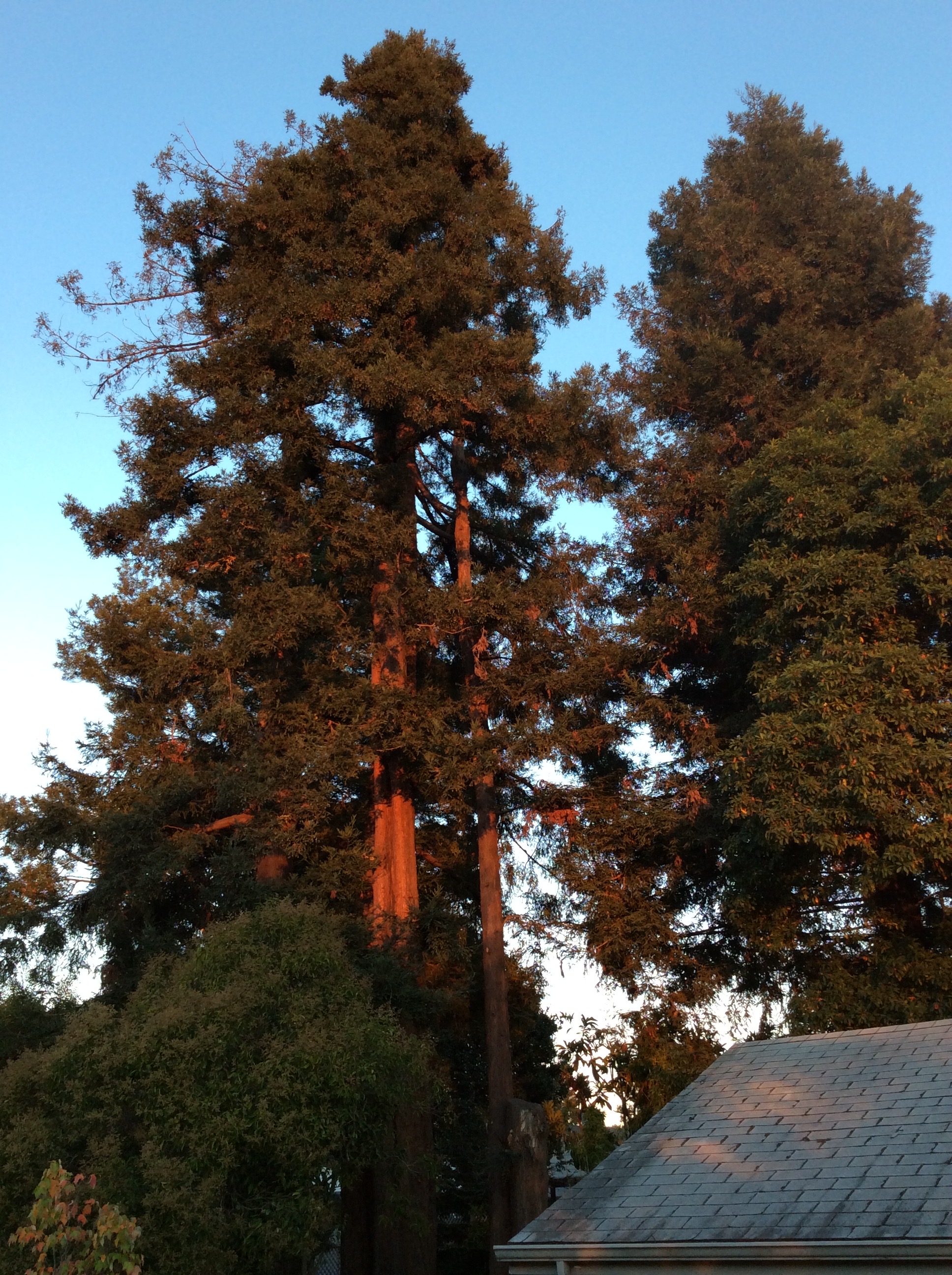
Reflections at Sunset, 12/2022, photo by Mary Elyn Bahlert
reflecting, Uncategorized

Season of Holidays

In the Mediterranean climate in the Bay Area, we know the weather, the sky, the light is changing, heralding the coming holiday time. The changes are subtle here, but the leaves fall from some of the trees, and the color is changing – the color not only of the trees, but the light in the sky, the early darkness. It’s winter now. The Season of Holidays has arrived.

The Bay Area is a diverse area of the country, and here we respect many traditions and the holidays they honor. Many of them reflect this time of darkness, this season. In my own faith tradition, we enter the liturgical season of Advent, four Sundays before Christmas Eve and Christmas Day, four Sundays filled with stories of those ancient, ancient people who longed for a Messiah – waited for the Coming of the Messiah. In the darkest time of year, we honor the Coming of the Light, the Holy One. In the darkest times of our lives, we long for someone to save us, for someone to come to us who will fulfill our longing.

I have always loved the time of Advent, those four Sundays before Christmas. As a pastor, I worked as hard as I could to have the good church folks “stay put” in the season of Advent, to have them hear the stories of the faith as if the Light had not come, to sing the songs that tell the story of the people who wait. As the autumn gives way to winter, we watch the days grow shorter. The sun falls earlier each day into the west. The last rays of each day come earlier, day by day, until we know the longest night. We are fully in the darkest time, then, we exist within it. Although we know the Light will come – as it has before – we still must live within this darkest time.

Advent is a time of darkness. In our lives, we know Advent well. A marriage ends. A depression has its hold on us – longer than we can bear, it seems. A relationship that is floundering goes on and on until its participants are exhausted with the ending. An illness has us in its grip, and though we long for it to end, it does not. The times of emptiness go on and on, without subsiding. We know so well these times of Advent, before we come to a time when we will breathe again.

And we are in that season, now. Of course the churches will begin to sing the Christmas Carols – soon. Too soon, for me. I want to honor, to respect this time of waiting, of preparation, of darkness. And there will be time for the lights to be hung on the tree, to be lit each evening as soon as the sky becomes dark. There will be a time for the Light. Are we afraid of the darkness? I want to write: of course we are. Who doesn’t want the times of sorrow, the grief, the depression, so hard to bear, to end? Who doesn’t want the light to come on so that we can see our way down the hall? But there is that moment of darkness, there is that season of darkness – when the promise is held before us – waiting in the wings – but not given.

Early Sunset, Autumn. Photo by Mary Elyn Bahlert, November 17, 2022.

Uncategorized

Leaving home

In “Fiddler on the Roof,” there is a heart-wrenching scene of the Jewish people of the village Anetevka being forced to leave their beloved village, their home, during the Russian pogroms (massacre or persecution instigated by the government or by the ruling class against a minority group, particularly Jews). The people are packing the few belongings they can carry, along with animals, onto carts and make-shift vehicles. What to take? What can they leave behind? They will leave behind that place they loved – we all love our homes, don’t we? – not only the home, but the place, the land, the sight of light on those trees, the fragrance in spring – and walk away to where? Can somewhere else be home, surely? The tailor, a man with a young family, asks the Rabbi, then: “Rebbe, wouldn’t this be a good time for the Messiah to come?” The old Rabbi looks fully into his eyes and says: “We’ll just have to wait for him somewhere else.”

Wisdom, in the heart of tragedy, of horrific loss.

We wait for the Messiah these days, also, as the War on Ukraine – invaded by Russia – drives on, for many months. How long will the people suffer? We wait for the Messiah when we are ill, or when someone we love is ill, and there does not seem to be an end to it. We wait for the Messiah when the price of gas goes up an up and – up – and although it is expensive to us, it is too much for so many others. We wait for the Messiah to come into the lives of refugees fleeing from war in their own homeland or fleeing because there is no water in their land. Refugees who are walking now, today, this moment. They, too, must be waiting for someone to save them.

We wait for Someone – Something – to save us.

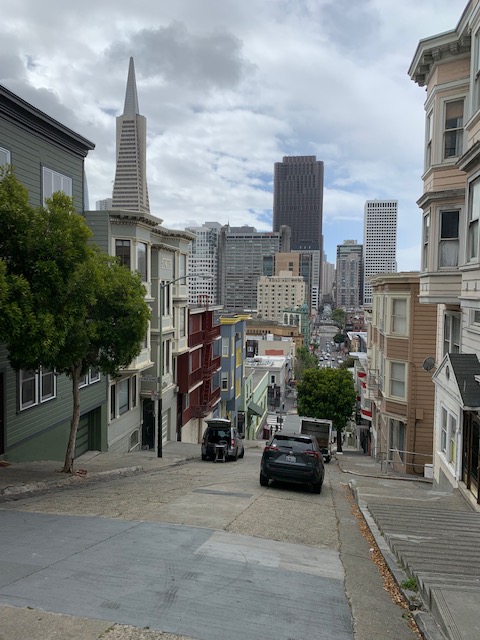
Deep Dusk, Oakland, 11/12/2022 – Mary Elyn Bahlert

Uncategorized

Tribute to Mickey Ganitch – Survivor of Pearl Harbor

“Make a joyful noise to the Lord, all the earth. Serve the Lord with gladness; come into God’s presence with joyful songs. Know that the Lord is God. It is God who made us, and we belong to God. We are God’s people.” – Psalm 100:1-3a

“Mickey’s strong spirit shone through his hard work.  He was ready with a kind word, with a cheerful word.  His eyes lit up as we each were greeted warmly and readily by this man who had known war and spent his life telling the story of what war is like to others. 

When I was the Pastor at Lake Merritt United Methodist Church in Oakland, California, I knew that the community there loved a spirited hymn, and so we sang spirited hymns as often as we could.  One of our favorite hymns as a community was “Marching to Zion.”  I liked to have us sing that hymn as the closing hymn of the worship service, and I would stand at the center front of the sanctuary, just as happy to sing that song as everyone else:

“We’re marching to Zion, beautiful, beautiful Zion,

We’re marching upward to Zion, that beautiful City of God..”

As we stood to sing, a few bars into the hymn, I would see Mickey Ganitch start to march around the perimeter of the sanctuary!  I smile when I remember it, as I smiled then.  Everyone in the sanctuary smiled! Mickey’s joy in life and in service to others was contagious! As Mickey marched, the children would follow, and then the adults, and we’d finish worship in a high spirit, having marched together to Zion! — Mary Elyn Bahlert, Opening Comments, 7/23/2022

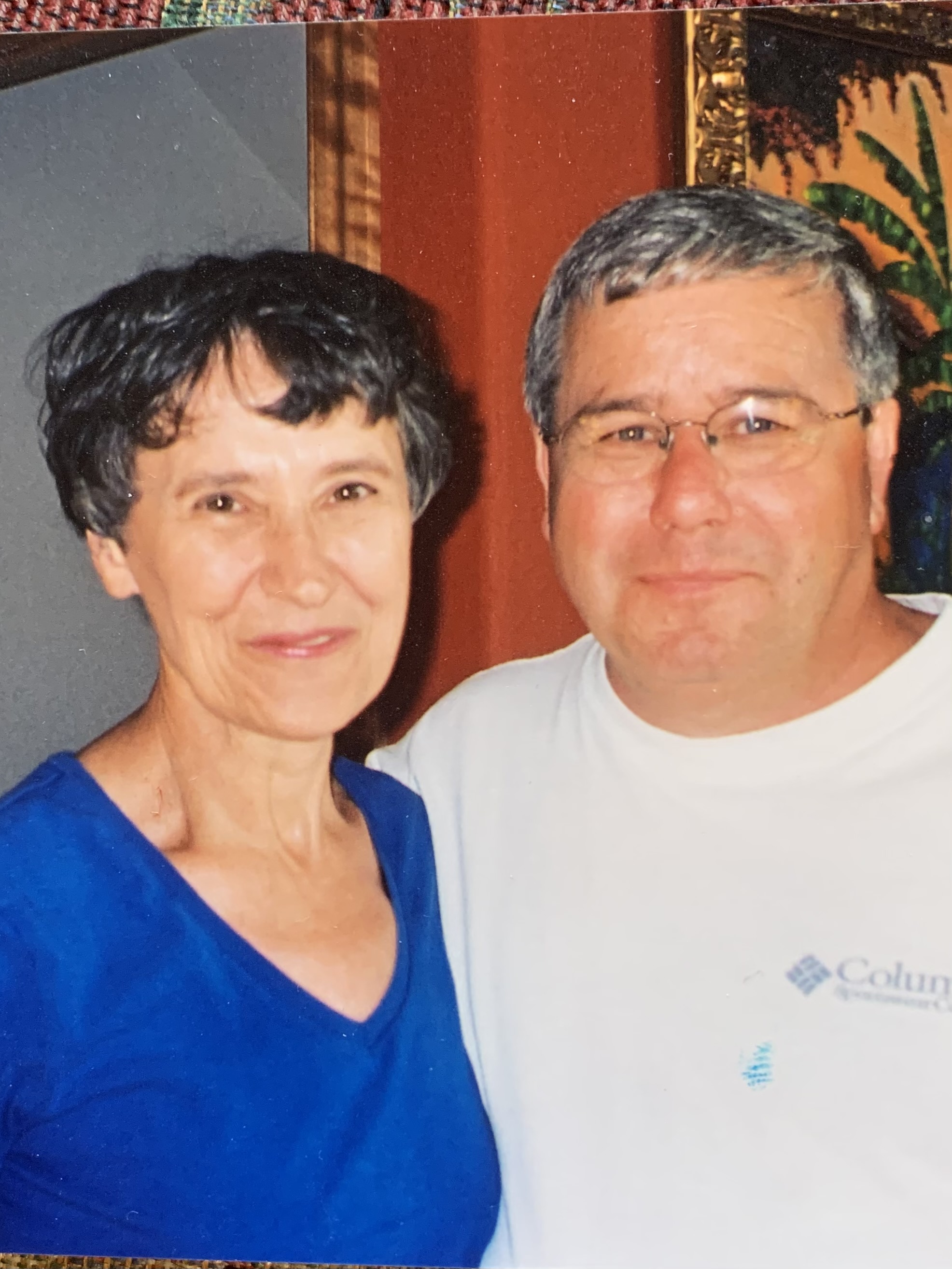
Photo taken 7/23/2022, the day of Mickey Ganitch’s Memorial Service aboard the USS Hornet, moored at Alameda Air Station, Alameda, California. Photo credit: Mary Elyn Bahlert

Uncategorized

Darlin’ Be Home Soon

Come
And talk of all the things we did today
Here
And laugh about our funny little ways
While we have a few minutes to breathe
Then I know that it’s time you must leave

But, darling, be home soon
I couldn’t bear to wait an extra minute if you dawdled
My darling, be home soon
It’s not just these few hours, but I’ve been waiting since I toddled
For the great relief of having you to talk to… John Sebastian, 1965

When I was a child, when I was growing up in the flats in Milwaukee, my sister and I were in bed before Mom and Dad. Mom and Dad stayed up to watch the news at 10 pm, and shortly after, the television turned off, they went to bed.

My memory of those days is of the soft, quiet talking they did before they went to sleep. I don’t know what they talked about. In the evenings, after the supper dishes were taken off the table, they sat at the kitchen table and played Canasta, most nights. And from the living room where I watched television, or from my bedroom, where I studied, my back propped up against the headboard of my bed, I could hear their laughter and shouts of happiness at having won.

By late evening they returned to the living room to watch the news of the day. Then, the flat was quiet, except for the soft, quiet talking they did before they went to sleep. I don’t know what they talked about. Dad fell asleep first, of course, and then I could hear his snoring, sometimes having cut the conversation short in the middle of a sentence. And Mom, I know, lay awake for a long time, her anxious mind, her memories filling the space that could have been filled with sleep.

Jeff and I are often quiet in the evenings, reading, chatting a bit, fussing with small tasks around the house, and we both go to bed at about the same time, but we don’t often talk once we go to bed. A few evenings ago, we were talking for a few minutes after we’d gone to bed, and Jeff said: “we’re talking in bed, just like your mom and dad.” He had remembered my telling him about that small intimacy I had known as a child, I expect because his parents didn’t like one another much at all, it seemed. And his remembering recalled those times in my own mind.

From the first time Jeff and I met, I felt as if the John Sebastian’s words, written years earlier than our meeting, were written for us. They still are.