community, wisdom

Hello’s in the ‘hood

As a child, my family moved from rented upper flat to rented upper flat on the North Side of Milwaukee, every few years. We always lived in the upstairs flat. Because Milwaukee has cold, cold winters, each house had a full basement, usually divided in half, half reserved for the lower flat, and half reserved for the upper flat, each also boasting a coal furnace. Every winter morning, Daddy filled the furnace that heated our flat with coal, and stoked the flames as soon as he dressed, after the alarm which rang promptly at 6 AM, early enough for Mom to make his breakfast of bacon and eggs – every morning. I lay in bed until 7, when my little sister, Suzie, and I started our days at the kitchen table with a bowl of cold cereal. Then we walked the few blocks to school.

As a child, I knew the children in the neighborhood, those other children from working class families who walked the streets to school with me, who became my first playmates when the evenings were long, on the weekends, and during the hot, humid summers. I walked to school with those children, some who came from homes where another language was spoken at the table. Although Mom’s first language was Ukrainian, we all spoke English. Mom, Daddy, Ronn, me and Suzie.

What I don’t remember about the neighborhood is whether or not the neighbors were friendly. I don’t remember most of their names. Except for the children who lived within a block of our flat, my playmates in the summer time lived in the modest flats and modest single family homes that lined the streets for as far as I could see or could walk. My world grew a little when I became friends with Judy Hauser, whose family lived about a mile away, a house that her parents owned, and where her grandmother – who never spoke a word in my hearing – lived in the small upstairs of the bungalow, coming down to sit at the table with the family for lunch. Some Saturdays, I’d ride to Judy’s house to spend the day, or her dad would drop her at our house to spend the day with me. That’s how my world grew, inch by inch, block by block, school by school, buddy by buddy.

What I don’t remember about the neighborhood was whether or not we spoke to the neighbors we did not know, who walked those streets, who sat on the porches in the warm, humid evenings of the precious summers. I don’t remember if we even knew the names of all the neighbors. Of course we knew the names of the families on the next street whose kids were my playmates. It was Michelle Fralick who asked me one day as we walked to school: “are you Catholic?” I don’t know what I said to Michelle in answer to her question, but I know I asked Mom if I was Catholic when I got home from school that day. “No,” she said.

*

I suppose it’s because of those old Milwaukee neighborhoods that I love cities. The places I lived were modest places, and when I have the time to see them again, I take a look. I see the narrow streets. I see the streets, now more modest than they were then, some of the windows of those flats boarded up, some of the steps to the front porch broken, some of the strips of land that had been lawns now barren, brown, uncared for. Milwaukee is one of the cities who has suffered greatly from the racism that plagues the nation, that plagues the world. Milwaukee is a broken place in many ways, although it will always be my home.

“Feels like home to me…” (Randy Newman, “Feels Like Home”)

What I don’t remember is whether or not we greeted our neighbors. The cities I’ve lived in have changed – mightily – since those days of growing up. I love cities, love the city where I live now, and have lived for many years, and I love the cities of other places, of other lands, I’ve been privileged to see. This past spring, Jeff and I traveled to Japan for a trip with Overseas Adventure Travel. On the first morning after our arrival, as the group gathered to get a feel for our few days in Tokyo, I spent the morning alone, walking on the city streets. I was comfortable. I was happy. I enjoyed my time alone, to explore on foot the strange and wonderful new land I was privileged to visit.

But did we look at one another as we passed each other on the narrow sidewalks of Milwaukee in the 1950’s and 1960’s? Did we say hello to one another? Did we greet one another warmly, as neighbors? I don’t remember.

And so it is a small and wonderful joy to me when I walk in my neighborhood in Oakland now, and when someone looks at me – really looks at me – and when we say a few kind words to one another. One day, as I walked one of my well-worn routes to make sure I add to my tally of daily steps, I passed a short, gray haired old woman – she must have been my age, that is – and as I passed, she said a few words. More than a few words. She started a conversation. She told me she was new to the neighborhood, and since we passed one another on a street a few blocks from where Jeff and I lived, I don’t know where she lives. But I’ve looked for her ever since the day we passed one another, when I walk along that block. I think of her. I hope to see her again.

It’s good to see the same folks on my street, day after day. It’s good to hear voices sometimes, to see a dog out for a friendly walk on our street – on leash (of course). I know the names of some of the people I pass. And I often don’t know the name of someone I pass. Yesterday, as I walked up the last hill to my house along Pleasant Valley Avenue, the busy street that runs parallel to my own street, a young woman who I’ve seen once or twice came up to the curb to cross the Avenue. She turned to smile at me.

I’m old now. To her, I’m just another old woman. But maybe that’s why she smiled. I’m harmless, after all – I’m old now.

I hope to see her again. I’ll make sure to smile, to say hello. I hope we can make our own place just a little friendlier when we do.
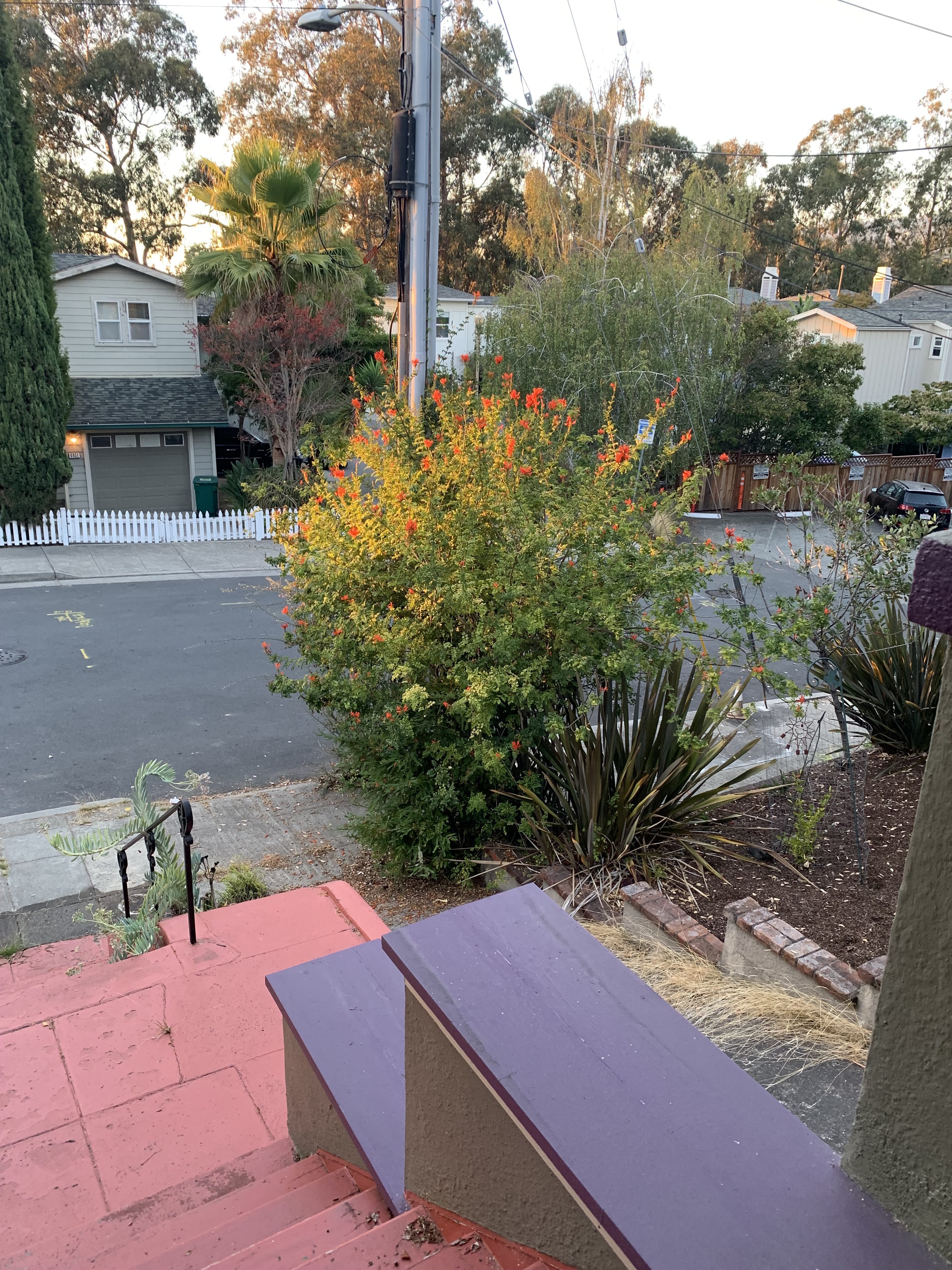
A fall sunset over our street. Photo by Mary Elyn Bahlert, 9/2026
memories, nostalgia, remembering

Auntie Irene

Suzie called her “the hugger.” Yes, Auntie Irene – one of the extroverted Bahlert’s – loved to hug us when we arrived at her house on Old Lime Kiln Road in Baileys Harbor, Wisconsin. And she loved to hug us when we left. She was, indeed, “the hugger.” Like my dad, Frank Bahlert, Auntie Irene talked fast and kept on talking, no matter what. And she would cry sometimes, too. Her emotions came easily to her, and they couldn’t be kept quiet. It wasn’t quiet with Auntie Irene around.

When Dad had his two weeks off from the steel mill each summer, we’d drive up to Door County – 200 miles north of Milwaukee, a peninsula bordered by Lake Michigan on the East and Green Bay on the West – and spend a week.

Sometimes we stayed in a rented cabin, rented from the Kellstrom’s of Sister Bay, and sometimes we’d stay with my Uncle Fritz, Aunt Goldie, Bobbie and Susie. For several years, they lived on a farm East of Sister Bay, where they kept pigs. After a long day at the shipyards in Sturgeon Bay, Uncle Fritz, my Dad’s younger brother, would collect garbage from restaurants along the highway to feed the pigs. The fastest I ever rode in a vehicle – a small truck – was with Uncle Fritz. My cousin Bobbie in the middle, me on the passenger side, and Uncle Fritz at the wheel, he sped up to 100 miles per hour. I think I was too young to consider what could have happened at that speed – and without seatbelts. Uncle Fritz was one of the quiet Bahlert’s, like my Auntie Edna, Uncle Clarence, Uncle Ray, and my cousin Terry, Ray’s daughter.

Auntie Irene, like my Dad, was a talker – as well as a hugger. After college and after I had been hired as a Claims Representative in the Social Security Office in Green Bay, Wisconsin, I’d sometimes stay the weekend with Auntie Irene and Uncle Erdreich – others called him “Peggy.” They had an upstairs to their house, an upstairs reached by a narrow stairway built into the wall. I’d stay alone in one of the two rooms up that narrow passage, looking up from my bed at the trees that pressed against the windows as the wind blew. Food was always plentiful at Irene and Erdreich’s house. Auntie Irene would bring out dish after dish of good food, filling the table with her cooking along with her non-stop talking.

I liked to introduce friends to my family in Door County. Friends were always welcome. One day, I invited a friend who worked with me at the Social Security Office in Green Bay. We headed to Door County on Friday night. After we’d met Auntie Irene and Uncle Erdreich, Becky and I headed out for some adventure of our own. Becky surprised me as we pulled out of the driveway and onto the highway: “there’s no excuse for someone to be like that,” she said. My feelings about Auntie Irene did not change with her comment, but my feelings about Becky did. I had no excuse to be a friend of someone who judged these loving, kind folks so harshly.

Another friend traveled with me from California to Wisconsin, many years later. We, too, made the pilgrimage to Door County. In her way, Bonnie told me, “I’ve never met people like this before.” Together with my mother, Bonnie and I climbed the narrow steps to that simple upstairs room and stayed the night. We were recipients of a kind and gentle hospitality.

When I took my husband Jeff up to meet the Door County folks for the first time, his kind and open manner made him welcome from the start. He loved to meet the family I loved so dearly, and they welcomed him with kindness. Jeff gets excited about a lot of things – which is fun (but can be exhausting). Together with Auntie Edna and Uncle Werner, Auntie Irene and Uncle Erdreich, we went to take a look at the cabin that Werner used to house seasonal workers who came from the city to pick cherries every summer in his orchard. We walked through tall grass to the frame house, following one another on a narrow path. As we approached the house, Jeff was saying: “this is great! “

Behind me as we walked along the narrow path to the house, I heard Auntie Irene say, under her breath: “I feel sorry for Mary Elyn.” I can still hear her voice, saying out loud only to herself what she was really thinking…

I was hospitalized in the summer of 1996. Before Jeff and I had made the trip back to Wisconsin, I’d written a note to my beloved Auntie Irene, who was ill and in a care home. “Wait for me,” I’d written. When Jeff and I and my mother made it to Door County, Irene had already passed. I sat with the others in the narrow wooden pews of the Evangelical Lutheran Church. After the funeral, I stood on the steps of the church, looking over the heads of my Bahlert cousins, some of whom I had not seen for many years. I remembered what I’d written in my note to Auntie Irene. Auntie Irene had waited. And I had returned, just in time, as it turned out.

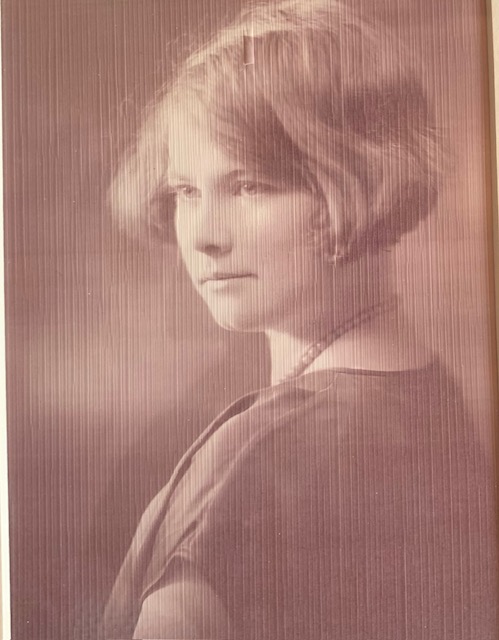
Irene Bahlert, circa 1923

memories, nostalgia, The Holy, Uncategorized

A dream

My dad loved life. He loved my mother, he loved us, and he loved his life. After having been diagnosed with colon cancer in the year after he retired from his work as a steelworker at age 65, he was always grateful for the life he was able to live during the 10 years after. He came to realize that he could live much as he had before the arrival of the cancer, and so he returned as much as possible to the life he’d had before the cancer diagnosis and the colonoscopy. He rode his bike all around his neighborhood in Milwaukee, and he and Mom drove clear across the country from Wisconsin to visit my mother’s brothers in California. Mom and Dad enjoyed every moment of that trip, my father at the wheel, my mother pointing out sites and reading from the AAA trip-tick that guided their trip. Both my parents – my father had an eighth grade education in a country one-room school house, my mother had received her GED when I was in college – were interested in life. As I remember them, I count the quality of having an interest in life as important, not only to them, but to me, as well. I’m grateful.

My dad loved life. He spent many weeks in a hospital bed at St. Joseph’s Hospital in Milwaukee, knowing he would not leave that room – ever. More than anything, he missed being able to ride his bike, especially now that spring was coming to the Midwest; it was April. He was 75; he would never make it to his 76th birthday. Now that I’m 76, I think of that fact – often.

Before I left his hospital room for the last time, before I traveled back to Pleasanton, California, where Jeff and I lived, I said to Dad: “Let me know you are all right.” I was clear: after he passed, I wanted a sign from him. As I said those words to Dad, he didn’t speak. He nodded. He understood.

The dream came some time later, months after Dad died in April of 1986. It was a simple dream, a clear dream. I saw my Dad, dressed in a suit, standing with a group of people, looking away from me. He had a humble look on his face as he stood with the others, his hands held together in a simple gesture, below his waist.

When I awoke, I knew immediately that Dad had kept his promise. He had come to me. And he had let me know that he was all right.

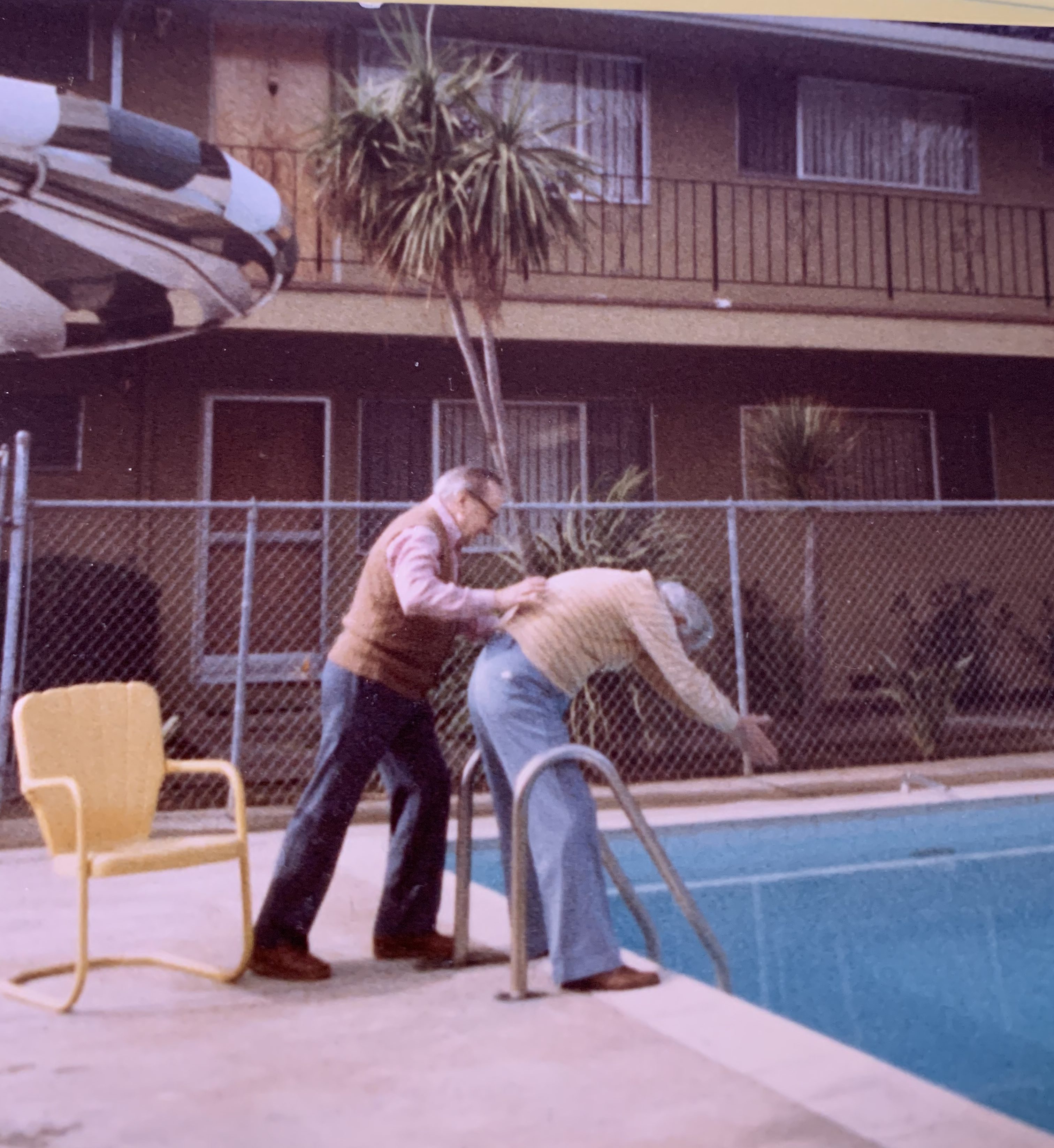
Uncle Johnny must be angry at Dad – he’s about to push him into the pool… They had fun together.
photo, circa 1983, San Jose, CA.

Uncategorized

Holy Moment

IMG_1102

We sat, together on the edge of your single bed,  in that narrow room.

There, you would die, within the year.

I told you that your little brother was dead:  “Uncle Pete died.”

Your green eyes filled with tears – I had seldom seen you cry –

a small sob escaped.

You were remembering, I guess,

those complicated years of disenchantment, and love.


In a moment your face cleared –  you smiled,

and laughed.

Gone.