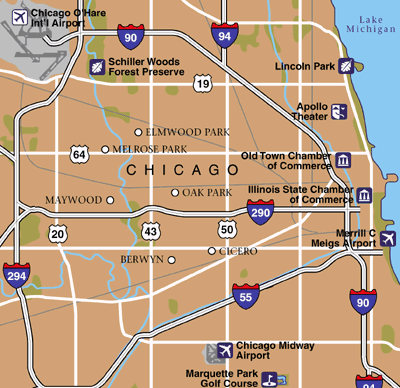
These days, O’Hare Field in Chicago is just another airport. Since many flights have changed over the course of the years we’ve all been living with Covid-19, Jeff and I fly into O’Hare and drive to Wisconsin on our trips “home.”
Flying into and out of O’Hare Field is a sort of home-coming – and a home-leaving – to me.
O’Hare Field stands in my mind as a character of its own. O’Hare Field holds a particular place in my memories. I was in my late teens before I flew in an airplane, and I was in my early 20’s before I met O’Hare Field. As I walked through the terminals – everything so much bigger than in Milwaukee, 80 miles to the north – and I observed the people in that crowded, crowded airport – I was transported into another life, a life filled with a kind of diversity that I had not seen in my coming up life.
I loved it! I loved all the different people, people traveling from other parts of the world, distant places that I was not sure I would ever see. Turks, their heads held proud, covered, and women, long skirts around them as they herded their children from one gate to another. Strangers with their eyes focused ahead of them, focused on where they were going, eyes and hearts reflecting where they had been. I didn’t imagine my life at that point, a life that would include trips to foreign places, distant places that I was not sure I would ever see! And I have seen some – many – of them.
And so my world was opening, before I knew it was, before I was aware. The life that someone had dreamed for me – maybe I dreamed it myself – was beginning to lay itself out before me. I’ve lived most of my life in the Bay Area, a long way from Milwaukee, a long way from O’Hare Field. I often say that the weather is more interesting back in Wisconsin, but the people are more interesting here, the diversity of people who land here in the Bay Area from around the world.
So many of the stories from my grade school years seem to include Nancy, who grew up in the same neighborhood as I did in Milwaukee. Nancy and I are still connected, all these years later. And I always remember that Nancy and her sister, Diane, did not have parents, but that they lived with their Grandma and Grandpa in a lovely house on Medford Avenue, two blocks from our rented flat.
One day, as Nancy and I hung out together, we sat in the kitchen of that house with her Grandma. And although I don’t remember Grandma at all – was she talkative? Was she friendly to me, a friend of Nancy’s? Was she busy, always busy, or did she take time to sit down? That day, she told us about how she met her husband, Nancy’s Grandpa, who sat in the front room of the house. She had walked with a girlfriend to go roller skating, and there she met him, tall and handsome. Oh! he was so funny! Grandma recalled.
I looked toward the room where the old man sat. Handsome? Funny? How could that be? I tried to imagine him that way, but I couldn’t. And Grandma – how could I imagine her as a young woman, out with friends, having fun?
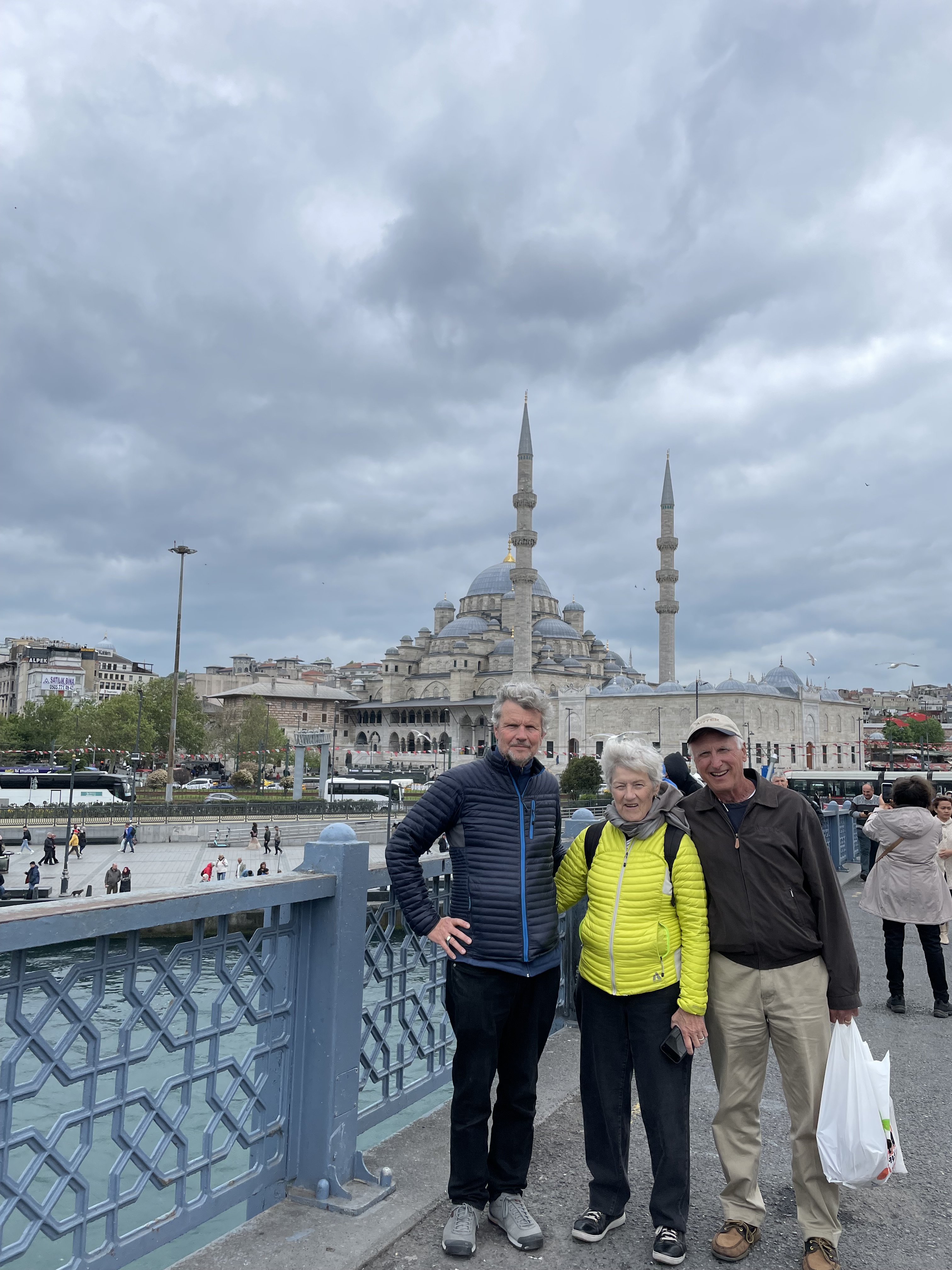
I guess all this means is that it’s a good time for me to be humble. Surely the young people who pass on the street next to our house here in Oakland must look at Jeff, look at me, and have a hard time thinking that we were young, once, too. One day, Jeff was walking to the house from his studio behind the garage, and he heard the young woman who lives next door to us describing her neighbors to a friend: “and there’s a nice retired couple next door.” We’re like Grandma, now, old and remembering when we were young. And grateful, grateful to be here, to “have our health,” as the old-timers used to say. Indeed, we do have our health and I suppose we’re old, now, too.
A nice old couple in Istanbul with a friend, May, 2023
My mother loved books, and although she had not graduated from high school (she received her GED when I was enrolled in college), she made sure she passed on her love of books and learning to her children. So once every two weeks, she walked my sister and me to the Center Street library, where she checked out several books, and where Suzie and I also found books to take home and to read.
Somewhere over the course of my childhood, my mother received a set of bound, green covered books, fictional accounts of a family from Canada: The Whiteoaks of Jalna (written by Mazo de la Roche, Collier and Son, publishers). I still have the six volumes, a wonderful set of books I set out to display on beautiful fir shelves in our living room. When I was old enough to read these books, Mom and I read the books. And we talked about what we had read, those fictional people, whose lives were much more privileged than ours, that beautiful country land, such a stark contrast to the streets lined with narrow, rented flats in the city.
What I remember most about those books is how they awoke my mother’s fancy, as well as mine. We loved the characters. We talked about the happenings in the books, as if we had witnessed these happenings in our own lives. And we admired – maybe even had a crush – on the eldest son, Renny Whiteoak.
Renny was a red-headed, ruddy young man, strong, good looking. Over the course of the books, he grew from a young person into a young man. And both Mom and I fancied, from time to time, that we had seen Renny. Sometimes, as we rode in the car (Mom learned to drive and got her driver’s license when I was in Junior High), one of us would point out a young man on the street: “look, there’s Renny!” And we’d both agree that we’d seen him, again.
Mom sparked my imagination, and I expect she sparked mine because her own was lit. She would remind me – in later years, when I discovered my anger at what my folks had or had not been able to give me – that she had grown up in a different way than I had. And that included making space for books, for imagination, for a world that would grow to be larger than the world I was coming up in.
Now, I love seeing those green covered books on my shelf. They hold a lot of memories for me. Lately, I’ve been reading again – for the fourth time, I believe – Jane Eyre. As I remember the legacy my mother gifted to me, I expect I’ll be reading about Renny Whiteoak again, too. Maybe I’ll even see him on the street.
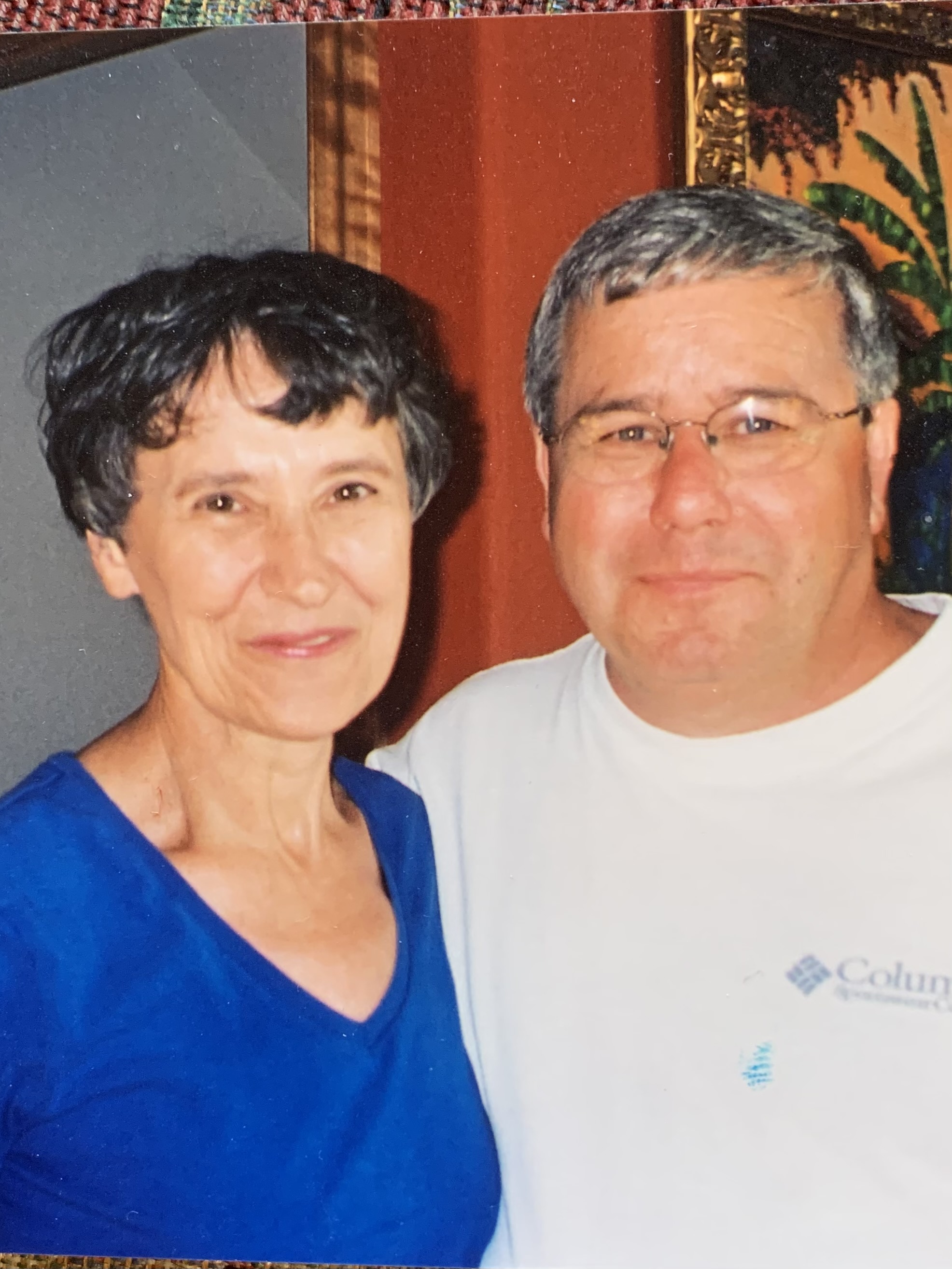
Here’s to Renny! – photo by Mary Elyn Bahlert, 6/2023
2023 marks fifty years since Joanne sat down across from me at my desk in the Social Security office in Green Bay, Wisconsin, smiled warmly at me, and said: “Do you golf?”
I answered: “I haven’t, but I could try.” I have never tried, in 50 years. But Joanne is still a good friend, to me, and to my husband, Jeff.
We were both Claims Representatives at the Social Security office in Green Bay, Wisconsin. I’d arrived at the office in June of 1973, after three months of training in the Minneapolis office. In March, I’d driven my red VW bug to Minneapolis while I received training, and now I was permanently assigned to Green Bay. When I came to the office, I was the first woman to work as a Claims Representative in that District, helping folks who were about to retire to complete their claim for benefits. Joanne would follow, a couple of months later. She’d been promoted from her job as a Service Representative. As a Service Representative, she’d helped folks with issues they had after they had begun to receive benefits: Retirement, Disability, Child’s Benefits. In the time I worked at Social Security, in the Green Bay office, at the office on the South Side of Milwaukee, and later, as a Field Representative out of the Waukesha office, I never ran into a person who performed the job better than Joanne. She read each of the papers that came across our desk each week, filing them in the proper place in her copy of the Social Security Manuel, the working details of implementing the Social Security Law. She was smart and competent, the hardest worker I knew.
We traveled together, driving to the Northeast, to Florida, to Washington, D.C., to Montreal and Quebec on our vacation times. We met one another’s friends. We lamented our lack of dates. We shared recipes. We took rides together on warm summer nights, ending up on the Eastern Shore of Green Bay, watching the sun set over the Bay. When I was able, I moved back to Milwaukee, and Joanne followed, not long after. She bought a little house and she spent her weekends and evenings working hard on that house. Joanne can do anything, in my estimation.
The contractor that helped her with one of her house projects told her that there was a nice, young, divorced man who lived in a house around the corner. He wanted them to meet. Sure enough, Rich and Joanne began to date, and after a couple of years, they married, in the spring of 1983. They moved into his little house in the neighborhood, and later, a larger house. In 2014, they moved into a home they’d built on a small lake in the county to the west of Milwaukee County. Joanne had accomplished her life long dream to live on the water.
I was in seminary when Joanne and Rich were married, and she stood up with me in my wedding to Jeff in Milwaukee in March of 1984. In later years, after I’d moved to California, she and my mother became good friends, baking and cooking together, enjoying one another. When my mother’s memory became bad and she needed help, Joanne visited her and answered her frantic phone calls, until we knew she had to move to be closer to me in California.
A few years ago – 2016 – I answered the phone in the kitchen on Labor Day, in the evening, when Jeff and I were about to go to bed. I heard Joanne’s voice then, and I heard something in it I hadn’t heard before. “Joanne?” I asked. And then again: “Joanne?” She told me that she and Rich had spent the day in Emergency at a local hospital. Rich had been diagnosed with Glioblastoma, an aggressive cancer that originates in the brain. By October 15 of that year, Rich was gone. Jeff and I made sure we cleared our calendars and made the trip to be at his Memorial. There, Joanne was surrounded by so many friends that she and Rich had made over the years, both Rich and Joanne folks who were important to the community in which they lived.
Joanne came to visit us in Oakland this past winter. She’d arrived from Wisconsin, hoping for some nice, sunny weather. Winter can be long and gray in the Midwest, and sadly, winter here was long and gray, also, one rain storm following another for days. But the conversation that started so long ago in Green Bay continued, and since Joanne was visiting, we explored some interesting places in the Bay Area.
Next week, Jeff and I will be flying to O’Hare Field in Chicago, where we’ll rent a car and drive to spend the first night of our trip with Joanne in her house on the water. We won’t run out of things to talk about, the three of us, and together, we’ll make sure we remember Rich, how he made us laugh, how he made Joanne laugh.
I will be the gladdest thing Under the sun! I will touch a hundred flowers And not pick one. — “Afternoon on a Hill,” Edna St. Vincent Millay
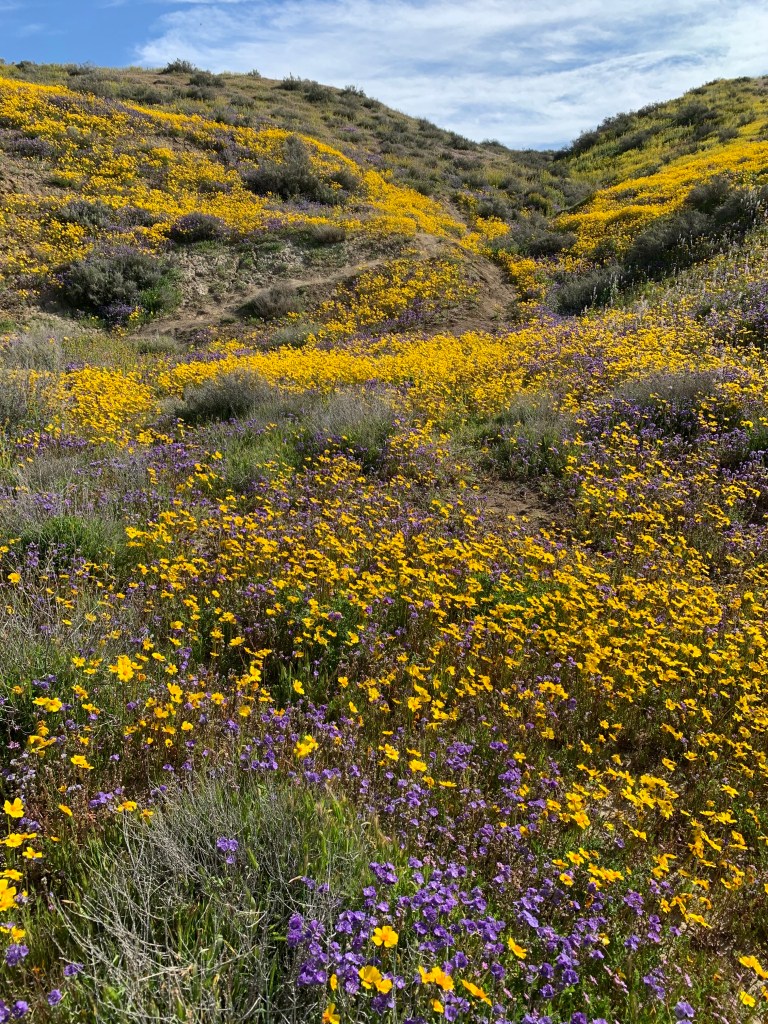
For a couple of days – for a few hours this week – my husband and I and two good friends were, indeed, “the gladdest thing under the sun!” We drove and we hiked up hills and we walked among the hills at Carrizo Plain National Monument in South Central California. The long drive was worth it!
Enjoy this tiny sliver of the beauty that was ours to savor, to enjoy, just for a time:
Carrizo Plain National Monument, photo by Mary Elyn Bahlert, April 11, 2023