Uncategorized

First job

My first job was at the Times Fine Arts Theater on Vliet Street and Hawley Road in Milwaukee. Word must have passed from one young person to another, because most of the other young people who worked at the theater were friends of mine from high school, and even earlier in my life. There was Pat R., her younger brother, Bobbie, my best friend, The Bug (who had received her name from Bobbie at some point), my cousin Mark, and a couple of other kids from the neighborhood.

I could take the 23 bus right to the front door of the theater to start my shift. I was the vendette, my friends Pat and Bug – who worked at different times – were the ticket sellers. We worked for minimum wage – I started at $ .90 – yes, that’s right – 90 cents! – and stayed at that rate for the year I worked there. And I worked no more than 15 hours each week.

My shift started with my walking down the left aisle in the dark theater to a little room off the dark hall behind the stage. There, I reached into the dark room to flick on the light switch, and I reached for a big bag of popcorn that was stored in that room. The popcorn had been popped at a sister theater, larger, with its own popcorn popping machine. I carried the big bag of popcorn back to the narrow aisle in the lobby of the theater, where I dropped the popcorn under the lights to warm. I had picked up some real butter in the back room of the theater, too, and I put that in the dispenser to warm and to melt. Then I was ready for customers.

Times Fine Arts Theater was not well-attended. Its fare was mostly “adult pictures,” although not what we would call X-rated these days. And then, the Theater showed one feature – not several in different theaters, which is common today. From time to time, I’d catch a few minutes of the movie currently running. But mostly, I stayed behind the counter where I sold popcorn and candy from a selection that was locked behind the counter until I opened it for my shift.

During the movies, I could talk and have fun with my friends who worked along with me. The usher stood at the doorway to the outer hallway, which was cold in the winter. The ticket seller had an electric heater which she had plugged in as soon as she arrived for her shift. Sometimes, crushes developed there between various couples, mostly short-lived.

I credit that job as marking the beginning of my life-long addiction to popcorn. (During COVID, popcorn-making in a pot on the stove became part of a daily lunch ritual with Jeff). I kept a small portion of popcorn behind the butter machine, and I snatched another kernel of buttered corn – real butter – from time to time. During COVID, popcorn-making in a pot on the stove became part of a daily lunch ritual with Jeff.

At the end of our shifts, we carefully counted out what we had made that night, and inventory of the candy in the glass cabinet that I opened from the back was taken. Then, I locked it up again, stuffed the remaining popcorn into the large plastic bag I’d stashed under the counter, and walked it back to the room behind the big screen.

When the shift was over, my Dad’s dark blue Chevy Bel-Air coupe showed up in front of the doors, and I was on my way home. Later, the Bug had access to one of her parents’ cars, and she’d drive me home, the two of us talking and laughing all the way.

Uncategorized

As we walk among the graves

Mornings,
we walk among the graves,
up hills and down.
I read the stones, glean the stories buried there.
A child, born and died, 2 days old.
Her mother gone, too.
Beloved father and mother,
pictures frozen on the stone,
as if they look the same today.
One young man, mother’s son,
died in war,
before he lived his life.

Mornings,
I count the years of the beloveds
as we walk among the graves.
I reckon those whose lives I now outlive,
some by many years.
I drift off, recounting my own life:
who was I, then?
The time has passed away,
and so quickly.

Mornings, 
I am sad as we walk among the graves.
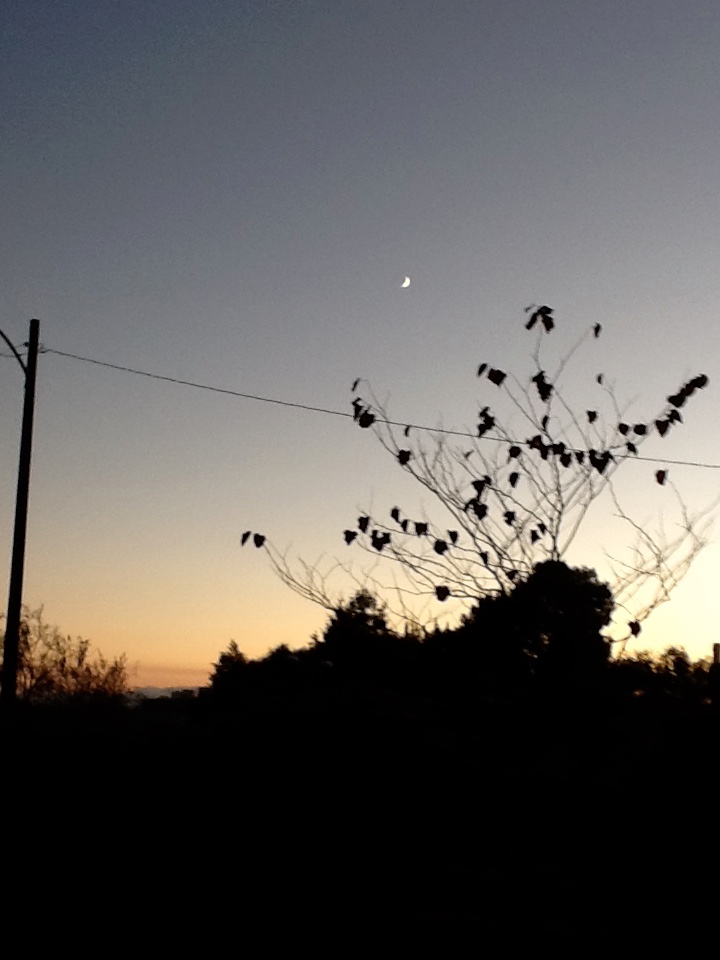
I look into the sky, beautiful.
I see the city in the distance,
all that life booming and moving,
all those moments of importance,
passing too –
quickly.

Mary Elyn Bahlert, 10/2020

From the beginning of COVID sheltering-in-place, in March, 2020, through the long months that followed, Jeff and I had a morning routine. We’d rise from bed at 5:30, make two dripped cups of coffee, and sit together in the living room. After a time, we’d get dressed for the day and head outside for our morning walk: St. Mary’s Cemetery, just a block away from our home, has beautiful views of San Francisco Bay from the top of the hill. Each day, we’d pass the same graves, by the same route, talking with neighbors, stopping to play with someone’s dog, greeting those who passed by – some for the first time. We made friendships on those walks, and we heard plans change as a young couple purchased their first home in another neighborhood, some friends only people who passed us with a nod and a “good morning,” never to be seen again. This poem is from the time of COVID, in 2020.

“Mornings,
I count the years of the beloveds
as we walk among the graves.
I reckon those whose lives I now outlive,
some by many years… ”

Uncategorized

Mr. Fischer

November 22, 1963. I was in my 9th grade German class, Mr. Fischer at the front of the room, when his teaching was interrupted by the distinctive ringing of the public address system, the large speaker in the right hand corner of the room, almost directly across from my desk.

I don’t remember what words came drifting down to us in our desks, bolted to the floor in even rows. What I remember, as the announcement of the assassination of President John F. Kennedy as he rode in the presidential motorcade in Dallas, Texas was reported to us from the intercom, was the face of Mr. Fischer, tears streaming down his cheeks. He made no attempt to cover his face. His eyes were not looking at all of us, the young people whose various motives had brought them to be enrolled in his second-year German class. His eyes were somewhere else in their sorrow.

Now, I remember that moment in detail, the detail of his face, larger than life, in front of the desks filled with young people who would not, could not understand the enormity of what had happened to the President, and to all of us. I had seen my father cry – never my mother – and so it must not have struck me as strange to see the kind man cry.

Now, I also – in my considering that moment in our lives over the years – believe that Mr. Fischer, so many years older than all of us sitting before him – had witnessed in his own life and history such happenings in Europe. And so he was living again in his new country a repeat of history. A sordid history.

And for the first time in my life, I came to know that not everyone saw the state of the country, the state of the world, as we did. I mentioned something about the assassination to my friend Carlene, to be met with her cryptic response: “we didn’t like him.” That was jarring, but I said nothing, taking it in, and maybe seeing for the first time the great difference between Carlene and me, between our families: her father an engineer in an engineering firm, my father a union steel worker with an 8th grade education. I saw something clearly, then, in her response. I saw something clearly about her, something that would never leave me. And I understood that we were different, and that other people saw the world differently. I understood, and for the first time.

And I knew I would stand with my people.

*

Now, as the nation struggles with the sharply drawn political/ideological differences of the people, those lines are drawn more clearly than those first decades following World War II. Vietnam and what it would bring to all of us, in particular to all of us in my generation, did not hold an important place in our minds at that moment. That would come later, and the years of unrest – brought to a head in my generation – were before us.

I remember that moment, Mr. Fischer – as a teacher, always larger than life in my own memory – standing, tears on his cheeks. And always, I’m grateful to him and to the others who influenced me, who formed the shape of my youthful world, whose influence would never leave me.

*

Remembering, from the autumn time of life… photo by Mary Elyn Bahlert, 10/2024, Wales, Wisconsin

memories, nostalgia, remembering, Uncategorized

The outfits

There was always room for a sewing machine in our upper flat. Looking back now, I see how cramped those working class houses were, their windows covered with curtains to keep out the cold of the freezing winters in the Midwest. But there was always room for Mom’s sewing machine.

Well, it was Mom’s sewing machine until Suzie and I learned to sew. Then, if I was working on an outfit with a Simplicity or McCall’s pattern, chances are that either Mom or Suzie was working on something too, and when I stepped away from the machine to get another piece of fabric, carefully looking at the directions – I’d find a spool of thread in a color that didn’t match my material already in the machine. The sewing machine was ours – the three of us.

Like a lot of mothers over time, Mom was happy to have two daughters for her to make homemade clothes from the patterns. She must have worked many hours when we were at school and when Daddy was at work in the steel mill. And because she was happy to have two daughters, she was extra happy (I expect) to be able to make them matching outfits. To make us matching outfits – Suzie and me.

One Easter, Mom made Suzie and me matching dresses, including capes lined in pink fabric. She bought matching Easter hats – “in your Easter bonnet…” and Suzie and I were models, standing together on the front lawn of the flat, looking into the camera.

Mom made us matching outfits, that is, until I told her at some point that I didn’t want to be dressed like my little sister. Thankfully, Mom agreed – or at least understood – because I heard her tell the story to my Auntie Anne not long after. And so the days of matching outfits came to an end.

+

We are well into the 21st century now, and those days in the cramped flats – winter and summer, and fall and spring, when the fragrance of lilacs in the huge bushes in front yards that adorned the streets wafted down to walk with us – are well in the past. It’s interesting that some of the feelings remain, filtered through the grief at remembering all those who are gone now, and how they loved us, each in their own way. How their dreams still live in us.

And I’m grateful for my mother – coming from poverty and abuse – and how she crafted the best life she could for us, for us all. How she protected us, to the best of her ability, how she made a home for us, and how happy she must have been to sew Easter outfits for her two daughters.

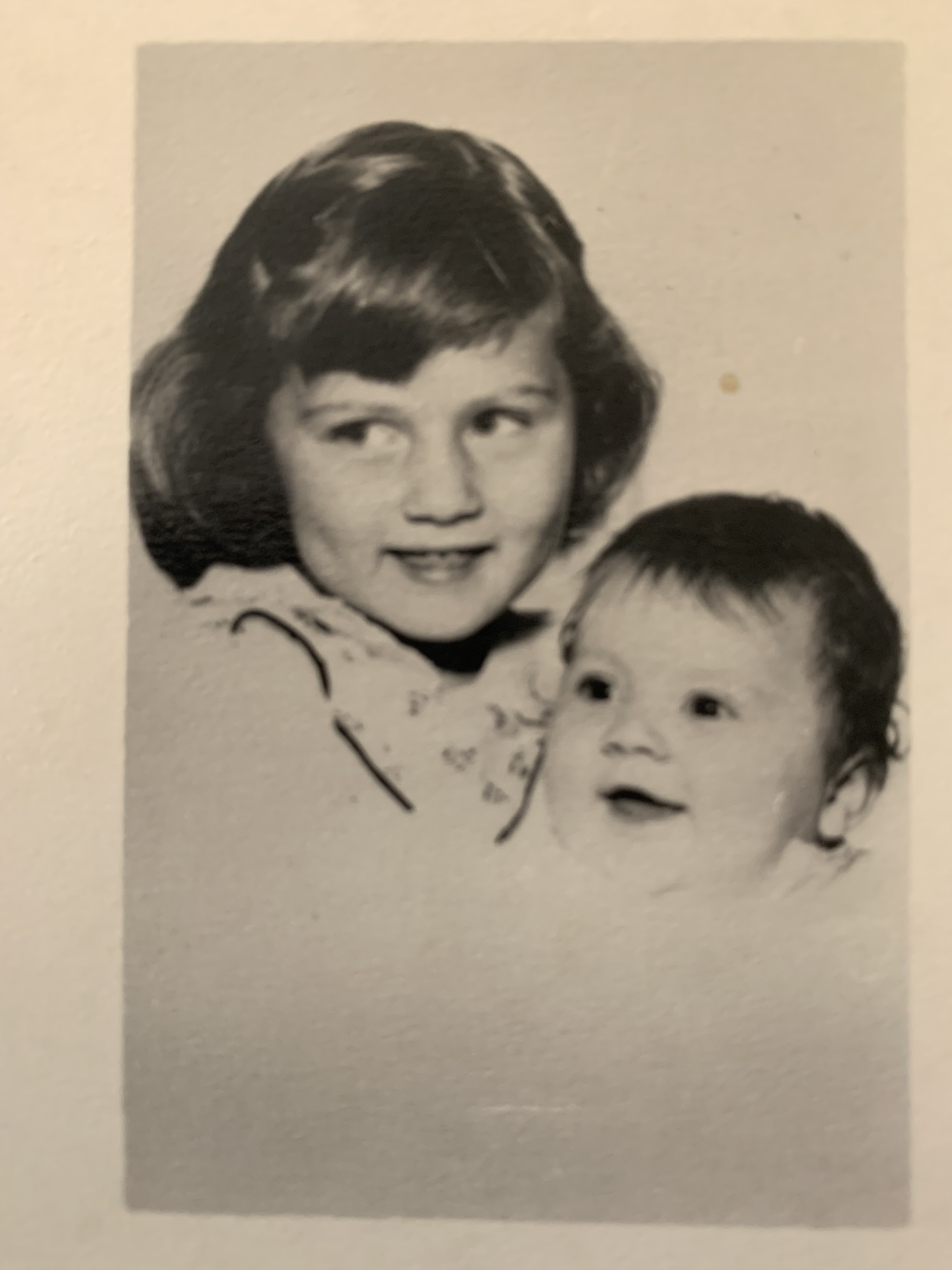
Suzie and me, circa 1954

memories, reflecting, remembering, Uncategorized

Grandma Bahlert

My most vivid memory of my Grandma Bahlert is seeing her – tall and thin – as she opened the door of the little cabin that Uncle Erdreich had built for her and Grandpa, right behind his and Auntie Irene’s house, on the road in Baileys Harbor that led from Highway 57 to a gravel road deep in the woods, a swamp.

Daddy and I had made the long drive from Milwaukee to Baileys Harbor on a Friday night, and we had left Momma and the baby and Ronnie back at home in Milwaukee. Momma and Daddy must have agreed – and known – that this was to be an important trip, and so Daddy drove the four + hours along Lake Michigan when darkness had already descended, to see his Mother. I didn’t feel well on the way, and so I lay down in the back seat, and when we entered Door County, I watched the shadows of the trees that stood, tall and deep, dark, along the highway. Daddy drove on.

When we arrived at the house, Daddy and I walked up to the door of the cabin, and Grandma Bahlert stood at the door to “greet us,” she would have said.

Auntie Irene’s buoyancy, her love of children, must have greeted us first. Later that evening, I would lay on a couch in the living room of the pieced-together house that Erdreich had built – a house that grew longer and more filled with furniture and knick-knacks as the years passed. And when I couldn’t get to sleep, Auntie Irene went next door to get my Daddy, who lay with me cuddled up against him as he fell asleep on the couch.

In her letters – written in a primitive, elementary school handwriting – to my folks, my Grandma Bahlert had mentioned, again and again, “my little Mary.”

A few months later, she was gone. Auntie Edna – who always took charge of such things – had called us on the telephone, and when Daddy came back to sit in his chair, he cried.

Years later, I would ask to see Grandma in a dream, before I fell asleep. She didn’t come for many nights, but then I had a dream! I was standing at a grave, Grandma Bahlert’s grave, and I was alone. When I awoke, I knew the message of the dream to me: “she’s really dead.”

+

From where I sit at the dining room table where Jeff and I eat dinner together every evening, I look out onto the beautiful trees that fill my sight at the dining room windows. In the center of the windows, on the counter on which I place beautiful things to enjoy, I have placed two black-framed photos, both in black and white. The photos are old, and the manner of dress attests to that. On the right are my Grandpa Markowski, Grandma Markowski, John – Ivan, about 4 years old – standing in front of them in an old-fashioned sailor suit. They are not smiling, as seems to have been the custom when taking pictures at that time.

To the left is another photo, a photo of the Bahlert family. They were good-looking people, all. The year was 1910, judging from the ages of the children. On my grandmother’s lap is a baby with big brown eyes, looking, like the rest, into the camera. The baby is my father, Frank. His twin, Carl, had already died, only a few months old. Grandma has a small smile on her lips as she holds her baby. Maybe it was for the picture, or perhaps she was happy to be surrounded by the little ones she loved so well.

I think of them often, I remember my Grandma Bahlert’s love for me, always. When I return to Door County, filled with tourists now, I go by the quiet, less traveled roads to the graveyard at the Sister Bay Moravian Church, and I always stand at the graves for many minutes, thinking of them having come to this place, at the end.

A few years ago, I messaged my first cousin’s son, Eric, to tell him what I remembered of his Grandpa, my Uncle Johnny – Ivan – my mother’s eldest sibling. I told Eric how his Grandpa had loved him so much. To my message, Eric replied: “I remember the love.”

Grandma: I remember the love.

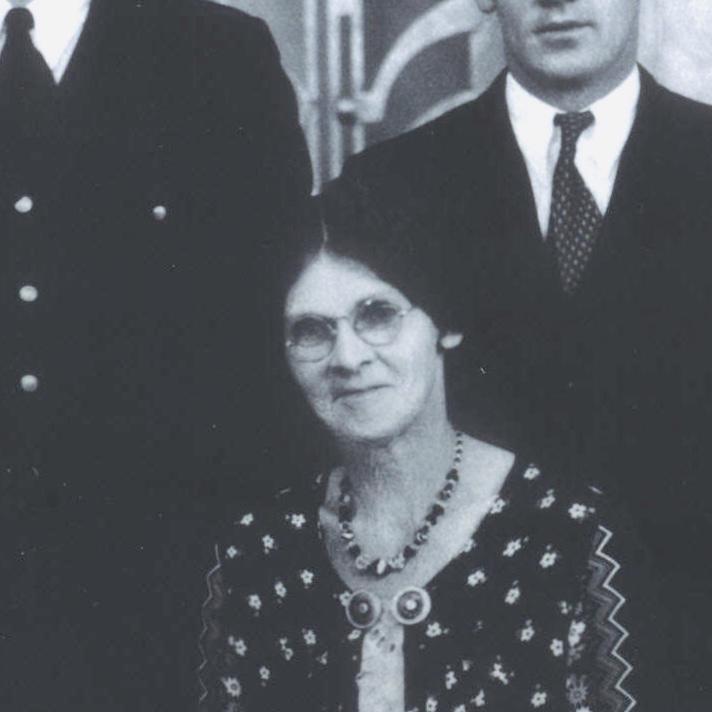
Grandma Bahlert, circa, 1930’s