Uncategorized

It’s Easter

Very early this Easter morning, a couple of hours before sunrise, Jeff and I were both awake to hear the screeching sounds of a “sideshow” somewhere close to our street in Oakland. Young people connect with one another via text to set a time and place to come together at an intersection in the city, where bystanders watch as the fast moving cars in the intersection screech around and around the circle formed by the intersection itself. One disturbing memory I have of having served as a pastor in Oakland is of the day I received a distraught phone call from the mother of a teenage girl who had been killed the night before while she watched a sideshow from the side of the street, a bystander, an observer. The sanctuary was full the day we held the teenager’s funeral, her casket open as the community gathered to mourn her passing.

When I heard the screeching tires last night, I was reminded of that day.

Last night Jeff and I listened as the screech of tires on pavement made its way into our bedroom through the open windows, open to bring in the beautiful night air of spring. The sound of a sideshow is another thing: the tires of the cars screech as they circle the chosen intersection. Today as we drove home from church, we looked carefully at each intersection until we saw the one with tire marks that marked the activities of the night before Easter. The sideshow last night was only two blocks we from our house.

And we honored Easter today by going to Mass at a parish in North Oakland, where the people sang and shouted: “Christ is Risen!” And Christ, indeed, was risen in that place, a colorful group of worshippers remembering and honoring the High Holiday of the Christian faith. In worship we remembered the people of the world who are struggling to survive in the midst of horrific wars: Ukraine, Palestine. We like this parish for its diversity: class diversity, racial diversity, diversity of acceptance of Catholicism – or not. To us, the people there represent the diversity that is Oakland, which has been an important part of our making our home here for many years.

We chanted together with the other worshippers, laughed and sang with them, and when we left, we felt as if we had, indeed, worshipped on this day, on Easter Day, remembering the old, old story, so badly abused and harmed by well-meaning and damaged human beings. Even so, the story remains. We have known its message to be true in our lives.

It’s Easter.
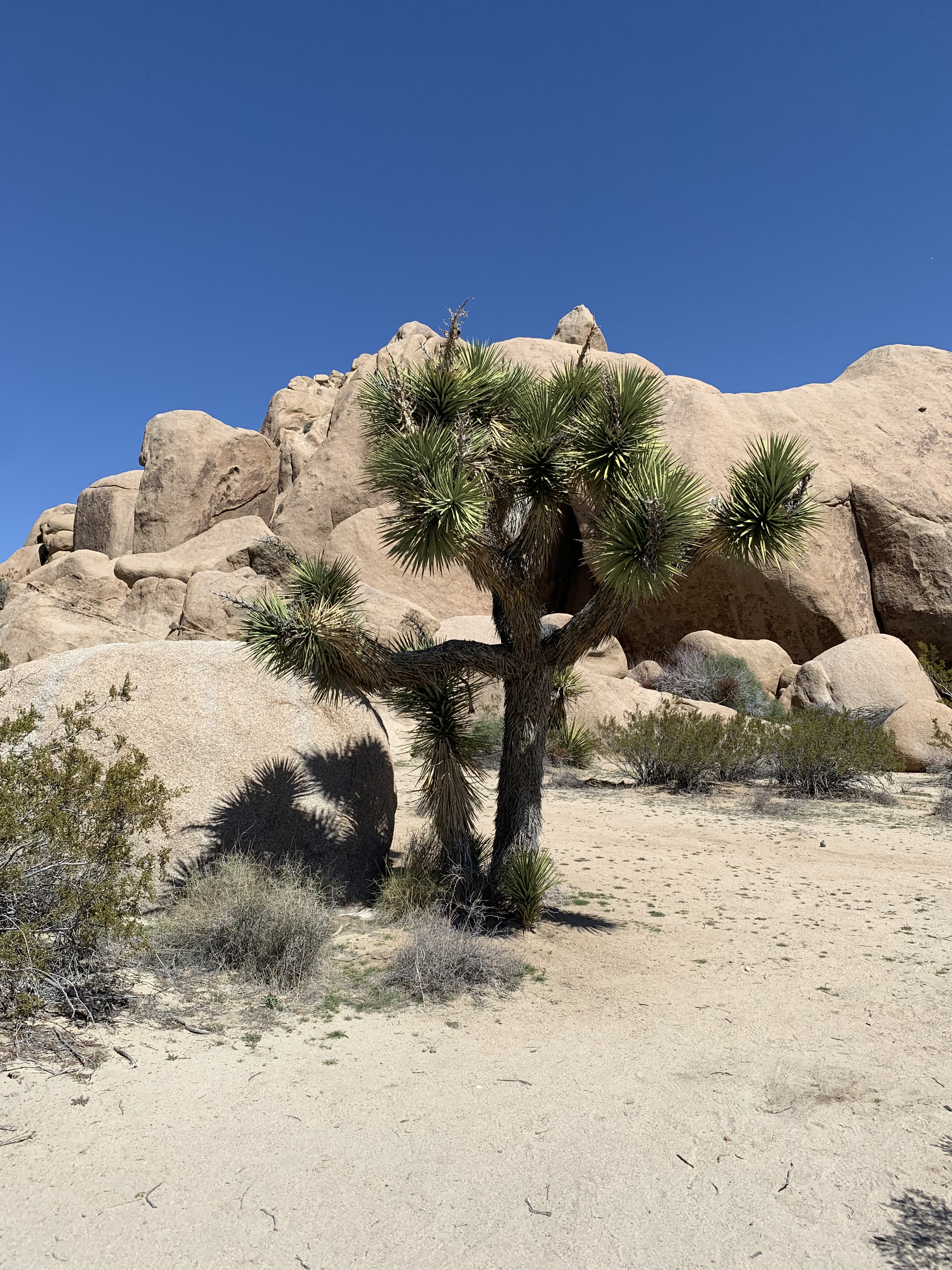
Easter time in the desert, Joshua Tree Park, Mojave Desert. photo by meb: 3/2024
Uncategorized

Winter car wash

Over the course of my college years, while I lived at home and attended school at the University of Wisconsin-Milwaukee, I worked weekends as a cashier in a car wash, 20 hours per week, Friday, Saturday, and Sunday. There, I was introduced to people and cultures outside my personal experience, people I came to respect for their hard work, their ability to make their way in the complex situations which arise when working with the public.

Many of the young men who worked on the cars, who wiped them down before driving them onto the belt that took the car through the wash were men, African-Americans, who had arrived in Milwaukee from the Jim Crow South, although I didn’t know that at the time. When work in the car wash was slow, I talked to Acey, who spoke in a slow Southern drawl, and who said again and again, as if to himself: ”we just good friends, that’s all.” I knew that he was poor, and now, years later, I think that he was illiterate, as well. He spoke about his wife and children, at home in some neighborhood I did not know, where he took a city bus to home every day.

I met a smart, likable young man with a good manner. After a time, he quit working at the car wash, and one day he arrived with a brand new car, dressed to the nines in a suit and tie. We chatted for a moment as he paid his bill, and I asked him what he was doing now. Looking at me, he said: ”I’m a pimp.”

I’ll never forget the kindness and people-smarts of two of the managers – who managed both the employees who cleaned the cars, and the various problems that came with dealing with the public. One, Jim, was a white man with a quiet manner, kind, and well-spoken. Another, Montell, was a black man who’d survived throat cancer and spoke by putting his fingers over the hole in his throat, the result of a layrngectomy. His dark eyes danced as he teased and talked, sometimes, as if he had a secret that he could not share. Both men were excellent at disarming confrontations with customers, and they stood behind the men who worked for them on the wash line. They were loyal to the man who owned the car wash, and both worked for him for many years. 

Marilyn, who was the bookkeeper and secretary who worked full time during the week, came to be a role model to me of a woman who was so different from my mother, Marilyn, who laughed and was cheerful – all the time, it seemed to me. I admired her extraversion, her ability to do more than one thing at a time, and her kindness and acceptance of us all. At the holidays, she was the one who purchased gifts for us all on behalf of the owner. 

Summer weekends, I could bring a book or even two with me to sit behind the counter to read where the cash register and I waited for a few customers. 

Winter was the busiest time, especially weekends that followed a week of snow storms. The salt on the roads of city streets was damaging to cars, and it was easier to have a car washed in the machine than to do it in the driveway or on the street in front of the house. And so my fingers flew over the rows of the keys of the cash register I operated manually, adding up as many as 100+ customers/hour, most who paid cash, and an occasional credit card payment. One Saturday in a cold January when we’d had a week of snow storms, I stayed standing at the cash register for hours, taking payment; I had to take a “powder room” break, but the owner, who passed through several times an hour, couldn’t spare a moment of my fast and accurate work with the customers, so I waited until the last car went through the wash, the doors to the business locked, before I used the rest room.

“I made it!” I said as I came out, thinking of all the hours of hard work we’d all accomplished. The owner laughed as I said it, clearly thinking I’d made it to the restroom in time. That, too!

I first saw my future husband, Jeff, at the carwash, but I didn’t know it at the time. Like all the other men who worked hard during the week and wanted to prevent damage from salt on their cars, his dad brought Jeff and his brother Randy with him to the wash, stopping at the cash register and walking through the long hallway of windows, watching their car go through the loud machines. 

At the end of my shift, I tallied up the profits for the day, totaling the money in the cash register, balancing the books to what the register had recorded, and I left for the day, to take the city bus back home. 

Uncategorized

remembering Verdell

In my mid-twenties, I was searching for a community. At the time, I didn’t know what that community would be for me, but I was drawn to go to church, since that was what I understood to be community. And, as I’ve written before, deep inside me – not spoken aloud – was the seed of a call to ministry, to a particular vocation.

And so I visited churches, one Sunday after another. My only experience of “church” had not been positive – even as a young teenager, fundamentalism did not make sense to me. But I was looking for community, for a community of people with a heart for social justice, activism. I set out to find that place – a place I did not know existed.

And so I visited churches, one Sunday after another. As a natural introvert, it is difficult for me to enter a community. Maybe I was shy. I know I was uncertain. But I must have known what I didn’t want, as I visited one church after another. I made sure to sit in the last row of the pews, so that I could make a safe and fast exit – which I did, regularly. Or I might find myself in the Narthex of the church, the hall from which the sanctuary is entered, looking for someone familiar. Again and again, when I’d see someone, when I’d catch their eye, they would turn to look for someone they knew. Not for me, not a newcomer, longing for a community.

Years later, as a pastor, I would repeat this story, again and again, to the congregations I served. I would repeat the story because I knew the people who came to those places were like me, longing for a community, longing to be gathered into the community they were visiting.

My looking took me, finally, to Kenwood United Methodist Church on Kenwood Boulevard in Milwaukee, across the street from the Student Union of the University of Wisconsin-Milwaukee, where I’d received my Bachelor’s Degree. And so, one Sunday, I held my breath again as I entered the sanctuary, and found a safe place to sit – a place that could assure a fast exit when service was over, if needed.

The woman who was already sitting in the pew to my left was an old woman, to me. But she noticed me. She looked at me! She told me her name – Verdell xxxxxxxx. Later, I would learn Verdell’s nickname in the community – “the grandma who went to jail,” for protesting issues that were important to her, civil rights. I didn’t know that then, when Verdell looked right at me and welcomed me. She told me that after church, she’d take me to meet Harvey Stower, the Young Adult Minister.

And so she did.

I have repeated that story to many congregations over the years, and each time, I put out my arm, my hand, and I tell the people that on that day, Verdell reached out her hand to me, and brought me into Church. When I arrived, lonely, looking for a community, Verdell was there, reaching toward me.

I’ve spent more time in my life in “Church” than is necessary, I’m sure! But at that point, I needed a welcome, a warmth, a connection. Apparently, when that connection was missing, I knew it, and I moved along. Apparently, when that connection was made, I knew it, and was gathered in.

Verdell introduced me to Harvey Stower that day. Over the course of my lifetime, I’m not sure I’ve ever met someone who was more extraverted than Harvey Stower. Years later, he’d take his extraversion into service as a Representative in the State of Wisconsin. But at the moment I needed to meet Harvey, he was there. And if Verdell reached out her hand to me and brought me in, Harvey helped me to connect. He saw me. His wisdom and his work on behalf of justice shaped my own call to ministry, a call that was rolling around in me, silent, at the time we met.

*

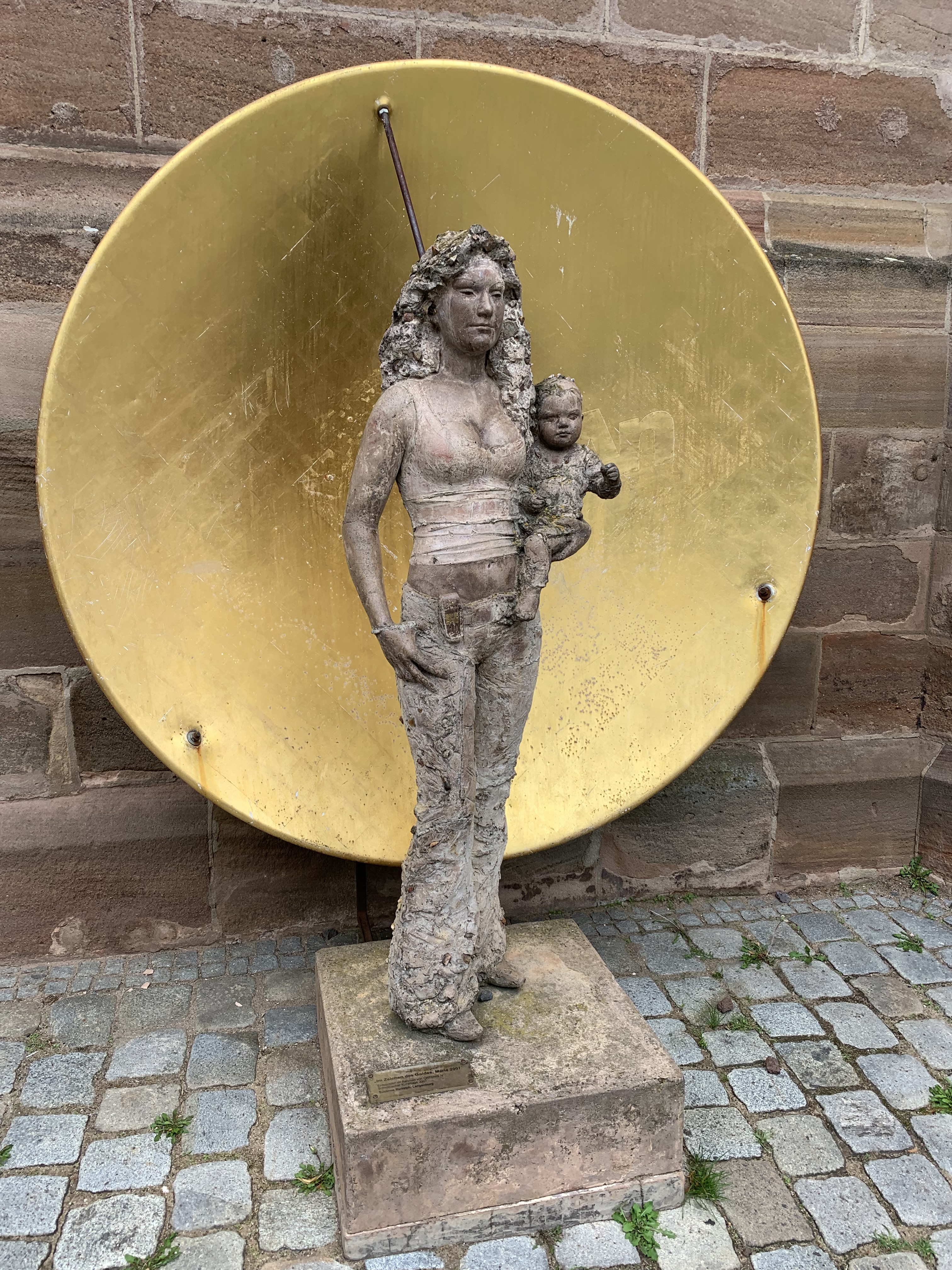
Jeff and I have just returned from three weeks in Germany. We’ve returned from our first cruise, which began our trip, and from four days spent with friends in Nuremberg, where we walked the city and saw the site of Hitler’s rallies, the site a warning to all of us to never forget what began there, and ended there. In Nuremberg, our friends made sure we visited several churches. Jeff and I have spent a lot of our lives as pastors. And we like to see the churches in Europe, hundreds of years old.

The simple, kind, warm gesture that Verdell offered me that day continues to ripple in my life. I don’t know if I ever told her. “Thank you, Verdell.”

Uncategorized

Magic

Magic seems to permeate this season of the year, the time when the darkness descends upon us – literally – and we are full into the darkness. In my life and spiritual practice, it is certain that when I descend into the darkest place, the light, the new emerges. The promise of those who have gone before is that there will be light, there will be another day. And another day arrives, new – Magic.

When I was a child, my sense of wonder provided a kind of Magic. On Christmas Eve, my non-churched family attended a church to be present for the children’s program. I was among the children who stood to recite the Christmas story, verse by verse, for the gathered adults, the sanctuary filled with lights, the light of candles, the smells and sounds of a place with a cold winter: cold hands and faces, warm wool outerwear. What I remember about those Christmas Eve times is the sense of Magic I held as a child – that Magic itself something holy, something that would pass away, away from me as I entered puberty and young adulthood. Nothing can replace the Magic of that time and place, still clear in my memory.

A few days ago, as the light of the day was ending, Jeff finished his work on the strip of land we call, “the Panhandle,” where he has lately installed a neighborhood library – a beautiful wooden box complete with a glass door that a friend crafted to suit the vision Jeff and I had. As soon as the library was installed, a few books appeared. One day, I watched as a woman I did not know stopped her car and delivered several books to the library. Our vision has come to life! Our vision is useful! Our vision is beautiful!

That day, as the sun set over San Francisco Bay, barely visible from our windows on View Place, Jeff stepped into the kitchen and looked out to the West as the sun was setting. He had cut the branches of a tree in our yard that had hid the site we were seeing. Jeff called me over to stand with him at the window. And there – there! – as if the moment was for us alone – our own screen on the sun setting over the Bay – the outline of downtown San Francisco, coated in grey fog and lit by the lights of the City – shone before us. Magic! I named our view, “The City of God,” and we stood for a few moments as the vision faded, as the sun sank lower into the Pacific beyond the City. Then – gone.

The simple gifts of light, of a tree with golden leaves about to fall, of my cat who comes to sit close to me on the couch to receive a good petting, of an old recipe for borscht that gives us a week of meals. These simple gifts are Magic to me.

“The City of God,” photo by Mary Elyn Bahlert, Oakland, 12/2022

Uncategorized

Bishop Earl

One Sunday morning in 2002, as I was in the sanctuary at Lake Merritt United Methodist Church in Oakland, preparing for worship, I saw an elderly African American couple I had not seen before. It was my practice to arrive early, while the choir rehearsed, to greet folks I knew, and to personally welcome people I did not know. When I walked up to Joanne and Earl that morning, they stood, and Joanne spoke first, introducing herself, and then her husband: “this is Earl,” she said. “He’s a Bishop,” she added. I saw the look of pride that moved across his face at that moment.

An African Methodist Episcopal Bishop, Earl had chosen to have a community outside of his denomination to make his home in retirement.

I came to know that every emotion showed in Earl’s face: tears shed, eyes shut tight in laughter, a wandering look when he was wondering. Every emotion showed and was quickly replaced by the next emotion. Sometimes anger and frustration, the next moment, joy, laughter. After a time, Bishop Earl volunteered in the church office, and often as I worked in my study there, I would hear his booming voice as he answered the phone, and laughter – also booming – from the office staff, and from Bishop Earl himself.

My husband has an expression that he saves to describe certain people, and I think it applied to Bishop Earl: “he was helplessly himself.” And for those of us who knew him, his being himself filled our lives with kindness, with sincerity, with happiness.

Over the years I pastored at Lake Merritt Church, Earl and I spent lots of time together. One day, we visited the Mountain View Cemetery in Oakland, where Earl parked his car and walked to the stone crypt that held his oldest daughter. He cried, and his little dog, who stayed in the car with me, whimpered as she watched him in that sad and lonely place. When he returned to the car, Earl was all words again, and soon we were laughing, enjoying the day. Sometimes, Earl would take me to another of his favorite eating places, and we’d talk and laugh over lunch together. When my mother died, he was one of the first to talk to me, to offer his condolences, and he preached for me that day after she died, on short notice.

I can remember the exact place in Oakland where, stopped at a stoplight, Earl and I were talking about our favorite kinds of music. I told him that I loved the blues. He burst into song, singing the blues – in his deep, resonant voice. We laughed, and laughed again!

My mother-in-law, Betty, was a reserved woman from a small community in Wisconsin. On one of our visits to see her, she answered the phone to hear Bishop Earl asking to speak to “his children.” She handed the phone over to me quickly, not sure what to make of this!

Joanne’s health failed before Bishop Earl’s, and they moved away. On one of his return trips to Oakland, where their daughters still lived, Earl invited me to hear him preach at a small church near my home. That’s the last time I saw Earl; as I walked away, I watched him court the women, speak with respect to the men. Many years have passed, but I still think of him when I pass that little church.

There was no one like Bishop Earl. I miss him.