Uncategorized

“All stories are true.” – Ibo proverb


about-storytellers“All stories are true.”

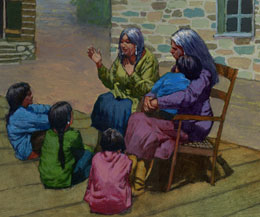
There is great power in stories. This is basic to the human experience. When we think of stories being told, the image of ancient peoples sitting in a circle around a fire comes to mind.  Perhaps the gift of one person in the ancient community was the gift of story-telling, and so they were designated to tell the story of the community. The story brought the people together, and the telling of the story brought the people together with their ancestors, their history, and to their unconscious connections to past, present, and even future.

We still tell stories. Something in us wants to tell stories, and so we do. How often have we told one another where we were and how we heard about the events of 9/11, when the story of our nation in this post-modern era was forever changed?  Why do we turn on the evening news, except to hear the story of the day, a story to which we are connected, like it or not?

What story of your own do you tell, again and again? What is the story of your life you would tell at this moment, at this time?

There is great power in stories. To heal from trauma, we must tell someone our story. Sometimes the details of the story change, but the story must be told, over and over and over again, to release the trauma. It is our need to tell the story. It is also our need to find someone who is safe to be the recipient of the story.  When we are grieving, we need to tell the story of our grief, of our loss, of our troubles.

We need to speak our story to someone, to a community, that is safe.

Who is safe? Well, I can say who is not safe. Someone who interrupts to insert their own opinions or their own story, is not safe. Someone who wants to give advice is not safe. Someone who wants to change our story for reasons of their own is not safe. Someone who has an interest in keeping us trapped in our story is not safe.  Sometimes our closest friends are not safe.  Maybe we need to find others to listen, other friends, who are safe.

Certainly, someone who does not honor the importance and the privilege of hearing our story is not safe.  Do not share your story with someone who cannot be trusted to keep the story safe, safe from telling others, safe from gossiping about your story.  You are the keeper of your story, and as the keeper, it is your responsibility to care for your story, as you would a child, keeping the story safe from those who will abuse the story.  You are responsible for your story.

There is great power in stories, and stories must be told. Our healing is in the telling.

Sometimes, stories need to be told again and again until their true kernel is discovered, through the telling of the story. Sometimes, we tell the story over and over again, as if we are turning a beautiful, rough rock in our hands, looking at it from many angles. We feel it, we sense it, we see it, we run our fingers over it. And so it is with the telling and the re-telling of our stories.

“All stories are true.” The details of a story are not often true. We see this in ancient scriptures, when sometimes the same story is told in many versions, from chapter to chapter, book to book. The details change. But the power of the story remains.

How often have you heard someone you love tell a story, and as you listen, you realize that the story – which you have certainly heard many times before! – is being told for a certain effect: to impress, to remember, to grieve, to instill with a particular meaning. And so you have witnessed, you have known that the details are not always true, but the story remains, the story is true.

What is your story? Who will you honor by telling your story? Choose carefully! Choose someone who is safe to hear your story! Choose someone who will honor your story – honor you – by listening, quietly, with great presence, with respect. Choose someone who will not degrade your story by telling it to others as gossip, as if the story was not rich and important. Your story – whatever it is! – is your richest gift to the world.

When you tell your story, you begin to see yourself in new ways. When you tell your story, you see the empty places, the things that are missing. You see the characters in the story, and you see who has had power in your story. As time goes on, and as you tell the story again and again, you begin to see the shifting of the story.

Perhaps you need to become the hero of your own story, because you are the hero of your life. Life is difficult, for all people. When you tell your story, you begin to look at it differently. Maybe you see the parts that are missing, the parts you are not telling, that you are ashamed to tell, that you have been told are not worthy to tell. This is not true.

And when you tell your story, over and over and over again, sometimes you may find that you are tiring of your own story! Some things that were true are no longer true, and will never be true for you again. You have grown. Maybe you’ve outgrown the story you have been telling. It is time to tell another story.

“All stories are true.”

Uncategorized

“What’s Happenin’ – by poet Peggy Trojan

th

What’s Happenin’
by
Peggy Trojan

Selma Makkela
printed all the news fit to print.
The Hemmilas had a boy,
Erickson’s cow was hit by lightening,
The Polks motored to Chicago
for their grandson’s graduation.
Nothing to cause you anger
or “take to bed worry.”
When you saw Willard
at the feed store, you could ask how
Mildred’s broken leg was coming along,
send an anniversary card
to the Mattsens,
keep an eye out for
Johnson’s lost calico cat.
The news connected you
to community,
safe in the knowledge
you were informed enough
to know just what
was going on.

Peggy Trojan retired from teaching English to the north woods of Wisconsin.
She enjoys quilting, gardening, picking berries, and writing poetry. She is a
member of the Wisconsin Fellowship of Poets.

I had an aunt, Edna Johnson, who also “printed all the news fit to print” in the Door County Advocate. When I would travel all the way from Green Bay to Ellison Bay (!) to see her for the weekend – about 80 miles – she’d make sure she mentioned that in her column. Everything was newsworthy, and we had to wait for news – wait for news to be published. That’s hard to believe for those of us who receive news every moment, at our fingertips.

But have we lost our sense of community, a community that cares, a community that takes notice, a community of real people, not “bits of information?” For as easy as information is to receive these days, connection does not seem easy to receive.

“Something’s lost, and something’s gained, in living every day…” from “Both Sides Now,” written by Joni Mitchell.

Uncategorized

Share resources

photo

Yesterday I followed another car for about a mile, stopping at stop lights long enough for the logo in block print on the trunk to register with me: “Wheels when you need them.” City-cars are vehicles you can rent for a few hours or a day, only when needed. In some cities, parking is almost impossible for residents, in San Francisco, for example. Car-sharing of any sort is needed, to be sure.

A long time ago, an acquaintance mentioned his idea that tools and other implements could be shared, from neighbor to neighbor. For example, let’s say you need a lawn mower. Maybe one person on your block owns a lawn mower, so you use it when you need it, then return the lawn mower in the condition you received it. Why, my acquaintance asked, did every house on the street need a lawn mower, or a rake, or a bush trimmer? Why, indeed?

A close friend of mine “rents” her car to a friend one day a week. He has a set of keys, arrives at her house before she leaves for work on the regular day, and uses the car for the day to do errands, to take care of business he can’t make happen easily without a car. No, he doesn’t need a car all the time. No, it’s not a problem for my friend to walk to work on the day her car is otherwise in use. She gets to enjoy the mile walk down an interesting street to her office. At the end of the day, her friend fills the tank with gas and returns the car to its usual place in the driveway. Often, the two don’t see each other for weeks at a time.

Share resources. Such a simple idea. Share resources. Something we have not been accustomed to doing, in our consumer-driven, “each person for him/her self” culture. Why not share the resources we can? Deciding how to share resources can be a community decision. Why not have a few folks from the neighborhood over for a cup of tea one evening to share some ideas. “How can we share resources, the resources we already have?” In community, in a group, our ideas build on the ideas of others, and new ideas arise. This is how group-think works!

Maybe you’ve seen pictures or even a movie that portrayed “barn-raising.” Sometimes in the U.K. the day-long event was called a “raising bee.” On a given day, the community came together to build a barn – an essential for rural life, for animals and crops – to use the resources of the whole community. This custom still takes place in Amish and Old Order Mennonite communities in parts of the U.S. In depictions of “barn raisings” I have seen, the men work all day, “raising the barn,” while the women and children buzz around below, the women lifting colorful cloths from baskets filled with abundant food. All day, the men take time from their work to eat the wonderful food. At the end of the day, musicians magically appear to make music, and the worn-out workers, men and women, find second wind to dance into the night. That’s community. That’s sharing resources.

Sometimes it seems that we are people who have lost our creativity, as if we are marching along, all to the same, droning drummer. To share resources will require some creative thinking on our parts. We’ll have to begin to envision our resources and their use differently.

We’ll have to ask one another for help.

Posted in Uncategorized | Leave a comment

Uncategorized

It takes a community


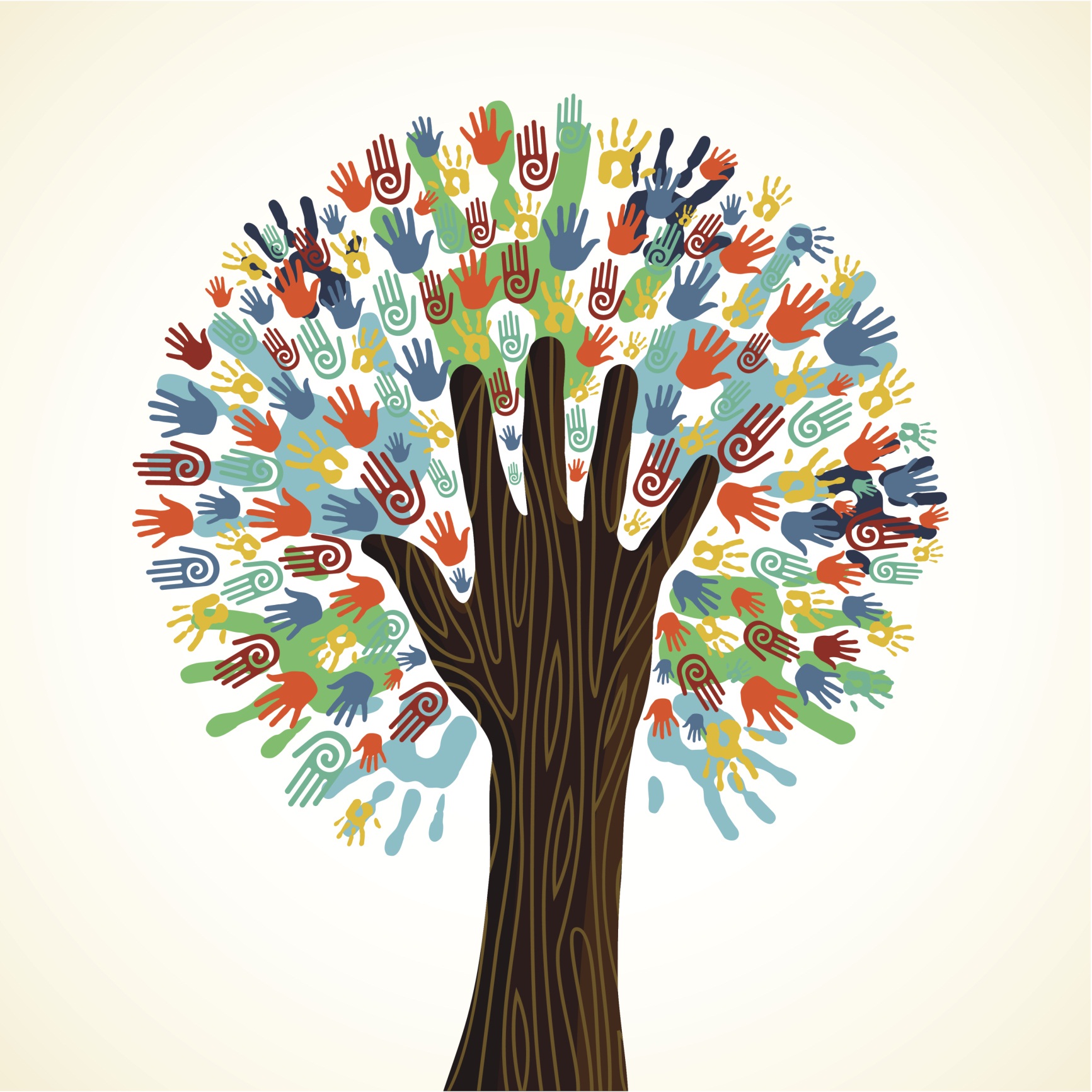
Hands on a globe

It takes a community.

As long as I’ve been an adult I’ve been reminded, again and again, of how individualistic Western society is. Surely, individualism is the seed of entrepreneurship. Each one of us has gifts, talents, smarts that we cannot contain within ourselves. Our talents are necessary for the whole community to flourish.  However, when we allow our individualism to isolate us, to deprive us of the creative ideas of others, to turn us into combative souls, vying for space and resources and goods, then we have allowed individualism to destroy us.

As the leader of a faith community for many years, I learned what community can give. Community breaks isolation. Community is a place where others know your name. Community is the place where you are asked: “how are you?” and the question is for real. Community is the place where folks are genuinely concerned for “the other.” Community is the place where transitions – death, loss, change – are honored. Community is the place where it is safe to come when you are lonely. The people in community are the ones you call when you are sick and need a ride, or when you have a question to ask about some practical matter. Community is the place where an idea may arise that you didn’t have – an idea that solves your problem.

It takes a community to break down the barriers of individualism, those high walls we have so often built around ourselves. I expect that there is a “feel” to community – a “feel” of safety, of boundaries, of being connected, a feel of being solid. That “feel” comes from the presence of other people, other people who look out for you – just as you look out for them.

Sometimes, a neighborhood is a community. A neighborhood where others know what’s going on, a place where folks come out from their homes onto the street when something happens. A place where people know who lives here and who doesn’t. A neighborhood can be the place where the owners of the shops are also part of the network of relationships.

It takes a community. If you are isolated today, then I invite you to start – NOW! – to look for a community. Find a place where others have your interests. Find a place where you meet like-minded people. Find a place where people are having fun. Find a place where someone thinks to ask your name, to extend a hand. Next time, you can be that person for someone else.

As the world gets smaller through technology, travel and changing populations, our own community gets bigger.  The folks we are in conflict with are across the globe.  What used to be turf protection in one place involves the politics, economics, histories, and conflicts of many places.  Your community, and mine – for better or for worse – is the world.  Can we live in community with one another?  It takes a community.