Uncategorized

remembering Verdell

In my mid-twenties, I was searching for a community. At the time, I didn’t know what that community would be for me, but I was drawn to go to church, since that was what I understood to be community. And, as I’ve written before, deep inside me – not spoken aloud – was the seed of a call to ministry, to a particular vocation.

And so I visited churches, one Sunday after another. My only experience of “church” had not been positive – even as a young teenager, fundamentalism did not make sense to me. But I was looking for community, for a community of people with a heart for social justice, activism. I set out to find that place – a place I did not know existed.

And so I visited churches, one Sunday after another. As a natural introvert, it is difficult for me to enter a community. Maybe I was shy. I know I was uncertain. But I must have known what I didn’t want, as I visited one church after another. I made sure to sit in the last row of the pews, so that I could make a safe and fast exit – which I did, regularly. Or I might find myself in the Narthex of the church, the hall from which the sanctuary is entered, looking for someone familiar. Again and again, when I’d see someone, when I’d catch their eye, they would turn to look for someone they knew. Not for me, not a newcomer, longing for a community.

Years later, as a pastor, I would repeat this story, again and again, to the congregations I served. I would repeat the story because I knew the people who came to those places were like me, longing for a community, longing to be gathered into the community they were visiting.

My looking took me, finally, to Kenwood United Methodist Church on Kenwood Boulevard in Milwaukee, across the street from the Student Union of the University of Wisconsin-Milwaukee, where I’d received my Bachelor’s Degree. And so, one Sunday, I held my breath again as I entered the sanctuary, and found a safe place to sit – a place that could assure a fast exit when service was over, if needed.

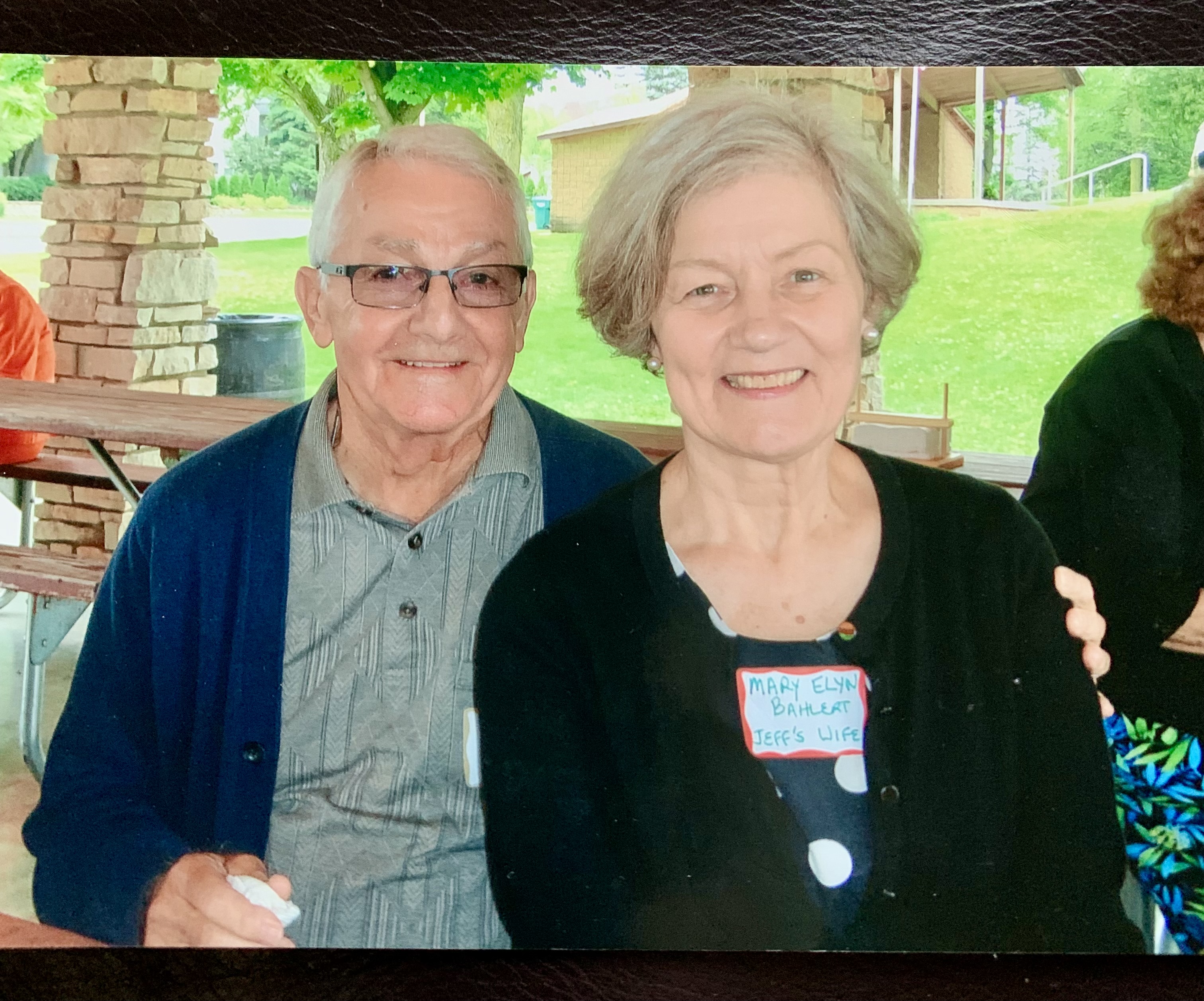
The woman who was already sitting in the pew to my left was an old woman, to me. But she noticed me. She looked at me! She told me her name – Verdell xxxxxxxx. Later, I would learn Verdell’s nickname in the community – “the grandma who went to jail,” for protesting issues that were important to her, civil rights. I didn’t know that then, when Verdell looked right at me and welcomed me. She told me that after church, she’d take me to meet Harvey Stower, the Young Adult Minister.

And so she did.

I have repeated that story to many congregations over the years, and each time, I put out my arm, my hand, and I tell the people that on that day, Verdell reached out her hand to me, and brought me into Church. When I arrived, lonely, looking for a community, Verdell was there, reaching toward me.

I’ve spent more time in my life in “Church” than is necessary, I’m sure! But at that point, I needed a welcome, a warmth, a connection. Apparently, when that connection was missing, I knew it, and I moved along. Apparently, when that connection was made, I knew it, and was gathered in.

Verdell introduced me to Harvey Stower that day. Over the course of my lifetime, I’m not sure I’ve ever met someone who was more extraverted than Harvey Stower. Years later, he’d take his extraversion into service as a Representative in the State of Wisconsin. But at the moment I needed to meet Harvey, he was there. And if Verdell reached out her hand to me and brought me in, Harvey helped me to connect. He saw me. His wisdom and his work on behalf of justice shaped my own call to ministry, a call that was rolling around in me, silent, at the time we met.

*

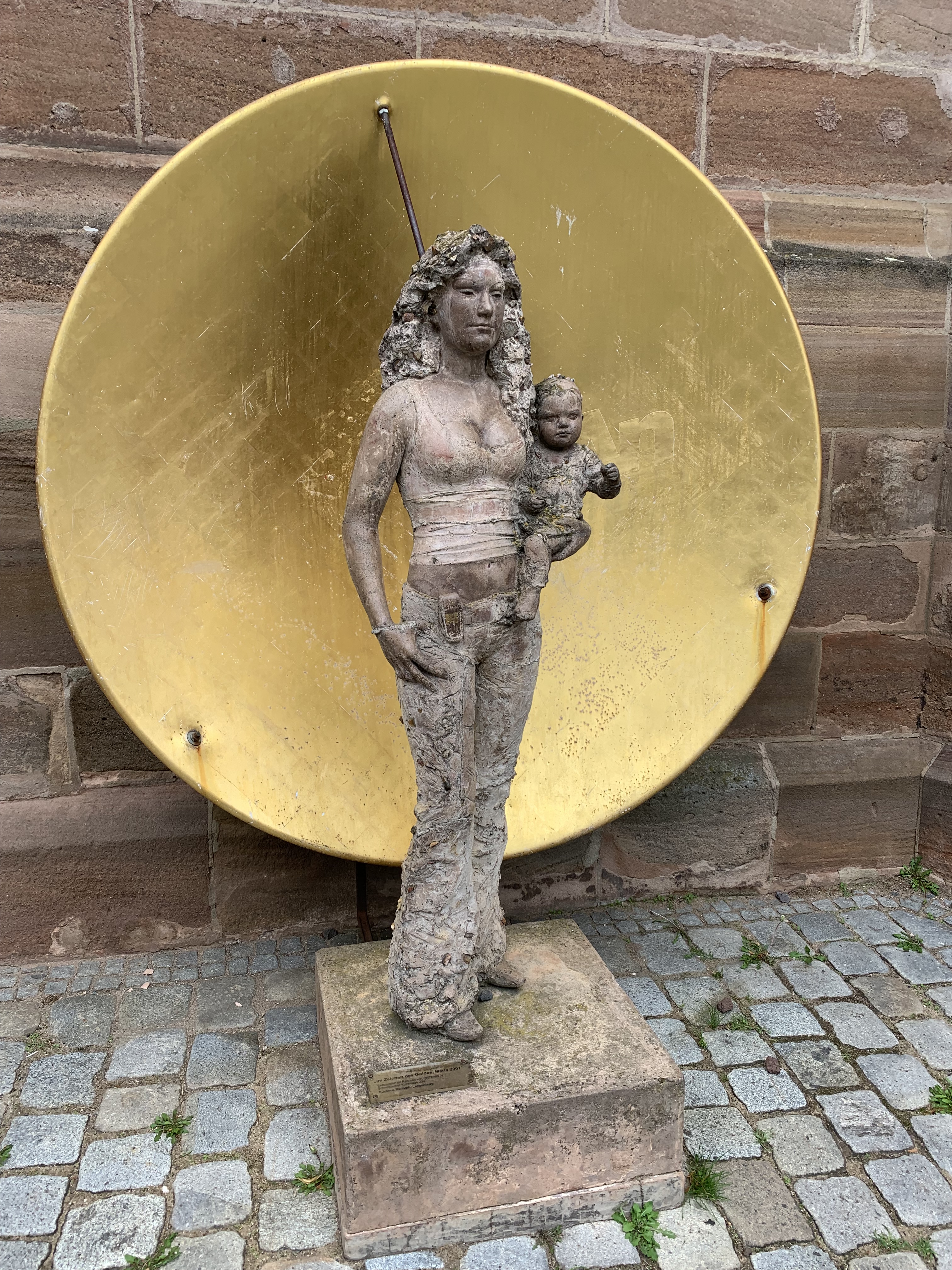
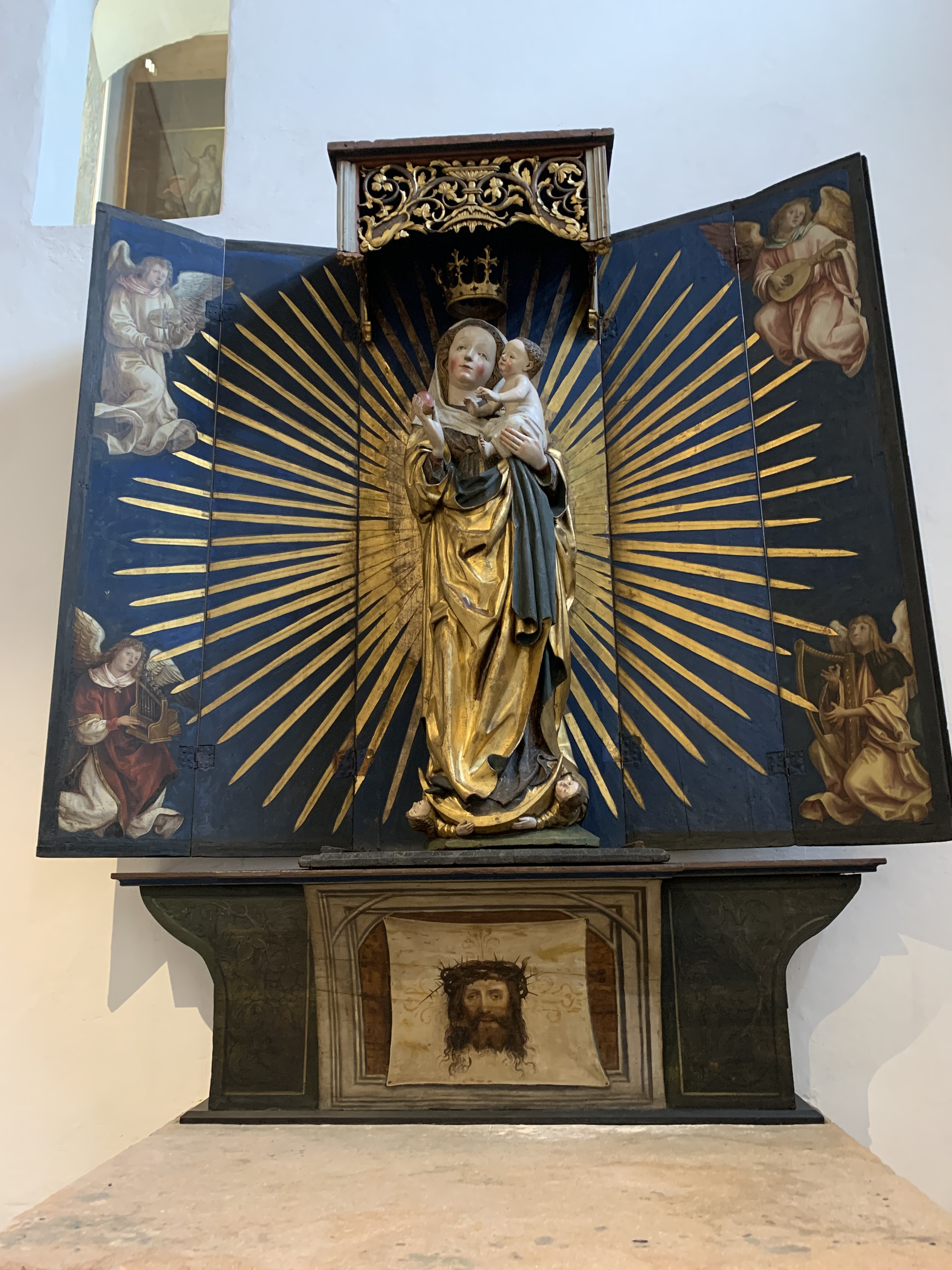
Jeff and I have just returned from three weeks in Germany. We’ve returned from our first cruise, which began our trip, and from four days spent with friends in Nuremberg, where we walked the city and saw the site of Hitler’s rallies, the site a warning to all of us to never forget what began there, and ended there. In Nuremberg, our friends made sure we visited several churches. Jeff and I have spent a lot of our lives as pastors. And we like to see the churches in Europe, hundreds of years old.

The simple, kind, warm gesture that Verdell offered me that day continues to ripple in my life. I don’t know if I ever told her. “Thank you, Verdell.”

Uncategorized

Magic

Magic seems to permeate this season of the year, the time when the darkness descends upon us – literally – and we are full into the darkness. In my life and spiritual practice, it is certain that when I descend into the darkest place, the light, the new emerges. The promise of those who have gone before is that there will be light, there will be another day. And another day arrives, new – Magic.

When I was a child, my sense of wonder provided a kind of Magic. On Christmas Eve, my non-churched family attended a church to be present for the children’s program. I was among the children who stood to recite the Christmas story, verse by verse, for the gathered adults, the sanctuary filled with lights, the light of candles, the smells and sounds of a place with a cold winter: cold hands and faces, warm wool outerwear. What I remember about those Christmas Eve times is the sense of Magic I held as a child – that Magic itself something holy, something that would pass away, away from me as I entered puberty and young adulthood. Nothing can replace the Magic of that time and place, still clear in my memory.

A few days ago, as the light of the day was ending, Jeff finished his work on the strip of land we call, “the Panhandle,” where he has lately installed a neighborhood library – a beautiful wooden box complete with a glass door that a friend crafted to suit the vision Jeff and I had. As soon as the library was installed, a few books appeared. One day, I watched as a woman I did not know stopped her car and delivered several books to the library. Our vision has come to life! Our vision is useful! Our vision is beautiful!

That day, as the sun set over San Francisco Bay, barely visible from our windows on View Place, Jeff stepped into the kitchen and looked out to the West as the sun was setting. He had cut the branches of a tree in our yard that had hid the site we were seeing. Jeff called me over to stand with him at the window. And there – there! – as if the moment was for us alone – our own screen on the sun setting over the Bay – the outline of downtown San Francisco, coated in grey fog and lit by the lights of the City – shone before us. Magic! I named our view, “The City of God,” and we stood for a few moments as the vision faded, as the sun sank lower into the Pacific beyond the City. Then – gone.

The simple gifts of light, of a tree with golden leaves about to fall, of my cat who comes to sit close to me on the couch to receive a good petting, of an old recipe for borscht that gives us a week of meals. These simple gifts are Magic to me.

“The City of God,” photo by Mary Elyn Bahlert, Oakland, 12/2022

Uncategorized

Bishop Earl

One Sunday morning in 2002, as I was in the sanctuary at Lake Merritt United Methodist Church in Oakland, preparing for worship, I saw an elderly African American couple I had not seen before. It was my practice to arrive early, while the choir rehearsed, to greet folks I knew, and to personally welcome people I did not know. When I walked up to Joanne and Earl that morning, they stood, and Joanne spoke first, introducing herself, and then her husband: “this is Earl,” she said. “He’s a Bishop,” she added. I saw the look of pride that moved across his face at that moment.

An African Methodist Episcopal Bishop, Earl had chosen to have a community outside of his denomination to make his home in retirement.

I came to know that every emotion showed in Earl’s face: tears shed, eyes shut tight in laughter, a wandering look when he was wondering. Every emotion showed and was quickly replaced by the next emotion. Sometimes anger and frustration, the next moment, joy, laughter. After a time, Bishop Earl volunteered in the church office, and often as I worked in my study there, I would hear his booming voice as he answered the phone, and laughter – also booming – from the office staff, and from Bishop Earl himself.

My husband has an expression that he saves to describe certain people, and I think it applied to Bishop Earl: “he was helplessly himself.” And for those of us who knew him, his being himself filled our lives with kindness, with sincerity, with happiness.

Over the years I pastored at Lake Merritt Church, Earl and I spent lots of time together. One day, we visited the Mountain View Cemetery in Oakland, where Earl parked his car and walked to the stone crypt that held his oldest daughter. He cried, and his little dog, who stayed in the car with me, whimpered as she watched him in that sad and lonely place. When he returned to the car, Earl was all words again, and soon we were laughing, enjoying the day. Sometimes, Earl would take me to another of his favorite eating places, and we’d talk and laugh over lunch together. When my mother died, he was one of the first to talk to me, to offer his condolences, and he preached for me that day after she died, on short notice.

I can remember the exact place in Oakland where, stopped at a stoplight, Earl and I were talking about our favorite kinds of music. I told him that I loved the blues. He burst into song, singing the blues – in his deep, resonant voice. We laughed, and laughed again!

My mother-in-law, Betty, was a reserved woman from a small community in Wisconsin. On one of our visits to see her, she answered the phone to hear Bishop Earl asking to speak to “his children.” She handed the phone over to me quickly, not sure what to make of this!

Joanne’s health failed before Bishop Earl’s, and they moved away. On one of his return trips to Oakland, where their daughters still lived, Earl invited me to hear him preach at a small church near my home. That’s the last time I saw Earl; as I walked away, I watched him court the women, speak with respect to the men. Many years have passed, but I still think of him when I pass that little church.

There was no one like Bishop Earl. I miss him.

Uncategorized

Destroying the sacred

This past week, I read a distressing article on my news app. The article recounted that a right-wing pastor in Tennessee declared to his congregation that God had told him to burn “evil books,” after which the pastor led his congregants outside, where they burned books together, in a huge bonfire. In his mind, these books are a threat to his religious rights, freedoms, and belief system. Apparently this is not the first time the young man has caused a stir, as over the past 2 years – when the country and the world have been dealing with the COVID pandemic, and over 900,000 Americans have died of the disease – he has denied the pandemic.

I’m reminded of Bob Dylan’s words: “You’re gonna have to serve somebody
Well, it may be the devil or it may be the Lord… But you’re gonna have to serve somebody
…” And John Lennon, reacting to those words, wrote: You gotta serve yourself… Ain’t nobody gonna do it for you

Book burning refers to the ritual destruction by fire of books or other written materials. Usually carried out in a public context, the burning of books represents an element of censorship and usually proceeds from a cultural, religious, or political opposition to the materials in question. The burning of books under the Nazi regime on May 10, 1933, is perhaps the most famous book burning in history.” (credit to: encyclopedia.ushmm.org; Holocaust Encyclopedia).

Every day, the great divide in the United States grows, right and left separated from one another, malice for the other accelerating on both sides. Many people in this country are armed, some with assault weapons, a testament to their “Second Amendment Rights.” In their ignorance, they will not travel to other places – where they could see the vast diversity of how human beings live.

I won’t say that this is dangerous; that is obvious. What I want to say is that I grieve for this country. We have gutted our educational system, and in its place are dangerous ideologies that rely on the ignorance of those who hold them. I grieve for the children of this country, in particular the children who will be educated in public schools, children who are not privileged, children whose lives could be opened and enlightened by an education that teaches them to think for themselves, to hold the common good, to be kind to one another, even those who are different. I am fearful for them, and I am fearful for the future that this lack of education will mean to this country, and to the world.

Apparently, the United States, this “great” country, will be empowered by refusing to educate its young, by refusing to to send them into the world as world citizens, as people with respect – for themselves, and for other human beings, whoever they are, however different they may be.

I like to say: “your God is too small.” A small God is a dangerous God, undoubtedly a God who takes orders from the ego, that small part, that fearful part, that wounded part of each one of us, the part we grew from our wounds. This small God is the God of ideologies.

And those who choose this God will be those who hurt other human beings, other living things. Wounded people – hurt people – hurt other people.

You can’t argue with someone whose “God is too small.” There is no room for compassion, for growth, for understanding. There is no room for difference, diversity.

As I get older, I am more and more aware that my life has been shaped, has been formed, has been gifted by, and has been empowered by the education I received in the 50’s and 60’s in the public schools. I am ever grateful for the teachers I had: several were Jews, professional teachers who loved their subject, who loved their work, who wanted to give to the children who were entrusted to them. Several had fled Europe during the Holocaust – and spent their lives giving to the next generation. I am grateful for teachers who taught us to think, to consider, to open our minds, our thinking by reading, learning, and discerning. They taught us by who they were, by their example, by their choice to take on an important profession. They taught us by by their willingness to teach us how to think – to think for ourselves. And in their teaching, they gifted us their longing for a just, kind, and peaceful world. By example, they taught us that there was a way to live with one another.

Through their teaching, and through the example of our elders – even those who were not educated, as in my family – they taught us that we could be citizens who could think, who had historical memory that would continue to teach us, that even those of us who came from poor, working class families could be educated. The public schools taught us this.

And now, every year, the schools in this country are at the bottom of what is deemed important. Instead of being highly regarded for teaching students how to think, they are required to teach students what to think. The best people will not want to be part of that legacy. We will assure that by our actions as a country.

We are all suffering from this world view. We will continue to suffer. We will continue to raise up children – young people – who cannot think for themselves, and because they cannot think for themselves, can be led by damaged, dangerous people – even people who claim to speak for “God.” And we, then, will be responsible for the injustices, for the damage done to other human beings, whoever they are. We will be responsible.

When I was young, my having teachers who opened my mind and experience, gave me the gift of thinking that I could serve, too, that maybe I could leave something of value for the world when it came time for me to leave. Now, in the Wisdom Years, I am less certain.

“The Path,” photo by Mary Elyn Bahlert, 10/2021

Uncategorized

A New Rhythm

Over the past two years, life has developed a new rhythm. I didn’t choose to move into a new rhythm – the choice was made, and given to me, as it was given to everyone else. In the first days of the COVID sheltering-in-place mandate, the streets were quiet. If I needed to drive myself, it was seldom, and for short distances. For the most part, I stayed close to home.

You have your story of COVID-time, I’m sure. This is my story.

Activities that were meaningful to me – classes at a Senior Center, or volunteering as a chaplain at a local hospital – stopped immediately. My familiar routine was erased, also. A few friends stayed in contact as they adjusted to this change in all our lives; one friend, who is the last person to call – ever – called me one evening just to chat. At Thanksgiving, we had to forgo the usual family gathering in San Francisco for a ZOOM call, listening to each person talk about what their life was like now.

Some days, my husband and I would drive a distance – 30, 40 miles – to walk. Over time, we developed favorite places, places to which we’ve returned again and again. We came to enjoy walks at the Martinez Slough, where we watched the water ebb and flow from the tide, sometimes allowing us to see a shipwreck in the Carquinez Strait, sometimes not. Often afterward, we’d drive through the neighborhoods of Martinez, sightseers with a lot of time on our hands. Or we’d walk downtown, alone on the empty streets.

We walked in downtown Oakland, too, not far from our home. In the weeks after the George Floyd protests, we took our time, looking at the graffiti that lined the buildings on Broadway. We stopped to take pictures. We discovered places in our city we had not seen before, or places that we had only driven past in our cars.

As the months passed, we became more accustomed to this new, quieting rhythm, and we added new sites to our list of walks. One day, we drove to Half Moon Bay, where we walked along the shore of the Pacific Ocean, and then we walked on the high ridge that overlooks the shore. Because we live across the Bay from San Francisco, whose skyline we can see from our front window, we started to drive across the Bay Bridge – a dream to drive in pandemic days, with so little traffic! – to a different neighborhood on each visit, for a long walk on the hills, taking in the sites of the new places that we discovered.

One day in the fall of that first year, we drove to Apple Hill in the foothills of the Sierra Mountains for the yearly Apple Festival. We were grateful that the booths and stands, open-air, were open, yet were not filled with people from a long line of tour buses, which they had been in the past. The sight-seers’ loss was our gain as we enjoyed the quiet and safe surroundings.

Those early days of the pandemic are in the past, now. The busy street a block from our house is busy again. During the day and at night, I can hear the traffic passing, cars filled with folks busy in their lives. Now, although I continue to go to the grocery store early in the day – a habit I developed during the pandemic – even then, it can be busy, with lines of people waiting to check out.

Now, we are waiting – again – for another spike in COVID cases to complete its work, and, now, having learned about the ability of the virus to evolve again, and again, those early days are a long time ago. This is a new time, it seems.

Still, what will our lives be like when we are not barraged daily with new virus updates – the number of deaths, rising again, news stories of the famous who have lost their lives to COVID, COVID as the central and first news story, day after day?? We listen to the news each day, noting whether or not COVID is the first story of the newscast.

I’m in an in-between time, once again, in my life. What will interest me now? Where will I ever want to go, after this pandemic has moved into endemic mode? What will this new stage of my life, a stage I am not entering alone, but with all the other inhabitants of this world, be like? What will have changed, and what will not have changed? I guess, mostly, this is a time of questions.

Driving into Oakland from San Francisco on the Bay Bridge, March 16, 2020. The ship pictured was a cruise ship stranded in Oakland at the beginning of the pandemic. Photo credit: Mary Elyn Bahlert