Uncategorized

Michelle

From the time I was small, I knew that I had family – uncles, aunts, cousins – in California. They were the people who peopled my world, although they lived far from us. From time to time, one of my mother’s brothers would visit, and I would hear about my cousins, those strangers who were yet part of the community that made up my life.

Michelle has been in my life forever. When I was five, Uncle Pete and Aunt Athalie and Michelle came to Milwaukee, and now I look again at the photo of Aunt Athalie and Michelle and me on the front lawn of our flat at 1115 West —- Street in Milwaukee. Michelle has her hair covered in a scarf, tied under the chin in the style of teenage girls of the day. I’m happy. I was thrilled, to be in the presence of my cousin Michelle. She was a hero to me.

When I was a teenager, Michelle was already married. For a few years, we were penpals, and I read with interest each letter about her life, so different from mine, in California. In one letter, she told me about the ending of her marriage. She wrote about her life, and I had to conjure up what her life might look like, in that place so far away, a place I had never been.

Now, I’ve lived most of my life in California, and I’ve lived most of my life not far from where Michelle grew up. By a strange turn of events, I was called to be a pastor in the neighborhood in South San Francisco where Michelle had grown up, and at the time when her father, my Uncle Pete, was already suffering from Alzheimer’s. Then, I visited my aunt and uncle from time to time, and for the first time, developed a relationship with Aunt Athalie. She was the aunt who never forgot a birthday, she was the aunt that had sent a care package of Michelle’s well worn clothes to our family from time. As I spent time with Aunt Athalie, I learned about her and her life, separate from my uncle and cousin. One day, she told me the story of where she was on Sunday, December 7, 1941. A young woman, she was getting payroll ready for the Navy Fleet, working alone – in Pearl Harbor. My blustery, extraverted Uncle Pete – who’d fought in three wars – had always commanded the attention of the room when he told stories. Her own story – more dramatic than his – had stayed, quietly, within her.

As the years passed, Michelle settled into her life in Riverside, California, and our connection became birthday cards and Christmas cards with a short note: “Love, Michelle.” Her hand-writing was dramatic, flourishing.

A few years ago, I was at home in the afternoon when the mail arrived. When I opened the box, I found a hand written note from Michelle. On her latest trip to Hawaii – always her home – she and her beloved, Tony, had been married! As soon as I read the letter, I called her. She’d been surprised – and disappointed – that she had not heard from me, that I had not reacted to learning her news. But the mail had been slow, and now, we were connected again. I was happy for her, as I watched and imagined her life from afar.

Three years ago, Michelle called to say she’d been diagnosed with pancreatic cancer. For three years, she bravely battled the disease, working with her excellent doctors to discern the next steps forward. Then, early in September, she was sent home to her little house on Larchwood Place, on hospice. I did not talk to her again. I noticed one day that her Facebook posts had stopped, and a few friends offered sad messages instead. She had posted a photo of the mantle of her home, and on the mantle I can see the birthday card I sent to her this year, her birthday one week before my own.

Last weekend, as Jeff and I were preparing for a short trip to the mountains, and on to Sparks, Nevada, Jeff and Michelle’s beloved, Tony, called. The days were coming to a close now, and Michelle drifted in and out of consciousness. He was tired. Tony had been a stalwart, fierce companion and protector of Michelle in these last days. As I prepared to meet a friend for lunch on September 26, Jeff’s cell phone rang, and Tony spoke the words we all knew would be coming soon: Michelle had died. I went to lunch with my friend, mentioned Michelle’s passing. And that was that.

The memories are here, now. And Michelle is gone.

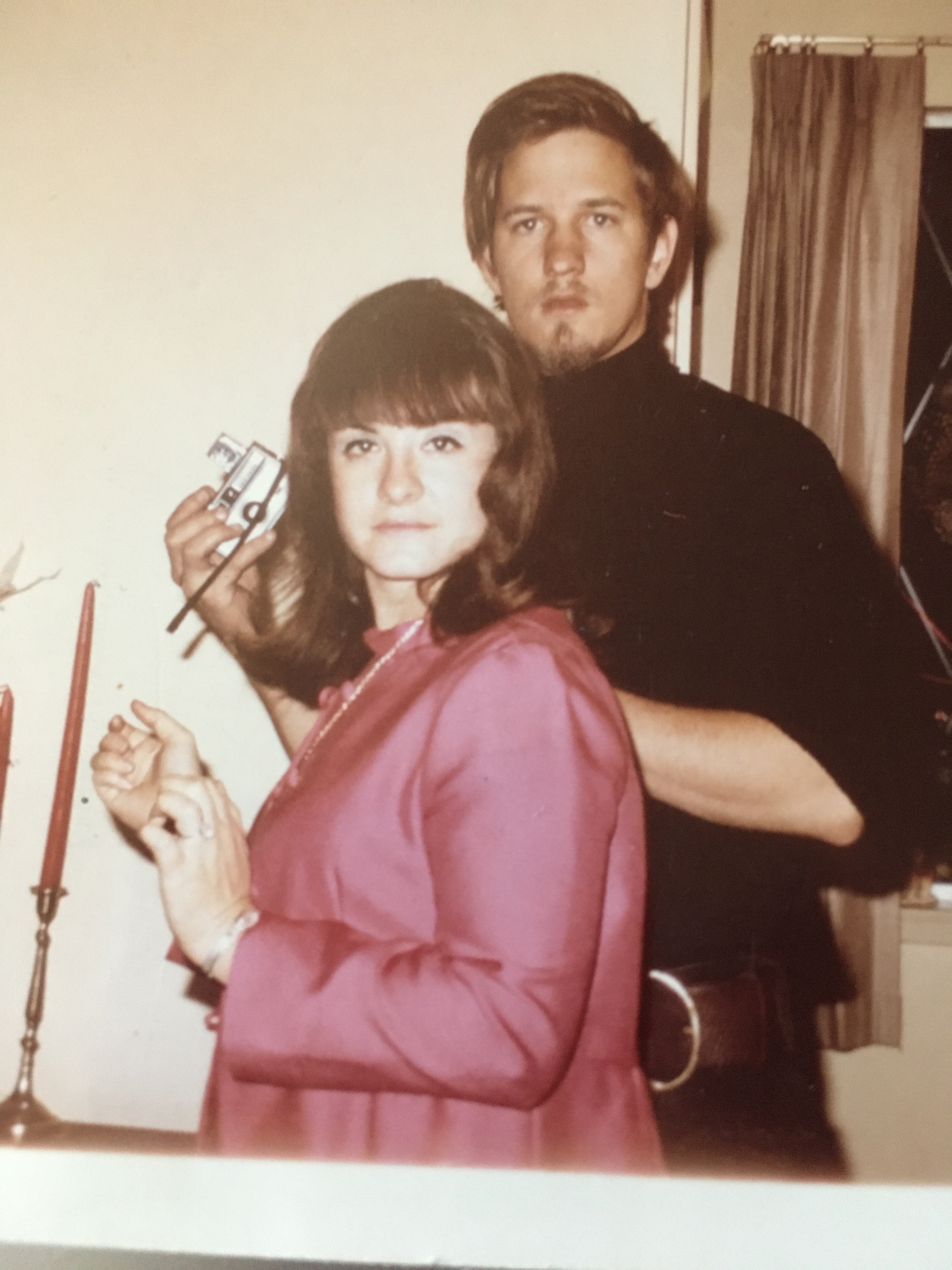
Michelle and cousin Dennis. From my collection.

Uncategorized

Auntie Irene

My father was extroverted and his sister Irene was extroverted. Really extroverted: the kind of extrovert that spoke everything that passed through her mind. And I loved her.

Auntie Irene and her husband, Uncle Erdreich, lived on a road off the State Road 57 going north along the shore of Lake Michigan, north of Baileys Harbor. Their road led into a swamp, a mile or so past their house, their house with the cottage behind it – the cottage that Uncle Erdreich had built for my grandparents to live in in their elder years. The door of Auntie Irene’s house led to a hall that led to another door into the kitchen, the table directly ahead as you walked into the house. I suppose that house was strange by modern standards of “footprint,” as rooms had been added on by Erdreich, a carpenter, as the need had presented itself over the years.

I spent many nights in a second story bedroom at the top of the winding stairs that led from the living room to that unused space; unused, since Irene and Erdrich’s two sons were a generation older than me, and were long past away from Baileys Harbor, making their lives in other places. When I was living in Green Bay for a couple of lonely years in my twenties, a few times I made the trip to Baileys Harbor to spend a day or two with Auntie Irene and Uncle Erdreich. I slept in that cozy bedroom with its old fashioned pictures on the wall many times.

Irene was “the hugger” to my sister Suzie. That’s how Suzie remembered her as being different from Edna, a quiet Bahlert, who lived twenty miles to the north, near the tip of Death’s Door at the end of the Door Peninsula. And Irene did welcome us all with a hug, as her mother had done, a generation before, when she welcomed my reserved mother into the family as she met her for the first time. My mother never forgot that hug of kindness and acceptance.

Irene and Erdreich rarely went more than a few miles from their home, but they did come to Milwaukee to visit my family when my sister was still in a stroller. The Big Sister (as Irene had been to her Bahlert siblings) took the baby and Auntie Irene for a walk, Auntie Irene anxious, talking non-stop as soon as we were out of sight of the house where my family lived.

Irene hugged and Irene talked. Is it a truth about extroverts that they say exactly what comes into their mind? I think that was true of Irene. She was kind; she was gentle; she was warm and she had a humor about her. When my parents and Suzie and I had been greeted on the lawn with hugs, we were given a tour of the garden that was full of vegetables and fruits every year, and then we walked into the kitchen of the welcoming house for a treat at the table, something home baked by Auntie Irene.

On one of the trips to Door County during my years in Green Bay, I invited a friend to join me for the weekend, and we were the guests of my loving aunt and her home cooked meals. As we drove away, my friend turned to me in the car and said: “there’s no excuse for a person to be like that.” Her comment surprised me, and it still surprises me that I did not feel shame at her judgment of a person I loved so completely. Years later, I introduced another friend to Irene and Erdreich, and she told me that she had never met people like them before. Her comment reminded me of her kindness and gentle acceptance.

When Irene was in a nursing home, already past 90, dying, I wrote a note to her. I’m sure someone must have read it to her as she lay in her bed, that lonely bed away from the double bed she’d shared for 70 years with Erdreich. As I signed the note, I remember writing: “wait for me.” Jeff and I made the trip to Door County again on our visit “home” to Wisconsin that year, just in time to be present at Auntie Irene’s funeral in the Evangelical Lutheran Church along the highway, the church where, years before, I’d sat in the pew after receiving communion, next to my aunt who fell to her knees, head bent, before she sat back in the pew. I’ve always thought that Auntie Irene had waited for me return, for me to be present alongside my Bahlert cousins, some who came from a long way to be at her funeral, on that summer day.

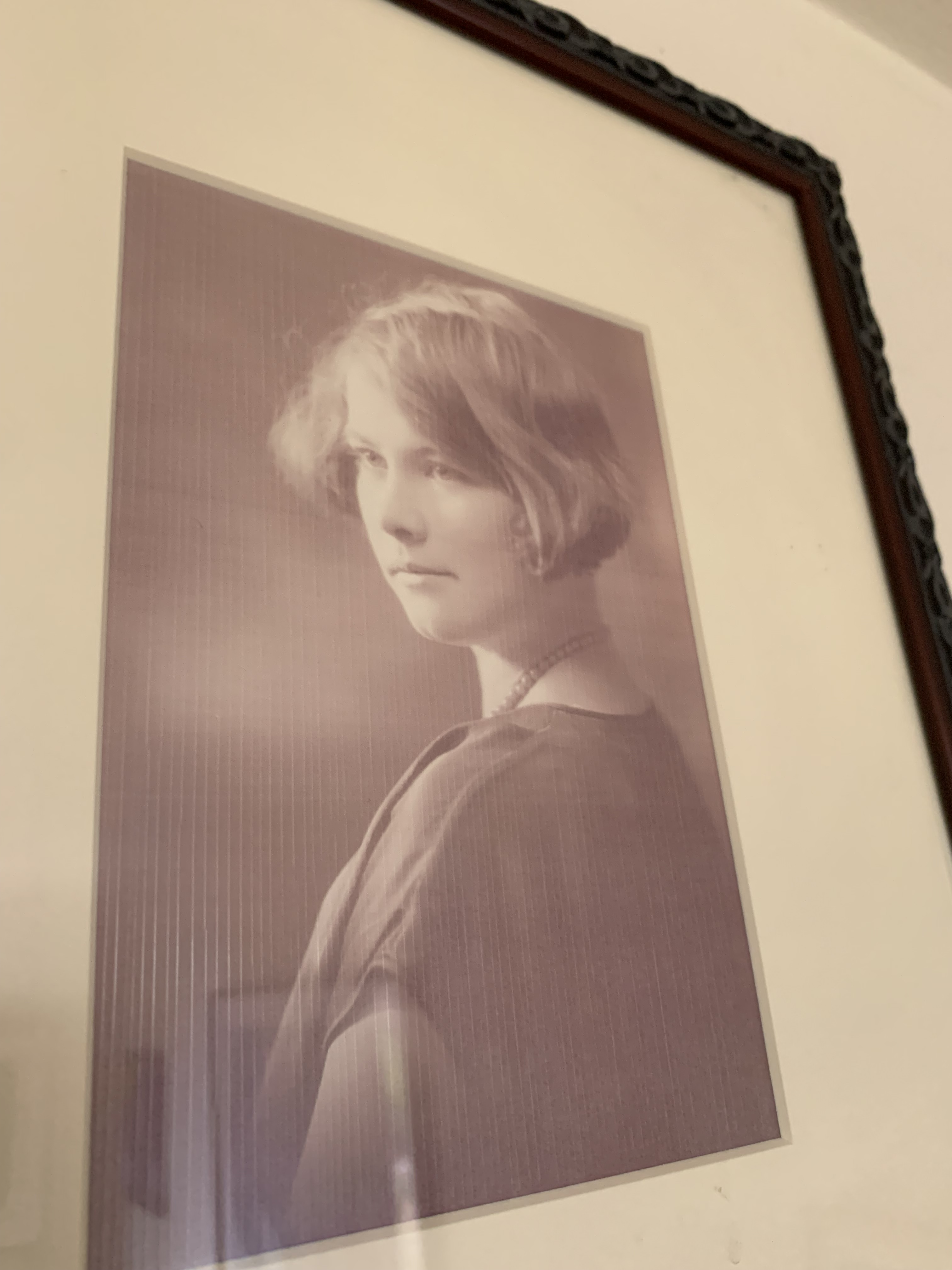
Irene, circa 1926

Uncategorized

When Grandma Died

My Grandma Bahlert, my father’s mother, died when I was five years old. I remember when the phone call came, when Mom called Daddy into the hallway to learn the news. And I remember my Dad, then, crying as he sat in his chair in the living room, my mother and I looking on. I was little then, and although many years later I would still miss my Grandma Bahlert’s kindness and playfulness, death had no meaning to me.

I was nineteen years old when my Grandma Markowski died, and her death was the first that touched me, when I began to understand what this all meant, especially to the rest of us, the living, whose lives went on. By the time she died, Grandma Markowski spoke only her native Ukrainian, and my time with her was spent silent, listening, as Mom and Grandma talked, sitting next to her bed in the smelly front room of a house fashioned into a “nursing home.” A nursing home for poor people. Once a month, my mother took my grandmother’s Social Security check to her, and I watched grandma sign her wobbly “X” on the back so that Mom could cash the check to pay the home.

Grandma died in Milwaukee County Hospital, the place where the poor went to die. And I wondered about her. Was she aware? Did she hear the voices of those who came to her bed as she died? Was she alone? Had they rolled her bed down the hall, trying to save her, to allow her to live another day? I wondered.

A few months after Grandma died, Auntie Anne, my mother’s only sister, died. Now, I look at her pictures and I wonder about her life, as I have wondered about my Grandma’s life. I know Auntie Anne suffered violence in her life, and when I look at the pictures, I look at her eyes, wondering if her fear and sorrow showed in them. Years later, my cousin Mark, her son, told me that he thought his mother – who was already suffering with cancer – gave up after Grandma died.

For as many questions as I asked my mother while she was alive, as many questions remain about them all. So many questions – unanswered – followed them all to the grave. And I suppose it will be that way when I am gone, and Jeff, and all those that we love and have loved.

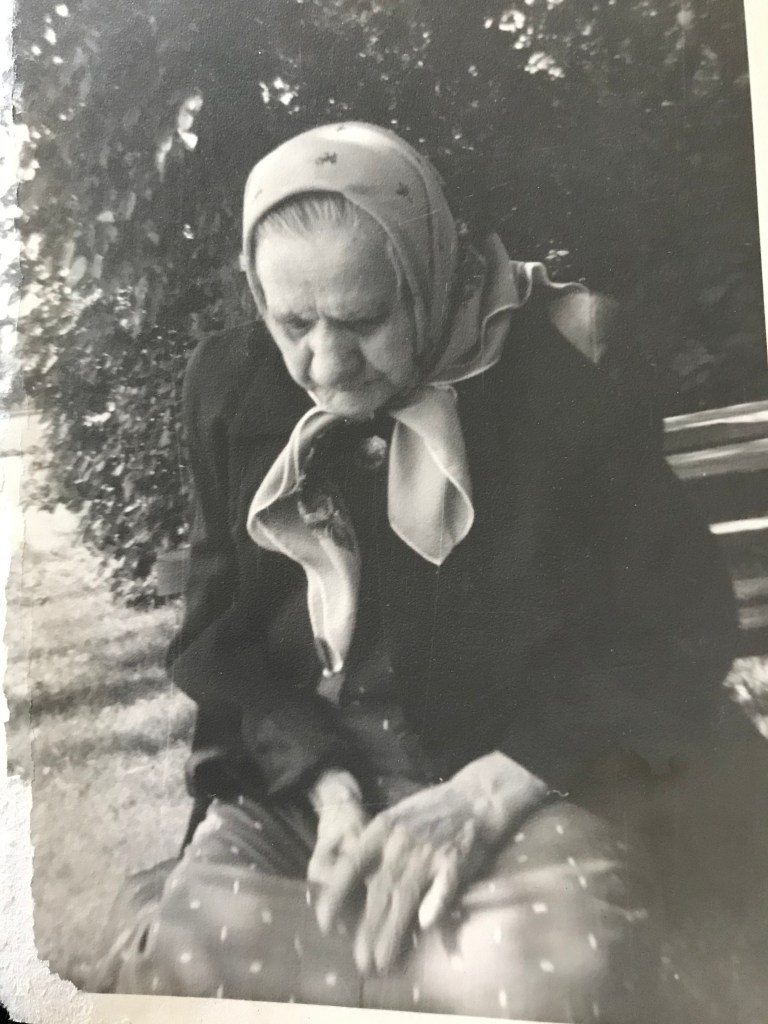
Grandma, circa 1969

Uncategorized

remembering Verdell

In my mid-twenties, I was searching for a community. At the time, I didn’t know what that community would be for me, but I was drawn to go to church, since that was what I understood to be community. And, as I’ve written before, deep inside me – not spoken aloud – was the seed of a call to ministry, to a particular vocation.

And so I visited churches, one Sunday after another. My only experience of “church” had not been positive – even as a young teenager, fundamentalism did not make sense to me. But I was looking for community, for a community of people with a heart for social justice, activism. I set out to find that place – a place I did not know existed.

And so I visited churches, one Sunday after another. As a natural introvert, it is difficult for me to enter a community. Maybe I was shy. I know I was uncertain. But I must have known what I didn’t want, as I visited one church after another. I made sure to sit in the last row of the pews, so that I could make a safe and fast exit – which I did, regularly. Or I might find myself in the Narthex of the church, the hall from which the sanctuary is entered, looking for someone familiar. Again and again, when I’d see someone, when I’d catch their eye, they would turn to look for someone they knew. Not for me, not a newcomer, longing for a community.

Years later, as a pastor, I would repeat this story, again and again, to the congregations I served. I would repeat the story because I knew the people who came to those places were like me, longing for a community, longing to be gathered into the community they were visiting.

My looking took me, finally, to Kenwood United Methodist Church on Kenwood Boulevard in Milwaukee, across the street from the Student Union of the University of Wisconsin-Milwaukee, where I’d received my Bachelor’s Degree. And so, one Sunday, I held my breath again as I entered the sanctuary, and found a safe place to sit – a place that could assure a fast exit when service was over, if needed.

The woman who was already sitting in the pew to my left was an old woman, to me. But she noticed me. She looked at me! She told me her name – Verdell xxxxxxxx. Later, I would learn Verdell’s nickname in the community – “the grandma who went to jail,” for protesting issues that were important to her, civil rights. I didn’t know that then, when Verdell looked right at me and welcomed me. She told me that after church, she’d take me to meet Harvey Stower, the Young Adult Minister.

And so she did.

I have repeated that story to many congregations over the years, and each time, I put out my arm, my hand, and I tell the people that on that day, Verdell reached out her hand to me, and brought me into Church. When I arrived, lonely, looking for a community, Verdell was there, reaching toward me.

I’ve spent more time in my life in “Church” than is necessary, I’m sure! But at that point, I needed a welcome, a warmth, a connection. Apparently, when that connection was missing, I knew it, and I moved along. Apparently, when that connection was made, I knew it, and was gathered in.

Verdell introduced me to Harvey Stower that day. Over the course of my lifetime, I’m not sure I’ve ever met someone who was more extraverted than Harvey Stower. Years later, he’d take his extraversion into service as a Representative in the State of Wisconsin. But at the moment I needed to meet Harvey, he was there. And if Verdell reached out her hand to me and brought me in, Harvey helped me to connect. He saw me. His wisdom and his work on behalf of justice shaped my own call to ministry, a call that was rolling around in me, silent, at the time we met.

*

Jeff and I have just returned from three weeks in Germany. We’ve returned from our first cruise, which began our trip, and from four days spent with friends in Nuremberg, where we walked the city and saw the site of Hitler’s rallies, the site a warning to all of us to never forget what began there, and ended there. In Nuremberg, our friends made sure we visited several churches. Jeff and I have spent a lot of our lives as pastors. And we like to see the churches in Europe, hundreds of years old.

The simple, kind, warm gesture that Verdell offered me that day continues to ripple in my life. I don’t know if I ever told her. “Thank you, Verdell.”

memories, remembering, Uncategorized

Auntie Edna

“There are places I’ll remember. All my life, though some have changed. Some forever, not for better; Some have gone and some remain…” Lennon and McCartney

Our yearly trips to Door County seemed to have a pattern, and the pattern included visits to various aunts and uncles – my father’s siblings – who lived close to where they had been born. At some point during the week, we would drive for a visit to Auntie Edna’s house, close to the tip of the Door Peninsula, at Gill’s Rock. The road that ran to the north of Auntie Edna and Uncle Werner’s (we said, “Verner”) place led to the dock to the ferry to Washington Island.

Edna and Werner had lived in that house for many years longer than I had been alive. My cousins Donna and Dean had been born in that place. On my trips to Door County now, I always drive past the brown-shingled house with the cherry orchard to the East. On the edge of the property on which their home stands is a plaque: “Johnson Homestead 1904, Leonard and Selma” the names of their children with years of birth, below. My Uncle Werner, who spoke as if he’d come straight from Sweden, had been born there! Years later, the thought would come to mind that his first language had been Swedish.

For a living, Uncle Werner had fished the tumultuous waters of that part of Wisconsin, Green Bay, Death’s Door to the North ( the native people had named that passage between Green Bay and Lake Michigan). He also raised the sour cherries that grew abundantly in the rocky soil of Door County.

The visit to with Auntie Edna and Uncle Werner began in their living room, with both Edna and Werner seated in their large, comfortable chairs. I sat in the same place each time, also, and I would look to that part of the long, narrow room toward the places we did not sit. Did they ever go into that part of the house, I wondered? Did the Christmas Tree go there?

Dad and Mom, Suzie and I sat formally in that living room, Dad with his cap in his hand, doing most of the talking. Of the lot of us, he was the most extraverted. Uncle Werner seemed to have a twinkle in his eye; I always thought that in his way, he was laughing at us. Auntie Edna was one of the quiet Bahlerts, and so she sat quietly in her chair, asking questions. Gentleness radiated from her presence. After awhile, we’d all get up, and Auntie Edna, Mom, Suzie and I would move to the small, dark dining room, where she served us juice and cookies. I remember her kindness, her ability to listen. When I went to the bathroom before we left the house, I’d glance into their bedroom, and always wondered why they slept in two single beds. At home, Mom and Dad slept together.

Years later, I would come to know my cousin Donna, who worked in Milwaukee and made the trip to the Door Peninsula every week to get her clothes washed, to be home again. Her life was much like my father’s had been, a generation before. While I was in college, I made the trip to Door County with Donna for a weekend, and she took me to her lifelong haunts. After she retired, Donna would marry Jim Thorp, who had lived his entire life on the Door Peninsula. They would live in their double-wide trailer, a short walk away from Donna’s folks.

On the Sunday of our week in Door County, we’d go to church at the Moravian Church just down the road from Werner and Edna’s place, and there she would be, my beloved aunt. In her quiet way, she was a presence.

Once a week, Edna wrote a column for the Door County Advocate about happenings in that place, so beautiful in the summer, with long bleak winters. When we had had our yearly visit, our names were mentioned in her column.

When we are a child, it’s hard to imagine these elders as being young, but sometimes I try to piece together the bits and pieces I heard, often repeatedly, into a pattern. I knew that Edna had graduated from high school, something not all of her siblings had done. She spoke as I spoke, not in the dialect of that place that my father had. Her father, Ginter Bahlert, my grandfather, had wanted her to go to college to be a schoolteacher, but that was not to be. She worked for a time at Bunda’s Store in Sister Bay, an establishment that lasted there until at least the 1970’s, on the West Side of Highway 42, on the South end of town, before she married Werner. I think of her every time I pass the building that once housed Bunda’s Store, the Sister Bay Bowl across the street, still standing.

It is odd, in a way, hard to understand that these places are still there, and the people I loved gone now, so long.

Photo by Mary Elyn Bahlert, October, 2021