Uncategorized

The day they died

Jeff and I were driving home from Sacramento on Saturday, March 21, 2009. I leaned over to turn on the radio in the car. There was a repeating news story from Oakland – where we were headed, and where I was pastor of a downtown church -being broadcast on the news, details changing and being added as more information came to the broadcasters. Four Oakland police officers had been shot by one young man that afternoon. Two were motorcycle police officers, two were members of the SWAT team that had gone to the home of the suspect and were murdered by the suspect as they climbed the stairs to the apartment he was holed up in. The attacker was shot dead by officers.

When we arrived home, I checked the messages on our answering machine and discovered several calls. John Hege, the son of a family I served in the church in Oakland, was one of the motorcycle officers who had been shot. John would not die for a day or two, after he had been declared brain dead.

Like so many others, I was in shock. I tried to call John’s parents, John and Tam, but they were not home. The police department had brought the affected families together and they were in the care of officers. I tried to get to John Hege, Jr., who lay brain dead at Highland Hospital, but I was not permitted access to the officer.

*

Friday, March 27. Like so many others, I watched the funeral of the four police officers who had lost their lives on television, broadcast from the Oracle Arena. As the service ended, I walked to Mountain View Cemetery from our house, and met the funeral director who was caring for John’s family. I sat in the hearse as we waited for the family to arrive. I looked back at the hearse, realized there was no casket – four caskets had been visible at the community service. In one of those simple moments at such a time, I asked the funeral director where he was. He nodded toward my arm, leaning on the urn that held John’s ashes. We almost laughed as we broke the silence of that moment.

I rode in the hearse to the Hege plot, high in the hills, and waited with the family at John’s graveside. Tam and John and their two daughters and their families stood silently with us. I said a few – unimportant, but necessary, I suppose – words in the presence of this sombre gathering, and the funeral director nodded at John, the officer’s father, giving him the urn with his son’s ashes.

I stood behind John as he kneeled over the grave and leaned over to place all that was left of his son into the grave. As he kneeled, he appeared to fall over, and I leaned over him, reaching for his shoulder, just as he set his son’s ashes in the grave.

Years later, telling the story to someone who has not heard it, I come to tears each time. In my role that day, I did not cry. I witnessed. I was a witness to the grief that hung over us all, to the grief that enveloped John’s family.

*

There are some moments in life that remain, some moments as a Pastor that I remember, vivid moments that come to mind as if I am living them again. That day on the hill, witnessing the grief and the resignation of John’s family, comes often to my mind. When I pass the sign on the freeway that names the four officers killed that day, I nod, as a witness, and to my memory.

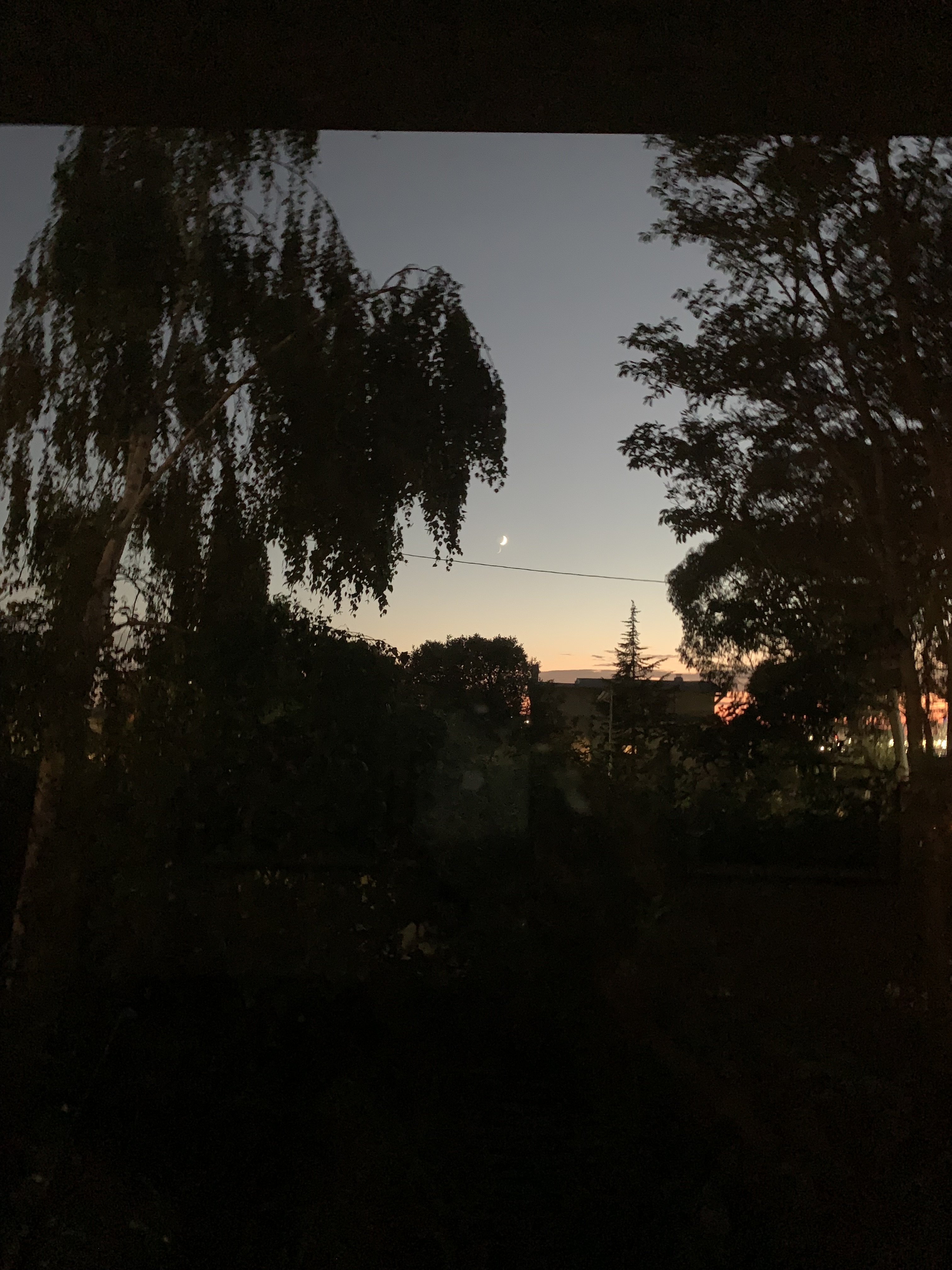
Sometimes it seems strange that beauty remains after such a grave loss.

Photo by Mary Elyn Bahlert

Uncategorized

Friends

Some would call it a blessing. For others, it is something they are not able to attain. Many people need – and want – only one or two. Some think that everyone they meet is a friend.

I call mine a blessing.

This past week, I spent several days with Vicki, a friend I met in high school. I met her brother Bruce before I met Vicki, when I sat behind this tall, painfully shy boy in Art Appreciation Class, my first elective course as a senior at Washington High School in Milwaukee. During our college years, Vicki and I started to hang out together more often. The course of our lives has been very different, but our friendship remains. When we met in Denver – as close to halfway between New Berlin, WI and Oakland as we could figure – we spent the evenings together in our hotel room, talking and talking, until after we’d turned out the lights and lay in our beds.

I remember meeting Joanne for the first time, when she sat down at my desk in Green Bay, Wisconsin, smiled her bright smile, and said, “do you golf?” (My answer: I didn’t, but I could try. I never did). We took road trips together, and we flew together to Montreal and Quebec with another friend, Carla, who is still in Joanne’s life. Joanne commiserated with me as we mourned our lack of dates, until we finally met the men we would marry. Joanne stood up with me in my wedding. Because I was at school in Berkeley, I wrote a prayer for her wedding and posted it in the U.S. mail, instead.

The Bug was my best friend in high school, and we keep in touch via email now. Her sister Bonnie and I stood up in the Bug’s wedding. My heart hurts for the Bug now; her son died unexpectedly – at only 46 – in the past year.

I knew Pat’s family from the time I was little in Milwaukee. Her aunt was one of my mother’s good friends, a friend from her neighborhood in Milwaukee, too. Later, Pat and I, her brother Bobbie and the Bug, and several other teenagers from our neighborhood worked together at the Times Fine Arts Theater on Milwaukee’s North Side. Now, I talk to Pat very few months on the phone, and even now, we’ve got plenty to talk about. And to laugh about.

Later in my life, I’ve continued to make friends. I’m grateful. I met Alexis and Linda, both clergy, through meetings with other United Methodist clergy in Northern California. Staying in touch with them is important to me. A year ago, Judith rode home with me from a retreat where we’d both led small groups of clergy in reflection sessions, and we’ve been friends ever since.

Some of my friends, like Lana, live locally, so I get to have lunch with her, where we discuss books we are both reading, and with Jean, another Oakland person.

I hope their friendships keep me healthy, and I hope I have something to give them, as they do to me. Conversation with each one is different, full of history, often serious, and always interesting.

My life is richer for each one of my friendships. I am grateful.

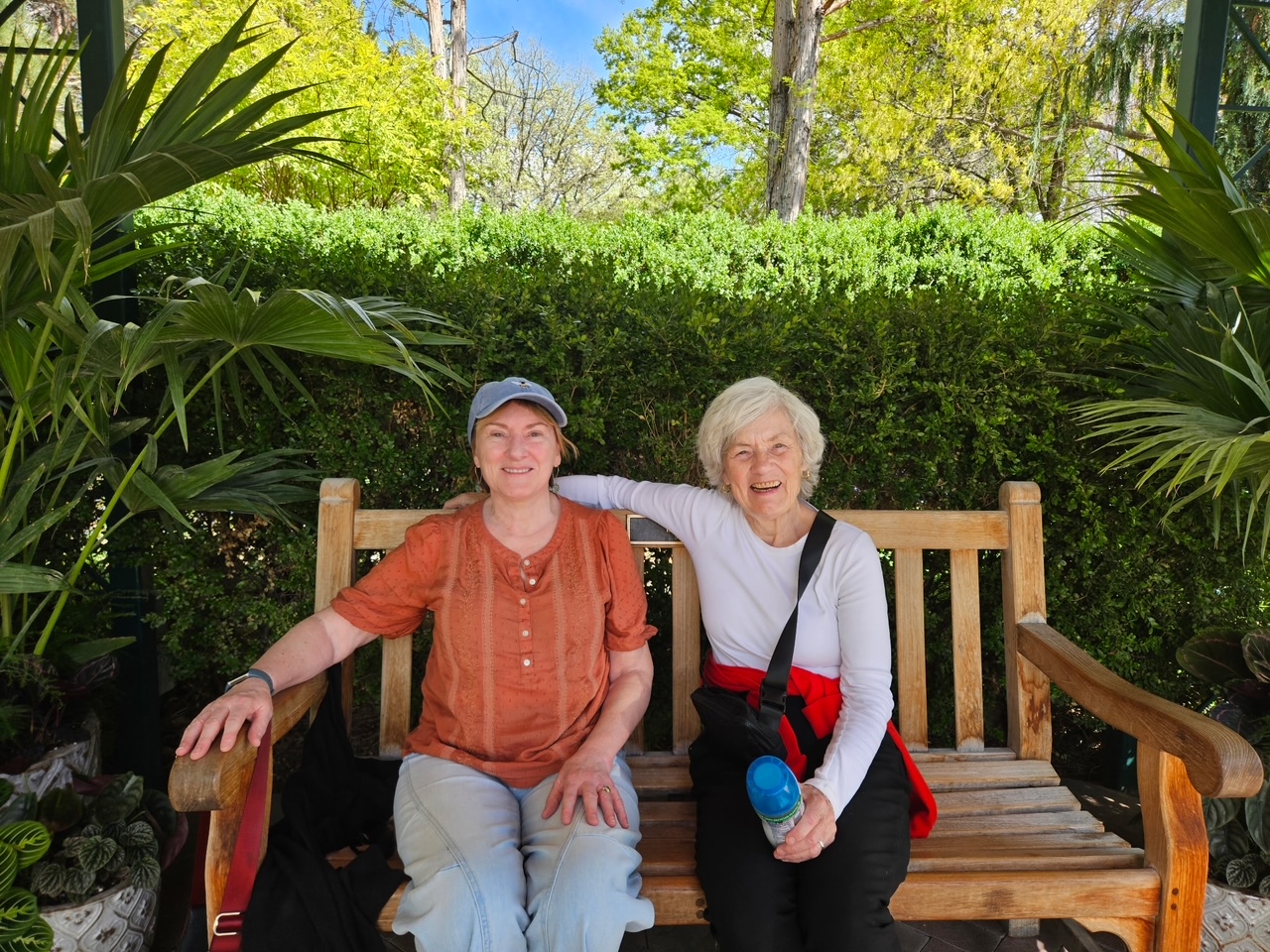
Vicki and me, Botanical Gardens, Denver, 5/2025

Uncategorized

place

So much poetry, so many beautiful views, graves of the beloveds at which to stand, roads that are familiar and dear: this is my place.

When I was in my twenties and I lived for a couple of years in Green Bay, Wisconsin, I often drove 100 or so miles north along the shore of Green Bay to Sturgeon Bay, and further, into the part of Door County I knew so well from the time I was a child. I can remember the drive north from Milwaukee as a child with my dad driving, as I lay in the back seat of the ’49 Chevy, sick with the beginning of the measles. I remember the stand of trees north of Jacksonport, on our way to Baileys Harbor, on our way to Sister Bay, on our way to Ellison Bay and Gills Rock.

I remember the faces and even the voices of the beloved family I would see in Door County. I remember Irene, with her giant hugs and never-ending chatter. I remember standing in a cherry orchard, carefully picking the sour cherries, while Daddy – standing by – filled a bucket in a few minutes. I remember exactly where the gas station is in Sister Bay – on the Green Bay side – and where Bunda’s Store – now another department store fills its space – stood across the street from the Sister Bay Bowl.

I know the names of taverns along the peninsula, too, along with memories of stories I’d been told as a child.

Although Door County has now become an “it” place, its two lane roads often lined bumper to bumper with folks from Chicago who’ve “discovered” the Door, I say I know the “old” places, the quiet places to go. And when I’m in Door County, I take the quiet roads to the quiet places.

Folks talk about a sense of place. Door County satisfies that sense of place for me. In my life, I’ve been privileged to travel to foreign places and I’ve been privileged to take many roads across the United States, beautiful places, all. But in my heart, in my memory, in my blood – it seems – I return always to Door County. At some moment in time, I promised myself that no matter how far away I might go in life, I would return to my place. I’ve kept that promise.

Each place I see again holds a memory for me, and as I stand at the graves of my beloved family – the Bahlerts were warm, gentle people – I see the faces of those who have passed. I can hear their voices. I can stand at exactly the places we stood.

When my beloved Auntie Irene was dying, I sent her a card, and included the words: “wait for me.” I wanted to see her again before she passed. And she did wait. I’d arrived in Door County later than expected after a hospitalization in Milwaukee, and I arrived, along with Jeff and my mother, in time to be at Auntie Irene’s funeral in the old, frame sanctuary of the Lutheran Church north of Baileys Harbor, to stand outside the church with many of my Bahlert cousins, to see them once again.

Several times in my life I have returned to Door County as a place to mark a change. I wrote my application to seminary in the autumn of 1981 in a rustic cabin along the shore of Lake Michigan. When I was heartbroken in earlier times, I went to Door County to heal, and in a cottage I pass along the highway to the north of Baileys Harbor – I remember as I drive past – I heard a voice call me by name.

And I am blessed, blessed by that voice, blessed by a sense of place.

I’ve lived many years in the West. I’ve lived a life I could not bring into my imagination when I was a child and a young person, trying to find my own way in life. And through all those years, I have kept my promise to myself: to return to this beloved place, as often as I am able.

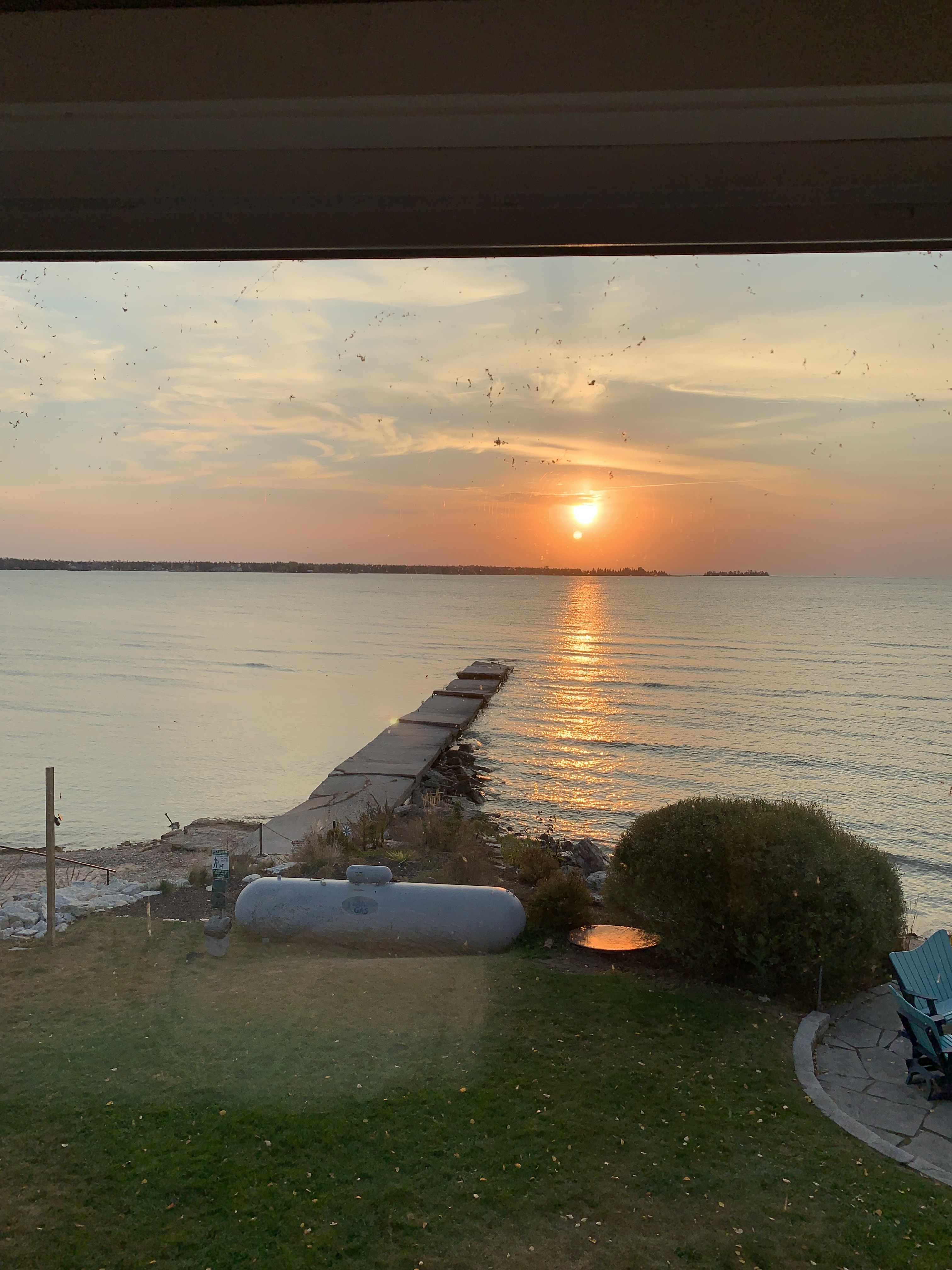
Photo of sunrise over Lake Michigan, photo taken by Mary Elyn Bahlert, 10/24. From a window in Baileys Harbor, WI.

Uncategorized

First job

My first job was at the Times Fine Arts Theater on Vliet Street and Hawley Road in Milwaukee. Word must have passed from one young person to another, because most of the other young people who worked at the theater were friends of mine from high school, and even earlier in my life. There was Pat R., her younger brother, Bobbie, my best friend, The Bug (who had received her name from Bobbie at some point), my cousin Mark, and a couple of other kids from the neighborhood.

I could take the 23 bus right to the front door of the theater to start my shift. I was the vendette, my friends Pat and Bug – who worked at different times – were the ticket sellers. We worked for minimum wage – I started at $ .90 – yes, that’s right – 90 cents! – and stayed at that rate for the year I worked there. And I worked no more than 15 hours each week.

My shift started with my walking down the left aisle in the dark theater to a little room off the dark hall behind the stage. There, I reached into the dark room to flick on the light switch, and I reached for a big bag of popcorn that was stored in that room. The popcorn had been popped at a sister theater, larger, with its own popcorn popping machine. I carried the big bag of popcorn back to the narrow aisle in the lobby of the theater, where I dropped the popcorn under the lights to warm. I had picked up some real butter in the back room of the theater, too, and I put that in the dispenser to warm and to melt. Then I was ready for customers.

Times Fine Arts Theater was not well-attended. Its fare was mostly “adult pictures,” although not what we would call X-rated these days. And then, the Theater showed one feature – not several in different theaters, which is common today. From time to time, I’d catch a few minutes of the movie currently running. But mostly, I stayed behind the counter where I sold popcorn and candy from a selection that was locked behind the counter until I opened it for my shift.

During the movies, I could talk and have fun with my friends who worked along with me. The usher stood at the doorway to the outer hallway, which was cold in the winter. The ticket seller had an electric heater which she had plugged in as soon as she arrived for her shift. Sometimes, crushes developed there between various couples, mostly short-lived.

I credit that job as marking the beginning of my life-long addiction to popcorn. (During COVID, popcorn-making in a pot on the stove became part of a daily lunch ritual with Jeff). I kept a small portion of popcorn behind the butter machine, and I snatched another kernel of buttered corn – real butter – from time to time. During COVID, popcorn-making in a pot on the stove became part of a daily lunch ritual with Jeff.

At the end of our shifts, we carefully counted out what we had made that night, and inventory of the candy in the glass cabinet that I opened from the back was taken. Then, I locked it up again, stuffed the remaining popcorn into the large plastic bag I’d stashed under the counter, and walked it back to the room behind the big screen.

When the shift was over, my Dad’s dark blue Chevy Bel-Air coupe showed up in front of the doors, and I was on my way home. Later, the Bug had access to one of her parents’ cars, and she’d drive me home, the two of us talking and laughing all the way.

Uncategorized

As we walk among the graves

Mornings,
we walk among the graves,
up hills and down.
I read the stones, glean the stories buried there.
A child, born and died, 2 days old.
Her mother gone, too.
Beloved father and mother,
pictures frozen on the stone,
as if they look the same today.
One young man, mother’s son,
died in war,
before he lived his life.

Mornings,
I count the years of the beloveds
as we walk among the graves.
I reckon those whose lives I now outlive,
some by many years.
I drift off, recounting my own life:
who was I, then?
The time has passed away,
and so quickly.

Mornings, 
I am sad as we walk among the graves.
I look into the sky, beautiful.
I see the city in the distance,
all that life booming and moving,
all those moments of importance,
passing too –
quickly.

Mary Elyn Bahlert, 10/2020

From the beginning of COVID sheltering-in-place, in March, 2020, through the long months that followed, Jeff and I had a morning routine. We’d rise from bed at 5:30, make two dripped cups of coffee, and sit together in the living room. After a time, we’d get dressed for the day and head outside for our morning walk: St. Mary’s Cemetery, just a block away from our home, has beautiful views of San Francisco Bay from the top of the hill. Each day, we’d pass the same graves, by the same route, talking with neighbors, stopping to play with someone’s dog, greeting those who passed by – some for the first time. We made friendships on those walks, and we heard plans change as a young couple purchased their first home in another neighborhood, some friends only people who passed us with a nod and a “good morning,” never to be seen again. This poem is from the time of COVID, in 2020.

“Mornings,
I count the years of the beloveds
as we walk among the graves.
I reckon those whose lives I now outlive,
some by many years… ”