nostalgia

War in Ukraine

Only a few weeks ago, the news was not filled with story after story of the War in Ukraine. Only a few weeks ago, we were focused on what the next surge of the COVID virus would bring, what it would mean to this pandemic that has affected the world. Only a few weeks ago, we all waited for the next report: what countries were open to travel? How would life be different after these two years of the global COVID pandemic? Although these were not easy questions, we did not know how quickly and completely the news, our attention, the attention of the world would shift to Ukraine. Like so many of you, I cry every day now.

My mother’s first language was Ukrainian. Mary was born in 1918 to Alex and Frances Markowski – Vlas Markov Srebny and Feodosia Machsuda Srebna – in Milwaukee, Wisconsin. Mary was the third living child of my grandparents, after her brother, John, and her brother, Michael. She was the second child to be born in the United States of America. After her would come Anne – Hannah – and Peter.

Like immigrants of all times and places, my grandfather and grandmother must have had their dreams, their hopes, for their new life in their new land. Or maybe it was my grandfather’s hope, and my grandmother, dependent on him, left her home and all she knew in the “Old Country” to come to a land she would not know as her own, as his spouse, without a dream of her own. They brought their first born – Ivan – and their memories of the land they knew, the people and customs of the land they knew, to this unknown place, where life would surely always be a struggle, as it is now, to the poor and the immigrants among us. Maybe my grandfather had a dream, a hope, some sort of light in himself that would surely come to shine in this new land. It did not. All of these thoughts now are speculation, because the poor and the uneducated among us are only numbers, so seldom is their story told.

The memory of my grandparents and how they came to be here is only memory, now. My grandfather died when I was one, and my grandmother, who only spoke Ukrainian in my memory, died when I was 19. Many times in the life I’ve crafted for myself, I’ve wondered about them. And I wonder who else now, in my generation, wonders about them, thinks about what their lives must have been like, what they held in them and with them as they came to this new place. Only questions arise, not many answers. As I think about my family in this country, I think that pieces of the story must exist somewhere, in someone. Who knows?

*

I’ve always had questions, I’ve always wondered, from the time I was young, about what lives my grandparents had. People who struggle to survive seldom leave deep marks on the path of their lives. Their children and their children’s children – and so on – are all that remain of them. I expect they had a dream, or a hope for this new place. I keep looking for that dream, that hope. I’ve been looking my whole life.

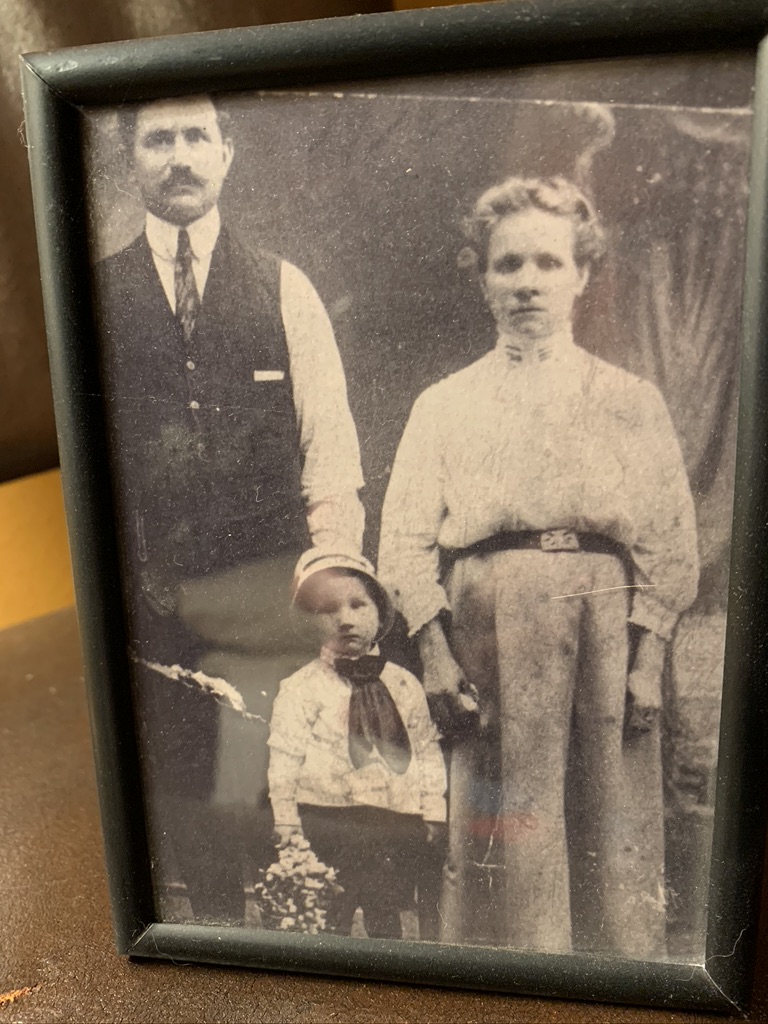
Alex and Frances Markowski, Johnny Markowski, about 1914

Were they content? Why leave their homeland, then? Why go to somewhere unknown, into an unknown future, with only hopes for something better, and nothing else? Whatever their dreams, they were not fulfilled. “Ukrainians have not done well in the United States,” I once heard a commentator say.

*

In my search for who they were – who I am – I have turned to DNA research. Several years ago, I connected online with a distant cousin who came from Ukraine, and who now lives in Canada. Through our connection, he had hoped to find a way for me to go to the place of my grandparents’ birth, their home. These days, instead, my cousin speaks daily to his family in Ukraine, helping them decide where to go for safety.

And this same story is being told for millions, millions of people, today.

Now, of course, another dream is lost. The dreams of millions in Ukraine have been smashed to death in just these past couple of weeks. As I write, people who could not think of leaving their home only a few days ago are leaving their homes, hoping to find safe passage to – to where? As I write, a war that started in the mind of one man is dismantling lives and livelihoods, forcing human beings to look for safety somewhere far from home. It’s an old story, older than the scriptures.

“Once I was happily content to be
As I was, where I was,
Close to the people who are close to me…”
– “Far From the Home I Love,” Fiddler on the Roof

Now, as the world watches, the Ukrainian people on the move again, people who were living their lives like the rest of us, just a few weeks ago. We are stunned as we watch, but our discomfort, our tears, our fears are only that. Today, we sit in our comfortable places, lamenting for these other human beings. Their history – their long history, has been full of violence, of turmoil, of poverty, all these things often at the hand of their leaders.

God save us all.

beauty, nostalgia, poetry

Longing

Days before she died, 
Mom sat, legs over the side of her bed, 
gazing out the window onto the sunny street: 
"I wish it would snow once - just for me," she said.
I think that, too, sometimes.
There is a longing in this dry place:
when life is dry, empty.
I'd love to see the snow then,
flakes falling, silent, to the ground,
the heavens shaking their down pillows.
I'd like to be in that quiet place for a few moments,
surrender my busy mind to it,
welcome the holy silence, the emptiness -
                     all that space. 
          
Mary Elyn Bahlert, February 27, 2022


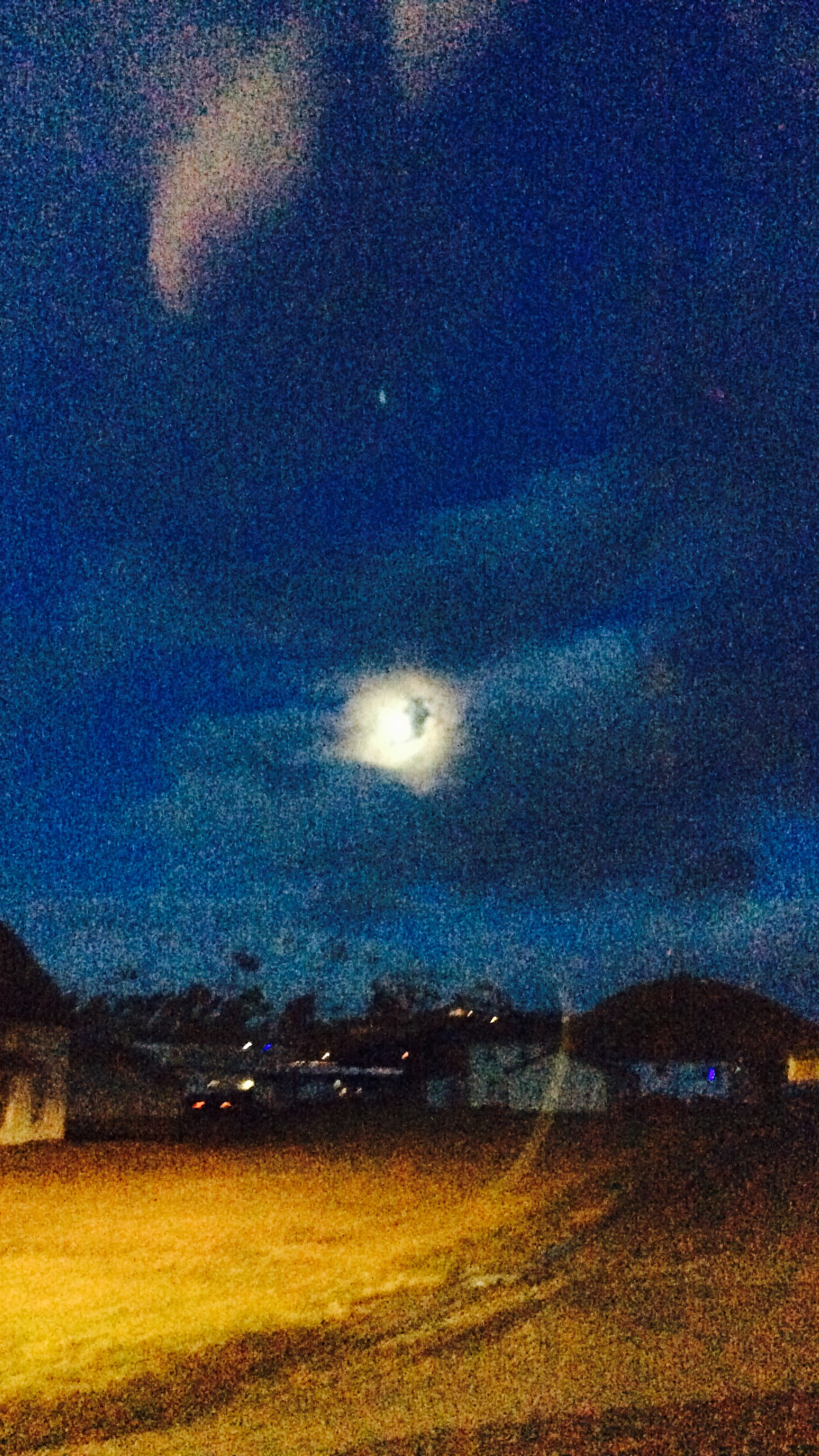
Full Moon – Moments Before Sunrise, 10:00 AM, Sunday, December 27, 2016
Unalaska, AK – photo taken by meb


Uncategorized

Where I came from

When I was five years old – five years and one month old – I started the long walk from 11 and Ring Street in Milwaukee to 9 and Ring Street, where I entered kindergarten at LaFollette Grade School.  Those two blocks were long walks for a little girl.  I expect – although I don’t remember – that my mother must have anxiously walked with me the first day or so, pushing in a stroller my baby sister, Susan, who had been born that March.  After that first day or two or three, I walked those blocks with the other children from my neighborhood.

When I return to drive through those streets now, I see how short the blocks were, moving west to east, toward “the Lake:”  Lake Michigan.  I think of myself as growing up on the shores of Lake Michigan; it’s not too much of a stretch to think that way.  The shore of Lake Michigan formed my compass-point, my sense of direction,  for many, many years.  “The Lake is on the east,” I think, “so I must be facing north, and to get there, I have to turn left, to the west…”  etc.  Years later, when I land in the Bay Area of California, I find that directions are figured differently.  “Turn right at the second gas station, then get into the left lane.  You’ll turn left at the next stop light.”  When I work at my first job in graduate school, someone hears me giving directions and says:  “You must be from the Midwest.”  Good guess.

That’s how our lives grow, how the edges of our lives expand:  by walking those few blocks to kindergarten, leaving home for the first time.  The edges widen by talking to kids whose lives inside their narrow flats are different.  I hear about dads who are mean, for example, and I hear about mothers who laugh a lot.  Until I leave my house in September of 1954 to walk those few blocks, my imagination does not hold space for those possibilities. 

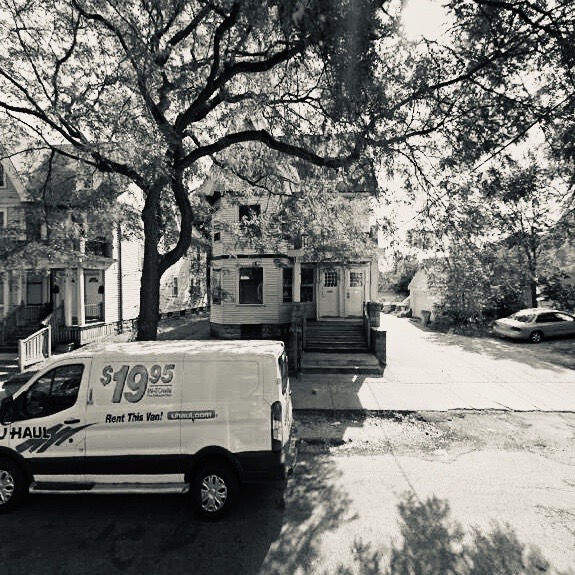
I am nostalgic for those streets, for those city spaces, for the shadows under the big elms that parade along the streets, for those narrow stairs with the small window on the right at the top, that lead to the second story flat with its small front room, tall windows, its small bathroom with the clawfoot tub that was used by 5 people without a thought that it could be otherwise.   My nostalgia wants to be satisfied, so I ride my laptop via google earth to the front of that flat; I walk with google the two short blocks to La Follette School.  I still see the beauty that was there, and I see the poverty, the simplicity of those flats, as well.

On the way to school one day, I learn that I am not Catholic.  Michelle, my neighbor across the alley (which runs next to my house), a year older then me, asks me one day, as we walk to school:  “Are you Catholic?”  I don’t know.  That night, I ask my mother if I am Catholic, and she tells me no.  I do not know the fraught history that lies behind her answer, and I will not know, for many years, the fraught history and the longing that goes with not being Catholic, in me. 

At LaFollette School, I am introduced to a kind of diversity, for the first time.  I sit near the front, always, our seats assigned alphabetically by teachers in navy blue polka dotted dresses.  In those narrow rows, in those wooden desks with holes for ink pots still marking the right hand side, I sit beside the children of first and second generation immigrants.  I do not know that many of my classmates speak a different language at home.  In my house, I often hear Ukrainian words, spoken with a kind of mysterious wink; from time to time, when my grandma visits, she and my mother speak their native tongue. 

In autumn, the elm trees that line Ring Street turned bright colors.  As  I walk, I often catch a maple seed – a helicopter to enchant children – as it floats to the ground.  Over the street, the trees meet to form a ceiling that arches from one street to the next.  In later years, Dutch Elm disease would take the elms away, and when I see these streets now they are just beginning to be tree-lined again, after many years. 

In winter, snowbanks form a path for children, four foot high, on the strip of land between the road and the sidewalk.  After a winter storm, the tops of the snowbanks form a hardened, frozen, flat sidewalk parallel to the cement sidewalk.   At the corner, I climb that tall bank of snow and stand taller than any adult, until I take the steps – made by other children – down again, at the place the alley meets the street.  After I’ve crossed the alley, I climb the snowbank again.

In spring, I walk to school as the glorious, wide, lilac bushes on front lawns float their purple flowers, their scent into the air.

meb/2021

Uncategorized

A New Rhythm

Over the past two years, life has developed a new rhythm. I didn’t choose to move into a new rhythm – the choice was made, and given to me, as it was given to everyone else. In the first days of the COVID sheltering-in-place mandate, the streets were quiet. If I needed to drive myself, it was seldom, and for short distances. For the most part, I stayed close to home.

You have your story of COVID-time, I’m sure. This is my story.

Activities that were meaningful to me – classes at a Senior Center, or volunteering as a chaplain at a local hospital – stopped immediately. My familiar routine was erased, also. A few friends stayed in contact as they adjusted to this change in all our lives; one friend, who is the last person to call – ever – called me one evening just to chat. At Thanksgiving, we had to forgo the usual family gathering in San Francisco for a ZOOM call, listening to each person talk about what their life was like now.

Some days, my husband and I would drive a distance – 30, 40 miles – to walk. Over time, we developed favorite places, places to which we’ve returned again and again. We came to enjoy walks at the Martinez Slough, where we watched the water ebb and flow from the tide, sometimes allowing us to see a shipwreck in the Carquinez Strait, sometimes not. Often afterward, we’d drive through the neighborhoods of Martinez, sightseers with a lot of time on our hands. Or we’d walk downtown, alone on the empty streets.

We walked in downtown Oakland, too, not far from our home. In the weeks after the George Floyd protests, we took our time, looking at the graffiti that lined the buildings on Broadway. We stopped to take pictures. We discovered places in our city we had not seen before, or places that we had only driven past in our cars.

As the months passed, we became more accustomed to this new, quieting rhythm, and we added new sites to our list of walks. One day, we drove to Half Moon Bay, where we walked along the shore of the Pacific Ocean, and then we walked on the high ridge that overlooks the shore. Because we live across the Bay from San Francisco, whose skyline we can see from our front window, we started to drive across the Bay Bridge – a dream to drive in pandemic days, with so little traffic! – to a different neighborhood on each visit, for a long walk on the hills, taking in the sites of the new places that we discovered.

One day in the fall of that first year, we drove to Apple Hill in the foothills of the Sierra Mountains for the yearly Apple Festival. We were grateful that the booths and stands, open-air, were open, yet were not filled with people from a long line of tour buses, which they had been in the past. The sight-seers’ loss was our gain as we enjoyed the quiet and safe surroundings.

Those early days of the pandemic are in the past, now. The busy street a block from our house is busy again. During the day and at night, I can hear the traffic passing, cars filled with folks busy in their lives. Now, although I continue to go to the grocery store early in the day – a habit I developed during the pandemic – even then, it can be busy, with lines of people waiting to check out.

Now, we are waiting – again – for another spike in COVID cases to complete its work, and, now, having learned about the ability of the virus to evolve again, and again, those early days are a long time ago. This is a new time, it seems.

Still, what will our lives be like when we are not barraged daily with new virus updates – the number of deaths, rising again, news stories of the famous who have lost their lives to COVID, COVID as the central and first news story, day after day?? We listen to the news each day, noting whether or not COVID is the first story of the newscast.

I’m in an in-between time, once again, in my life. What will interest me now? Where will I ever want to go, after this pandemic has moved into endemic mode? What will this new stage of my life, a stage I am not entering alone, but with all the other inhabitants of this world, be like? What will have changed, and what will not have changed? I guess, mostly, this is a time of questions.

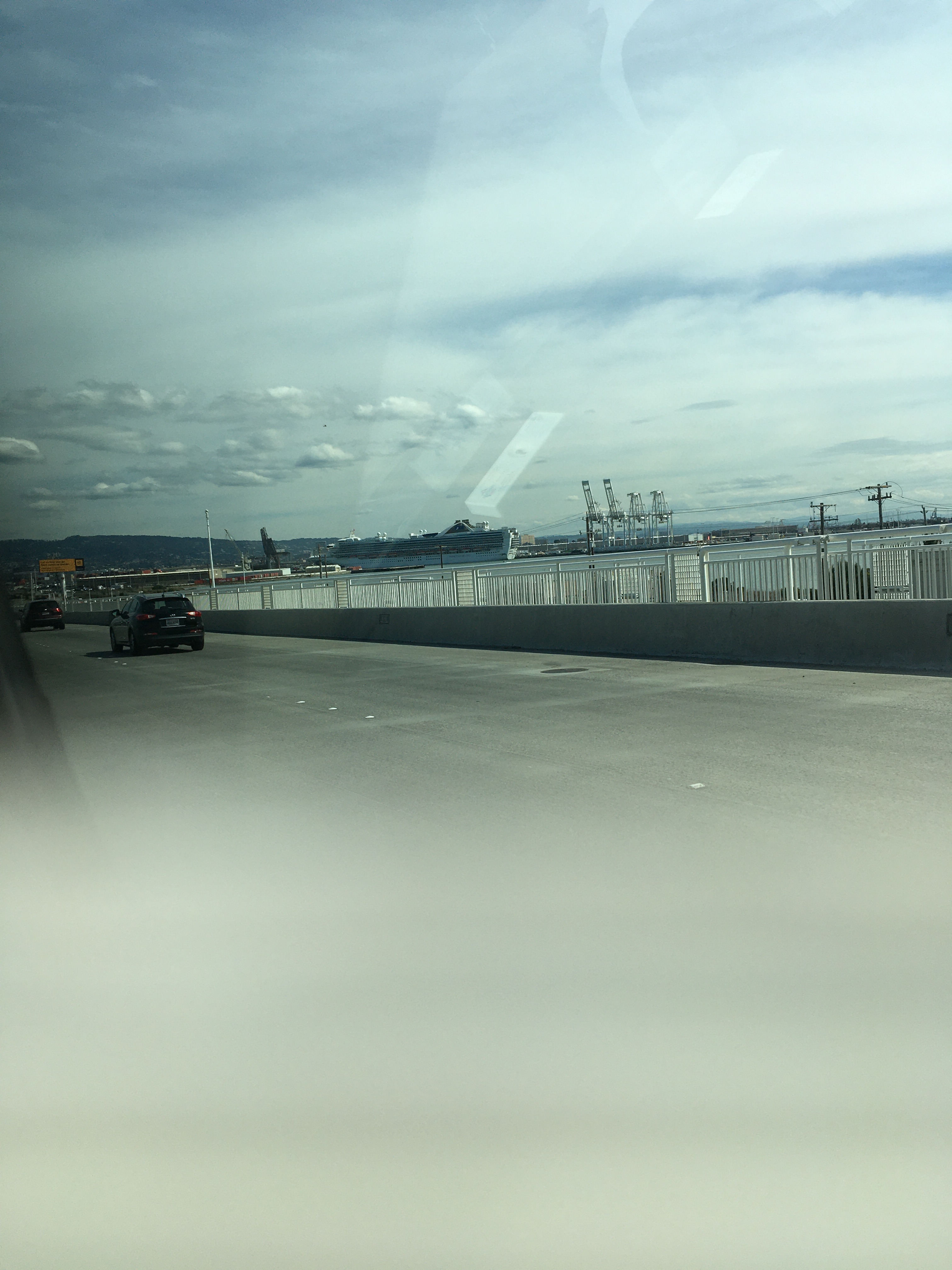
Driving into Oakland from San Francisco on the Bay Bridge, March 16, 2020. The ship pictured was a cruise ship stranded in Oakland at the beginning of the pandemic. Photo credit: Mary Elyn Bahlert

Uncategorized

This holy time…

FullSizeRender

When I was a young girl, my mother told me the story of Jesus dying on the cross on Good Friday. I know she had told me the story to explain why I couldn’t go off and play that afternoon, and so I stayed dutifully in front of our flat on Ring Street.

I don’t remember Mom telling me the story, but I do remember hanging from the iron hand-rail that led to the sidewalk, thinking about a man who was dying somewhere that afternoon, on a cross.  I remember looking out across the street, imagining the scene in my child’s mind.  I wondered about him.  I had a sense of loneliness, as if loneliness hung in the air that day.   I couldn’t see what was happening, but it was somewhere, then, in present time.

It was a quiet afternoon.  In the 1950’s, activity stopped and stores closed from 12 to 3 on Good Friday afternoon.  Folks who went to church, did.  And many folks did in that Midwestern city, good and faithful church folks who sat for 3 hours listening to sermons about the 7 last words Jesus spoke.  Then, they returned to whatever else they were doing.  In Milwaukee, I’m sure, Friday fish fry meals at taverns across the city and state would be full that evening, as they usually were.

My family were not church-going people, and so it seems strange, in a way, that Mom told me the story, but she did.  Stories have power even when they are not our stories.  Stories that are told, again and again, have more power.  Stories have more power than fact or history, truly.   And stories we tell become our stories, have a way of working their wonder and fear and meaning inside of us, all the time.

***

Now, I love the quiet season of Lent, that time of year when winter gives way to spring, slowly, with each lengthening day, with early buds on slender branches, with each storm that may be the last for the season.  And I love the movement of the moon across the sky.  I wait for the evening when I see the Pascal moon, the full moon that heralds Passover and Easter, an off-shoot of Passover.  That same moon marked the day and time for the telling of the story, Jesus taking a meal with his closest friends, honoring the ancient story, also.  The moon marks the time when winter slinks into spring, when green appears, when life that was under the earth comes back from the death of winter.

I watch the moon.  For as much as we modern folks know, moon is mystery.  For a time, it gives reflected light that lights up the white cover on my bed as if it was lit from within.  In the evening and night, moonlight comes into the bedroom, and by morning, it is far across the sky, hanging over the Pacific in the west.

Moon is mystery enough.  All those other things, those theological understandings and explanations, do no justice to the moon.  The passing of time is mystery enough, also, that I would reach back in memory today to see myself hanging from that bar, on that lonely day, the street quiet, and me, safe  in the assurance that Mom was close by, checking on me from the upstairs window, often.