Uncategorized

A night visitor

My Grandma, Frances Markowski – Feodosia Machsuda Srebna – had been born in Ukraine and came to the United States in 1914, before the Soviet Revolution that took that land and swallowed it into itself. A picture of her as a young woman with her young son, Ivan/John, and her husband, Vlas/Alex sits on the cabinet under the window in my dining room.

As a little girl, I looked over the railing of the porch on the second floor of the flat on Ring Street to see my grandma walking slowly, head down and covered by a scarf – she was a true “babushka” – her long dark winter coat covering her legs, up the alley to sit with my mother in the kitchen, to have a talk in the language that was native to both. In later years, Mom would often forget much of her Ukrainian first language, only speaking a word or two, sometimes with humor, with her sister, Anne, or one of her brothers.

Grandma died when I was in high school, and her funeral was the last that my parents went to without me and my sister, Suzie. A few months later, my mother’s younger sister died, as if to follow her mother. Years later, her son, my cousin Mark, would tell me that he thought his mother – who was already battling cancer – gave up after her mother died.

After Grandma’s death, my mother went to the cemetery a few times a year to clean up the graves of her father and mother, a sort of homage. When I went with her, she’d send me off with a bucket to the water spout on the road that ran past the graves and I’d come back, the bucket filled with the water, so that she could tend to the dead. A few years ago, Jeff and I returned to the cemetery in Milwaukee, and when we drove into the gates, I provided directions that took us right to the graves. I have not forgotten.

***

I wasn’t thinking of Grandma at all when I entered seminary in 1982 in Berkeley. One early morning, before sunrise, as I lay sleeping in my small room in the dormitory apartment that I shared with two other women, I was awakened by a presence in the room. I knew it was Grandma. I knew. She came into me that early morning. Frightened by this unbidden presence, I called out to Jesus.

Was I haunted? Why did she come to me? I asked the questions, longing to know, in a conversation with a friend. “Who else would she go to?” Her answer.

Jeff speaks of that time as a “haunting,” but I’m not sure. I do know that she lived with me, in me, for a number of years. And over the course of that time I wrote the series of poems I call “The Feodosia Poems.” They are her poems, not mine. She was an illiterate woman from the Old Country, and I am a woman of the New World, privileged, educated.

My mother told me she did not remember her dreams. But she remembered a dream one morning when I was visiting in her apartment. Just before she awoke, she dreamed she was standing looking at the back of a truck. The back of the truck rolled up, and there, looking at my mother, was a Matryoshka doll, a nesting doll. The doll’s face was her mother, my grandmother. She winked at my mother! And Mom woke up. She recounted the dream to me when we talked over coffee that morning.

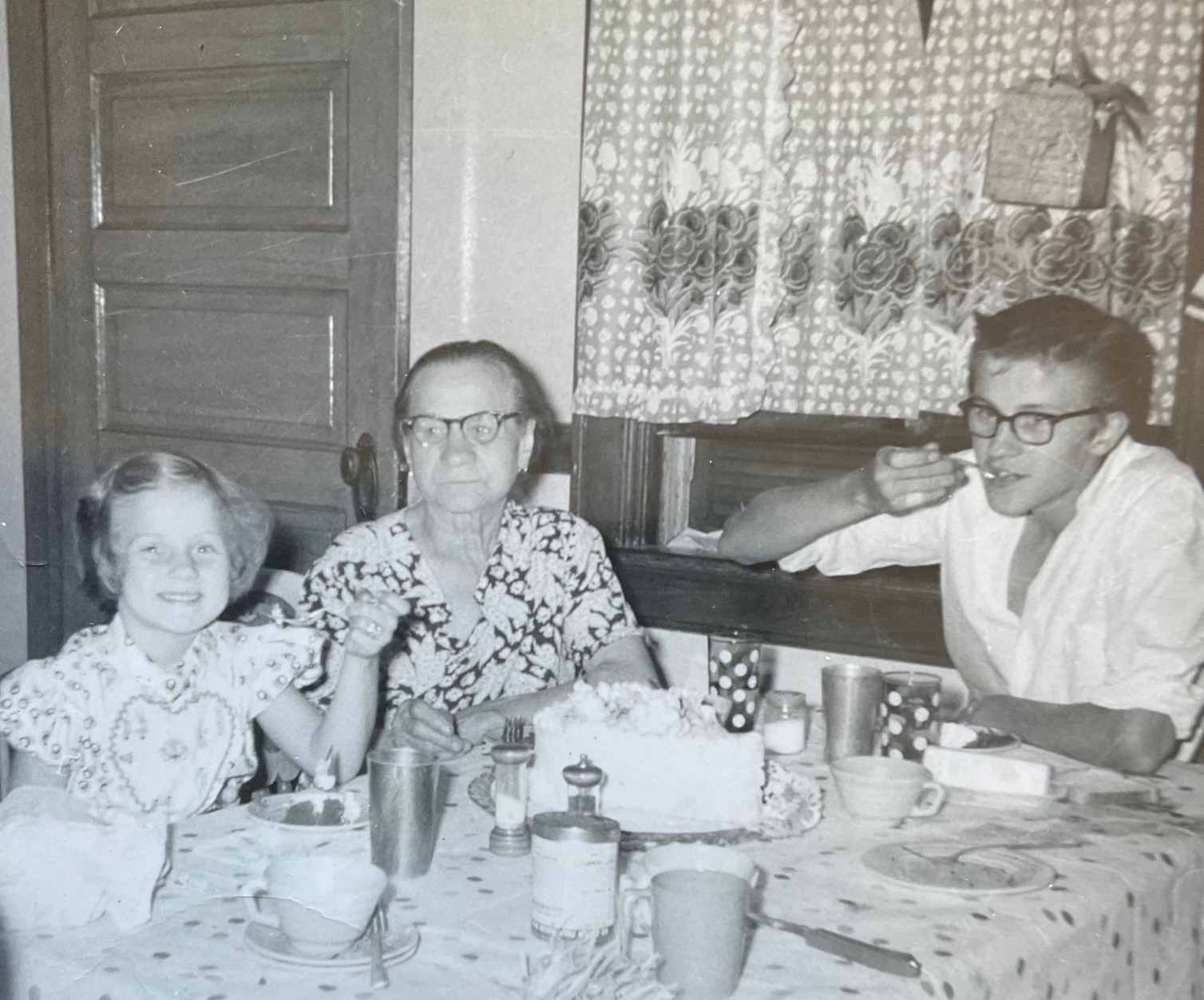
A black and white photo from the 1950’s is the only photo I have of Grandma with a light in her eye. She sits between me and big brother Ronn, already a teenager, trying to look “cool.” Maybe we brought some joy to her.

How I wish I knew her better, my Grandma, my babusya. And maybe, I do.

Me, Grandma, Ronn, circa 1955

beauty, memories, reflecting

the cat

I married a man and a cat. Schatzi had been in Jeff’s life for several years when he and I were married in 1984. Part Maine Coone, she was a beautiful creature with long gray fur. After we were married, she took to sleeping at our feet, making room for me. Schatzi will always be my favorite cat (sorry, LiLi).

Schatzi was my first cat, and she became my introduction to cats. She was a good role model. I’ve discovered since that not all cats have the same people-loving, generous disposition that Schatzi had. If I pushed her too far, she warned me gently, stretching one leg, claws showing, in my direction. I always paid attention! I studied her closely. One day I announced to Jeff: “this cat doesn’t have any eye-lids!” Welcome to cat-hood!

When I took long naps on the green couch in our living room, Schatzi would lie next to me, her back stretched out along my body, an extra layer of warmth. When we had visitors, Schatzi made sure to find her way to the center of the action. While she was a house cat, she was allowed outside if she chose, and being female, she didn’t ever go far from home.

In December of 2000, I recall a Sunday during the liturgical season of Advent when I recounted three things in my sermon that had happened to me during the prior week: I’d received a phone call that my friend and colleague Bruce had died of a heart attack, a doctor’s appointment with my mother had revealed that she had terminal cancer, and the cat had spent the week sick, lying close to the heat register in the dining room of our flat off Grand Avenue in Oakland. As she passed me after church, Phyllis turned to me and said: “I can’t get that cat out of my mind.”

A few months later, Mom passed, in February of 2001, at her beloved home at Mathilda Brown Women’s Residence in Oakland.

Schatzi stayed awhile longer that year. She seemed to know that I was grieving, that I needed her cozy and comforting presence. In the autumn of 2001, Schatzi spent her last night with us on the floor of the kitchen, not able to move, not able to eat. Jeff lay on the floor next to her, all night long.

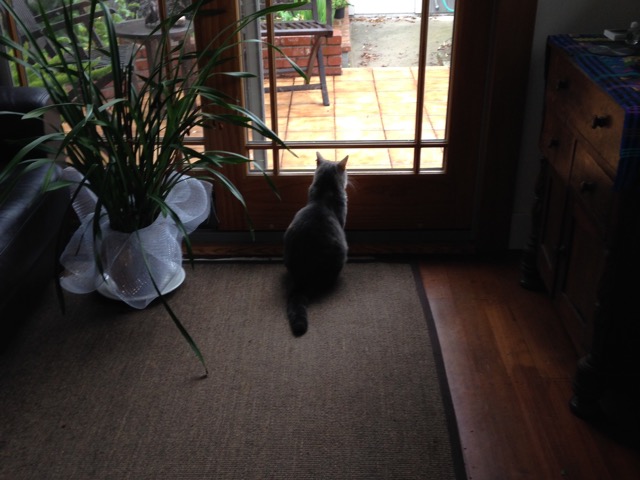
LiLi, our current feline housemate. Photo by Mary Elyn Bahlert.
Uncategorized

O, the Places You’ll Go!*

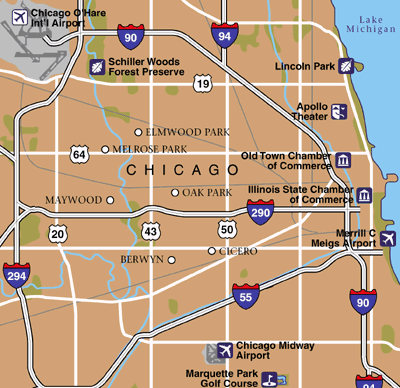
These days, O’Hare Field in Chicago is just another airport. Since many flights have changed over the course of the years we’ve all been living with Covid-19, Jeff and I fly into O’Hare and drive to Wisconsin on our trips “home.”

Flying into and out of O’Hare Field is a sort of home-coming – and a home-leaving – to me.

O’Hare Field stands in my mind as a character of its own. O’Hare Field holds a particular place in my memories. I was in my late teens before I flew in an airplane, and I was in my early 20’s before I met O’Hare Field. As I walked through the terminals – everything so much bigger than in Milwaukee, 80 miles to the north – and I observed the people in that crowded, crowded airport – I was transported into another life, a life filled with a kind of diversity that I had not seen in my coming up life.

I loved it! I loved all the different people, people traveling from other parts of the world, distant places that I was not sure I would ever see. Turks, their heads held proud, covered, and women, long skirts around them as they herded their children from one gate to another. Strangers with their eyes focused ahead of them, focused on where they were going, eyes and hearts reflecting where they had been. I didn’t imagine my life at that point, a life that would include trips to foreign places, distant places that I was not sure I would ever see! And I have seen some – many – of them.

And so my world was opening, before I knew it was, before I was aware. The life that someone had dreamed for me – maybe I dreamed it myself – was beginning to lay itself out before me. I’ve lived most of my life in the Bay Area, a long way from Milwaukee, a long way from O’Hare Field. I often say that the weather is more interesting back in Wisconsin, but the people are more interesting here, the diversity of people who land here in the Bay Area from around the world.

*thanks to Dr. Spock

memories, reflecting

Nancy’s Grandma

So many of the stories from my grade school years seem to include Nancy, who grew up in the same neighborhood as I did in Milwaukee. Nancy and I are still connected, all these years later. And I always remember that Nancy and her sister, Diane, did not have parents, but that they lived with their Grandma and Grandpa in a lovely house on Medford Avenue, two blocks from our rented flat.

One day, as Nancy and I hung out together, we sat in the kitchen of that house with her Grandma. And although I don’t remember Grandma at all – was she talkative? Was she friendly to me, a friend of Nancy’s? Was she busy, always busy, or did she take time to sit down? That day, she told us about how she met her husband, Nancy’s Grandpa, who sat in the front room of the house. She had walked with a girlfriend to go roller skating, and there she met him, tall and handsome. Oh! he was so funny! Grandma recalled.

I looked toward the room where the old man sat. Handsome? Funny? How could that be? I tried to imagine him that way, but I couldn’t. And Grandma – how could I imagine her as a young woman, out with friends, having fun?

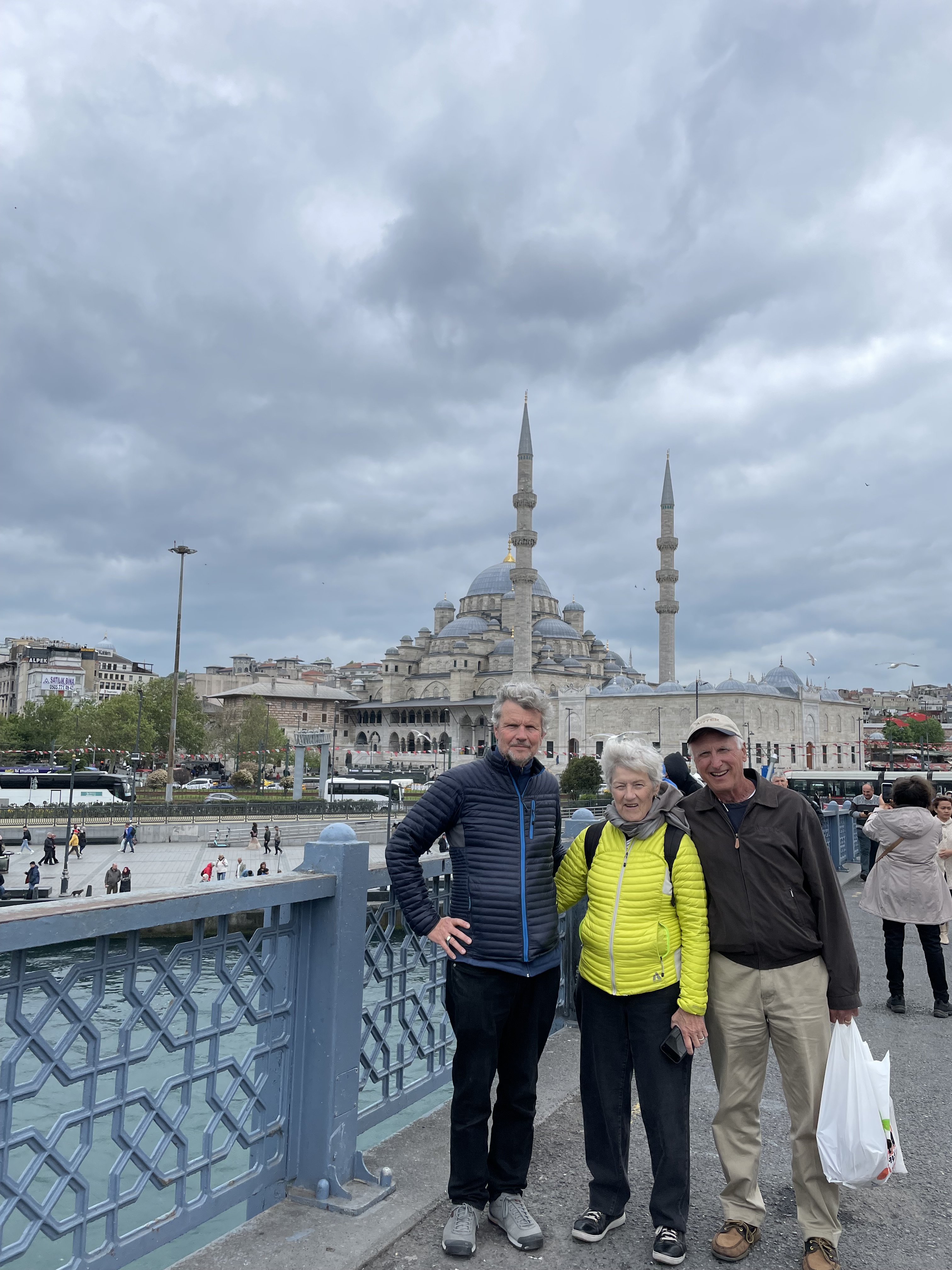
I guess all this means is that it’s a good time for me to be humble. Surely the young people who pass on the street next to our house here in Oakland must look at Jeff, look at me, and have a hard time thinking that we were young, once, too. One day, Jeff was walking to the house from his studio behind the garage, and he heard the young woman who lives next door to us describing her neighbors to a friend: “and there’s a nice retired couple next door.” We’re like Grandma, now, old and remembering when we were young. And grateful, grateful to be here, to “have our health,” as the old-timers used to say. Indeed, we do have our health and I suppose we’re old, now, too.

A nice old couple in Istanbul with a friend, May, 2023

Uncategorized

Renny Whiteoak

My mother loved books, and although she had not graduated from high school (she received her GED when I was enrolled in college), she made sure she passed on her love of books and learning to her children. So once every two weeks, she walked my sister and me to the Center Street library, where she checked out several books, and where Suzie and I also found books to take home and to read.

Somewhere over the course of my childhood, my mother received a set of bound, green covered books, fictional accounts of a family from Canada: The Whiteoaks of Jalna (written by Mazo de la Roche, Collier and Son, publishers). I still have the six volumes, a wonderful set of books I set out to display on beautiful fir shelves in our living room. When I was old enough to read these books, Mom and I read the books. And we talked about what we had read, those fictional people, whose lives were much more privileged than ours, that beautiful country land, such a stark contrast to the streets lined with narrow, rented flats in the city.

What I remember most about those books is how they awoke my mother’s fancy, as well as mine. We loved the characters. We talked about the happenings in the books, as if we had witnessed these happenings in our own lives. And we admired – maybe even had a crush – on the eldest son, Renny Whiteoak.

Renny was a red-headed, ruddy young man, strong, good looking. Over the course of the books, he grew from a young person into a young man. And both Mom and I fancied, from time to time, that we had seen Renny. Sometimes, as we rode in the car (Mom learned to drive and got her driver’s license when I was in Junior High), one of us would point out a young man on the street: “look, there’s Renny!” And we’d both agree that we’d seen him, again.

Mom sparked my imagination, and I expect she sparked mine because her own was lit. She would remind me – in later years, when I discovered my anger at what my folks had or had not been able to give me – that she had grown up in a different way than I had. And that included making space for books, for imagination, for a world that would grow to be larger than the world I was coming up in.

Now, I love seeing those green covered books on my shelf. They hold a lot of memories for me. Lately, I’ve been reading again – for the fourth time, I believe – Jane Eyre. As I remember the legacy my mother gifted to me, I expect I’ll be reading about Renny Whiteoak again, too. Maybe I’ll even see him on the street.

Here’s to Renny! – photo by Mary Elyn Bahlert, 6/2023