Uncategorized

“tis the season…”

Tomorrow is Thanksgiving Day. Jeff and I will gather with my cousin Norman’s family around a long, long table in a very small house on Potrero Hill for a Thanksgiving feast. Every year, we each make time to visit again with extended family to hear a few words about the past year, to hear what family life is like at this age, to mention how good everything that everyone has brought is, to hear laughter and conversations that don’t always make it all the way through – there are too many of us to catch up with! I bring the pies – pumpkin, apple, and two cherry pies made with cherries imported from Door County, Wisconsin, where my father and Norman’s father grew up.

Before we start to eat, Norman will undoubtedly turn to either me or Jeff – the resident clergy – to say a blessing. The room will be quiet for a few moments, and after the Amen! the chatter will rise up again.

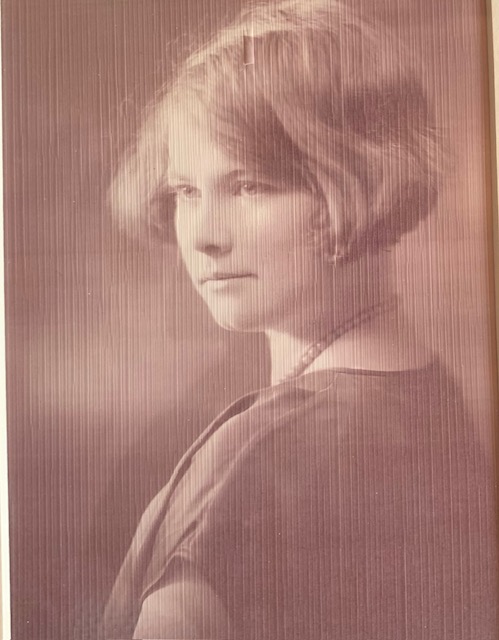
Since tomorrow is The Day, I’ll be at work in the kitchen after dinner today, baking the pies. Cheryl, Norman’s wife, has spent most of her week getting ready, cooking whatever she can that can be prepared early. She’ll have empty glasses and full bottles of wine on the kitchen counter, along with snack foods for us, in case we arrive to the fest hungry. Norman will roam around the tiny house with his camera in hand, snapping pictures of his grandchildren. And when we sit down to eat, a portrait of the Bahlert family of Sister Bay will look down on us as we eat, maybe offering an unspoken blessing to the gathered voices.

It seems to me that getting ready for Thanksgiving Day holds as many joys as the day itself. After all those hours of preparation, soon one family after another will be at the door, donning coats, carrying goodies of leftovers from the feast, saying goodbye.

*

Holiday time in the Bay Area has a different feel to me than holiday time in the cold and grey Midwest, where Jeff and I both grew up. Holiday time in the Midwest followed days of already cold weather and winds off Lake Michigan, days when winter coats and gloves were already out for the long season ahead. And holiday time as a child, when there was a sense of magic in the air, ended a long, long time ago. But these days are a good time to remember those who are no longer here, but who have never left us, in a way. I’m sure they are with us: in our voices, in our laughter, in our smiles and in the curls in our hair.

And these days are a good time to be grateful, for all that life that has passed, all the beloved ones who are gone, and for the long table of young voices that gather to help us celebrate the holiday, again.

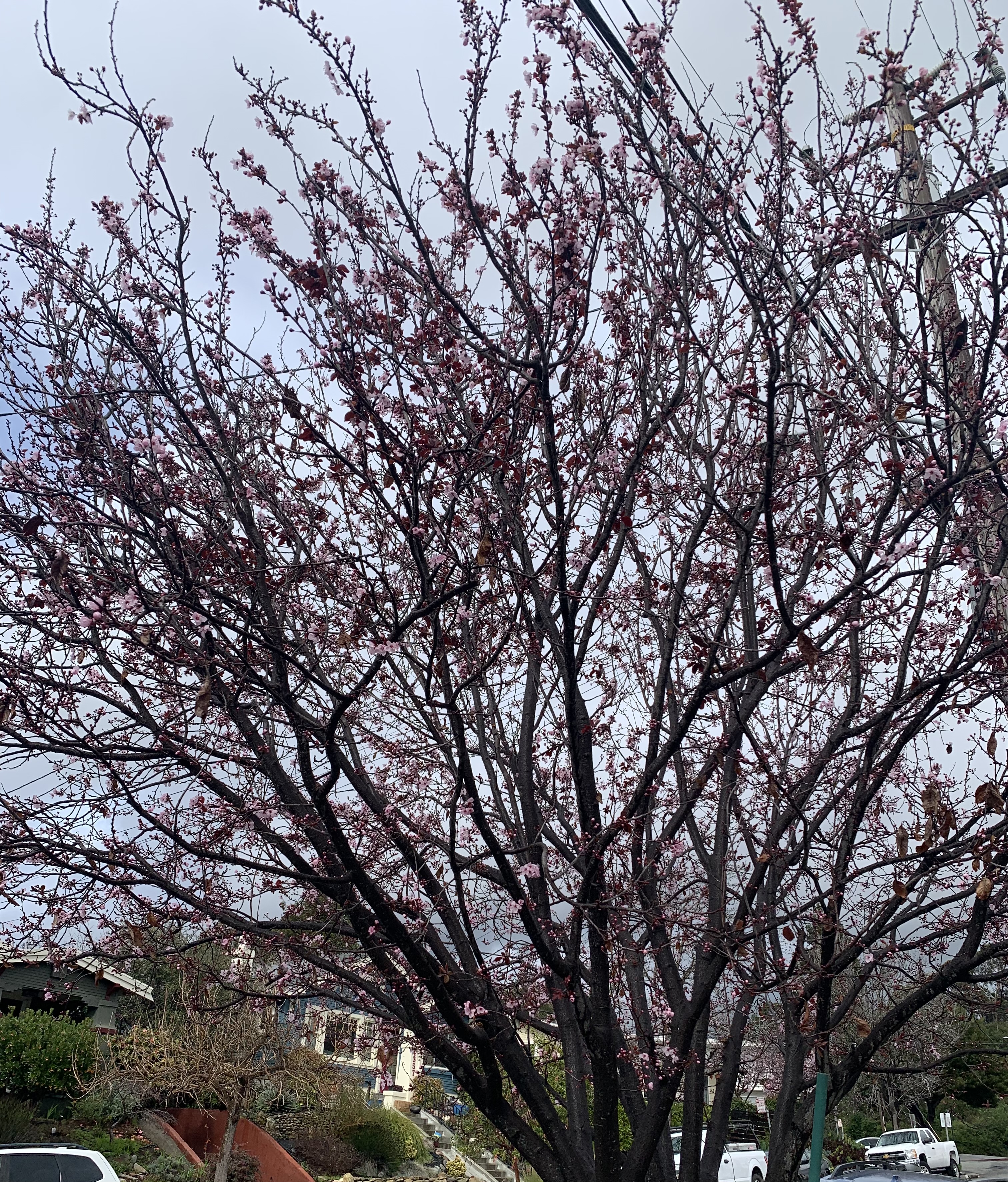
And autumn does come to the Bay Area… photo by Mary Elyn Bahlert, 10/2025

Uncategorized

A mind for it

As an undergraduate at the University of Wisconsin-Milwaukee, I majored in English. I didn’t say a word – at least not aloud, in class, as response to a question or to ask a question. I was silent, except when I visited with another student, someone who sat next to me in class, say. But I was listening. I had been silent in high school, too, although I joined a forensic society and was able to make presentations to my classes with ease. It would take several years – long years – after I’d graduated and moved on to my first position with the Federal Government as a Claims Representative for Social Security, assigned to the Field Office in Green Bay, Wisconsin, and even later, when I moved across country to study at Pacific School of Religion in Berkeley, to settle into life in Northern California, before I’d break through the shell of the shame that kept me silent as my busy mind answered questions, wrote papers.

The name of the class intrigued me. “Theology and Literature.” And so, as was my way, I sat silently in class as the instructor – an Episcopal Priest who seemed to enjoy teaching (I remember that!) began the first meeting by explaining that we’d be writing papers, and that to receive an “A” in the course, we would also be expected to take part in class discussions. I knew that an “A” was out for me then – because I never spoke up in class. But I was an avid student; I loved the literature and I loved the focus we took. And I knew this: I had a mind for what we were reading, what we were studying, for what the professor brought to us.

I wrote the requisite papers and completed the semester without having said a word. And I waited along with the other students as the final paper of the semester was returned. And I waited also, to receive my final grade in the class. There it was: “A.”

I’d done it! And that “A” got my attention. It confirmed my thought that I had a way with this kind of thinking, for theology, for a way to bring together literature – which I loved – and theology – which I also loved.

*

My semester in a student in “Theology and Literature” came to mind today as my husband and I looked over the collection of a lifetime of poems I hope to have published. I’ve always thought: “someday.” It seems that in these elder years, the “somedays” of life are having to step into the light, or be banished forever from my hopes, my dreams. “Someday, I’d like to have my poems published.” The sting of jealousy that accompanies my experience when a friend publishes still arrives some days. But someday – my someday – seems to be now.

Now, now, now… photo by Mary Elyn Bahlert, 10/25

Uncategorized

If the world hadn’t stopped

If the world hadn’t stopped 
its incessant orbit, 
its frantic motion – one day to the next –
if all the people hadn’t halted their wars, 
their value counted in barrels of oil, 
I expect I wouldn’t have seen the sun brightening, blue by blue, 
or known the smell of the morning air, fresh, 
as I go sniffing like a cat 
to catch a whiff of what has gone before. 
I would not have opened my window, grateful, 
or wondered at the sound of humans calling into the night to give thanks.

I expect I wouldn’t have stopped midday to pray,
my arms lifted beside the lonely tree, 
its branches lifted, also, in gratitude 
for the magic of the sun, the sky, the dusk and dawn. 
We would not have murmured together at the light 
of the lilies at dusk, 
at the quiet that hangs over the morning air, 
at the call of the crow hoarding its bounty: 
all of us inhabitants of this magnificent earth.


Mary Elyn Bahlert, 2020

Photo by Mary Elyn Bahlert, View Place, 2020

Uncategorized

On Martinez Slough

I expect that most of us who have lived through – or are living through – the “Covid Years” since March of 2020 have stories to tell. Some of the stories will be about times of isolation, times when holidays were lived through with phone calls instead of dinner around a table with loved ones, times when groceries were delivered to the door, when the PBS Evening News on Friday afternoon included the number of recorded deaths across the country that week, times when people discovered new ways to work, to connect, to cope.

Jeff and I remember fondly those long evenings when we would get into one of our cars and drive somewhere in Oakland we had not seen before, a new neighborhood, a new view, perhaps. And we remember those early days of 2020 when we sat in a circle, scarves thrown over our shoulders, in our yard, with good friends. We had a way to see each other face to face, and we were grateful for those times, for those friends. Each day seemed the same: the alarm beside our bed going off at 5:30 am, coffee together as the sun came up, an early morning walk in St. Mary’s Cemetery, where we came to know some of our neighbors for the first time, the streets – once filled with lines of cars waiting at the stop light – quiet. We discovered for the first time some of the treasures of living here in the Bay Area.

And we discovered a place we love to walk even now, a place we like to take friends, as we introduced our friend Ron to that place today: the Martinez Slough. Martinez is a small city about 20 miles to the North and East of Oakland, through the tunnel and past the satellite city of Walnut Creek, along the highway that runs through the Valley and on to the Sierra, several hours to the east. Martinez is an industrial city, and the hills which surround Martinez often fill with steam from the petroleum refining and chemical manufacturing companies that surround the city proper. Martinez, on the southern shore of the Carquinez Strait, sees the tide come in and go out, marking the days, marking the passage of time.

And along the Strait, we discovered a walking path that is home to the shore birds and other creatures as well as to the humans who walk there along the level path. People are often friendly when we pass them on our walks, and we stop again and again at the site of a ship wreck – more of the ship visible to our eyes as the tide goes out. The paths further from the water are rutted and uneven, but along the water, the path is most often free of debris, easy to walk.

In the spring of the year, the kites of people from the area go up in the Park that lines the shore of the Strait, colorful kites, and the children and daddies holding the strings are colorful, diverse, too.

During the COVID years, we liked to leave our house early on a Sunday morning – free Sunday mornings remain a luxury to us, two retired preachers – to drive to a small parking lot across the railroad tracks from downtown Martinez, to leave our car there, enjoying one another’s company, and to walk the paths, chatting with one another, greeting other human beings, enjoying the air, the green, the blue of the Strait, the ships coming and going, docked for a day or two, the sound of traffic on the Martinez Bridge – we can see from the shore! – just a soft buzz in the air.

There’s a new train station in Martinez, a block away from the parking lot where we leave our car, and sometimes we wait to cross the tracks as a passenger train makes its way to the East, on its way to the Valley, to the Sierra. Every time we pass the train station we remind each other that we’d like to take the train from Oakland to Martinez – some day (we haven’t, at this writing!).

As the COVID years continued, we discovered a Farmers’ Market on Sunday mornings in downtown Martinez. Jeff made sure to take a cloth shopping bag from the car to fill with goodies – fruit, fresh vegetables – at the market. Caramel popcorn, a favorite for me, is fresh-popped and sold by the bag, which I carry with me to the car, and which both Jeff and I devour, all the way home.

*

Ron, our companion today, is an experienced hiker, having hiked with his wife on paths around the world, but the Slough was new to him; we like to introduce this gem to friends who visit us from other places. Each person we take finds something in particular to like at the Slough, as we have.

It’s been over 5 years – 5 long years – since the world was introduced to COVID, a staple in our experience now. Our lives have changed, and our lives have remained the same in many ways, over those 5 years. Still, it’s always a new pleasure to walk the trails at Martinez Slough, enjoying the path, enjoying the air, the light, the shore birds that fly away when we come near, enjoying one another.

At Martinez Slough, photo by Mary Elyn Bahlert, 8/11/2025

Uncategorized

My trusty Royal

When I left Milwaukee to go to seminary at the end of 1981, I took 2 suitcases of clothes and a portable Royal Typewriter.

I had used that typewriter in high school after I learned to type. All the girls took a mandatory course in which we were taught how to use a typewriter in the 1960’s (that along with being required to wear a skirt). Being able to type with some proficiency – and accuracy, which I can prove now, as I write these words – was expected. And so, using index cards with carefully written notes, along with sources, properly described, I wrote my first term papers on that Royal typewriter. I was good at the writing, which came easily to me.

And I used that typewriter in college. I majored in English literature, and my typing skills came in handy. I was quiet in classes, but I made up for being quiet by being able to write sentences and paragraphs. And I made up for being quiet by being interested in literature: my interest showed in the papers I wrote.

It was Mom’s typewriter. Most of the time, the typewriter sat, covered and locked, on the desk Mom used when she wrote checks or did other business – until I took it over. If I needed to use the typewriter, it was mine. Most of the time, the typewriter took up what was left of the space on the desk – the desk which now sits in the small office my nephew Rainier has for himself at his home in Seattle. When his little girl, Celeste, was an infant, the desk served as a changing table in her bedroom. I’ve told Rainier that his Grandma would be happy to know that her desk was still in use – and by her grandson, of whom she would be proud.

When I left to go to seminary, the typewriter became mine. It sat on the desk in my dorm room, and later in my studio apartment, a third floor walk up in North Berkeley, where my kitchen window overlooked the patio of the Franciscan Seminary next door. On Friday nights, the smell of alcohol drifted up to my window, along with the sounds of laughter and muffled conversation of the aspiring monks below. When I used the typewriter in my studio, I moved it to sit at the table in the kitchen.

When I left seminary and started to serve as a pastor in downtown San Jose, the typewriter moved with me and my husband to Pleasanton. There was a typewriter – an electric typewriter! – in my office in downtown San Jose, and I used that when I was in the office. But shortly after our move to Pleasanton – this being the 1980’s – we purchased our first computer – a little box that had a separate keyboard, and a printer that used a roll of paper to churn out our writings.

And that first computer signaled the end of a long and worthy life for the little Royal typewriter that had served me so well.

Now, that little Royal portable typewriter sits on a shelf in the garage. I rarely take it out, and if I did, it would be to take a look at it again. Instead, it gathers dust. I expect that little Royal portable typewriter to outlive me. It’s a relic from another time, for sure.