nostalgia

War in Ukraine

Only a few weeks ago, the news was not filled with story after story of the War in Ukraine. Only a few weeks ago, we were focused on what the next surge of the COVID virus would bring, what it would mean to this pandemic that has affected the world. Only a few weeks ago, we all waited for the next report: what countries were open to travel? How would life be different after these two years of the global COVID pandemic? Although these were not easy questions, we did not know how quickly and completely the news, our attention, the attention of the world would shift to Ukraine. Like so many of you, I cry every day now.

My mother’s first language was Ukrainian. Mary was born in 1918 to Alex and Frances Markowski – Vlas Markov Srebny and Feodosia Machsuda Srebna – in Milwaukee, Wisconsin. Mary was the third living child of my grandparents, after her brother, John, and her brother, Michael. She was the second child to be born in the United States of America. After her would come Anne – Hannah – and Peter.

Like immigrants of all times and places, my grandfather and grandmother must have had their dreams, their hopes, for their new life in their new land. Or maybe it was my grandfather’s hope, and my grandmother, dependent on him, left her home and all she knew in the “Old Country” to come to a land she would not know as her own, as his spouse, without a dream of her own. They brought their first born – Ivan – and their memories of the land they knew, the people and customs of the land they knew, to this unknown place, where life would surely always be a struggle, as it is now, to the poor and the immigrants among us. Maybe my grandfather had a dream, a hope, some sort of light in himself that would surely come to shine in this new land. It did not. All of these thoughts now are speculation, because the poor and the uneducated among us are only numbers, so seldom is their story told.

The memory of my grandparents and how they came to be here is only memory, now. My grandfather died when I was one, and my grandmother, who only spoke Ukrainian in my memory, died when I was 19. Many times in the life I’ve crafted for myself, I’ve wondered about them. And I wonder who else now, in my generation, wonders about them, thinks about what their lives must have been like, what they held in them and with them as they came to this new place. Only questions arise, not many answers. As I think about my family in this country, I think that pieces of the story must exist somewhere, in someone. Who knows?

*

I’ve always had questions, I’ve always wondered, from the time I was young, about what lives my grandparents had. People who struggle to survive seldom leave deep marks on the path of their lives. Their children and their children’s children – and so on – are all that remain of them. I expect they had a dream, or a hope for this new place. I keep looking for that dream, that hope. I’ve been looking my whole life.
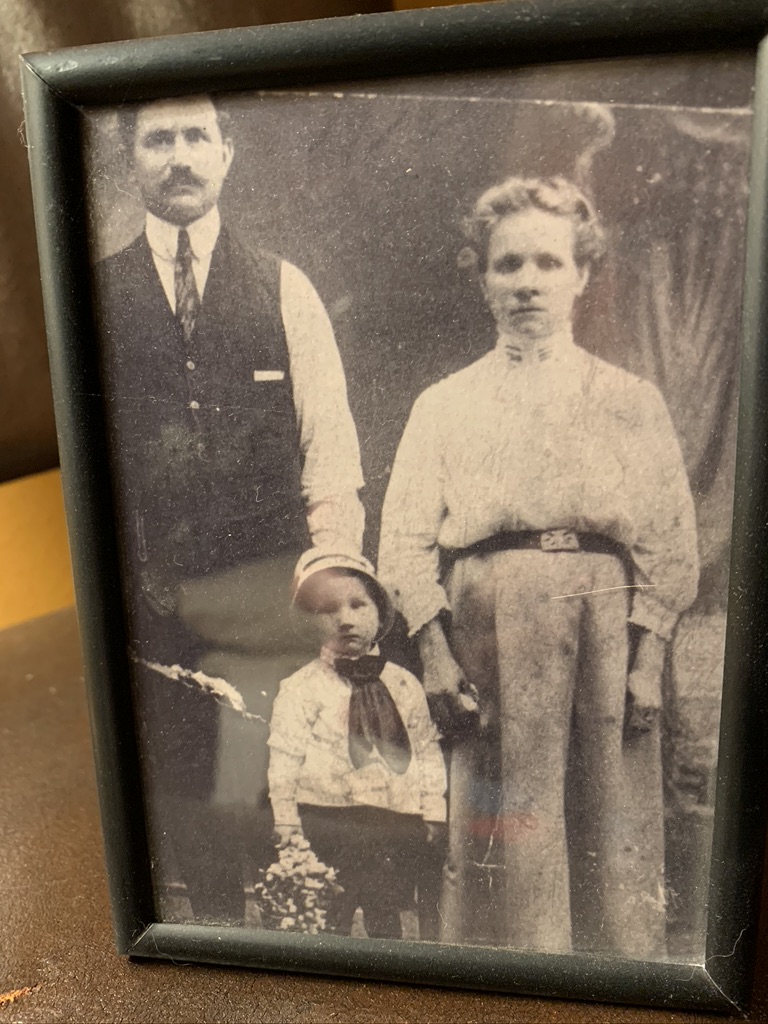
Alex and Frances Markowski, Johnny Markowski, about 1914

Were they content? Why leave their homeland, then? Why go to somewhere unknown, into an unknown future, with only hopes for something better, and nothing else? Whatever their dreams, they were not fulfilled. “Ukrainians have not done well in the United States,” I once heard a commentator say.

*

In my search for who they were – who I am – I have turned to DNA research. Several years ago, I connected online with a distant cousin who came from Ukraine, and who now lives in Canada. Through our connection, he had hoped to find a way for me to go to the place of my grandparents’ birth, their home. These days, instead, my cousin speaks daily to his family in Ukraine, helping them decide where to go for safety.

And this same story is being told for millions, millions of people, today.

Now, of course, another dream is lost. The dreams of millions in Ukraine have been smashed to death in just these past couple of weeks. As I write, people who could not think of leaving their home only a few days ago are leaving their homes, hoping to find safe passage to – to where? As I write, a war that started in the mind of one man is dismantling lives and livelihoods, forcing human beings to look for safety somewhere far from home. It’s an old story, older than the scriptures.

“Once I was happily content to be
As I was, where I was,
Close to the people who are close to me…”
– “Far From the Home I Love,” Fiddler on the Roof

Now, as the world watches, the Ukrainian people on the move again, people who were living their lives like the rest of us, just a few weeks ago. We are stunned as we watch, but our discomfort, our tears, our fears are only that. Today, we sit in our comfortable places, lamenting for these other human beings. Their history – their long history, has been full of violence, of turmoil, of poverty, all these things often at the hand of their leaders.

God save us all.
Uncategorized, wisdom

The Ego – the companion

Many years ago, to help myself not only to understand intellectually my faith, but to embody my faith, I took a very interesting class with a woman teacher in the Bay Area, Wendy Palmer.  The class was called: “Aikido as Spiritual Practice.”  I learned many things about myself in that class – takes a good teacher to offer that! – and one in particular has stayed with me through the years.  The point of the practice was to stay self-contained, to not be thrown off by an attack.  The first time I practiced the movement, my very tiny teacher stood about 6 feet in front of me holding a very big stick above her head.  (No kidding).  When she quickly brought the stick straight down in front of her, I pivoted, and in doing so, I turned to face the way she was facing, my arms out around her body, and me, still on my feet! 

I loved this practice, for what it taught me about myself.  I learned that I needed to stay focused on my own path to stay on my feet.  I learned not to look my opponent – in this case, my teacher – in the eye.  That would engage her as my enemy.  That would mean I would use my energy to figure out what she was going to do. Then, I would wobble, lose my balance, lose my own ground. Instead, I looked beyond her as she stood across from me; I looked beyond her, toward my vision, my path, my purpose. I kept my eyes on the path I meant to take.  In doing this, I embraced her energy, I protected her with my body, I saw things from her point of view, and I stayed firmly planted on my feet. I didn’t see her, then, as enemy, but as an encounter on my path: part of the journey.

Every year at Lent I think of what I learned as I practiced Aikido.  In my imagination, I engage with the Gospel story: I see Jesus, going out to teach, to heal, to feed the hungry – his sight focused, always, on Jerusalem.  To me, Jerusalem is a character in the Gospel account of Jesus’ ministry.  Jerusalem looms ahead- always.  Jesus is firmly rooted on the path he is taking.  The disciples, his companions on the journey, don’t get it.  They are worried about things: “how do we feed all these people?”  they ask.  At every turn, they get flustered, confused. 

When we start on the path – the path that is our True Self – we are like the disciples.  We are engaged in a dual with the ego.  We are afraid.  What if I let go?  What will happen to me?  How can I trust?  How can I do it?   That inner battle holds sway over us, makes us afraid. 

And when the ego holds sway over us, it holds us hostage.  We are bound to it.  We listen to what it tells us.  We are afraid.

There is a freedom, real freedom, to choose to walk the path that is yours. There is a freedom in choosing that other way. There is a freedom, inner freedom, and powerful, that sustains you, no matter what happens. You stay on your feet. You keep to the path. You encounter the people, the events, the happenings that you need to make the journey.

You stay on your feet.

***

And, today, we continue to pray with and for the people of Ukraine, the people of Russia, the world.

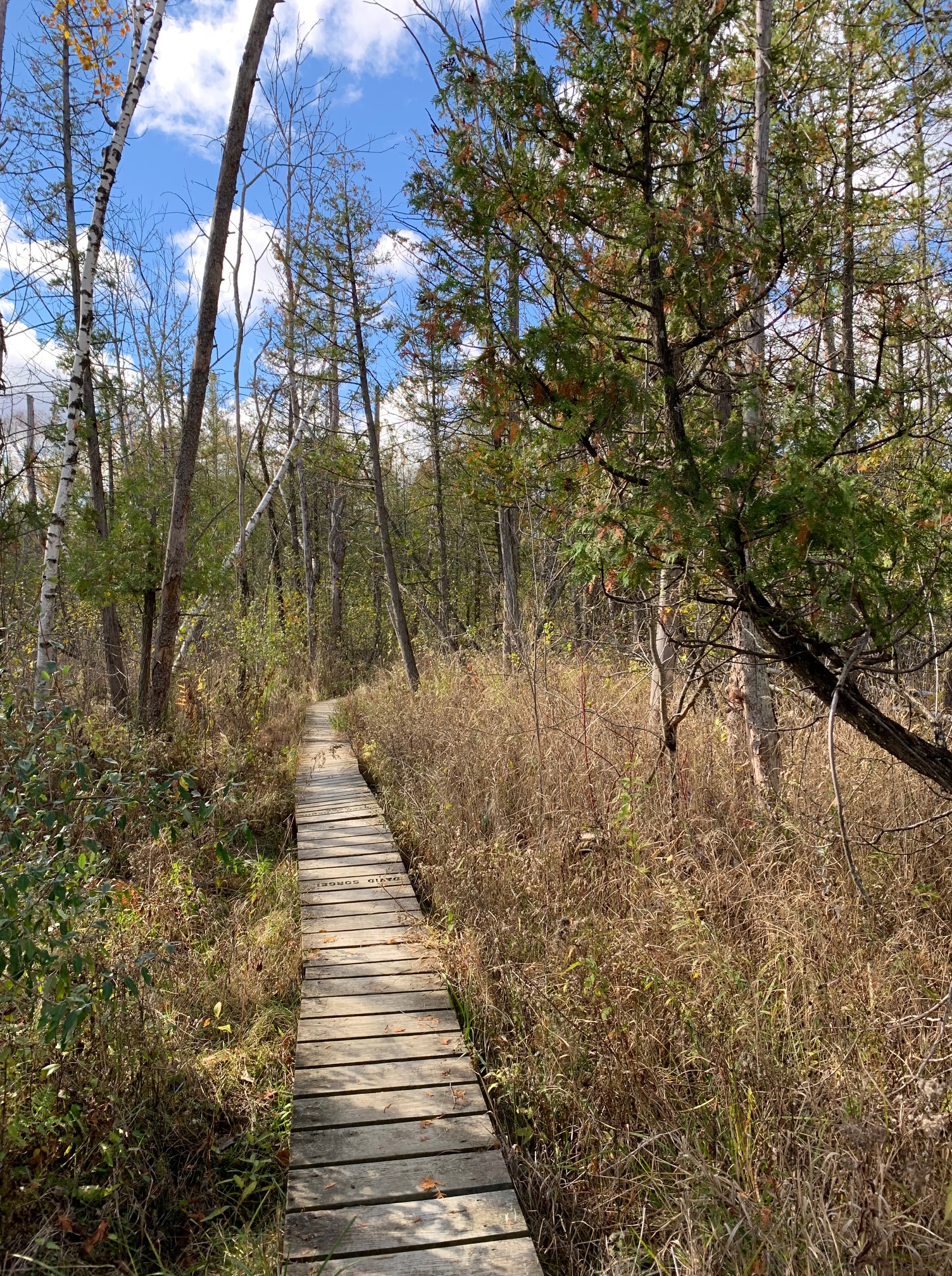
The Path – Photo by Mary Elyn Bahlert, Saukville, WI, 10/25/2021

beauty, nostalgia, poetry

Longing

Days before she died, 
Mom sat, legs over the side of her bed, 
gazing out the window onto the sunny street: 
"I wish it would snow once - just for me," she said.
I think that, too, sometimes.
There is a longing in this dry place:
when life is dry, empty.
I'd love to see the snow then,
flakes falling, silent, to the ground,
the heavens shaking their down pillows.
I'd like to be in that quiet place for a few moments,
surrender my busy mind to it,
welcome the holy silence, the emptiness -
                     all that space. 
          
Mary Elyn Bahlert, February 27, 2022


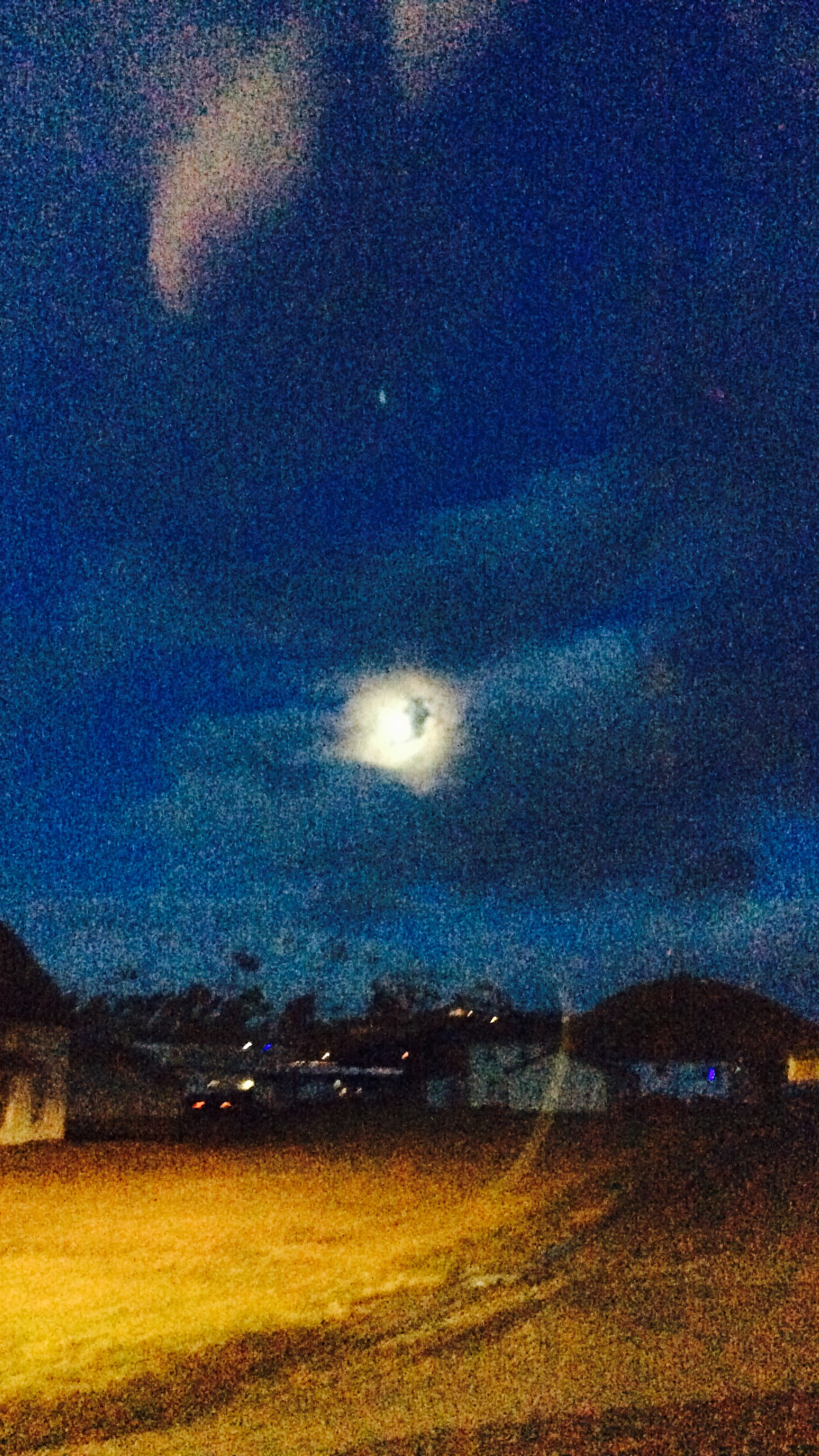
Full Moon – Moments Before Sunrise, 10:00 AM, Sunday, December 27, 2016
Unalaska, AK – photo taken by meb


Uncategorized

Harvey

My 20’s were difficult years, as I began a professional career, moved to a city that was too small for my taste, as I floundered with relationships, and mostly, was lonely, although I had many good friends, long-time friends and new friends.  What did I want?  Who did I want to be? 

At first, I began my journey into relationship with the Holy One by reading books.  I had been confirmed in a fundamentalist denomination, and I rejected that before I was out of high school.  That’s all I knew of church.  I began to know that for me, faith and political action and perspective were needed. I read books about different denominations, all Christian.  Along the way, I encountered the first people I knew who were serious about their faith – a Baha’i couple who influenced my understanding of faith, and who encouraged me to find my own path. I have always been grateful to Joan and Nat.

I had within me the rumblings of a “call” – had had that rumbling since my late teens, when I began to think that I could be a pastor.  I had not seen or heard of a woman pastor, so I put that on a back burner, and didn’t take it out for anyone to see.  I was reading Ms. magazine from cover to cover, so the thought occurred to me: “why not?”

When I moved back to Milwaukee, my home town, in late 1975, I continued my search for a community to safely bring my questions, a community involved in the world, a community that sought for justice and wholeness. 

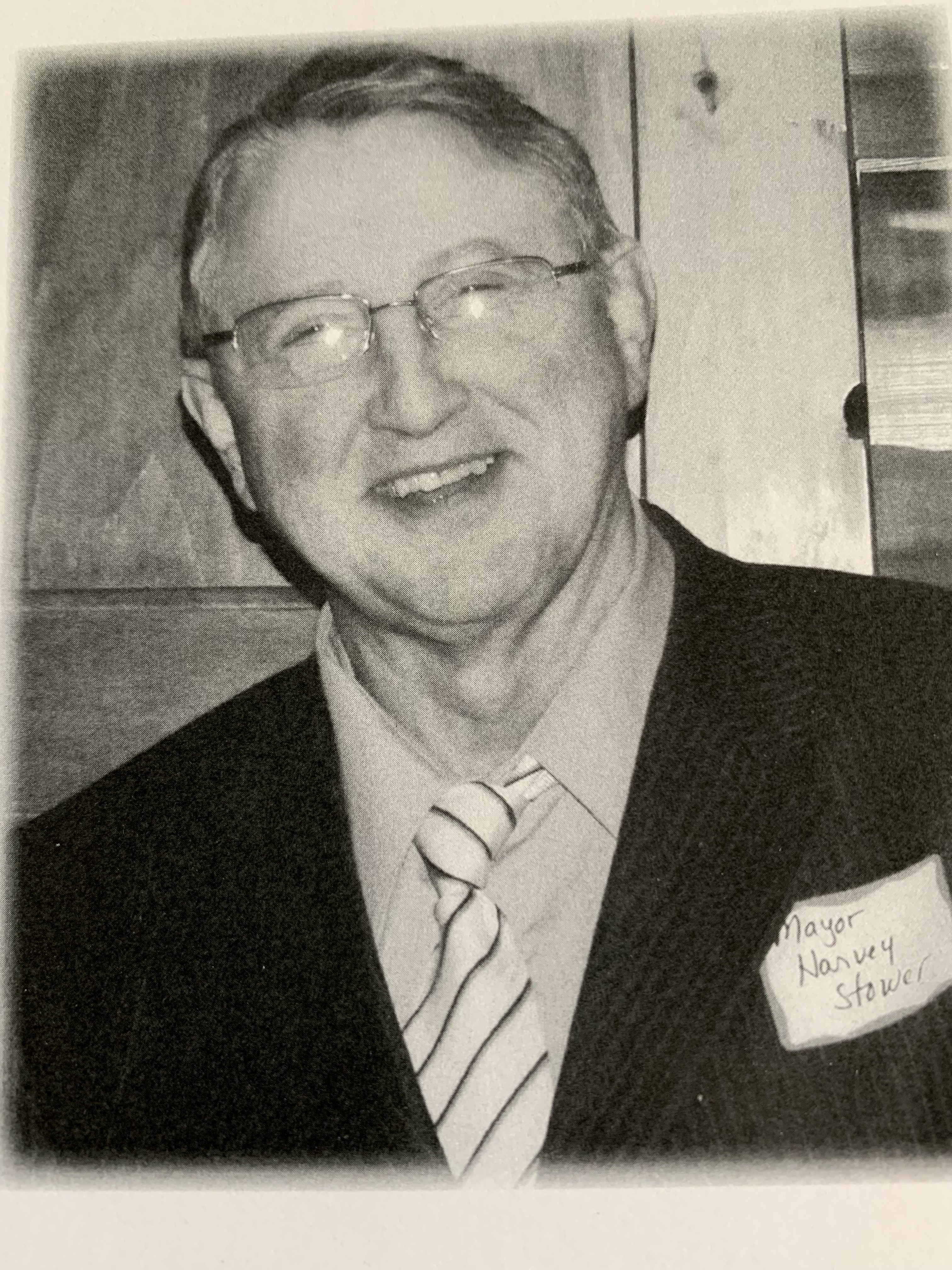
I met Harvey Stower, Young Adult Minister, on the first Sunday I attended Kenwood United Methodist Church, across from the University in Milwaukee.  A kind woman, Verdell de Yarman (“the grandmother who went to jail” during the Civil Rights Movement), spoke to me. Often, as a lone visitor to a church, I had been ignored.  I didn’t return to those churches. Verdell told me I’d like it there. After worship, she took me to meet Harvey Stower.

I guess I became one of Harvey’s followers, learning from him, spending Sunday afternoons with his family – Marilyn, his wife, fed whoever showed up at their flat on the East Side of Milwaukee – and beginning to see that a community DID exist to “do kindness, love mercy, and to walk humbly with God.” 

Harvey and Marilyn owned a large and humble cabin in Northwest Wisconsin.  When they had time away, they’d spend time at the cabin, and they’d invite young folks who hung around them in Milwaukee to be with them there.  On a summer weekend, I made the long journey to the cabin, where I found a clean bed made up for visitors, and of course, wonderful meals, cooked by Marilyn as she held her baby girl on her hip. 

One night, Harvey and I stood out in the blackness surrounding the cabin, looking up at the stars.  Is there anything more beautiful, magical, and mysterious as the night sky, filled with white dots, shooting stars, constellations – away from city lights?  As I stood there in the dark, I confessed to Harvey: “I’m not a Christian.”  Still looking up at the stars, Harvey answered: “If you can just think of Jesus as your friend.”  

His words changed my life.  I could set aside all I had been taught to “believe” for a real relationship with the Holy One.  My own journey began that day.

One day, not long after, Harvey asked me: “Do you ever think about going to seminary?”  I told him:  “I do, all the time. I don’t tell anyone about it”. It became his mission to remind me, from time to time: “what does this mean about seminary?”

Harvey was a true “evangelical,” who loved God and showed his faith by how he lived his life, by his work in the world. (These days, the media has used the word “evangelical” to describe folks who are really fundamentalists, who take the Scriptures literally and use their faith against others in the world who do not share their values). Harvey had studied in seminary in Washington, D.C., and he had been part of the beginnings of the Sojourners Community in Washington. One summer week, he took several of us to D.C. to work in the Community.

Later in his life, Harvey would go on to be elected to the Wisconsin State Senate. And even later, he was elected mayor of America, Wisconsin, his home town.

*

Harvey is gone, now.   I was privileged to be able to travel to Amery, Wisconsin, for his funeral, on October 10, 2009.  When he died, Harvey was serving as Mayor of Amery. Since I was serving a church in Oakland at the time, a good friend stepped in on short notice to preach so I could travel to the funeral.

*

Out through the

fields and woods

And over the walls

I have wended;

I have climbed the hills of view

And looked at the

world, and descended;

I have come by the

highway home,

And lo, it is ended.”

“Reluctance,” Robert Frost


Uncategorized

I’m a Monk in the World

This article appeared in “Monk in the World”, Abbey of the Arts (online community), Guest Post, July, 2014

‘As if the sorrows of this world could overwhelm me

now that I realize what we are. 

I wish everyone could realize this. 

But there is no way of telling people 

they are all actually walking around shining

like the brightest sun.’

Thomas Merton

The world was always there for me – gurgling with joy, shining like the brightest sun, fragrant-full, slippery and hard-edged, colorful beyond belief, and filled with grief, loss, loneliness – and there I was, walking around with my head in the clouds, my eyes toward the ground. 

I have a good mind, but living from that linear place didn’t work for me forever. My best thinking brought me straight into a long and deep depression almost 20 years ago.  Life has not been the same, since.  Today, I am grateful to be alive, and every day offers new delicacies for my delight.  The gift of being a Monk in the World is that I get to enjoy what has been there all along, and I get to enjoy it as if it is new, as if I have been witness to this beauty before.

I’m as inter-faith as I am Christian, knowing that the Light, the Universe, the Christ, the Mother, the Holy One, El, is in us all.  Or maybe we are swimming in this Holy One.  I struggle to find words.

I learned to meditate several years ago, and this practice has deepened me.  My greatest joy is that I find myself more present in the moment, moment by moment.  I see things I did not see before.  I delight in the branches of the birch tree outside my city window; I watch the seasons and winds bring change to that tree. I say:  “I love that tree, and that tree loves me.”  It’s true. When I meditate, I find the boundaries between myself and the world dissolving.  I feel the sound of a neighbor’s voice, the boom of a truck on the street, the harsh call of a jay, the wind against the window – as much as I hear them.

Many years ago, I learned to pray after reading The Christian’s Secret to a Happy Life, by Hannah Whitall Smith (of the American Holiness Movement).  That was the beginning of a long, rich, and growing walk as a Monk in the World.  I studied theology and became a preacher, a way to offer to others the gift of knowing we are not separate, we are not alone.  I found growing self acceptance through prayer.  After all this time, I still believe we can change the world by praying, by praying for ourselves, which grows us in Love. And that Love, which is us, changes the world.

 As a preacher, I served a community of faith.  My work as a Monk in the world was very extroverted for this introvert!  I had the privilege of being with others in their times of deepest need – learning a diagnosis that would take a beloved woman’s life, baptizing an infant who would not go home from the hospital, as she lay in the arms of her teenage mother, rushing into a hospital emergency room only minutes before the death of a vibrant woman in her 50’s, as her partner lay sobbing on top of her; I’ve sat in silence and watched the minutes tick away, waiting for surgery to end, with a frightened wife.  I’ve answered the door to find a man who has not slept in days, smelling of the street, who tells me his long and convoluted story, only to ask me for a few dollars for food.  I’ve heard many of those stories, and even though I do not understand, I have prayed with each one; I have not have ever known that particular desperation.  I’ve witnessed the suffering of the mentally ill who come to Church, hoping for something; I am blessed by my own illness to be able to see the suffering person, trapped by their mind, underneath what we call “stigma.”

For whatever service I have been able to give, I am grateful.  The gift has been mine.

All of this is to say that I am still looking to see the light Thomas Merton, one of my spiritual mentors, saw.  The light is so ordinary, I’m sure.  I know with a keen knowing that we are all light, that we are swimming in this light.  I’ve felt it for a moment when I meditate, I’ve seen it shimmer – just a glimpse! – in the green, heart-shaped leaves of my beloved birch tree. 

I am a mendicant now, begging for alms.  I am a mendicant, raising my eyes to look into the eyes of whoever crosses my path.  I am a mendicant, wanting to trust each day’s needs and gifts to the Holy One.  I am a mendicant, looking for Light.

photos taken by Mary Elyn Bahlert, October, 2021