Uncategorized

Listening

Listening

I was privileged to be present the day that my husband, Jeff, read aloud what he had written for the Native Corps. In Nome, AK.  The Elders gathered in a small room around a large oval table to hear the story of how 2 native boys had led “Three Lucky Swedes” to the gold that was rich on the beach at Nome.  The year of this event was 1898. That event led to what has been called the “Nome Gold Rush.” 

Over the years, the Three Lucky Swedes had been credited with finding the gold. The natives told another story.

Jeff had previously edited a book of the letters and photos of two brothers who arrived in Nome from San Jose, California, in 1899, two young men seeking their fortune.  He pieced together their story from a cardboard box of the letters and photos that had been sitting high in a dusty closet of the son of one of the miners.  In the course of putting the book together, Jeff had traveled often to Nome, and there he met with the white settlers, and then, with the Natives, who had their own story to tell about how the gold had been discovered.  His invitation to write the native account of the gold rush had come from the Native Corps because the natives had never forgotten the kindness of the two young men, gold-miners from San Jose, their kindness an anomaly in the native experience of white people.  Oral history had kept the young men’s kindness alive.

After many interviews and in collaboration with the Native Corps., Jeff had been asked to write again about the Nome Gold Rush – this time, from the point of view of the natives.  On the day that Jeff was to meet with the Elders, I was invited to accompany him.  I will never forget that day, a highlight in my own life.  I sat at one end of a long table next to my husband, encircled by the people who would hear their oral history as written words, for the first time.  They sat silently as Jeff read the account, based on their own words, based on the stories they had been told, and then told again to this stranger.

His writing told the story of how the two native boys, not knowing the value of the gold in the white man’s world, had led “Three Lucky Swedes” to the gold on the beach.  When he had finished reading, he closed the small book and sat back in his chair.

A long time passed.  Silence.  Finally, out of the silence, one Elder after another spoke, without interrupting one another.  They reflected on the words they had just heard, often prefacing their thoughts with the words: “this is what I was told.”  Their memories edited what had been written. And their memories brought into that room the living, breathing oral history that had held this story for a long, long time.

I sat, silent also, observing and experiencing the wonderful moment that lay before me.  I sat in the silence that the people held – in their persons –  as in the silence of the Holy.  There was no arguing about facts.  The stories were their own facts.

I think often of those moments in my life.  I have never forgotten the depth of what I experienced, witnessed, and knew in that room. 

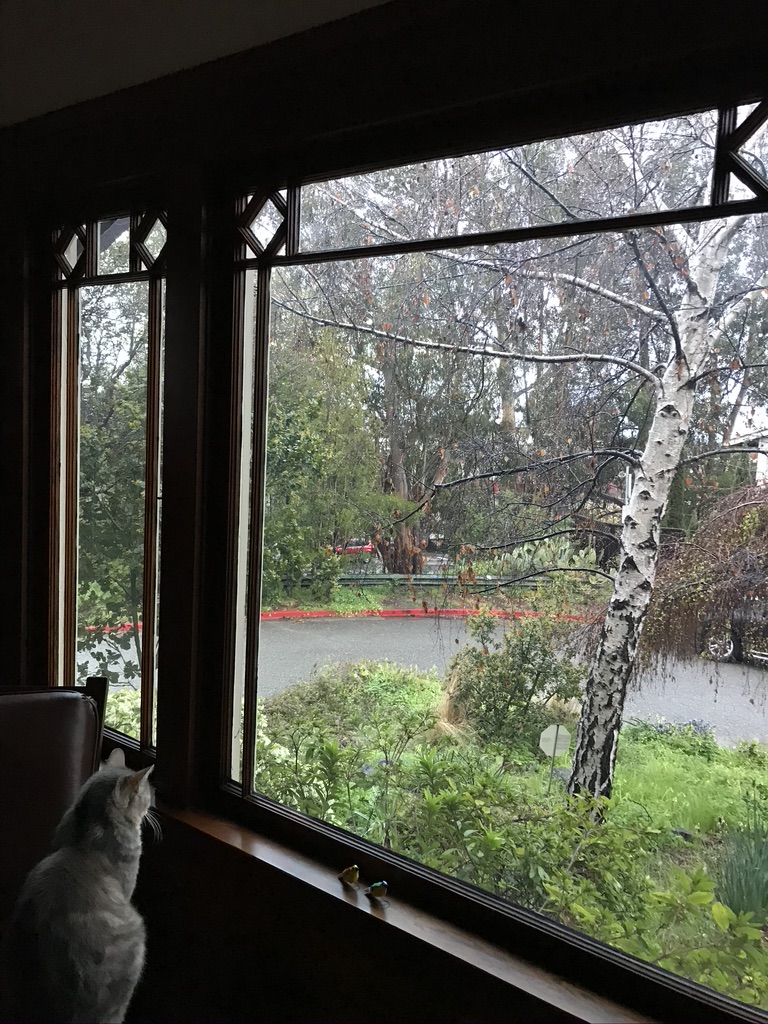
The whole of creation is listening. Photo by Mary Elyn Bahlert, 5/2021

p.s. In Nome, two statues stand to commemorate the finding of the gold that led to the Gold Rush in Nome. One statue remembers the Three Lucky Swedes. Another, dedicated in Nome a few years later, remembers the Two Eskimo Boys.

Uncategorized

Rise!

Daffodils bloom again, every year. Here in the West, daffodils bloom early, in February or early March. So spring comes again, early. Every year, I am filled with joy when I see the first daffodils. In the Midwest, flowers that are dependent on the winter freezes are still waiting to rise again from the cold earth. But they will rise.

We bloom, again and again, also. I’ve seen it in others. I’ve known it in myself. That freshness, that new mind, that spark of energy that was not there before, arises from the ashes of grief, of anger, of hurt. We bloom again, after the war has gone; we bloom again, after a long time, often. Like the long winter in the North, sometimes it takes a long time for the rising to take place – but there it is.

I don’t pin my hopes for the rising on someone else. I know it’s up to me, this hard work of surrendering to what life has placed in my path. And I know that I’ll have to do it again, if my ego-self will just get out of the way for a moment to let me remember. I love the depth of Holy Week, when the tragic journey to Jerusalem – where the powers hold their mighty weapons – has met its tragic end: a reminder that this rhythm of holding on tight to the life I have will give way to the letting go, the long, long letting go.

Many times, I remember that the hard way gives way to glory, after a long walk down a jagged, rocky path. I have to remember to hold on to hope when things are muddled and grief-filled, endlessly – it seems.

Spring comes, fragrant, green, lush. A reminder that the winter does not last. A reminder that sorrow is a path, that sorrow, also, does not last.

Happy Easter!

Korean Lilac, photo by Mary Elyn Bahlert, spring, 2022
Uncategorized

Liga

Liga was my mother’s godfather. Whenever he arrived at our house, he was dressed in a suit coat. He looked like a retired businessman. I remember his presence, quiet, and he seemed kind. I don’t think I ever had a conversation with Uncle Liga. When he couldn’t work any more, he rode the Milwaukee buses in his suit – always a hat, with a top coat in the winter. In his final years, he lived in an old, narrow apartment close to downtown. The place was dark, made darker by the sounds of traffic on the busy street it faced.

Liga died in the bathtub of that old apartment. At that time, after Dad had retired, my mother and father went to check on him every few days. When he didn’t answer the ring to his doorbell, the apartment manager unlocked the door of his place. My father found Liga, dead. Later, Dad said he couldn’t sleep for several days after he found LIga. “I loved Liga,” Dad said.

Liga worked in the foundry with the other men who arrived from Eastern Europe in the early years of the 20th century. They left before the Revolution of 1917, a revolution that brought a new life, but not the life they had hoped and dreamed for their land. When I knew him, he was alone. I have a picture of him, from the pictures my mother saved and gave to me. It looks to have been taken in the “old country.” Liga, a young man – handsome, with thick, black, wavy hair – sits in a chair, dressed in a top coat and tie, looking sternly into the distance. A young woman, also formally dressed, stands behind him, her hand on his shoulder. What happened to her? What happened to him? Where did those beautiful young people go? In my mind, Liga was always an old man. And when I knew Liga, he was always alone.

Many Ukrainians fled Ukraine for work and food and an education for their children. They arrived in the New World, and settled in the industrial cities of the Midwest, Chicago, Detroit, Milwaukee. Others settled in Canada. They brought with them their hard work, their ability to live with very little – they were descendants of freed serfs – freed to remain landless, illiterate, and poor, apparently – and a need to drink. Oddly, I don’t associate Liga with drinking.

Most holidays, Liga joined us at the holiday table and in the living room afterward. He was there when we enjoyed the Christmas tree lights, and he was there when we tapped together the ends of colored, painted eggs at Easter, to see whose would crack first. The one whose egg didn’t crack was the winner!

Every few months, Liga arrived at the front door of our flat, where he rang the bell and waited for one of us to run down the stairs to answer the door. In the summer, I would often go to open the door for Liga. He would greet me, shyly and gently. Then, he and Mom sat for an hour or two at the kitchen table. She read to him the latest letter from his family in Canada, which had been carefully carried in his pocket. Sometimes a photo – black and white, of a favorite niece – was included in the letter. Then, Liga told my mother, line by line, his answer to the letter. She translated his Ukrainian into English. When Mom addressed the envelope, Liga always handed her a couple of dollars from his pocket, to put into the envelope with the letter. A few dollars from a poor man, sent as love.

When I think of Uncle Liga, a place in my heart is warm.

nostalgia, remembering, Uncategorized, wisdom

Remembering Mom, her later years

When I was a girl, my father would say from time to time: “my life has gone by so quickly.” I would look at him, just little, and wonder what he meant, and how that could be. I could not relate. Some people say that time goes more slowly for the young, when all the years stretch out beyond, when growing up is something to be yearned for and in the yearning, of course, time passes slowly. But my memory is of that question or wondering that was in me when I heard my father reflect. Later, he would quote again and again, this Bible verse: “A thousand years is but a day in the eyes of the Lord.” Apparently, my dad did not stop thinking about the passage of time.

Often, I think of my most cherished memories, as “life has gone by so quickly.”   My memories include those days on my visits to Milwaukee to see my mother, after I had moved to the Bay Area of California, after my father had died.  My mother lived in a small upper floor apartment on a busy street close to the center of Milwaukee, and I would stay in the cramped second bedroom, the noise of the busy thoroughfare keeping me awake nights.

Both mom and I were “Milwaukee girls.”  We had grown up in the flats that line the streets of poor and working class neighborhoods of the North Side.  Those flats are still there.

We knew the streets, the bus lines, the parks, and we knew the sense of “small town-ness” that Milwaukee cherished for a long time.  We knew the particular kind of diversity of that place – the streets where Eastern European communities lived, the place where the Italians built their church, now a Cathedral to welcome the Bishop from Rome, the places where African Americans came to live, to build community, during the Great Migration.  We knew the part of town where people from Mexico came to live among others who spoke their native language.  We knew how to navigate to new places, too, in that city laid out in a grid.  I have never understood how to find places in cities that are new to me.  How can addresses not make sense, like they do in Chicago and Milwaukee, a small Chicago?

On my visits to see Mom, before the dementia took her away,, we set aside a day to “do Milwaukee.”  After coffee and breakfast, we backed her car out of the garage and onto the busy street.   We had no particular plan, except to explore old places that held meaning for us, to make our way to the Milwaukee Art Center at some point, to have lunch out, and maybe to do a bit of shopping along the way.  I loved those small adventures.  I loved the fun we had together:  “that’s the fun of it!” was one of my mother’s expressions.

On one of our adventures, we discovered again a small section of town filled with Ukrainian immigrants.  My mother’s first language was Ukrainian, and so we ventured into a small bakery, a storefront, and she stumbled to say a few words to the man behind the counter.  He understood, all right, and soon we found ourselves in another cramped space, the family’s living room, complete with an altar adorning a corner.  They were Ukrainian Catholics, and a candle burned in that corner, lighting up the features of the Virgin Mary, her eyes cast down, her blue gown ending at her bare feet, on a sphere covered with stars.

On another adventure, I gazed at my mother as she gazed at one of her favorite paintings in the Milwaukee Art Museum, The Wood Gatherer, by Jules Bastien-Lepage.  Later, Mom told me her wonderings about the scene that painting depicted, her own story fleshing out the art.   I still own a print of that painting.

One day at lunch we found ourselves in an old Italian neighborhood for an Italian lunch, another at a Jewish deli across from a synagogue.

As the years passed, it was harder and harder for mom to enjoy those days, until the last time we set out.  We did not know it was the last time, but something had changed.  We returned home to her apartment right after lunch.  Soon enough, I’d have to move Mom out of her apartment and into assisted living in the Bay Area, a move which she made bravely and with great trust.

I suppose some part of me thought those adventures would go on forever, that those times when we laughed and remembered and saw old things new again, would not end. All times end.  Now, those days are distant memories, and I continue to cherish them as some of my favorite times.

Here, I find myself years later, remembering those small adventures, remembering the tilt of Mom’s head as she laughed, remembering the narrow streets we knew so well, remembering driving her blue Tercel all over the city we loved.  I’m in the memory time for so many people I have loved, so many experiences, so many grievances that had filled my life over the years.    All of those beloved people, all of those rich days are a memory, now.

Uncategorized, wisdom

The Ego – the companion

Many years ago, to help myself not only to understand intellectually my faith, but to embody my faith, I took a very interesting class with a woman teacher in the Bay Area, Wendy Palmer.  The class was called: “Aikido as Spiritual Practice.”  I learned many things about myself in that class – takes a good teacher to offer that! – and one in particular has stayed with me through the years.  The point of the practice was to stay self-contained, to not be thrown off by an attack.  The first time I practiced the movement, my very tiny teacher stood about 6 feet in front of me holding a very big stick above her head.  (No kidding).  When she quickly brought the stick straight down in front of her, I pivoted, and in doing so, I turned to face the way she was facing, my arms out around her body, and me, still on my feet! 

I loved this practice, for what it taught me about myself.  I learned that I needed to stay focused on my own path to stay on my feet.  I learned not to look my opponent – in this case, my teacher – in the eye.  That would engage her as my enemy.  That would mean I would use my energy to figure out what she was going to do. Then, I would wobble, lose my balance, lose my own ground. Instead, I looked beyond her as she stood across from me; I looked beyond her, toward my vision, my path, my purpose. I kept my eyes on the path I meant to take.  In doing this, I embraced her energy, I protected her with my body, I saw things from her point of view, and I stayed firmly planted on my feet. I didn’t see her, then, as enemy, but as an encounter on my path: part of the journey.

Every year at Lent I think of what I learned as I practiced Aikido.  In my imagination, I engage with the Gospel story: I see Jesus, going out to teach, to heal, to feed the hungry – his sight focused, always, on Jerusalem.  To me, Jerusalem is a character in the Gospel account of Jesus’ ministry.  Jerusalem looms ahead- always.  Jesus is firmly rooted on the path he is taking.  The disciples, his companions on the journey, don’t get it.  They are worried about things: “how do we feed all these people?”  they ask.  At every turn, they get flustered, confused. 

When we start on the path – the path that is our True Self – we are like the disciples.  We are engaged in a dual with the ego.  We are afraid.  What if I let go?  What will happen to me?  How can I trust?  How can I do it?   That inner battle holds sway over us, makes us afraid. 

And when the ego holds sway over us, it holds us hostage.  We are bound to it.  We listen to what it tells us.  We are afraid.

There is a freedom, real freedom, to choose to walk the path that is yours. There is a freedom in choosing that other way. There is a freedom, inner freedom, and powerful, that sustains you, no matter what happens. You stay on your feet. You keep to the path. You encounter the people, the events, the happenings that you need to make the journey.

You stay on your feet.

***

And, today, we continue to pray with and for the people of Ukraine, the people of Russia, the world.

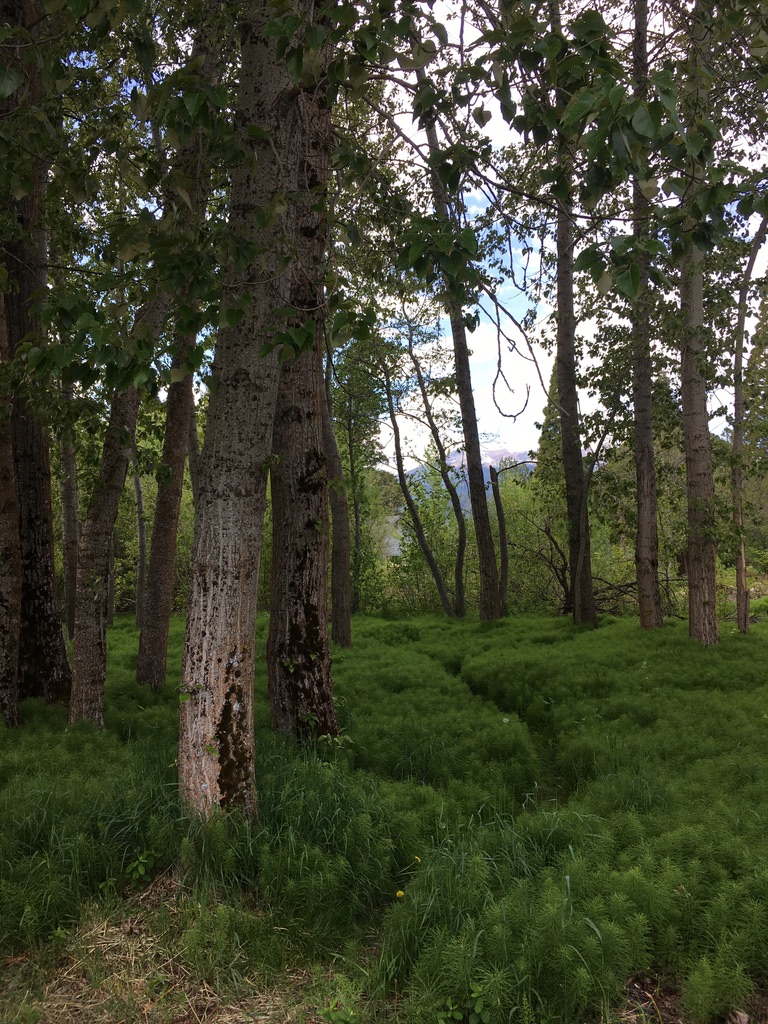
The Path – Photo by Mary Elyn Bahlert, Saukville, WI, 10/25/2021