Uncategorized

remembering Verdell

In my mid-twenties, I was searching for a community. At the time, I didn’t know what that community would be for me, but I was drawn to go to church, since that was what I understood to be community. And, as I’ve written before, deep inside me – not spoken aloud – was the seed of a call to ministry, to a particular vocation.

And so I visited churches, one Sunday after another. My only experience of “church” had not been positive – even as a young teenager, fundamentalism did not make sense to me. But I was looking for community, for a community of people with a heart for social justice, activism. I set out to find that place – a place I did not know existed.

And so I visited churches, one Sunday after another. As a natural introvert, it is difficult for me to enter a community. Maybe I was shy. I know I was uncertain. But I must have known what I didn’t want, as I visited one church after another. I made sure to sit in the last row of the pews, so that I could make a safe and fast exit – which I did, regularly. Or I might find myself in the Narthex of the church, the hall from which the sanctuary is entered, looking for someone familiar. Again and again, when I’d see someone, when I’d catch their eye, they would turn to look for someone they knew. Not for me, not a newcomer, longing for a community.

Years later, as a pastor, I would repeat this story, again and again, to the congregations I served. I would repeat the story because I knew the people who came to those places were like me, longing for a community, longing to be gathered into the community they were visiting.

My looking took me, finally, to Kenwood United Methodist Church on Kenwood Boulevard in Milwaukee, across the street from the Student Union of the University of Wisconsin-Milwaukee, where I’d received my Bachelor’s Degree. And so, one Sunday, I held my breath again as I entered the sanctuary, and found a safe place to sit – a place that could assure a fast exit when service was over, if needed.

The woman who was already sitting in the pew to my left was an old woman, to me. But she noticed me. She looked at me! She told me her name – Verdell xxxxxxxx. Later, I would learn Verdell’s nickname in the community – “the grandma who went to jail,” for protesting issues that were important to her, civil rights. I didn’t know that then, when Verdell looked right at me and welcomed me. She told me that after church, she’d take me to meet Harvey Stower, the Young Adult Minister.

And so she did.

I have repeated that story to many congregations over the years, and each time, I put out my arm, my hand, and I tell the people that on that day, Verdell reached out her hand to me, and brought me into Church. When I arrived, lonely, looking for a community, Verdell was there, reaching toward me.

I’ve spent more time in my life in “Church” than is necessary, I’m sure! But at that point, I needed a welcome, a warmth, a connection. Apparently, when that connection was missing, I knew it, and I moved along. Apparently, when that connection was made, I knew it, and was gathered in.

Verdell introduced me to Harvey Stower that day. Over the course of my lifetime, I’m not sure I’ve ever met someone who was more extraverted than Harvey Stower. Years later, he’d take his extraversion into service as a Representative in the State of Wisconsin. But at the moment I needed to meet Harvey, he was there. And if Verdell reached out her hand to me and brought me in, Harvey helped me to connect. He saw me. His wisdom and his work on behalf of justice shaped my own call to ministry, a call that was rolling around in me, silent, at the time we met.

*

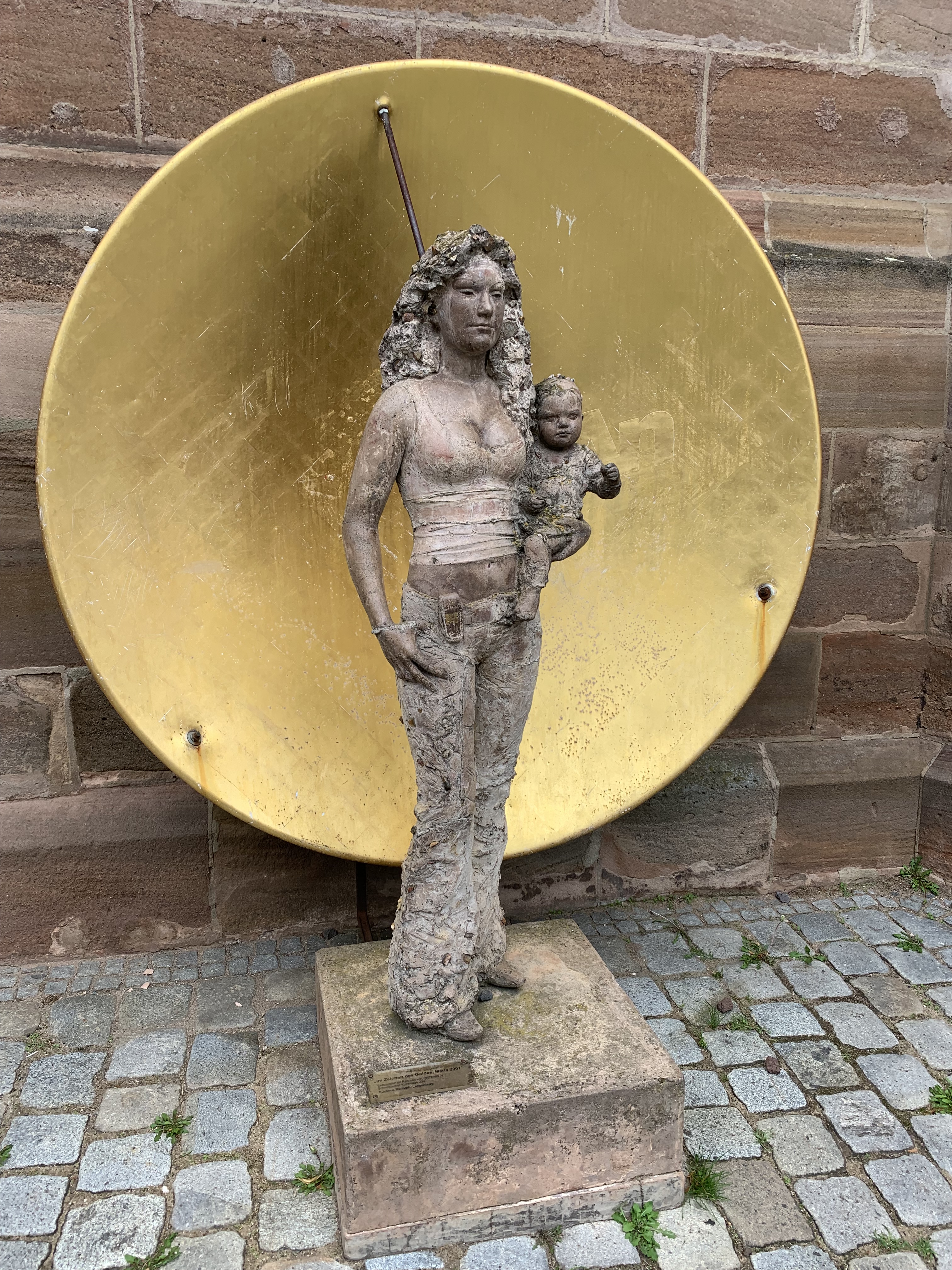
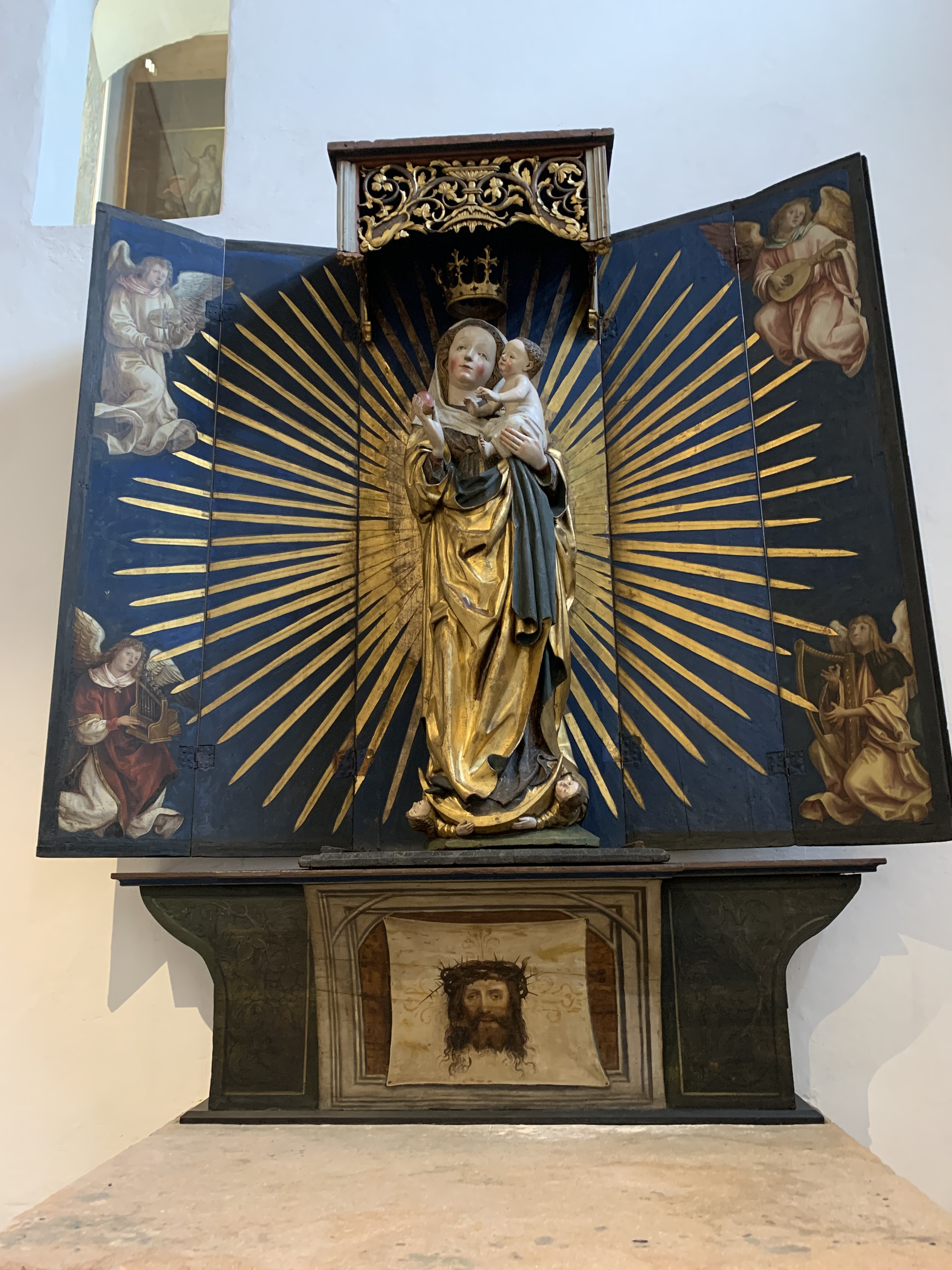
Jeff and I have just returned from three weeks in Germany. We’ve returned from our first cruise, which began our trip, and from four days spent with friends in Nuremberg, where we walked the city and saw the site of Hitler’s rallies, the site a warning to all of us to never forget what began there, and ended there. In Nuremberg, our friends made sure we visited several churches. Jeff and I have spent a lot of our lives as pastors. And we like to see the churches in Europe, hundreds of years old.
The simple, kind, warm gesture that Verdell offered me that day continues to ripple in my life. I don’t know if I ever told her. “Thank you, Verdell.”
memories, reflecting, remembering, Uncategorized, wisdom

Blessing

Uncle Johnny wasn’t very tall, but he was a god to us. He could stand at attention in a doorway for hours, talking about the workers, about union wages and strikes, about strikes and collective bargaining. He was an Atheist. He greatly respected my father, who had gone through 8th grade in rural schools, because my father was a good, strong, honest worker, a union man, a steelworker.

Johnny was a Communist, giving his own life, his smarts, to make life better for the workers.

Uncle Johnny was almost ten years older than my mother, who adored her brother. He had “been born on the boat,” we were told, coming with his father and mother – my grandparents – from Ukraine, about 1914. Years later, I discovered that his date of birth was in the year 1910; given that date, he had been born in Ukraine. To this day, I hold firmly to the understanding that people who leave their homeland for life in a distant land do what they must to keep their families together. I know mine did. My people were poor and uneducated, the grandchildren of freed serfs. My grandfather died when I was almost 2, falling to the curb on a Milwaukee street, drunk again. Still, he’d made it, made it to America to give his kids a life different from his own. My mother taught him to read English when she was in grade school.

When my mother, her two brothers and younger sister, Anne, were small, Johnny was already a worker. With great homage to Johnny, my mother told me that he had made Christmas happen for his siblings one year when my grandparents could not. There was no Christmas tree in that Milwaukee flat, now a boarding house for other men who’d arrived from Ukraine, most without their families. And there was lots of drinking in that house, a fact that has shaded the family ever since. Johnny knew there’d be no Christmas for his brothers and sisters, so he bought a tree and brought it home. Together, the kids decorated it, together, they made Christmas happen, thanks to Johnny. And under the decorated tree lay the gifts big brother had also brought. That made him a hero, forever.

My sister tells me that she was home sick from school the day two men in suits came to the door. That would have been about 1960. Two men in suits – an anomaly in that working-class neighborhood! What Suzie remembers is that Mom lied when the men asked her if she knew where her brother Johnny was. Mom said no. Didn’t Mom always tell us not to lie? A rumor in the family is that Pete, the youngest brother, who fought in three wars in the Army, never rose above the rank of SFC because of Uncle Johnny’s politics.

The family was proud of its politics, proud of its atheism. We were smart people, smart and uneducated, smart people who worked hard, union workers.

*

Sometime around the time I turned 20, I started thinking that the life of a minister might be a good call for me. I don’t know where the idea came from, because, like the rest of my family, I was not a “church person.” Now, I think a lot of people answer the call they receive by choosing a vocation that suits their temperament. The Call is not particular to the Church, although the Church likes to think it is. The year I was confirmed in the Lutheran Church, Missouri Synod, I stopped going to church, because what I heard in that fundamentalist denomination did not jive with what I was already learning from my European-educated school teachers. Besides, I had never heard of a woman minister. And I wouldn’t, for almost a decade. But there it was, the seed of a different life.

I was over 30 when I enrolled in seminary, almost 35 when I was ordained and sent to serve as Associate Pastor at a Church in San Jose, CA. My uncle Johnny and aunt Dani lived in Campbell, West of San Jose, where they had raised their family, my cousins. The autumn after I started work, my parents wanted to visit me, to see Uncle Johnny, and they wanted to see my church, to hear me preach.

You’ve heard it: “he would never darken the door of a church.” That was certainly true for Johnny. But there he was, along with Aunt Dani, my Uncle Pete and Aunt Athalie from South San Francisco, and my proud parents. It would take me several years after that time to get the hang of being a pastor, of whatever that all meant.

When the service was over, the congregation – full of many well-educated and highly regarded members of the community – filed out through the ornate doors, each person stopping to have a moment to tell the pastors a health concern, or about a death in the family. When my parents came through, followed by the uncles and aunts, I expect pride shone on their faces. I don’t remember.

What I remember is what Uncle Johnny said to me that day. “I can see you want to help people.”

With a touch of kindness and a few words, Uncle Johnny delivered the blessing. From people who had nothing came a love for their children, a pride in the young people who followed them. As a pastor, I’ve given blessings, and I’ve received blessings. I’m grateful. Mostly, I’m grateful for the quiet blessing I received from Uncle Johnny that day.

**

Uncategorized

A Sunny Place

One day late in the spring of 1995, Jeff came home from his tumultuous job as Pastor at the United Methodist Church in San Leandro and announced that he was going on sabbatical. That meant that beginning in July, we would have no income. A phone call to a District Superintendent – Nadine, who later became a dear friend – assured me that she’d put me on the list to be appointed to a church, although there were only a few openings left that late in the spring.

We needed a place to live, having lived in church housing for the past 10 years. First, we needed a place to look! So we settled on Berkeley, or maybe Oakland. Day after day – all that rainy spring – we drove to apartments and houses in South Berkeley or Oakland. Although I didn’t know Oakland, I was beginning to know its neighborhoods.

As the days came closer to the end of June, I was more and more frantic.

I prayed. In my prayer, I was specific, although only for one thing: that the place we find be sunny. I guess the rain was getting to me. Some years are dry, dry, dry here, and some are over flowing with rain. So it was in 1995. Please God, find us a place, a sunny place.

We looked at an upper flat in North Oakland, an area I did not know well. The house was at the base of a hill that led up to the the Rose Garden, a lovely spot in Oakland, well-known, well-loved. We walked through the flat with lots of other people. We liked it! We both liked it! And the price was right, as far as we had budgeted.

I sat down on the couch, and wrote out our information to give to the rental agent. And we went home to the church house in San Leandro and waited.

We got it! We lived in that place on Sunnyslope Avenue for 10 years. Even now, I often drive past on Grand Avenue; I always glance up toward the place that became our home, as it was, for a long time. That lovely, sunny place that was our home.

community, memories, reflecting, Uncategorized

A good friend

This past year, I have emailed my friend David every few months to see if he has time to have lunch with me. He always has time. We like to meet at a restaurant in Berkeley or Oakland.

In 1995, I suffered a major depression. At the time, it seemed as if life was collapsing in on me, loose ends fraying, so many things uncertain. After I’d been diagnosed and was placed on anti-depressants, I was granted three months leave with pay from the part time position I held in a little church on the Peninsula South of San Francisco. So now, the days that had once been filled with so many things – important to me – were quiet, empty. I sat often in a comfortable chair in the little room at the back of our flat on Sunnyslope Avenue in Oakland, looking out the window, drawing, reading.

And when they were able, friends would join me, for a walk, for a talk. I will always remember those who were so faithful in their friendship, whose kindness helped me get through.

Even when I was young, I had good friends. One time, Mom mentioned that to me: “you’ve always had good friends, Mary Elyn.”

David was one of those friends. He was still working at the time, as a therapist and as a writer. Every week, I walked from our house down Grand Avenue toward Lake Merritt, and over to Lakeshore Avenue, to a little greasy spoon. David and I would have lunch. The time we spent together was a gift to me, and I have not forgotten. I remember his kindness. I remember his friendship.

Over the course of COVID, I made sure to connect with David once again, and now we’ve been seeing one another for lunch – every few months now – in the same neighborhood as before, the old place gone. The last time we had lunch, as David and I stood on the street, before returning to our cars, he looked down at me (David is tall!) and said: “you’re a good friend.”

He’s the good friend, the good, solid, long time friend, of infinite value.

memories, remembering, Uncategorized

Auntie Edna

“There are places I’ll remember. All my life, though some have changed. Some forever, not for better; Some have gone and some remain…” Lennon and McCartney

Our yearly trips to Door County seemed to have a pattern, and the pattern included visits to various aunts and uncles – my father’s siblings – who lived close to where they had been born. At some point during the week, we would drive for a visit to Auntie Edna’s house, close to the tip of the Door Peninsula, at Gill’s Rock. The road that ran to the north of Auntie Edna and Uncle Werner’s (we said, “Verner”) place led to the dock to the ferry to Washington Island.

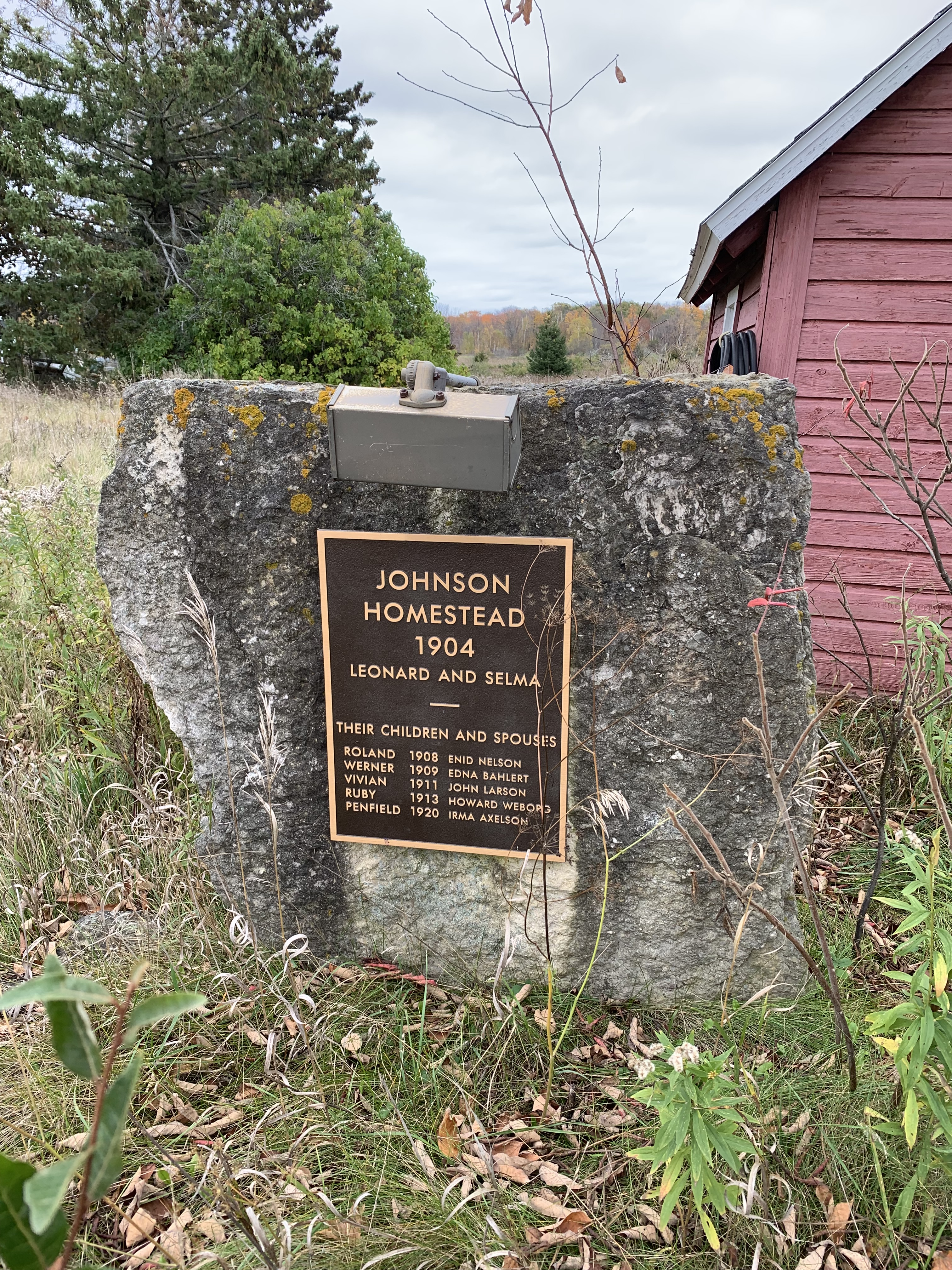
Edna and Werner had lived in that house for many years longer than I had been alive. My cousins Donna and Dean had been born in that place. On my trips to Door County now, I always drive past the brown-shingled house with the cherry orchard to the East. On the edge of the property on which their home stands is a plaque: “Johnson Homestead 1904, Leonard and Selma” the names of their children with years of birth, below. My Uncle Werner, who spoke as if he’d come straight from Sweden, had been born there! Years later, the thought would come to mind that his first language had been Swedish.

For a living, Uncle Werner had fished the tumultuous waters of that part of Wisconsin, Green Bay, Death’s Door to the North ( the native people had named that passage between Green Bay and Lake Michigan). He also raised the sour cherries that grew abundantly in the rocky soil of Door County.

The visit to with Auntie Edna and Uncle Werner began in their living room, with both Edna and Werner seated in their large, comfortable chairs. I sat in the same place each time, also, and I would look to that part of the long, narrow room toward the places we did not sit. Did they ever go into that part of the house, I wondered? Did the Christmas Tree go there?

Dad and Mom, Suzie and I sat formally in that living room, Dad with his cap in his hand, doing most of the talking. Of the lot of us, he was the most extraverted. Uncle Werner seemed to have a twinkle in his eye; I always thought that in his way, he was laughing at us. Auntie Edna was one of the quiet Bahlerts, and so she sat quietly in her chair, asking questions. Gentleness radiated from her presence. After awhile, we’d all get up, and Auntie Edna, Mom, Suzie and I would move to the small, dark dining room, where she served us juice and cookies. I remember her kindness, her ability to listen. When I went to the bathroom before we left the house, I’d glance into their bedroom, and always wondered why they slept in two single beds. At home, Mom and Dad slept together.

Years later, I would come to know my cousin Donna, who worked in Milwaukee and made the trip to the Door Peninsula every week to get her clothes washed, to be home again. Her life was much like my father’s had been, a generation before. While I was in college, I made the trip to Door County with Donna for a weekend, and she took me to her lifelong haunts. After she retired, Donna would marry Jim Thorp, who had lived his entire life on the Door Peninsula. They would live in their double-wide trailer, a short walk away from Donna’s folks.

On the Sunday of our week in Door County, we’d go to church at the Moravian Church just down the road from Werner and Edna’s place, and there she would be, my beloved aunt. In her quiet way, she was a presence.

Once a week, Edna wrote a column for the Door County Advocate about happenings in that place, so beautiful in the summer, with long bleak winters. When we had had our yearly visit, our names were mentioned in her column.

When we are a child, it’s hard to imagine these elders as being young, but sometimes I try to piece together the bits and pieces I heard, often repeatedly, into a pattern. I knew that Edna had graduated from high school, something not all of her siblings had done. She spoke as I spoke, not in the dialect of that place that my father had. Her father, Ginter Bahlert, my grandfather, had wanted her to go to college to be a schoolteacher, but that was not to be. She worked for a time at Bunda’s Store in Sister Bay, an establishment that lasted there until at least the 1970’s, on the West Side of Highway 42, on the South end of town, before she married Werner. I think of her every time I pass the building that once housed Bunda’s Store, the Sister Bay Bowl across the street, still standing.

It is odd, in a way, hard to understand that these places are still there, and the people I loved gone now, so long.

Photo by Mary Elyn Bahlert, October, 2021