memories, remembering, Uncategorized

Something’s always missing

One of the most poignant emotions, to me, is the feeling that something is missing. I expect the feeling is one of loss, or maybe nostalgia. It’s hard to put a finger – a word! – on it, but it’s there, a feeling that sticks to my insides, that doesn’t go away. Something is not quite right.

I think it’s the temperatures in the 50’s and 60’s that betray this time of year, the precious days between Thanksgiving and the end of the year. In Milwaukee, dark blue skies hanging over colorful trees of autumn give way to a bleak gray that marks the coming of the end of the year, of the beginning of months of cold, cloud-covered skies, of cozy homes, of night coming on early.

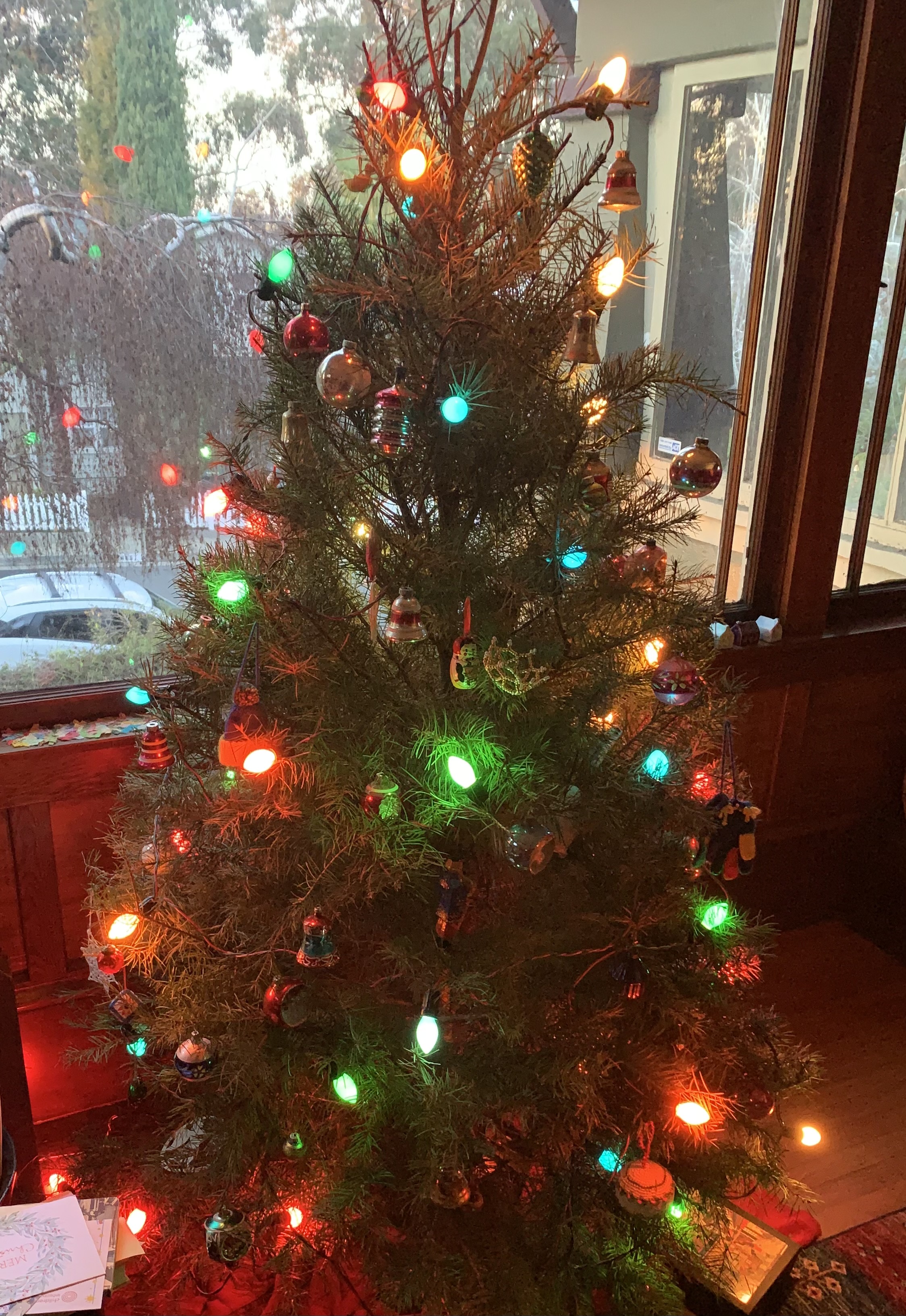
And I’ve lived in this temperate climate for most of my life, but the longing in me still comes on strong in late fall. After Thanksgiving Day, Jeff and I go out together to a Christmas tree lot to pick out a newly picked tree, take it home and begin the decorating as soon as the tree arrives. We love the lights that light up the early darkness each evening, and I move myself from my study into the living room, as often as possible. The pleasure of this season lasts for such a short time: the intense longing that accompanies the season will give way to the closing of the year. As a pastor, I loved bringing the Christmas story and the Christmas songs to the gathered community, often to a community of folks I did not know well, on Christmas Eve; now, I enjoy the lights and the early dark of the season alone, with Jeff. We seem to bring nostalgia into the house with the Christmas tree we’ve carefully picked out from a local business, always remembering the cold evening of a long ago December when my Dad would take a long time to pick out the best tree in the lot to take home to our cozy flat, carrying the tree up the narrow staircase to the second floor where Mom’s holiday baking filled the air with sweet smells.

All of these memories come to mind, as I sit near the tree. I like to play Christmas music on my iPad – quietly – as background to the moments we cherish now.

Before the end of the year, we’ll sit together in the room with the tree and remember moments of the past year that are highlighted in our memories. Jeff will write a list of what he intends to accomplish in the year ahead. I’ll remember those who are gone now, most for many, many years. It’s that time of year.

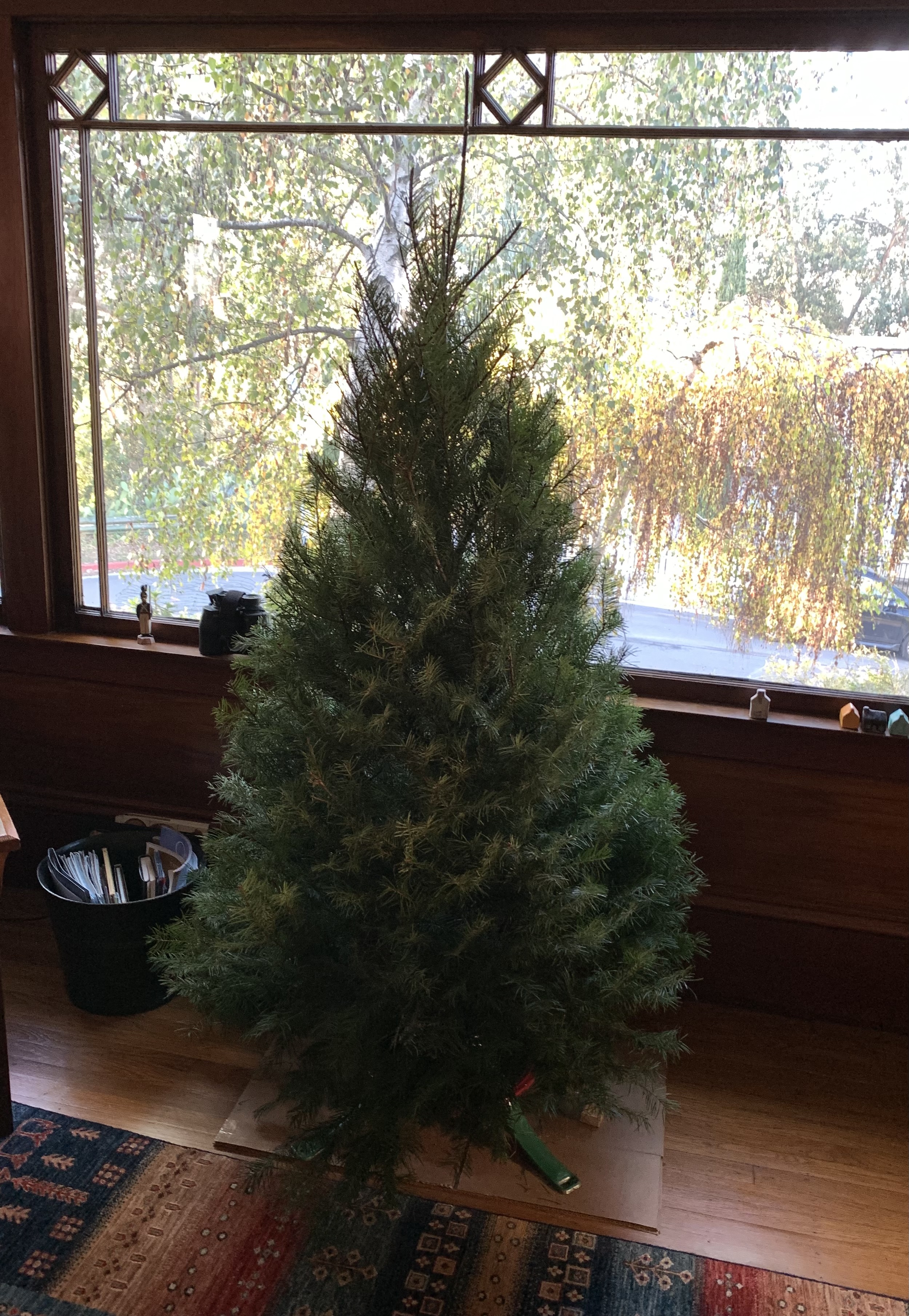
Our tree, waiting to be dressed for the holiday!

photo, Mary Elyn Bahlert, 12/1/2025

Uncategorized

Sue, Sister, Sweet

I remember when I first named you:  “sister,”
your sisterhood, a gift to me:
you, sitting on the edge of the claw footed bathtub
in the crowded bathroom of an old Milwaukee flat, crying.
Smaller, I sat without a word, until we laughed - again.
Then, I knew:
You are my sweet, sweet sister, Sue.

I remember you, 8 months pregnant – 
	another baby!
- your deep voice, your laughter until dawn
in the Carolina night,
the light from your cigarette, bright in the darkness.
During the day, you were Mom.

I remember you, marching with me to find the classical CD’s in the back 
	of Barnes and Noble.
You bought me Beethovan.
I listened, all spring long, to the minor notes,
mourning another Sue.
Now, these notes are for you.
	I mourn for you.

Sweet, sweet Sue:
Your love was there:
a simple melody in the background of my life.
Your love, that spanned the miles, the years.
I remember, Sue, sweet, sweet Sue.

I remember you.

“I don’t know when I’ll see you again, Sue,” I said into your silence,
your deep hug.
I remember your silent wave:  "goodbye."
(I watched you in the rear-view mirror).
You knew, you knew, you knew, my sweet, sweet sister, Sue.
You knew.

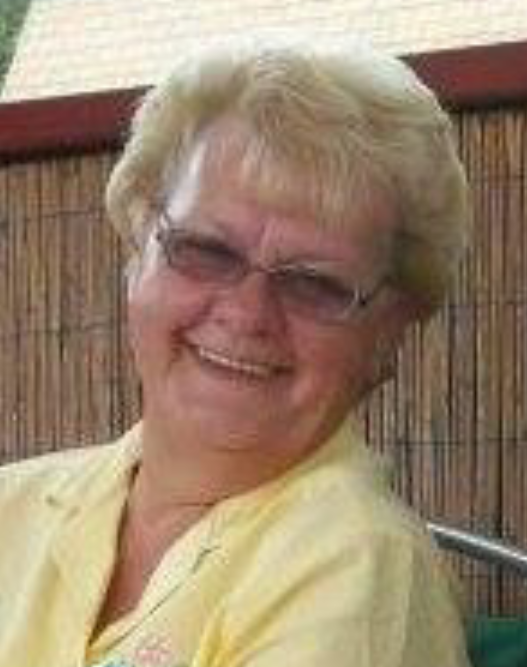
Sue Lass, 1943-2015

Uncategorized

Big Brother

A few years back, my brother in law, Thom visited my husband and me in Oakland, while Rainier, his younger son lived with us during his college years. One night after dinner, Thom and Rainier, a friend of Rainier’s from school, and Jeff and I sat at the dinner table for a long time after we’d eaten. We were having fun, one of those conversations that happens when we’ve known folks for a long time, when our history together is the framework for a long conversation. At some point, Thom asked me if I was comfortable, sitting there, talking with only men. I was taken aback by the question, and Jeff answered for me. He explained that I’d grown up with a father and brother who liked me, and as a result, I was comfortable with men. As difficult and nuanced as relationships – in particular, family relationships – can be, I was interested and grateful to hear Jeff’s answer. He had said something that brought to consciousness a particular nuance to an important relationship in my life. Within that consciousness is gratitude.

Ronn was nine years older than I was, born to my mother and her first husband at the beginning of World War II. During the War, while Ronn’s father was in the service, Mom was a single mother. My mother’s parents looked out for Ronn when she was working, or when she bowled, one night a week, with the women’s league from Cutler Hammer in Milwaukee. Ronn grew up at a different time, surrounded by different people than me, surrounded by my grandparents, who spoke a different language. After the War, Mom divorced Ronn’s father. He grew up as the son of a single mother.

Nine years older than me, and beginning with my first memory, Ronn was part of what family is to me. Mom told me more than once as a girl that, after I’d spent a week in the hospital because I’d suffered a seizure – a week without seeing my mother or father – she brought me home during the day, and I looked at her out of my big eyes, unsmiling, until Ronnie came home. Then I smiled, for the first time that day.

My sister is almost five years younger than I am, and she has few memories of having her big brother at home. I’ve read that we often grow up in different homes than our siblings – birth order, gender, connection to same and different gender parents playing a big role in how we come to know and relate to “home,” or “family.” I expect Ronn’s experience of home was very different from mine. Those differences would play out in major ways when we grew into adulthood.

Of the handful of memories I have of being very young, a memory that includes me and Ronnie stands out. To this day, it tells me about him,about myself, and about our relationship to one another. The memory must be from around 1958, based on information about Buddy Holly’s life – and death. We were sitting together on the couch, watching Buddy Holly on the black and white television screen. Buddy Holly! (That’s a long time ago!). As Buddy Holly performed, Ronn, sitting next to me on the red velour couch, turned to look at me and said: “He’s wearing glasses!”

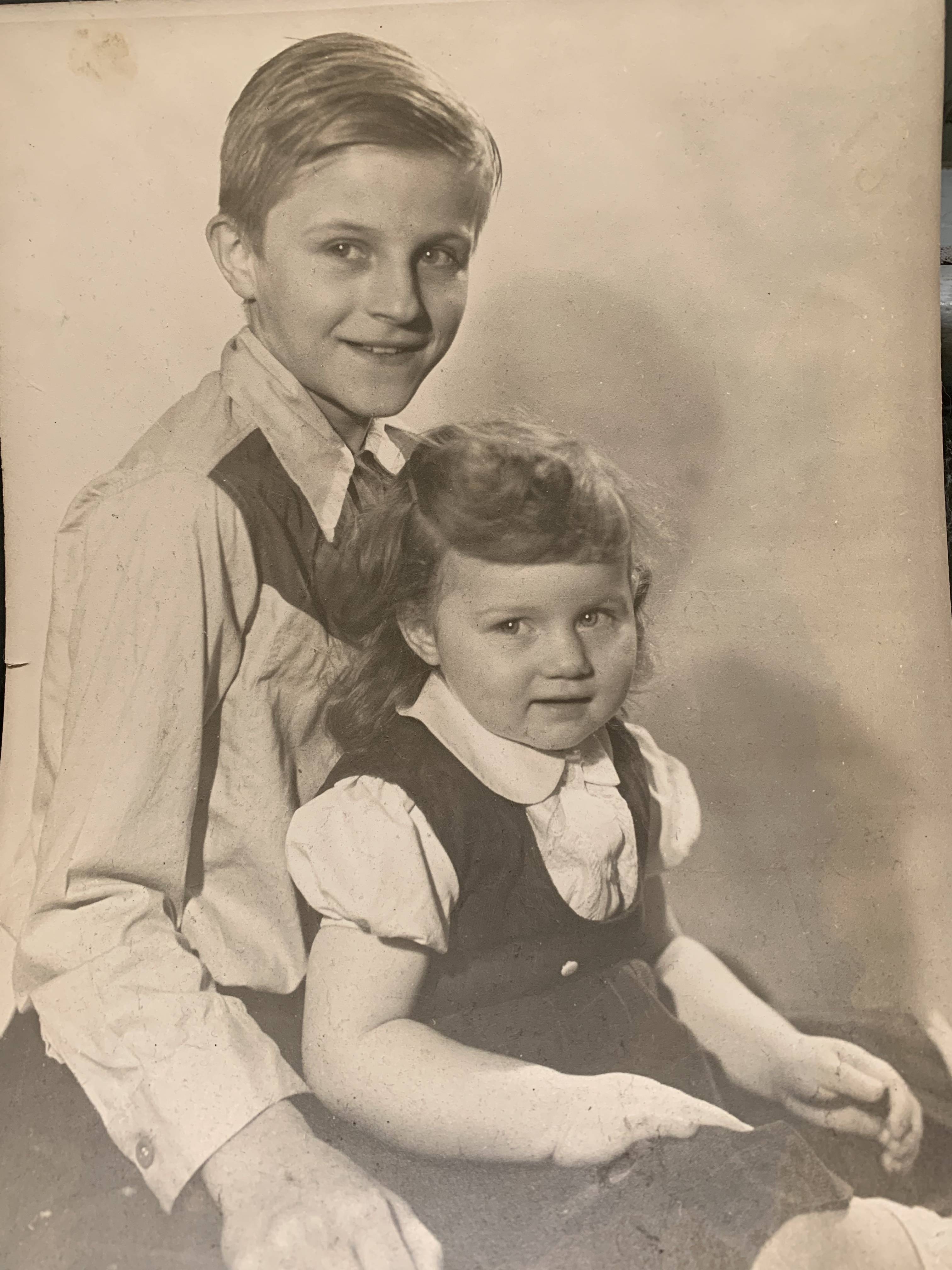
Ronnie and me, circa 1953

Whenever I remember that moment – I am filled with understanding and gratitude. I knew, without his saying so, that my big brother was self conscious about his having to wear glasses. He was a skinny, tall kid (taller than any of the rest of us in the family), and his comment betrayed his insecurity. And I knew, still know, that I was someone important to Ronn, my big brother, so much older, his life a different trajectory, as our lives would attest to, years later. Ronn had difficulties I did not have, as the son of an absent father. I had an intact family. Ronnie was lost, in a way; I grew up knowing that I belonged to this particular family, for better or worse.

Ronn has been gone a long time now. The night before he died, his granddaughter held the phone to his ear in a hospital in Jacksonville, Florida, while I cried and told him I loved him – my big brother. Ronn’s legacy – a large extended family, children and grandchildren and great-grandchildren – continues to grow. My family legacy is small, I often think.

remembering, wisdom

“You learn something new every day.”

My mother did not graduate from high school, although she received her GED while I was in university.  I know for certain she did that so that I would graduate with a degree, since I was wavering, and had taken a semester off during my senior year at the University of Wisconsin, Milwaukee.  She didn’t tell me her reason to do it then, but I knew.  When she received her certificate, I sent her a spring bouquet.

Mom quit school early to work.  She married young, also, and had a son within a year – Ron, my brother.  Mom was bright.  Now, when Mom comes up in conversation, I tell folks that she should have been a teacher – a kindergarten or first-grade teacher.  The daughter of Ukrainian immigrants who lived in flats in neighborhoods of poor folks, it was enough that she learned to read and write.  She taught her father to read English when she was a girl.  In my mind’s eye, I can see her, bright and determined, her feet wrapped around the rungs of a wooden chair in a cramped Milwaukee flat, as her father, Vlas, paced – determined, also.  He was smart, although illiterate in his native language.  He made that long trip across the ocean, left the familiar village of his homeland so that his children could learn to read and to write.

So Mom knew the value of education, although she could not see to get a degree herself.  The life of a working class woman in that era intervened.  She was married and divorced by the age of 22.  She worked hard at Cutler-Hammer in Milwaukee, where her employers noticed the bright, hard-working young woman.  Although she had greater earning potential than my father, she quit her job when she married again. That’s how things were done. 

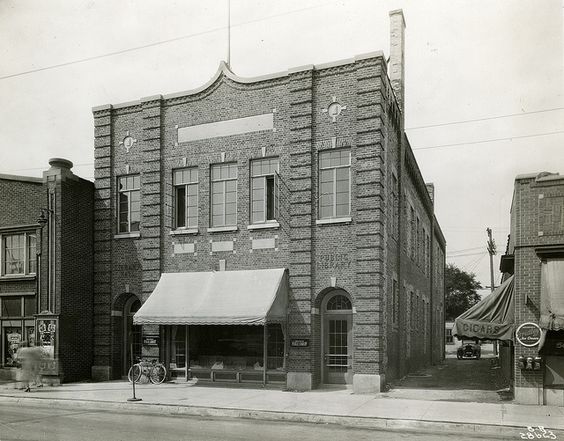
When I was girl, I walked 3 blocks to the Center Street Library – on 27th and Center – with Mom, every week.  She must have read all of the books  in the “mystery” section of that library.  It was in those days that I learned to love the smell of libraries.  In a library, it seems we can smell the riches of what is carried in the aisles.  Twice in my life I have worked in a library – in high school, and again in seminary.  For awhile as an undergraduate, I flirted with the idea of becoming a librarian. Books would save me, many times, during my life.

The old Center Street Library at 2620 West Center Street, Milwaukee, photo circa 1920

When Mom and I left the Center Street Library  to walk home, we each carried two or three books to read for the week ahead.  I see now that Mom was living her mantra, handing it to me:  “you learn something new every day.”  I was not able to see that for many years, but now, in my own learning, I understand. And I came to see that the learning that comes every day is not always in books!

Mom taught me how to wash clothes, too.  During summers when I was a young girl, my babushka-d Mom would take me down three flights of stairs to the shared basement of our flat to show me how to wash clothes.  I remember the smells – the damp and soapy smell of the basement, the hot, steaming water of the wringer washer.  Into the first load went whites – sheets, pillow cases, underwear.  Into the second load of the same water went towels and colored clothing.  Into the last load went Dad’s work clothes.  I know the smell,  I can see the beautiful wooden stick Mom used to lift the clothes from the washer into the first rinse water, and then into the final rinse before the clothes were taken in the large wooden basket into the yard to dry in the humid air.  As I write, I can smell the air, too.

If I could have one item of Mom’s, it would be that wooden stick, smooth, smelling of soapy water, imprinted with Mom’s hands, her weeping and her worries.  Like most of what has been held and used over the years, that wooden stick is gone.

I see Mom’s broad, strong peasant hands, hands that in later years would be crooked with arthritis.  She was a worker, teaching a little girl whose work is ideas and books and the fabric of words.   “You learn something new every day.”  I took those words into myself, and I made them my own.

The path I have taken through life has been the path of learning, too, not always from books.  I keep your mantra, Mom.

nostalgia, remembering, Uncategorized, wisdom

Remembering Mom, her later years

When I was a girl, my father would say from time to time: “my life has gone by so quickly.” I would look at him, just little, and wonder what he meant, and how that could be. I could not relate. Some people say that time goes more slowly for the young, when all the years stretch out beyond, when growing up is something to be yearned for and in the yearning, of course, time passes slowly. But my memory is of that question or wondering that was in me when I heard my father reflect. Later, he would quote again and again, this Bible verse: “A thousand years is but a day in the eyes of the Lord.” Apparently, my dad did not stop thinking about the passage of time.

Often, I think of my most cherished memories, as “life has gone by so quickly.”   My memories include those days on my visits to Milwaukee to see my mother, after I had moved to the Bay Area of California, after my father had died.  My mother lived in a small upper floor apartment on a busy street close to the center of Milwaukee, and I would stay in the cramped second bedroom, the noise of the busy thoroughfare keeping me awake nights.

Both mom and I were “Milwaukee girls.”  We had grown up in the flats that line the streets of poor and working class neighborhoods of the North Side.  Those flats are still there.

We knew the streets, the bus lines, the parks, and we knew the sense of “small town-ness” that Milwaukee cherished for a long time.  We knew the particular kind of diversity of that place – the streets where Eastern European communities lived, the place where the Italians built their church, now a Cathedral to welcome the Bishop from Rome, the places where African Americans came to live, to build community, during the Great Migration.  We knew the part of town where people from Mexico came to live among others who spoke their native language.  We knew how to navigate to new places, too, in that city laid out in a grid.  I have never understood how to find places in cities that are new to me.  How can addresses not make sense, like they do in Chicago and Milwaukee, a small Chicago?

On my visits to see Mom, before the dementia took her away,, we set aside a day to “do Milwaukee.”  After coffee and breakfast, we backed her car out of the garage and onto the busy street.   We had no particular plan, except to explore old places that held meaning for us, to make our way to the Milwaukee Art Center at some point, to have lunch out, and maybe to do a bit of shopping along the way.  I loved those small adventures.  I loved the fun we had together:  “that’s the fun of it!” was one of my mother’s expressions.

On one of our adventures, we discovered again a small section of town filled with Ukrainian immigrants.  My mother’s first language was Ukrainian, and so we ventured into a small bakery, a storefront, and she stumbled to say a few words to the man behind the counter.  He understood, all right, and soon we found ourselves in another cramped space, the family’s living room, complete with an altar adorning a corner.  They were Ukrainian Catholics, and a candle burned in that corner, lighting up the features of the Virgin Mary, her eyes cast down, her blue gown ending at her bare feet, on a sphere covered with stars.

On another adventure, I gazed at my mother as she gazed at one of her favorite paintings in the Milwaukee Art Museum, The Wood Gatherer, by Jules Bastien-Lepage.  Later, Mom told me her wonderings about the scene that painting depicted, her own story fleshing out the art.   I still own a print of that painting.

One day at lunch we found ourselves in an old Italian neighborhood for an Italian lunch, another at a Jewish deli across from a synagogue.

As the years passed, it was harder and harder for mom to enjoy those days, until the last time we set out.  We did not know it was the last time, but something had changed.  We returned home to her apartment right after lunch.  Soon enough, I’d have to move Mom out of her apartment and into assisted living in the Bay Area, a move which she made bravely and with great trust.

I suppose some part of me thought those adventures would go on forever, that those times when we laughed and remembered and saw old things new again, would not end. All times end.  Now, those days are distant memories, and I continue to cherish them as some of my favorite times.

Here, I find myself years later, remembering those small adventures, remembering the tilt of Mom’s head as she laughed, remembering the narrow streets we knew so well, remembering driving her blue Tercel all over the city we loved.  I’m in the memory time for so many people I have loved, so many experiences, so many grievances that had filled my life over the years.    All of those beloved people, all of those rich days are a memory, now.