Uncategorized

Auntie Irene

My father was extroverted and his sister Irene was extroverted. Really extroverted: the kind of extrovert that spoke everything that passed through her mind. And I loved her.

Auntie Irene and her husband, Uncle Erdreich, lived on a road off the State Road 57 going north along the shore of Lake Michigan, north of Baileys Harbor. Their road led into a swamp, a mile or so past their house, their house with the cottage behind it – the cottage that Uncle Erdreich had built for my grandparents to live in in their elder years. The door of Auntie Irene’s house led to a hall that led to another door into the kitchen, the table directly ahead as you walked into the house. I suppose that house was strange by modern standards of “footprint,” as rooms had been added on by Erdreich, a carpenter, as the need had presented itself over the years.

I spent many nights in a second story bedroom at the top of the winding stairs that led from the living room to that unused space; unused, since Irene and Erdrich’s two sons were a generation older than me, and were long past away from Baileys Harbor, making their lives in other places. When I was living in Green Bay for a couple of lonely years in my twenties, a few times I made the trip to Baileys Harbor to spend a day or two with Auntie Irene and Uncle Erdreich. I slept in that cozy bedroom with its old fashioned pictures on the wall many times.

Irene was “the hugger” to my sister Suzie. That’s how Suzie remembered her as being different from Edna, a quiet Bahlert, who lived twenty miles to the north, near the tip of Death’s Door at the end of the Door Peninsula. And Irene did welcome us all with a hug, as her mother had done, a generation before, when she welcomed my reserved mother into the family as she met her for the first time. My mother never forgot that hug of kindness and acceptance.

Irene and Erdreich rarely went more than a few miles from their home, but they did come to Milwaukee to visit my family when my sister was still in a stroller. The Big Sister (as Irene had been to her Bahlert siblings) took the baby and Auntie Irene for a walk, Auntie Irene anxious, talking non-stop as soon as we were out of sight of the house where my family lived.

Irene hugged and Irene talked. Is it a truth about extroverts that they say exactly what comes into their mind? I think that was true of Irene. She was kind; she was gentle; she was warm and she had a humor about her. When my parents and Suzie and I had been greeted on the lawn with hugs, we were given a tour of the garden that was full of vegetables and fruits every year, and then we walked into the kitchen of the welcoming house for a treat at the table, something home baked by Auntie Irene.

On one of the trips to Door County during my years in Green Bay, I invited a friend to join me for the weekend, and we were the guests of my loving aunt and her home cooked meals. As we drove away, my friend turned to me in the car and said: “there’s no excuse for a person to be like that.” Her comment surprised me, and it still surprises me that I did not feel shame at her judgment of a person I loved so completely. Years later, I introduced another friend to Irene and Erdreich, and she told me that she had never met people like them before. Her comment reminded me of her kindness and gentle acceptance.

When Irene was in a nursing home, already past 90, dying, I wrote a note to her. I’m sure someone must have read it to her as she lay in her bed, that lonely bed away from the double bed she’d shared for 70 years with Erdreich. As I signed the note, I remember writing: “wait for me.” Jeff and I made the trip to Door County again on our visit “home” to Wisconsin that year, just in time to be present at Auntie Irene’s funeral in the Evangelical Lutheran Church along the highway, the church where, years before, I’d sat in the pew after receiving communion, next to my aunt who fell to her knees, head bent, before she sat back in the pew. I’ve always thought that Auntie Irene had waited for me return, for me to be present alongside my Bahlert cousins, some who came from a long way to be at her funeral, on that summer day.

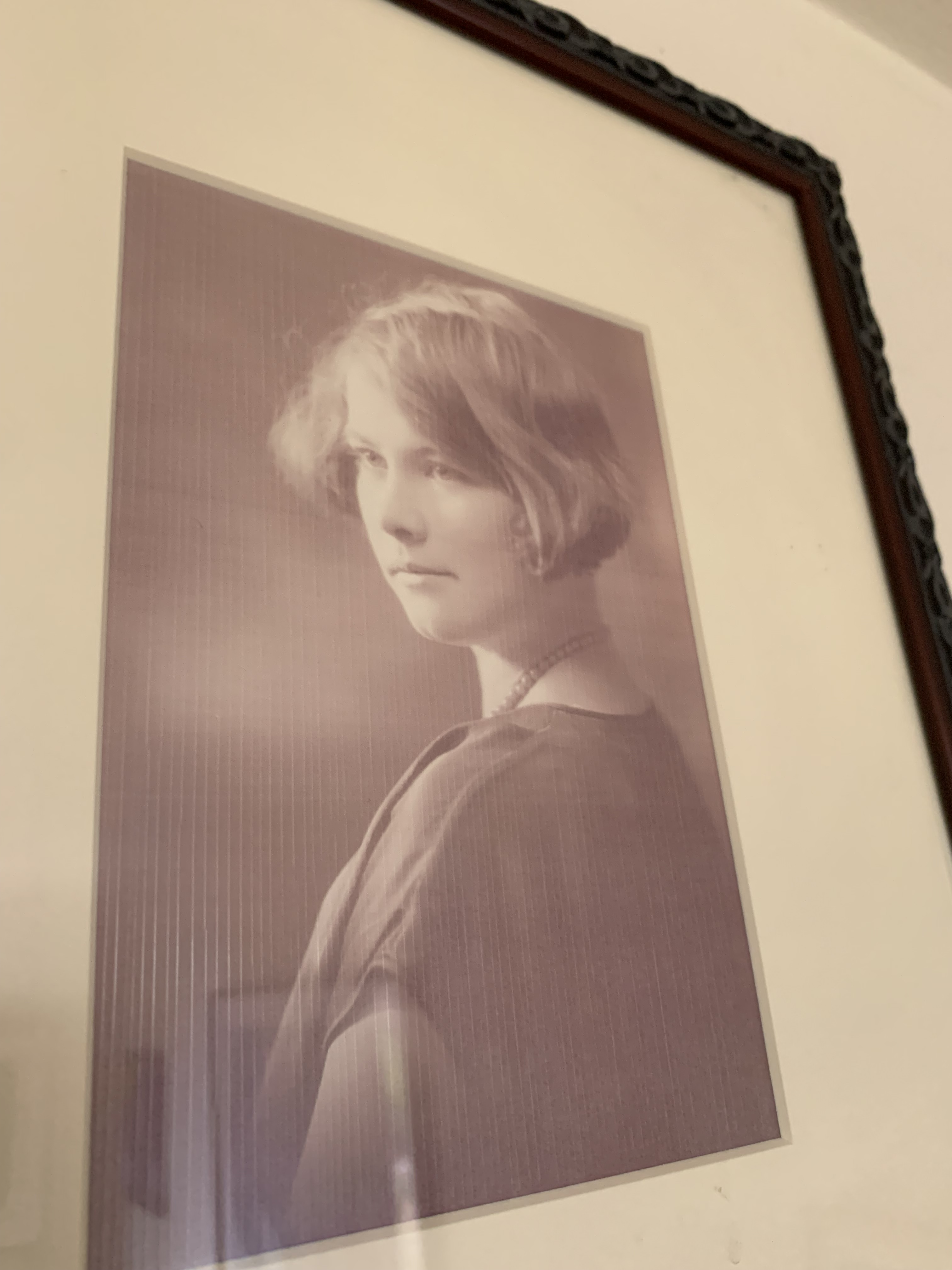
Irene, circa 1926

Uncategorized

The gladdest thing

I will be the gladdest thing
    Under the sun!
I will touch a hundred flowers
    And not pick one. — “Afternoon on a Hill,” Edna St. Vincent Millay

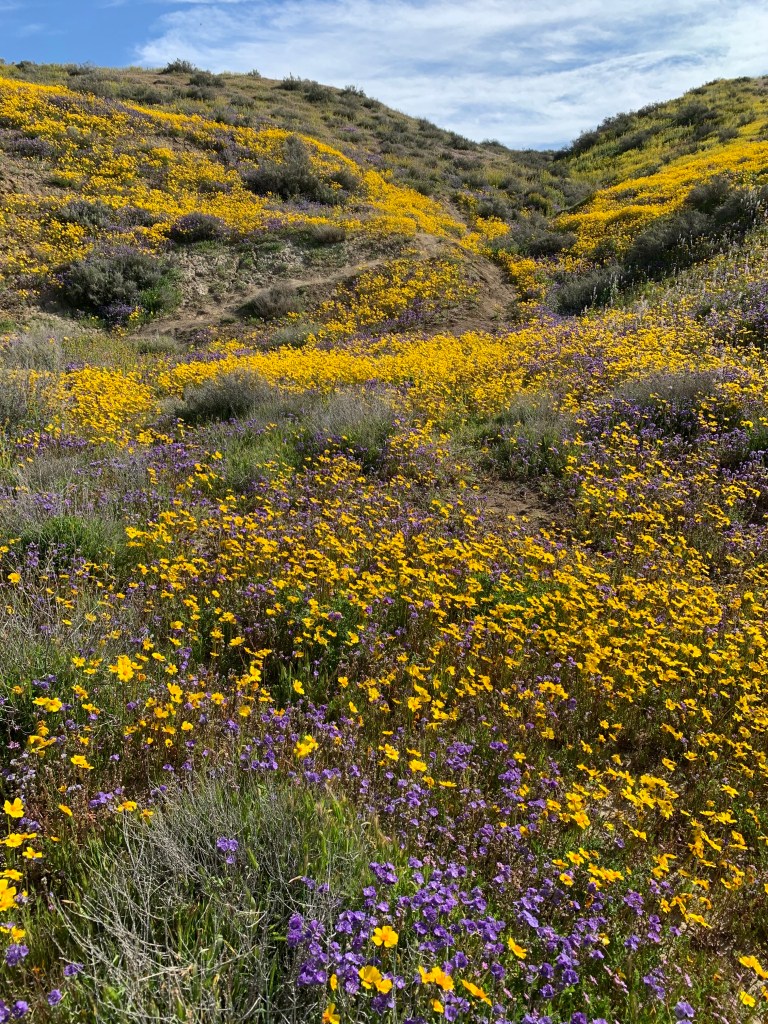
For a couple of days – for a few hours this week – my husband and I and two good friends were, indeed, “the gladdest thing under the sun!” We drove and we hiked up hills and we walked among the hills at Carrizo Plain National Monument in South Central California. The long drive was worth it!

Enjoy this tiny sliver of the beauty that was ours to savor, to enjoy, just for a time:

Carrizo Plain National Monument, photo by Mary Elyn Bahlert, April 11, 2023

beauty, community, reflecting

Christmas to Me

On the Saturday evening of the weekend before Christmas, my husband and I spend the evening with a group of people together in the sanctuary of a small, aging church building in Albany, California, north of Berkeley. In an area of the country where more folks are “unchurched” than in areas where hundreds of people – young and old – gather in large auditoriums to hear loud, drum-backed music while strobe lights flash overhead – we sit together for two hours in old wooden pews, taking in Christmas.

A Tongan woman dances to a song from her people as a two year old, born in the United States to parents whose native language is Tamil, born and raised in the South of India, runs behind the dancing woman, up the stairs to the chancel, where a Christmas tree stands at the center, its lights changing from white to multi-colored, and the little one dances in front of the tree as the rest of us smile and giggle at her antics.

A line of Filipinos, the women all wearing the same plaid winter shirt, sing a song from their country. A Korean choir proudly sings “He is Everything to Me,” standing in a line. A five year old girl – the oldest in the group of children who stand before us – sings all the verses of “Feliz Navidad,” the smaller children fidgeting, not sure where to look, as the mother of a two year old walks her little girl up to sit with the other children, all dressed in their Christmas best. A Tamil couple who spent most of the past year in India with family sing a song in their native language.

All the while during the concert unfolding before us, toddlers meet in the center aisle of the church, looking into each others’ faces, holding hands and swaying to the music they hear. Their parents smile as they watch their children, at the same time, their heads nodding to the Christmas music, the other entertainment of the evening.

A well dressed, handsome young man – accustomed to being in the spotlight – walks to the front of the sanctuary, where he reads “Mood of Christmas” by Howard Thurman, (November 18, 1899 – April 10, 1981; American author, philosopher, theologian, mystic, educator, and civil rights leader). The young man graces us with the African American Gospel song, “Jesus, What a Wonderful Child,” and as he leaves the front of the sanctuary, he is followed by a couple from India, singing the Malayalam Song, “Christmas Raavananja Neram.” Their daughter, 2 months old – a child they had waited many years to welcome into their lives – sleeps in the infant seat her mother had carried with her to the front of the church.

We are grateful when the Pastor, a native of Korea and a professor of preaching, uses his time at the pulpit to offer a few words of Christmas blessing, and then sits again among the rest of us in the pews. Not much needs to said when we see Christmas unfolding here, right before our eyes.

Over the course of the evening, we hear Christmas songs and carols in 10 languages.

And then – as the music quiets – Korean women, all dressed in red for the occasion, pass out little white candles, and we sing, “Silent Night, Holy Night…” The lights are darkened as the candles are held high, sparkling.

Soon, we crowd into the center aisle of the small sanctuary, greeting one another, many with elbow-bumps – in honor of Covid – and we are filled with joy, gratitude, for being together to bring Christmas to one another, a gift.

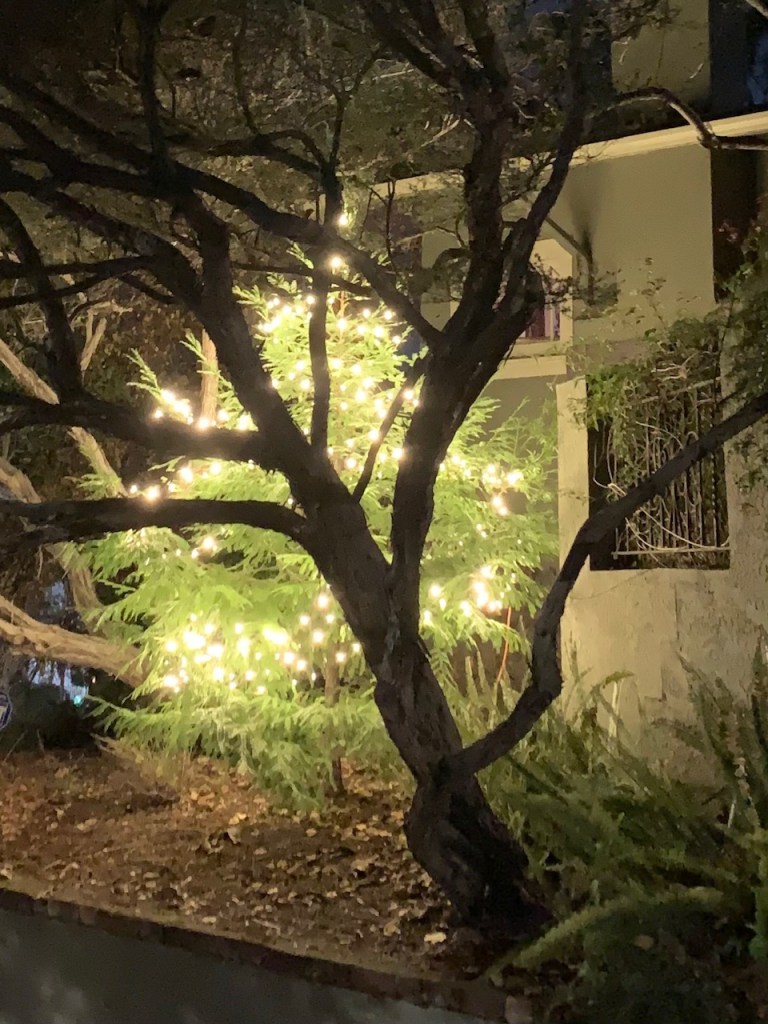
Christmas Lights on View Place, December, 2022, photo by Mary Elyn Bahlert

Uncategorized

Magic

Magic seems to permeate this season of the year, the time when the darkness descends upon us – literally – and we are full into the darkness. In my life and spiritual practice, it is certain that when I descend into the darkest place, the light, the new emerges. The promise of those who have gone before is that there will be light, there will be another day. And another day arrives, new – Magic.

When I was a child, my sense of wonder provided a kind of Magic. On Christmas Eve, my non-churched family attended a church to be present for the children’s program. I was among the children who stood to recite the Christmas story, verse by verse, for the gathered adults, the sanctuary filled with lights, the light of candles, the smells and sounds of a place with a cold winter: cold hands and faces, warm wool outerwear. What I remember about those Christmas Eve times is the sense of Magic I held as a child – that Magic itself something holy, something that would pass away, away from me as I entered puberty and young adulthood. Nothing can replace the Magic of that time and place, still clear in my memory.

A few days ago, as the light of the day was ending, Jeff finished his work on the strip of land we call, “the Panhandle,” where he has lately installed a neighborhood library – a beautiful wooden box complete with a glass door that a friend crafted to suit the vision Jeff and I had. As soon as the library was installed, a few books appeared. One day, I watched as a woman I did not know stopped her car and delivered several books to the library. Our vision has come to life! Our vision is useful! Our vision is beautiful!

That day, as the sun set over San Francisco Bay, barely visible from our windows on View Place, Jeff stepped into the kitchen and looked out to the West as the sun was setting. He had cut the branches of a tree in our yard that had hid the site we were seeing. Jeff called me over to stand with him at the window. And there – there! – as if the moment was for us alone – our own screen on the sun setting over the Bay – the outline of downtown San Francisco, coated in grey fog and lit by the lights of the City – shone before us. Magic! I named our view, “The City of God,” and we stood for a few moments as the vision faded, as the sun sank lower into the Pacific beyond the City. Then – gone.

The simple gifts of light, of a tree with golden leaves about to fall, of my cat who comes to sit close to me on the couch to receive a good petting, of an old recipe for borscht that gives us a week of meals. These simple gifts are Magic to me.

“The City of God,” photo by Mary Elyn Bahlert, Oakland, 12/2022

Uncategorized

Leaving home

In “Fiddler on the Roof,” there is a heart-wrenching scene of the Jewish people of the village Anetevka being forced to leave their beloved village, their home, during the Russian pogroms (massacre or persecution instigated by the government or by the ruling class against a minority group, particularly Jews). The people are packing the few belongings they can carry, along with animals, onto carts and make-shift vehicles. What to take? What can they leave behind? They will leave behind that place they loved – we all love our homes, don’t we? – not only the home, but the place, the land, the sight of light on those trees, the fragrance in spring – and walk away to where? Can somewhere else be home, surely? The tailor, a man with a young family, asks the Rabbi, then: “Rebbe, wouldn’t this be a good time for the Messiah to come?” The old Rabbi looks fully into his eyes and says: “We’ll just have to wait for him somewhere else.”

Wisdom, in the heart of tragedy, of horrific loss.

We wait for the Messiah these days, also, as the War on Ukraine – invaded by Russia – drives on, for many months. How long will the people suffer? We wait for the Messiah when we are ill, or when someone we love is ill, and there does not seem to be an end to it. We wait for the Messiah when the price of gas goes up an up and – up – and although it is expensive to us, it is too much for so many others. We wait for the Messiah to come into the lives of refugees fleeing from war in their own homeland or fleeing because there is no water in their land. Refugees who are walking now, today, this moment. They, too, must be waiting for someone to save them.

We wait for Someone – Something – to save us.

Deep Dusk, Oakland, 11/12/2022 – Mary Elyn Bahlert