Uncategorized

Taking the long view…

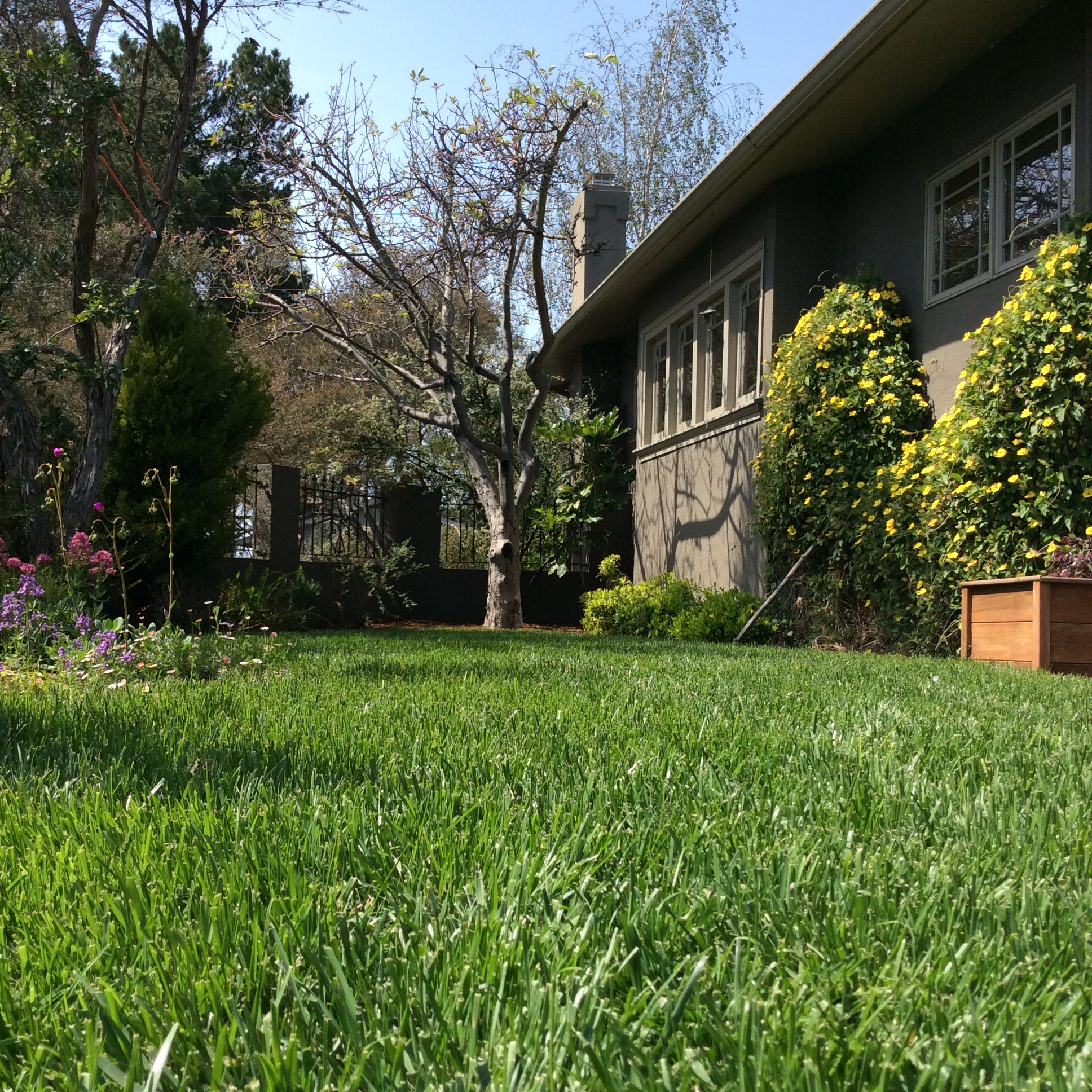
IMG_0634“The long view,”  from my camera…

These past few weeks, I have watched, as much of America and the world has watched, the aftermath of the death of a black man in police custody – in Baltimore, MD.  People have gathered in the streets to protest the death, and to bring the country’s – and the world’s – attention to the matter of racism and police use of force in the United States.  Having marched on many occasions in my lifetime, I am from a generation and a family of people who understood that sometimes the people must take to the streets to take back our democracy.  Like so many of us, I do not condone the violence that has erupted, the fires started in Baltimore, the reckless among the marchers.  But I also know that some things will happen, some people will not march peacefully; so many things in this situation – as in our lives – are out of control, and can become out of control.

Hopefully, the violent few will not stop the message of many from being communicated:  change is needed.

I especially appreciated the simple and clear statement made by David Brooks on the Public Broadcasting System New Hour last Friday, May 1:  “We know what the problem is:  we don’t know what to do about it.”  Hopefully, that is a statement of progress, a statement that those of us who are white are coming out of denial, that we realize that we are implicated in the systems, the structures that are our system, and that we also will be looked to for solutions for our part in these systems.  I pray that strong leadership will arise that will allow us as a country to confront the institutionalized racism that is in the fabric of who we are.

I was also touched by the interviews by members of the news media as they talked to people on their front porches in the neighborhoods directly connected to the violence that had broken out in the protests.  I heard the comments of an African American man who lives in the neighborhood where buildings had been burned:  “When I was young, the police walked on our street.”  He was remembering that there was a different relationship with the police in those days.

I remember those days, also, and I often think about how times were different then, in the 1950’s and early 1960’s.  I remember that we knew the names of the officers who walked down the streets of the city where I lived.  I know that we respected those officers.  I was a white girl, of course.  I was also raised in a generation – for good or not – that was expected to respect adults.  When I was with other children in the neighborhood, we knew each others’ parents, and we called them by their last name:  “Mrs. Smith.”  “Mr. Schmidt.”  When I look back now, I realize there were many things we did not talk about, that were an unconscious part of those streets and of the lives of the children who played there – domestic violence, drinking, sexual abuse.  We held adults and authority with respect, to be sure, and that has, like anything in life, positive and negative realities.

Something has been gained with our growing consciousness of the whole reality of life.  We know we cannot go back to those times, but those of us who have lived 5, 6, or 7 decades now have the ability to “take a long view of history.”  What happened to the neighborhoods we knew?  What happened to the semblance of safety we all had?  What happened to the days when children walked to school – safely, for the most part?  What happened to our innocence?  When did we stop treating one another with respect, the respect we give to another human being?

Was it as simple as the end of our naivete?  Was it the Watergate scandal?  Or Vietnam, and the lives of so many sacrificed in a war that was never really called a war?  Was it 2001?  Was it the resignation of the President?  We are the generations that remembers  the assassination of a young President whose election had brought many great hope.  We are generations that saw immediately and horribly the assassinations of a great civil rights leader and prophet, The Rev. Martin Luther King, Jr., and Bobby Kennedy, within a few months.  I remember my brother shouting from in front of the television that day:  “He shot him!”  Like millions of others, my brother had witnessed that moment, on live television.

What is the role of the Internet in all these changes, and the ability we have to see events as they happen, all witnesses to the world’s quickly changing borders and the identities of its people?

What do these things say about us as a people?

I don’t expect any of us to have the answers.  There are many among us who are looking for the answers in scholarly ways, searching through the annals of history for the answers.  Some simplicity (was life ever really simple?) seems to have been lost.  And there are many among us who are remembering with friends, and asking questions, talking, ruminating.

I also am not offering these thoughts as an exercise in nostalgia.  We are here, now, given our history, given our mistakes, given our greatness as part of the creation, and even given our questions.  This is who we are – and who we are not.

As I enter the Wisdom Years, I can see that those among us who have lived a long time have something that those younger folks among us do not have.  We have the scope of history, a scope that has driven us through tumultuous and rapidly changing times.  We also have the scope of our own histories, reflections on our own mistakes, some simple learnings, and we also have the ability to hold questions, to know that we do not have answers.  We are wise enough to know that the questions may be all we have.  We are people who can take the long view.

I am grateful for the life I’ve had.  I know I have had privilege  that I did not earn, by who I am, a white woman, an educated woman, a woman who has lived through times that women of no generation before has experienced.  I know my mother did not know the freedoms – internal and external – that I have had and yet, she, too, is part of this history.

I am also filled with questions.  I think we all are filled with questions.  It would not seem to be wisdom to strike out to make changes without deep considerations.  But we know change must happen.  Change means loss, and change means that something new is coming.

I am certain that others who are the elders are ruminating, also, and although not quickly coming up with answers, considering, turning history and the changes of history over in our hands, as one turns a rock over to see the other side.  Political correctness and opinions and views that we have held onto for so long don’t hold the answers we need, and I think they will have to be set aside.  How can we stop being so afraid of one another, how can we stop taking offense so quickly, how can we hold a space for answers, new answers, new behaviors, to take up space?

These are my questions, these are my wonderings, these are my considerations, not all stated here, but the crust of all that is churning in me as I face the Wisdom years.

What are yours?


Uncategorized

Crows Calling

220px-Corvus-brachyrhynchos-001

American Crow, Singing Sands, Bruce Peninsula National Park, Ontario, Canada – 6, 2007

 
The crow yells orders to the city birds:
“this is my place, my space!”
Isn’t the call of the crow our call, too?

Sometimes in the afternoon sun leaves fly and feathers, too, whole trees shake with the anger of the crows:

“this is my place, my space – I am taking my space!”

Isn’t this our call, too?

All over the world, crows are calling this morning, each morning, on and on into dusk:

“this is my place, my space – I am taking my space!”

Flapping its wings, shaking  leaves, bellowing over city streets,                                                  crow calls:

“I am taking my space!”

meb/4/2015

***

Don’t we all take up space, want our space, as children of the creation/creator?  Isn’t that why people all over the world are calling in the streets – like the crows?

Uncategorized

Always give thanks –

IMG_1072

It’s easy to be grateful when things are going well.  These days, it’s common to hear folks say:  “I am blessed,” when the list of positive things, things they feel good about, makes their life feel abundant and makes them feel rich, rich in blessings.  It’s harder to be grateful when things are not as good, when we are feeling down, when the blessings we have are not nearly as apparent, to us.

I’ve always loved the New Testament verse:  “Be joyful always, pray at all times, give thanks in all circumstances.”  Years ago, I read Corrie ten Boom’s account of the years she spent in a concentration camp in Europe.  She kept herself – her spirit alive – by living out those words.  Sometimes I remind myself of that verse, to get through a day.

This morning as I write these words, the people of Nepal are digging themselves and each other out from the rubble of a major earthquake that has devastated the country.  On Mount Everest, climbers who survived the quake are scouring through the debris to find friends, other adventurers.  Internet access is limited, and so people are finding ways to let their families know they have survived – so far.  As I sit here in my sunlit basement office, I am in luxury.  I listened this morning to the accounts of survivors on the BBC news.  A mother sits with her children, grateful to be alive, wondering how they will yet survive.  Aftershocks shake the country.  How will she feed her children?

I am deliberate about making time and space in my privileged life here in the West for those people around the globe – and not far from here – whose lives are not as privileged.  I think of it as part of my world citizenship to remember the lives of people who are struggling for food, for water, for shelter, for safety.  Since news travels so quickly around this planet earth, we hear the stories so much more quickly, and so much more vividly, it seems.  I am deliberate because I want to remember that my life is richer than most human beings can imagine.  My access to food, to water – even in this drought in Northern California – to basic, basic necessities, is simply a part of the way I live, and the way I expect to live.  How can I pray for these people?  Is there a way, by changing my/our lives here, I can effect change?

And what does it mean to “give thanks in all circumstances” in my life’s conditions?

Years ago, I read about a man whose life was full.  Educated and successful, he and his family had a beautiful home.  His children were beautiful, well-educated, and successful.  He had everything he needed or desired, it seemed.  Every day, he would say:  “I am blessed.”  One day, one of his beautiful daughters left for a trip to India.  On her arrival, she called her father to check in.  The next day, she was gone – murdered.

From that day forward, as her father and her family made that long and arduous and lonely and necessary journey to grieve  her loss, her father contemplated what it really meant to him to be “blessed.”  What did blessing mean now, in the face of this unimaginable, unnecessary loss?  Would he ever be able to say again, “I am so blessed?”

That is a question for us all.  I know – through my own years of learning to pray (we are always a beginner at such things, I think) – that so many of our days are not good days, or happy days, or days filled with all we want and desire.  Many of our days – if we are honest, and if we choose to live our lives to the fullest – are filled with loss, with unfilled desires, with disappointments, with sadness, some of which will never end.  What does it mean to say:  “I am grateful,” in those days?

I am grateful to be alive.  I am grateful for my one journey.  I am grateful for the beauty of each day.  I am grateful for food on the table, for the privilege I have as an educated white person in this society.  I am grateful for long, enduring friendships – in spite of me, I think.  I am grateful for the family I had in my life – as dysfunctional as any family, but still, a family in which there was love.  I am grateful for my partner in life.

I have been challenged, as we all are, by the changing winds of life.  Life is hard for any one, any where on the planet.  I can’t compare my own challenges to the people I have on my mind today, in Nepal.  It is hard to be a human being, invested with this life.

And so, in my own feeble practice, I try to give thanks, every day.  For awhile, I wrote a note of thanks to God, to the Universe, to Life, on a little sheet of paper every day, and put it in a drawer I had emptied for the purpose of holding my gratitude.  Now, I simply try to be grateful.  I have had moments when I have given thanks – did I feel grateful then? – in the midst of some crises of my mind or spirit.  That, as I said, is my practice.  Today, it is easy.  Some days, it is not.

I stay away from saying I am blessed.  That doesn’t work for me.  Why am I blessed?  Why is someone else not blessed?  Who is to say?  What does it mean, really?  I like to stay with the tide of life, the ups and downs, and I like to be grateful, when I can.

This is my practice.  And for that, for the abundant, privileged ability at all to think on these things, to reflect on life, I am grateful, for now, for this moment.  I hope you can be, just for a moment, also.

Uncategorized

who’s a big boy/big girl? Are you?

brave-person-walking-out-on-the-glacier-point-ledge

We ask little children this:  “who’s a big boy?”  The reality is that we are all big, our energy is big, we are larger than our bodies – and much, much – much! – larger than our minds!

Eastern medicine follows the precept that energy follows attention.  Can we apply that to our ordinary, everyday lives?  I think we can!

Most of the time, our energy is scattered.  When we follow the wanderings of our minds, that is completely true.  Our minds wander from one thought to the next, one judgement to the next, one “brilliant” idea to the next.  One day, for practice, intend to watch/observe the wanderings of your mind.  You will have to do this when you are silent and when someone else is not speaking to you.  Pay attention to your thoughts.  This practice alone may surprise you – you will find yourself making judgements, mental comments, about everything you see.  If you really pay attention, you will notice that it is easy for your mind to wander off, to not stay in one place, with one thought, one judgement.  The mind is busy.  The mind keeps moving along.  That’s what it does.

It is also easy, if you are only interested in what you think, to not be completely whole.  This idea in itself is counter-cultural.  We are a culture consumed with words, our own words, the words of others, important words, more and more important words.

(You may want to return to my post:  ‘don’t believe everything you think.’)…

But we are more than the wanderings of our minds.  We are so much greater than the wanderings of our minds.  We are energy, completely energy.  We are made of the stuff of the universe, the stuff of stars, the stuff of time and space and earth and light.  We are so much more than the wanderings of our minds.

Pay attention, today, to the movement of your body through time and space.  Notice.  Notice when your breathing deepens.  Notice the moments when you hold your breath.  Notice the feelings in your body.  When you walk, do you feel as if you are walking solidly on the earth?  Smell your surroundings.  You are a sentient being, a being of feelings, of sense, of physical sensation.  When you pay attention, you begin to experience yourself as a being of sensation.

Many years ago, I was privileged to be friends with a Zen Master, a man then in his 70’s, who was the teacher for a small group of pilgrims in a small city outside the bounds of the Bay Area in California.  In conversations with my friend, I always learned something new, something that opened my world.  One day as we sat together at lunch, we were talking about our minds (go figure how the conversation came to that!).  He asked me a simple question:  can you think outside of your mind?

I tried!  For a moment, I went into that image and word-filled space that I inhabited.  Could I think outside of my mind (whatever “my mind” is!)?  I came back to the present moment shortly:  “well, I tried,” I said to him.  Our minds, no matter how brilliant we are, how well educated we are, how well trained we are, are limited.  Are our minds limited by the constraints of our thinking?  I’m not sure – are you?  Do our minds expand?  I’m not sure – are you?  Is there always room for more in our minds?  I’m not sure -are you?

All I know now, is that we are so much more than our minds.  We are limitless, sentient, boundless, energetic beings.  Some say we are beings of light.  However you say it, however you choose to frame it, you are so much more than your thinking thinks you are.

Just how big are you?


Uncategorized

Take a look out the window – !

A few weeks ago I watched an online video about a woman who, from her front window, waved to the high school students who walked past her house day after day, morning and afternoon. Because they were accustomed to her being at the window, the young people waved back. After years of this interchange, the students invited their friend – a woman in her 90’s! – to their school to honor her.

Take a look out the window!

In some neighborhoods in most cities, people are afraid to look out their windows. That’s hard for me to imagine, and maybe it is for you, too. But it’s true. Folks are afraid to look out their windows because they might be seen by the crack dealer who walks the street, the crack dealer who carries a gun. Folks are afraid to look out their windows because they are afraid to be called as witnesses to the crime that is living in the streets.

That can happen to any of us. Unless we take a few moments today to look out our windows, to see what is happening on the street, to witness who is passing by, or to see who is missing today, we’ll lose control of our communities.

Over the past several months, students from a nearby high school have taken to climbing up the hill from the main drag that runs through this part of the city, to walking across the quiet street that leads to a cul de sac, and to sitting on the wall that marks the edge of my yard. I took a look at the kids as I parked my car, making sure they noticed me, as I had noticed them. When I came into the house, I went over to the window that looks out onto the wall. There they have gathered, talking, laughing, playing music. They look like young kids to me, and they look like kids just young enough to pay attention to adults.

That day, I opened the window and told them that this is private property. They looked up at me – ! – and answered politely that they weren’t harming anything. But I wanted them to know I’d noticed. A few minutes later, I heard a loud “pop!”, and laughter. Again I opened the window, but this time, in a firmer voice, I told them they’d have to go. When they didn’t leave, I opened the window a third time and told them I’d call the police if they didn’t leave.

Wow! young people can certainly run fast! I saw about 7 or 8 kids go running back across the street and down the hill onto the sidewalk of the main drag! Whew! That didn’t take much!

I know I’m just another old person to those kids. Anyone over 30 is old to them, after all! But I also know that I’m doing my best to keep my own community safe. I can’t do that alone. I need other well-meaning folks to keep an eye on the street, like I do. I need other kind people to point out clear boundaries to young people who are simply doing what young people do – hanging out together, maybe skipping afternoon classes.

When I was in junior high at Peckham (now Jackie Robinson) Junior High School in Milwaukee, I lived in an upper flat on Medford Avenue. I walked the mile to school, morning and afternoon. My parents rented that flat from Mrs. Schmidt, a widow who seemed very old to me at the time. Every day when I walked up the driveway next to the house to the back door and into the narrow hallway to take the steps to the second floor, I saw Mrs. Schmidt sitting in her chair by the front room window. Recognizing me, she waved – every single day.

I think adults weren’t as leery of young people those days as we are now. But Mrs. Schmidt was keeping watch, in her own way, of who walked up the driveway. One time she knocked menacingly on the window when my friend Sharon came to see me; later, my mother told Mrs. Schmidt that Sharon was the daughter of the Baptist minister, and Mrs. Schmidt didn’t try to motion her away again!

Sometimes we do what’s right, and sometimes we don’t do what’s right. How do we ever know for sure? At the very least, take a look out the window – today!