loneliness comes down - a shroud
over the holy days
at year’s end.
unbidden, she comes, her dance
mixed with tears, memories -
as lights brighten the darkness,
the early night.
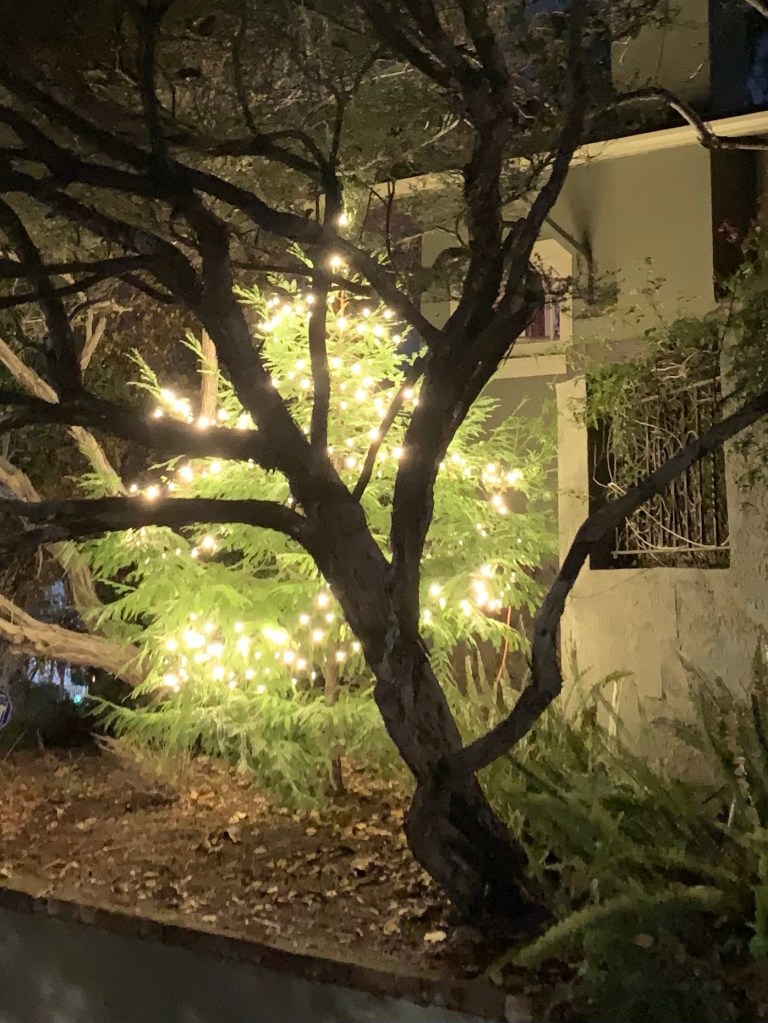
poem and photo by Mary Elyn Bahlert, 12/2023
what I've learned from life, by Mary Elyn Bahlert
loneliness comes down - a shroud
over the holy days
at year’s end.
unbidden, she comes, her dance
mixed with tears, memories -
as lights brighten the darkness,
the early night.
poem and photo by Mary Elyn Bahlert, 12/2023
In the fall of 2015, Jeff received a note from a District Superintendent he had met while working on his books in Alaska. The message was that a little church in Unalaska, on the Bering Sea, was without a Pastor and wanted someone to be with them to celebrate Christmas. I think of myself as a “city person,” one who feels comfortable in cities, wherever they are, but I had traveled to Alaska on several occasions with Jeff, most notably to Nome, where we had had an intimate gathering with the Elders. And so, as soon as I heard the word that a church on the Bering Sea wanted a Pastor, I said: “Yes! Here I am! – Send me!”
And in the middle of December I traveled from San Francisco International Airport to Seattle, on to Anchorage, where I spent the night in a hotel before boarding a small plane with a direct flight to Unalaska. The flight that day was uneventful. I heard stories of flights that needed to be cancelled because of the winds that rise in that place. “Unalaska” is the Inuit word for “birthplace of the winds.” I listened with some anxiety to a story of a flight that had to emergency land along the slopes to the south of the flight’s path until the wind passed and the fog and snow allowed safe passage. And I watched with anxiety and awe as we landed, the cliffs close to the left side of the plane that gave way to the landing strip at Unalaska, with a cliff overshadowing the runway to the right of the plane. I disembarked and was met by the Chair of the Pastor Parish Relations Committee, who took me on a short tour of the Island, introducing me to the one large supermarket, one or two restaurants – always full – and to the church, and the parsonage, a large house whose front windows looked out over the Bering Sea.
As we drove up to the house, several eagles fluttered down from the roof as if to greet us. The church folks had set up a small, artificial tree, complete with lights, in the living room. I kept those lights on 24 hours a day during my stay. The kitchen was well equipped, the bed made, and we turned the heat up when we entered the house. All was well.
The Birthplace of the Winds, indeed. One night I was awakened by a wind, wind so wild that it sounded as if it would pick up the big, cozy house in which I slept and carry it out over the water. The wind surrounded the house, wailing and whipping, louder and louder, until at last – it passed. I was a witness to the winds, then.
I preached for two Sundays before Christmas and met with the musician – a professional piano teacher who had married a native man and lived on the Island, where she raised her family – a worship leader, and one or two other folks who were active in the church community, to plan Christmas Eve worship. We filled our plans with music, the Christmas Story, and lights. Each Sunday of my time with the people in worship, I celebrated Holy Communion, because they did not have a regular pastor to be with them.
During the week, I spent part of my days in the library on the Island, where I became friends with the native man who worked behind the desk. I checked out books and movies to watch in the evenings in the big house, alone. I woke each morning to darkness, and at ten AM, as if by some magic, the sky was light, daylight again. When I could, I called Jeff; we never allow a day to pass without our speaking, even when we are separated.
On Christmas Eve, the sanctuary was full of lights – and people, who arrived from all over the Island to hear the Christmas music, to hear the Christmas story, once again. The music was wonderful – a concert of beautiful Christmas music, led by an artist. At the close of worship, we lit one another’s candles, and sang “Silent Night” to the darkened sanctuary, reverent before we went out again into the cold and the wind.
Jeff arrived on New Year’s Eve, and we watched the fireworks fly across the sky on the Bering Sea from the front window, at midnight. On New Year’s Day, I worshipped with the small band of people in the little church, and after lunch, Jeff and I drove the car I’d been loaned – Alaskans share cars freely with one another – to the little airport, where we were able to make the flight back to Anchorage that day. Jeff’s flight to San Francisco left earlier than mine, and I had a few more hours there, taking time to let go of my sacred days in the Birthplace of the Winds.
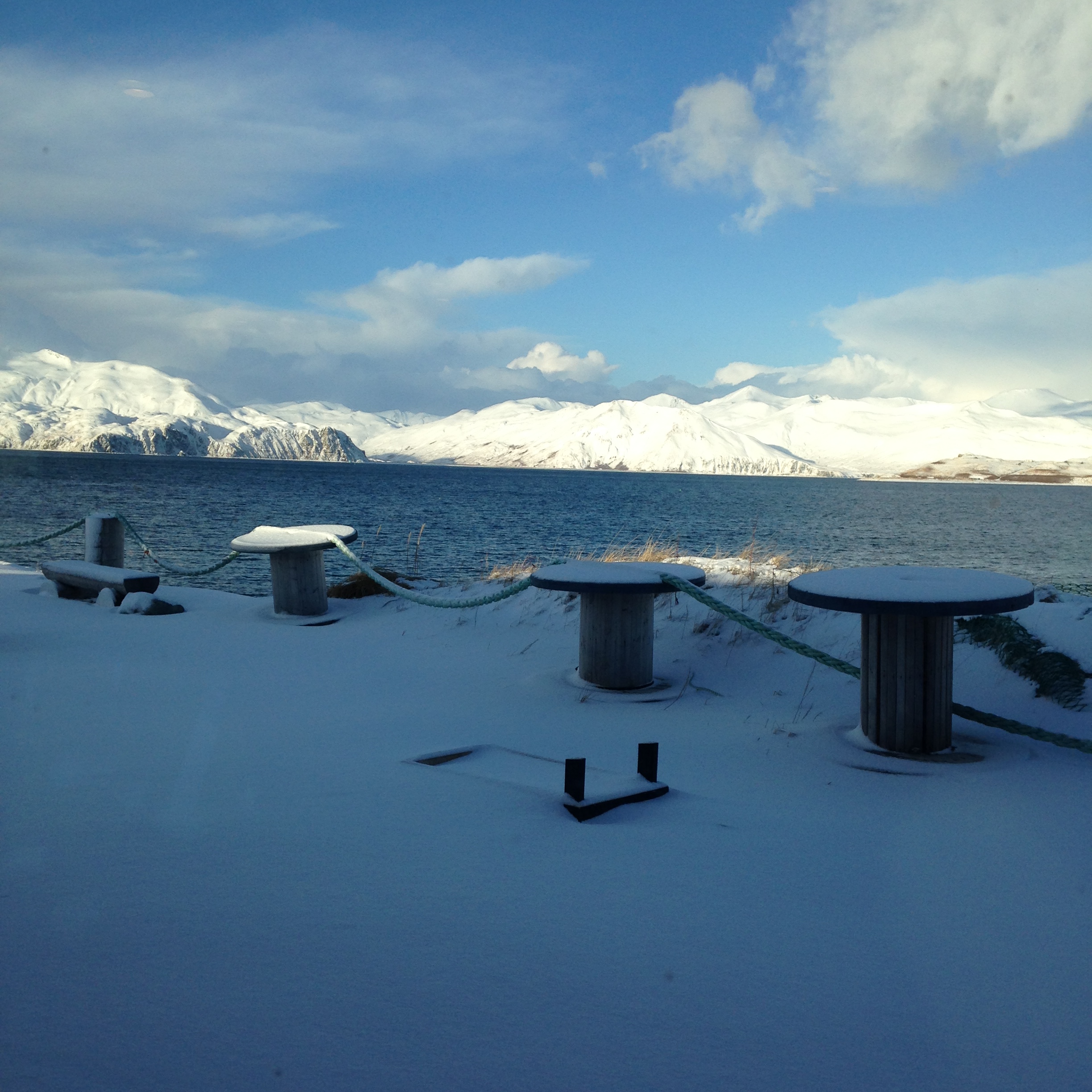
Over the Bering Sea, December, 2015, photo by Mary Elyn Bahlert
I love the holiday season, which begins with Thanksgiving Day. When I was pastor in downtown Oakland, the congregation marked the day of thanks by offering a wonderful, complete Thanksgiving Dinner to anyone in the community who wanted to join. Homeless folks, people who did not speak English, people without family or even friends, joined the day’s gathering to sit at a table and to be served by other grateful folks. For many years, that tradition became part of my personal Thanksgiving, as I looked out at the gathered people and said to myself, again and again: “these are my people!”
And Jeff and I mark the holiday every year now by arriving at Norman and Cheryl’s cottage on a hill in San Francisco, climbing the narrow stairs to the top of a hill, our arms filled with pies – our contribution! – and to sit at the long, narrow table filled with an assortment of Bahlert-related people every year. As the day progresses and the dusk and darkness come, families with little ones begin to gather their belongings and leave, with much ado. The tiny kitchen which produced the feast we’d all enjoyed is full of helpers bumping into each other, cleaning up, continuing the dinner-time conversation. And then – just like that! – we all descend the steps and walk to our cars on the quiet streets and drive home, mentioning to one another moments from the day, who had grown, who talked to who, how much older everyone is (except for us, of course!), and probably feeling a bit of sadness that another holiday has passed.
In the Midwest, the shorter days and long evening of dark and cold have begun by this time of year. There’s a sense of “cocooning” that we don’t know in the same way here in California. And missing now, also, is the childhood sense of a quiet and light filled season, beginning with Thanksgiving, that won’t end until after Epiphany, in January.
My mother honored the season of holidays each year by hosting Thanksgiving Dinner at our upper flat, and by creating for my sister Suzie and me a holiday tradition. In the 50’s and 60’s (of the last century), the holiday season did not officially begin until Thanksgiving. On the day after Thanksgiving, my mother and Suzie and I took the 23 bus from the North Side to downtown Milwaukee, now mysteriously decorated with lights and ribbons along Wisconsin Avenue, still a booming shopping district at the time.
We’d step off the bus at 3rd and Wisconsin to walk through the Boston Store, which anchored the downtown at that time. My mother held tightly to each one of us as we walked through the crowded store, the lights and music having followed us from the street into the store.
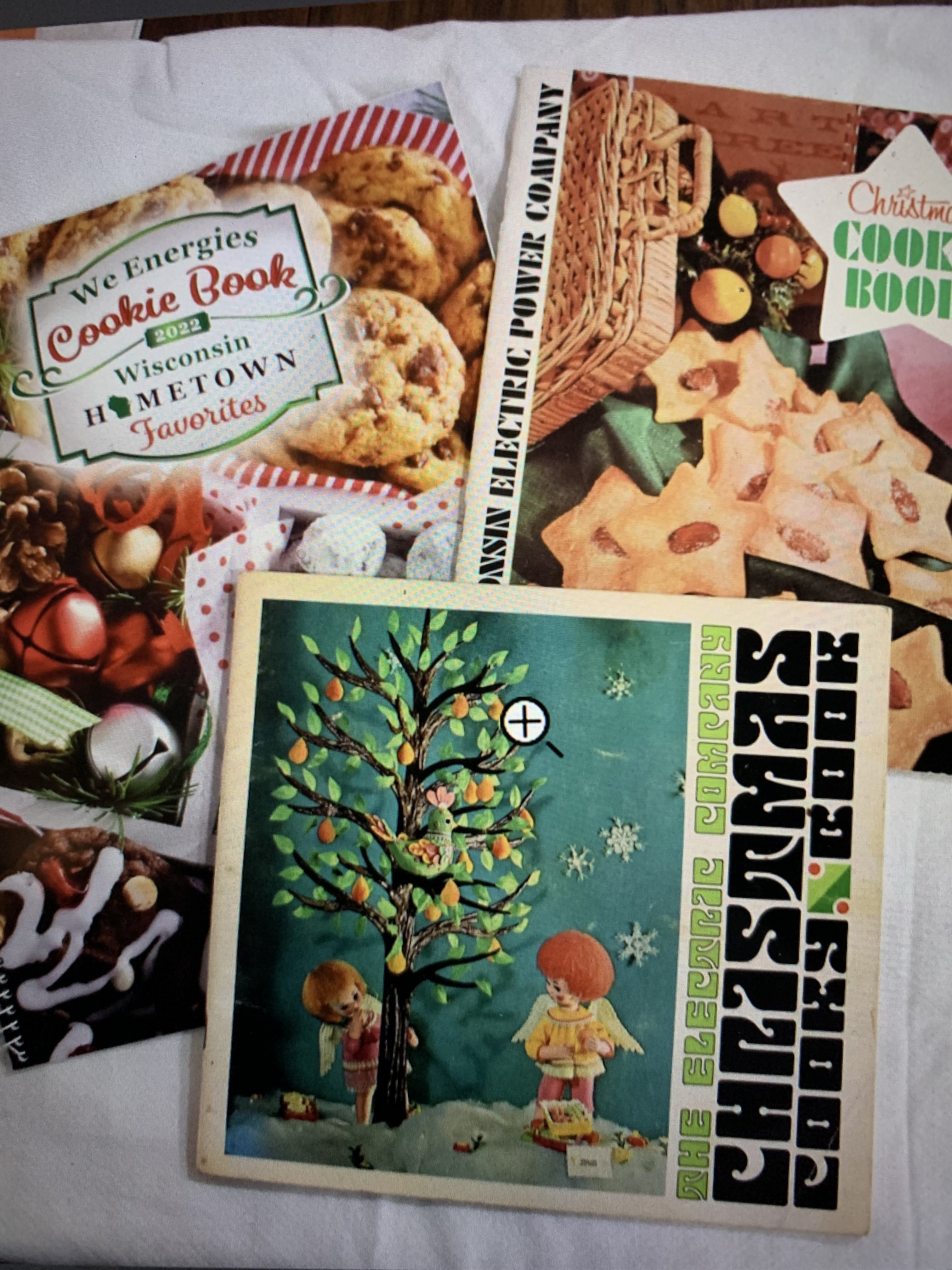
Then, we’d walk, first to the Wisconsin Electric Company, and then to the Gas Company, to take in the cookie displays at each one. My mother made sure that at each place, she was provided with 3 copies of the new cookie book published by each company each year. She loved to try new recipes, and she loved to re-create those that had been her favorites – or dad’s favorite, or mine, or Suzie’s. Unknown to me, she wrote notes as she baked: “a favorite,” “takes a bit less powdered sugar than called for,” “makes a big batch!”
I didn’t discover the notes until years later, when I had my own apartment in Green Bay, and when Mom presented me with the collection of cookbooks she’d saved, just for me.
I’m not a great baker, although the family in San Francisco allows me to bring pies as my contribution to Thanksgiving. My mother loved to bake: “that’s the fun of it,” she’d say. And I expect she envisioned some sort of future for me and for my sister, based on her own life. Neither of us grew to have quite that future, I expect; it was her dream for us, regardless. The year after I retired, I baked a few batches of cookies, looking for a new way to fashion my life after an adulthood of work, often in a “man’s world.” That’s the year I reached high onto the kitchen shelf reserved for our cookbooks, and retrieved the cookbooks Mom had saved so carefully for me. And that’s when I saw her notes, in her particular hand-writing, written with me in mind, written with the relationship between the two of us holding us together.
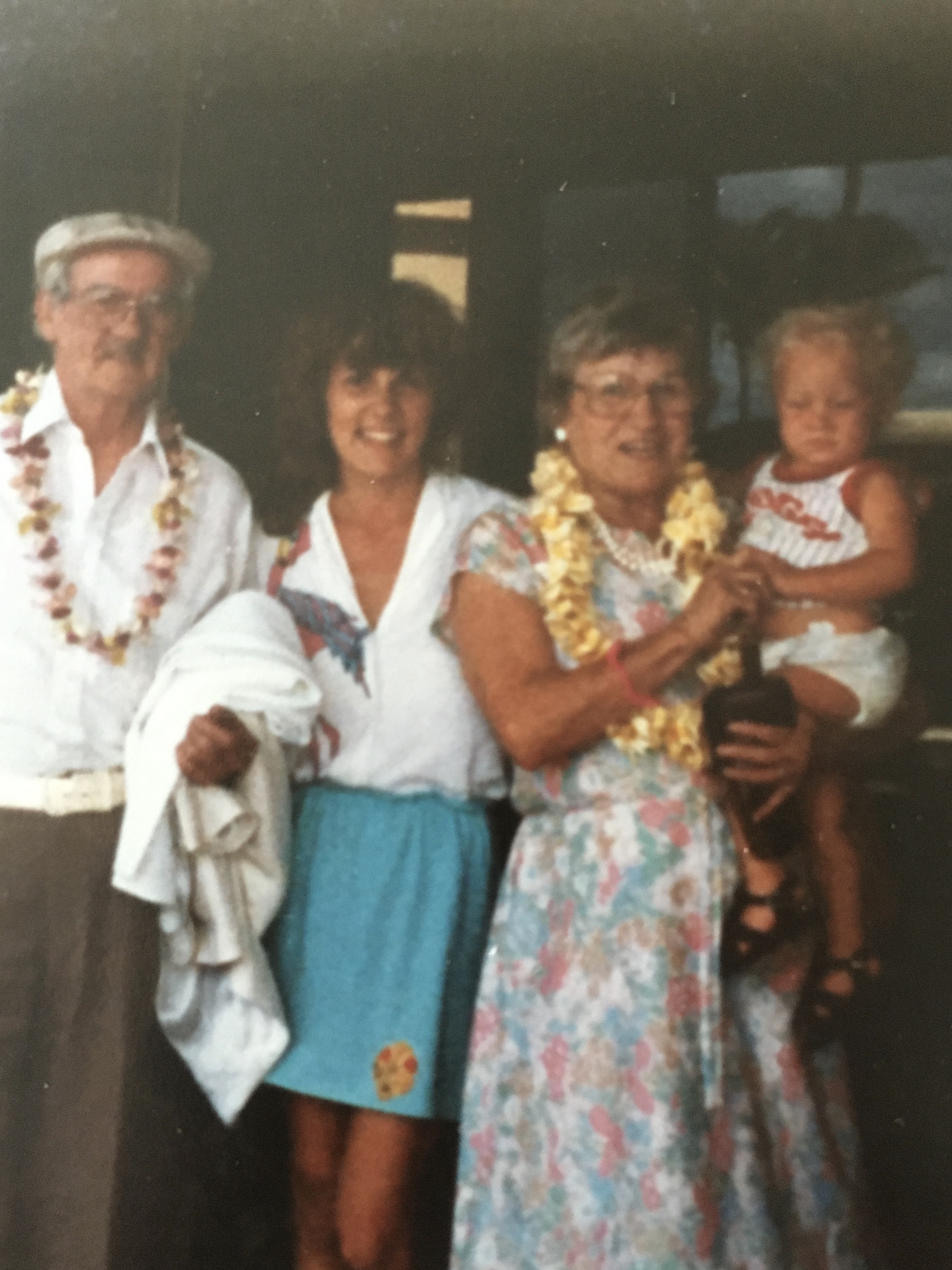
I came up with a nickname for my Dad during my high school years. I began by calling him, “FRB,” his initials. And then the nickname stuck, as others in my family began to call him FRB.
FRB loved his family, loved his work, and FRB loved “I Love Lucy.” Every week, we all watched the episodes – repeats, after the late 1950’s – on our little tv screen in the living room, FRB’s comfy chair directly across from the screen. FRB would laugh and laugh at the ridiculous and wonderful scenes of Lucy and her cohorts – all over-the-top silly folks. And vivid in my mind in those moments, FRB would turn to one of us – Suzie, Mom, or me – from time to time as he exploded again with laughter at scenes he’d seen before, and, his eyes sparkling, say: “Fun, isn’t it, honey?”
Over the years, I saw FRB angry, I saw him enjoying life, I saw him have fun, I saw him being nervous and serious, and I saw his eyes – one blue, one brown – sparkle as he looked at one of us. And I saw him cry, as he realized that the cancer he’d been diagnosed with at 65 had returned in his early 70’s, and as he realized that the cancer would take his simple, kind, and quiet life.
I’m grateful. When I think about my own life, and as my world has expanded to be able to get intimate views into the lives of many, many other folks, I know that I was raised in love. For as many things I did not receive, I received love – not always unconditional, but a good dose of love.
With a dose of fun.
“Feels like home to me
Feels like home to me
Feels like I’m all the way back where I belong…” words & music, Randy Newman
Were someone to ask me the question: “where’s home?” I would say, Milwaukee, the city where I was born, went to school, and where I lived until I was in my early thirties. I suppose in a way, Milwaukee is home to me. But another place holds my heart: Door County, Wisconsin, 200 miles north of Milwaukee, the peninsula between Lake Michigan to the East and Green Bay to the West.
My father, born in Upper Michigan, grew up in Sister Bay, a village on the Green Bay Shore of Door County, the place where his mother had been born – though several of her older siblings had been born in German speaking Prussia, now Poland. And because Dad had his roots in Door County, when he had vacation weeks from the steel factory in Milwaukee, where he had gone to find work after the Depression, and during the War Years, we traveled to Door County. And I expect my love for that place settled in me during those early years.
In my early twenties, I was assigned to Green Bay, Wisconsin, in my first career as a Claims Representative for the Social Security Administration. Brown County was a short drive north to Door County, and I grew to travel that highway north many times. Sometimes I would stay with one of my beloved aunts and uncles. Sometimes, over the years, I’d rent a small cabin – one right on the shore of Lake Michigan, north of Baileys Harbor – to spend a few quiet days alone. Every time, I promised myself I would return.
And I’ve kept that promise, even as Door County has changed over the years to become a popular, populated place of exodus for folks from all over the Midwest, in particular Chicago. I’ve kept that promise – as I moved from the Midwest to live most of my life in the Bay Area on the West Coast.
I know the “old” places and I know the roads that lead through the center of the Peninsula, with its rolling hills and orchards – luscious green in the summer – where not many tourists drive during their few days in Door County. I remember the places where members of my extended family lived, and as I drive past those places now, I can see us gathered on the lawn, talking, laughing, playing.
Because so many of the people I have loved my whole life are gone now, I use some of my time in “the Door” to drive the cemeteries, to walk again among the graves to find the names of those I loved – and love.
There is a love of place. I know that love of place. As I write this now, a gentle kind of homesickness comes to me. In my mind – and in my heart – it’s been too long since I’ve driven the roads of my beloved place. My own longing brings to mind my ancestors, those who traveled so far from their beloved homelands to come to a new country, a place where they were strangers with a strange language, a place where they could only remember, but never see again, their true home. In my life of privilege and these days of fast transport, my longing can be satisfied again. Some day – soon, I hope! – I’ll drive those roads again.
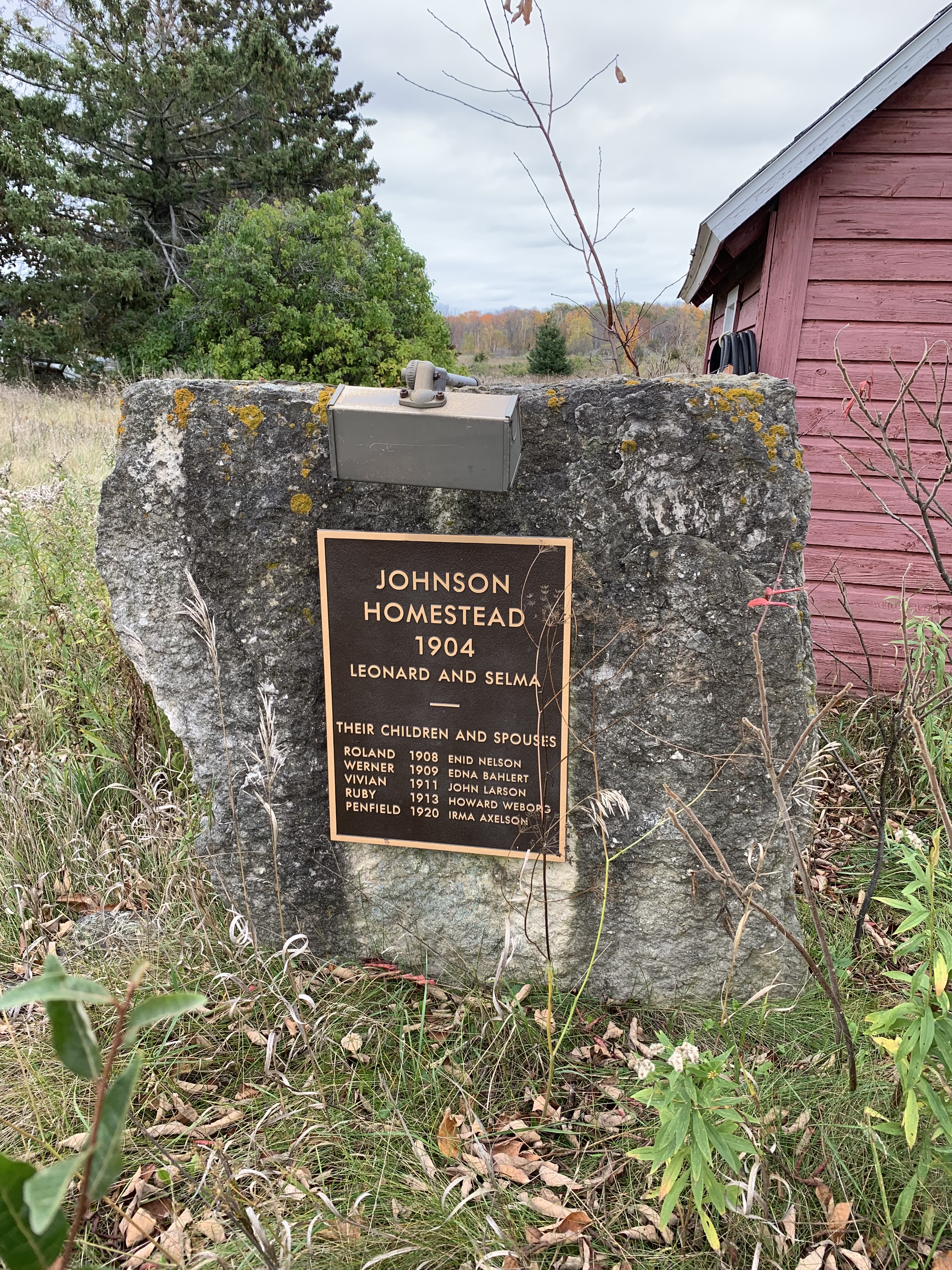
Johnson Homestead marker – Gills Rock, Wisconsin, photo by Mary Elyn Bahlert, 2021
