I am a spiritual seeker, a seeker who has "taken a drink from many cups." I love to accompany others on the deeper journey to witness to their True Self. Now a writer, photographer and poet, I have retired from full-time ministry as a pastor in downtown Oakland, CA.
Autumn in the Midwest is magical. The air has a feel to it, a feel touched with delight at the beauty all around, a feel touched with sadness and a kind of longing. Often, the autumn comes quickly, the leaves falling around, the color of the air changing, also. In the Midwest, we know that these magical days will be quickly followed by cold, by wind off the Great Lakes, by gray skies that go on for a long distance – and for a long time.
Autumn here in the West does not hold the magic that autumn in the Midwest held for me. Still, I watch with interest as the squirrels, tails twitching, climb quickly on their short legs across the branches of trees, scavengers, making plans for the winter. The squirrel that lives in my tree moves with a kind of stealth, watching me – my outline in the window – body turned to the side to give a full on view of this stranger, a look filled with confusion, and fear. And then the squirrel runs away, out of sight, out of danger. I know we inhabit the same place on earth, but our lives are so very different: I watch the squirrel with interest; the squirrel watches me with fear.
We both know, though, that time is passing, that the light is changing, day by day, and that the days are shortening.
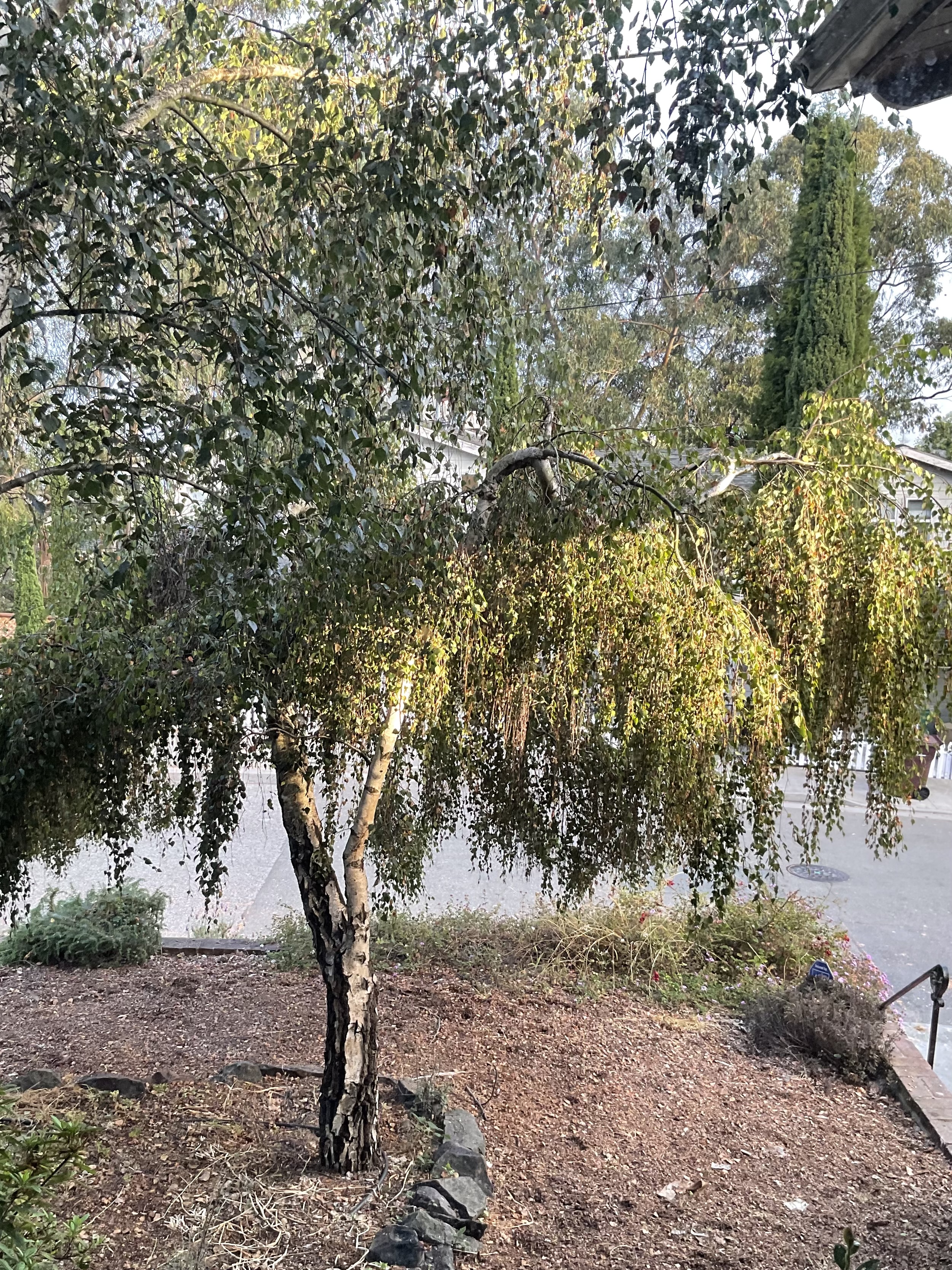
I miss the luxury of autumn in the Midwest, where the trees gladly hold their colorful branches into the sky. Even so, I see autumn here in the West, a long, slow autumn that begins with a subtle change in the greens of grass, the trees. Soon, the leaves on the birch tree I’ve watched so long outside my window – the birch tree that is part of me, part of this place – will begin to yellow. The leaves fall late from that tree; it holds on to the summer green longer than the trees around it.
We are waiting. The tree is waiting. I am waiting. We are waiting for just the right moment. Like my life, which has passed so quickly from the little girl who walked on the crunching leaves to school to this elder, looking at the leaves from her window – the tree will not let go ahead of its time. Nothing can force it. Nothing can make it lose its turn to softly let go.
And so, each day, I gaze carefully at my friend, my companion, that faithful tree. I gaze, I wait. The tree waits (I think). We are waiting for what only the passage of time will bring us.
See! The tree waits! – Photo by Mary Elyn Bahlert, 9/2023
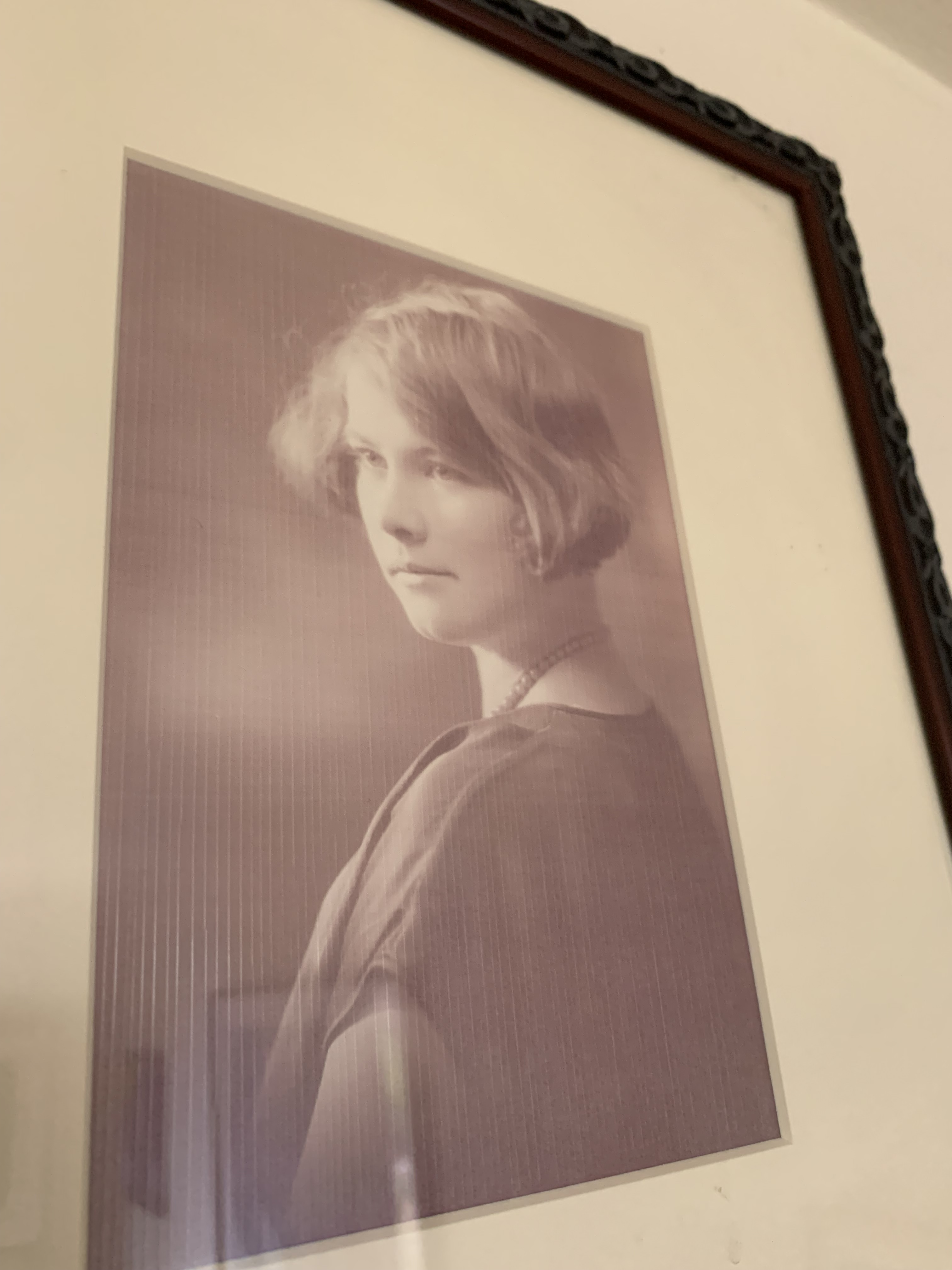
My father was extroverted and his sister Irene was extroverted. Really extroverted: the kind of extrovert that spoke everything that passed through her mind. And I loved her.
Auntie Irene and her husband, Uncle Erdreich, lived on a road off the State Road 57 going north along the shore of Lake Michigan, north of Baileys Harbor. Their road led into a swamp, a mile or so past their house, their house with the cottage behind it – the cottage that Uncle Erdreich had built for my grandparents to live in in their elder years. The door of Auntie Irene’s house led to a hall that led to another door into the kitchen, the table directly ahead as you walked into the house. I suppose that house was strange by modern standards of “footprint,” as rooms had been added on by Erdreich, a carpenter, as the need had presented itself over the years.
I spent many nights in a second story bedroom at the top of the winding stairs that led from the living room to that unused space; unused, since Irene and Erdrich’s two sons were a generation older than me, and were long past away from Baileys Harbor, making their lives in other places. When I was living in Green Bay for a couple of lonely years in my twenties, a few times I made the trip to Baileys Harbor to spend a day or two with Auntie Irene and Uncle Erdreich. I slept in that cozy bedroom with its old fashioned pictures on the wall many times.
Irene was “the hugger” to my sister Suzie. That’s how Suzie remembered her as being different from Edna, a quiet Bahlert, who lived twenty miles to the north, near the tip of Death’s Door at the end of the Door Peninsula. And Irene did welcome us all with a hug, as her mother had done, a generation before, when she welcomed my reserved mother into the family as she met her for the first time. My mother never forgot that hug of kindness and acceptance.
Irene and Erdreich rarely went more than a few miles from their home, but they did come to Milwaukee to visit my family when my sister was still in a stroller. The Big Sister (as Irene had been to her Bahlert siblings) took the baby and Auntie Irene for a walk, Auntie Irene anxious, talking non-stop as soon as we were out of sight of the house where my family lived.
Irene hugged and Irene talked. Is it a truth about extroverts that they say exactly what comes into their mind? I think that was true of Irene. She was kind; she was gentle; she was warm and she had a humor about her. When my parents and Suzie and I had been greeted on the lawn with hugs, we were given a tour of the garden that was full of vegetables and fruits every year, and then we walked into the kitchen of the welcoming house for a treat at the table, something home baked by Auntie Irene.
On one of the trips to Door County during my years in Green Bay, I invited a friend to join me for the weekend, and we were the guests of my loving aunt and her home cooked meals. As we drove away, my friend turned to me in the car and said: “there’s no excuse for a person to be like that.” Her comment surprised me, and it still surprises me that I did not feel shame at her judgment of a person I loved so completely. Years later, I introduced another friend to Irene and Erdreich, and she told me that she had never met people like them before. Her comment reminded me of her kindness and gentle acceptance.
When Irene was in a nursing home, already past 90, dying, I wrote a note to her. I’m sure someone must have read it to her as she lay in her bed, that lonely bed away from the double bed she’d shared for 70 years with Erdreich. As I signed the note, I remember writing: “wait for me.” Jeff and I made the trip to Door County again on our visit “home” to Wisconsin that year, just in time to be present at Auntie Irene’s funeral in the Evangelical Lutheran Church along the highway, the church where, years before, I’d sat in the pew after receiving communion, next to my aunt who fell to her knees, head bent, before she sat back in the pew. I’ve always thought that Auntie Irene had waited for me return, for me to be present alongside my Bahlert cousins, some who came from a long way to be at her funeral, on that summer day.
My Grandma Bahlert, my father’s mother, died when I was five years old. I remember when the phone call came, when Mom called Daddy into the hallway to learn the news. And I remember my Dad, then, crying as he sat in his chair in the living room, my mother and I looking on. I was little then, and although many years later I would still miss my Grandma Bahlert’s kindness and playfulness, death had no meaning to me.
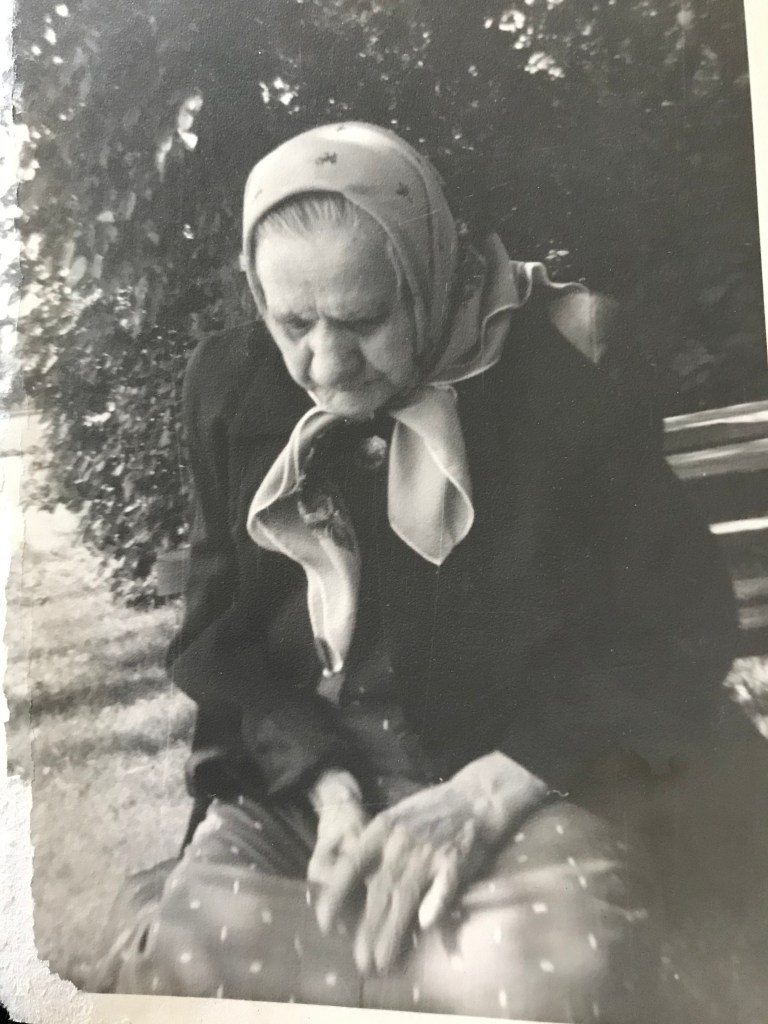
I was nineteen years old when my Grandma Markowski died, and her death was the first that touched me, when I began to understand what this all meant, especially to the rest of us, the living, whose lives went on. By the time she died, Grandma Markowski spoke only her native Ukrainian, and my time with her was spent silent, listening, as Mom and Grandma talked, sitting next to her bed in the smelly front room of a house fashioned into a “nursing home.” A nursing home for poor people. Once a month, my mother took my grandmother’s Social Security check to her, and I watched grandma sign her wobbly “X” on the back so that Mom could cash the check to pay the home.
Grandma died in Milwaukee County Hospital, the place where the poor went to die. And I wondered about her. Was she aware? Did she hear the voices of those who came to her bed as she died? Was she alone? Had they rolled her bed down the hall, trying to save her, to allow her to live another day? I wondered.
A few months after Grandma died, Auntie Anne, my mother’s only sister, died. Now, I look at her pictures and I wonder about her life, as I have wondered about my Grandma’s life. I know Auntie Anne suffered violence in her life, and when I look at the pictures, I look at her eyes, wondering if her fear and sorrow showed in them. Years later, my cousin Mark, her son, told me that he thought his mother – who was already suffering with cancer – gave up after Grandma died.
For as many questions as I asked my mother while she was alive, as many questions remain about them all. So many questions – unanswered – followed them all to the grave. And I suppose it will be that way when I am gone, and Jeff, and all those that we love and have loved.
In my mid-twenties, I was searching for a community. At the time, I didn’t know what that community would be for me, but I was drawn to go to church, since that was what I understood to be community. And, as I’ve written before, deep inside me – not spoken aloud – was the seed of a call to ministry, to a particular vocation.
And so I visited churches, one Sunday after another. My only experience of “church” had not been positive – even as a young teenager, fundamentalism did not make sense to me. But I was looking for community, for a community of people with a heart for social justice, activism. I set out to find that place – a place I did not know existed.
And so I visited churches, one Sunday after another. As a natural introvert, it is difficult for me to enter a community. Maybe I was shy. I know I was uncertain. But I must have known what I didn’t want, as I visited one church after another. I made sure to sit in the last row of the pews, so that I could make a safe and fast exit – which I did, regularly. Or I might find myself in the Narthex of the church, the hall from which the sanctuary is entered, looking for someone familiar. Again and again, when I’d see someone, when I’d catch their eye, they would turn to look for someone they knew. Not for me, not a newcomer, longing for a community.
Years later, as a pastor, I would repeat this story, again and again, to the congregations I served. I would repeat the story because I knew the people who came to those places were like me, longing for a community, longing to be gathered into the community they were visiting.
My looking took me, finally, to Kenwood United Methodist Church on Kenwood Boulevard in Milwaukee, across the street from the Student Union of the University of Wisconsin-Milwaukee, where I’d received my Bachelor’s Degree. And so, one Sunday, I held my breath again as I entered the sanctuary, and found a safe place to sit – a place that could assure a fast exit when service was over, if needed.
The woman who was already sitting in the pew to my left was an old woman, to me. But she noticed me. She looked at me! She told me her name – Verdell xxxxxxxx. Later, I would learn Verdell’s nickname in the community – “the grandma who went to jail,” for protesting issues that were important to her, civil rights. I didn’t know that then, when Verdell looked right at me and welcomed me. She told me that after church, she’d take me to meet Harvey Stower, the Young Adult Minister.
And so she did.
I have repeated that story to many congregations over the years, and each time, I put out my arm, my hand, and I tell the people that on that day, Verdell reached out her hand to me, and brought me into Church. When I arrived, lonely, looking for a community, Verdell was there, reaching toward me.
I’ve spent more time in my life in “Church” than is necessary, I’m sure! But at that point, I needed a welcome, a warmth, a connection. Apparently, when that connection was missing, I knew it, and I moved along. Apparently, when that connection was made, I knew it, and was gathered in.
Verdell introduced me to Harvey Stower that day. Over the course of my lifetime, I’m not sure I’ve ever met someone who was more extraverted than Harvey Stower. Years later, he’d take his extraversion into service as a Representative in the State of Wisconsin. But at the moment I needed to meet Harvey, he was there. And if Verdell reached out her hand to me and brought me in, Harvey helped me to connect. He saw me. His wisdom and his work on behalf of justice shaped my own call to ministry, a call that was rolling around in me, silent, at the time we met.
*
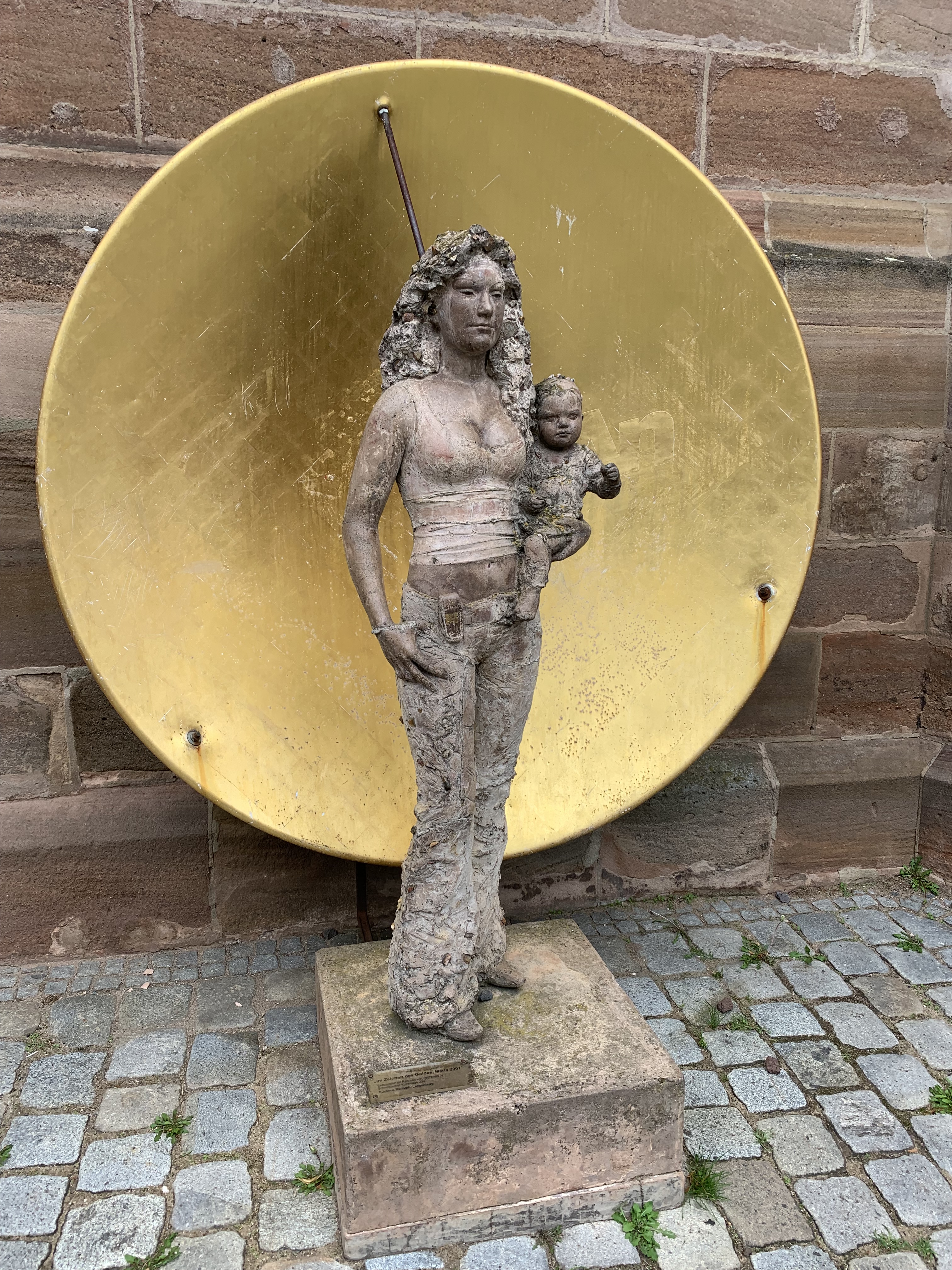
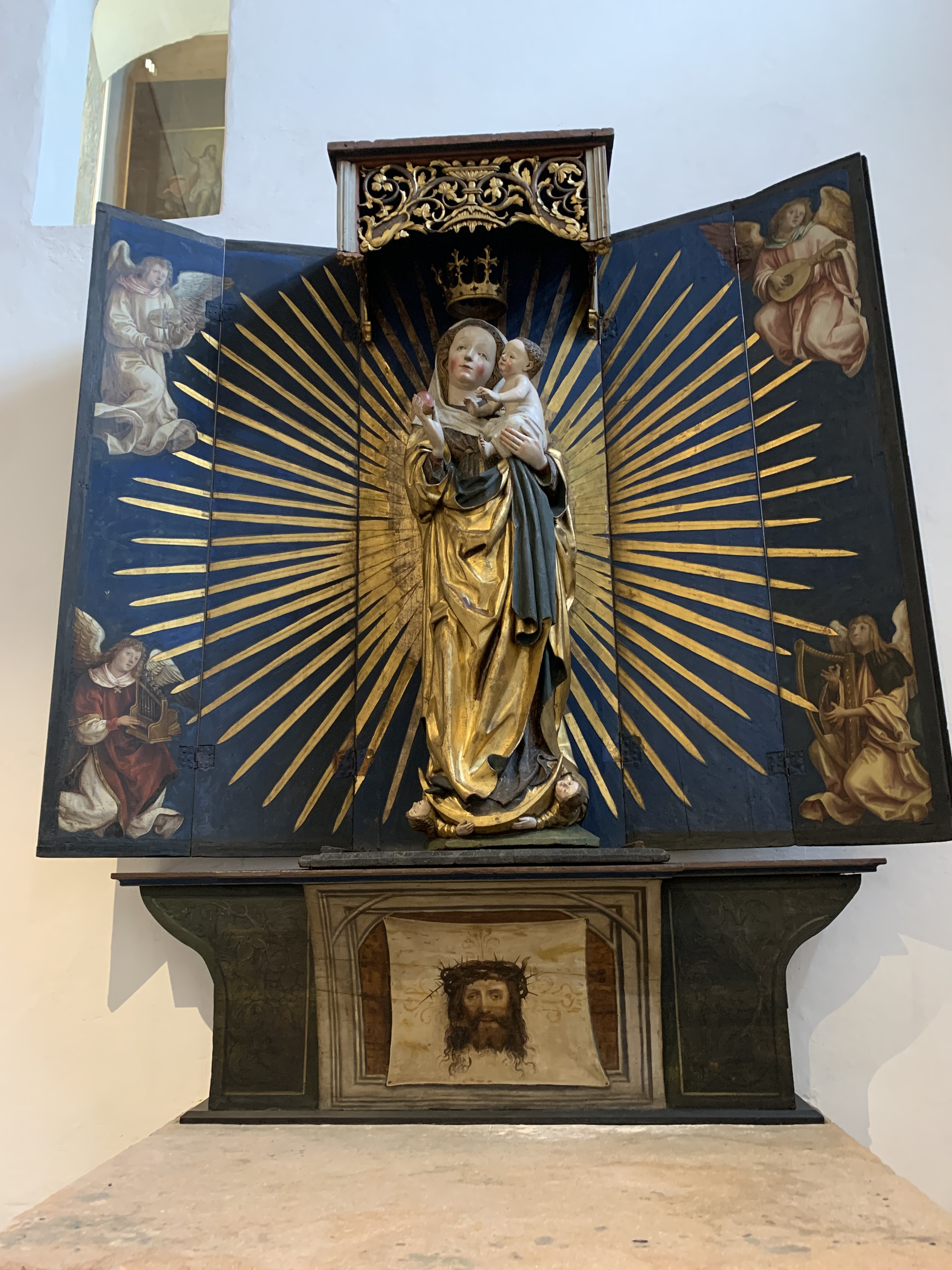
Jeff and I have just returned from three weeks in Germany. We’ve returned from our first cruise, which began our trip, and from four days spent with friends in Nuremberg, where we walked the city and saw the site of Hitler’s rallies, the site a warning to all of us to never forget what began there, and ended there. In Nuremberg, our friends made sure we visited several churches. Jeff and I have spent a lot of our lives as pastors. And we like to see the churches in Europe, hundreds of years old.
The simple, kind, warm gesture that Verdell offered me that day continues to ripple in my life. I don’t know if I ever told her. “Thank you, Verdell.”
Uncle Johnny wasn’t very tall, but he was a god to us. He could stand at attention in a doorway for hours, talking about the workers, about union wages and strikes, about strikes and collective bargaining. He was an Atheist. He greatly respected my father, who had gone through 8th grade in rural schools, because my father was a good, strong, honest worker, a union man, a steelworker.
Johnny was a Communist, giving his own life, his smarts, to make life better for the workers.
Uncle Johnny was almost ten years older than my mother, who adored her brother. He had “been born on the boat,” we were told, coming with his father and mother – my grandparents – from Ukraine, about 1914. Years later, I discovered that his date of birth was in the year 1910; given that date, he had been born in Ukraine. To this day, I hold firmly to the understanding that people who leave their homeland for life in a distant land do what they must to keep their families together. I know mine did. My people were poor and uneducated, the grandchildren of freed serfs. My grandfather died when I was almost 2, falling to the curb on a Milwaukee street, drunk again. Still, he’d made it, made it to America to give his kids a life different from his own. My mother taught him to read English when she was in grade school.
When my mother, her two brothers and younger sister, Anne, were small, Johnny was already a worker. With great homage to Johnny, my mother told me that he had made Christmas happen for his siblings one year when my grandparents could not. There was no Christmas tree in that Milwaukee flat, now a boarding house for other men who’d arrived from Ukraine, most without their families. And there was lots of drinking in that house, a fact that has shaded the family ever since. Johnny knew there’d be no Christmas for his brothers and sisters, so he bought a tree and brought it home. Together, the kids decorated it, together, they made Christmas happen, thanks to Johnny. And under the decorated tree lay the gifts big brother had also brought. That made him a hero, forever.
My sister tells me that she was home sick from school the day two men in suits came to the door. That would have been about 1960. Two men in suits – an anomaly in that working-class neighborhood! What Suzie remembers is that Mom lied when the men asked her if she knew where her brother Johnny was. Mom said no. Didn’t Mom always tell us not to lie? A rumor in the family is that Pete, the youngest brother, who fought in three wars in the Army, never rose above the rank of SFC because of Uncle Johnny’s politics.
The family was proud of its politics, proud of its atheism. We were smart people, smart and uneducated, smart people who worked hard, union workers.
*
Sometime around the time I turned 20, I started thinking that the life of a minister might be a good call for me. I don’t know where the idea came from, because, like the rest of my family, I was not a “church person.” Now, I think a lot of people answer the call they receive by choosing a vocation that suits their temperament. The Call is not particular to the Church, although the Church likes to think it is. The year I was confirmed in the Lutheran Church, Missouri Synod, I stopped going to church, because what I heard in that fundamentalist denomination did not jive with what I was already learning from my European-educated school teachers. Besides, I had never heard of a woman minister. And I wouldn’t, for almost a decade. But there it was, the seed of a different life.
I was over 30 when I enrolled in seminary, almost 35 when I was ordained and sent to serve as Associate Pastor at a Church in San Jose, CA. My uncle Johnny and aunt Dani lived in Campbell, West of San Jose, where they had raised their family, my cousins. The autumn after I started work, my parents wanted to visit me, to see Uncle Johnny, and they wanted to see my church, to hear me preach.
You’ve heard it: “he would never darken the door of a church.” That was certainly true for Johnny. But there he was, along with Aunt Dani, my Uncle Pete and Aunt Athalie from South San Francisco, and my proud parents. It would take me several years after that time to get the hang of being a pastor, of whatever that all meant.
When the service was over, the congregation – full of many well-educated and highly regarded members of the community – filed out through the ornate doors, each person stopping to have a moment to tell the pastors a health concern, or about a death in the family. When my parents came through, followed by the uncles and aunts, I expect pride shone on their faces. I don’t remember.
What I remember is what Uncle Johnny said to me that day. “I can see you want to help people.”
With a touch of kindness and a few words, Uncle Johnny delivered the blessing. From people who had nothing came a love for their children, a pride in the young people who followed them. As a pastor, I’ve given blessings, and I’ve received blessings. I’m grateful. Mostly, I’m grateful for the quiet blessing I received from Uncle Johnny that day.