Uncategorized

Imagination, a key

FullSizeRender

In my experience, imagination is one portal into the spiritual journey.  As a child, the idea of Jesus captured my imagination, and I held onto that idea as I slogged my way through fundamentalist confirmation classes.  When I had been confirmed and had the time and the inclination to question what I had been taught, I realized that those narrow beliefs (add your own adjective) did not jive with the Jesus who had captured my imagination.

And I will say, also, that my inclination to question has not ended – it is as alive as it ever has been!

A few years later, I was lonely.  I often pray for the lonely, because I have known loneliness, a deep, tearing loneliness. Alone in my small apartment, I spent many evenings turning the pages of my address book to find a friend to call.  I wanted someone to relieve my loneliness, but that loneliness still tore at me.   I soon discovered that a friend could not relieve that loneliness.  Now, I see that even my loneliness has become a gift.

During those times, I began to search, and I looked to the Bible – since that was my own tradition – as a place to search.   I read, again and again, the words of the Sermon on the Mount.  We don’t know what words Jesus really spoke as he taught the crowds who were following him, in the story.  We don’t know for sure whether he spoke those words at all.  We are not even certain that anything written about Jesus is true or ever happened. We do know it’s a darn good story, and stories – including our own – have power, simply by being stories.  There is more power in the story than in its historical fact, or not.

As I read those words, those blessings, again and again, Jesus re-captured my imagination.  Now, he was there, with me, present with me.  Jesus was there, present to my loneliness.  I didn’t see him in the room with me, but I knew his presence, the beginning of a long walk with Jesus.  This is not the Jesus who judges those who do not follow, no, this is the Jesus who loves, loves simply and completely.  I knew that as a child, I know it now.

What has captured your imagination, what has lived just outside the limits of your conscious awareness?  What lives, now?

A few months ago, I re-connected with a a friend who knew me in the years that followed.  She reminded that I had spoken to her often about “jogging with Jesus.”  The one who captured my imagination was with me, in the most ordinary moments of my life.

Maybe you are imagining a life different from the one you have.  Maybe you are lonely, and your imagination takes you over long paths that magically bring an end to your loneliness.  And when you take those long paths, you find out, again and again, that you are still lonely.  Maybe your imagination cannot conjure up what life, what different life, you’d like to have.  All you know is this:  you are lonely.  You are here.  You don’t want to be here, but if not here, then where – and when?

A dear friend of mine told me that she married her high school sweetheart when they were both 20.  Within a few years, they had a home together, and life was unfolding as it was meant to unfold.  As it was meant to unfold, except for the days my friend spent in her kitchen, tears running down her face, something in her knowing that this was not the life she was meant to live.  Something else was capturing her imagination, although she couldn’t name it, wouldn’t name it until years later.  She did not know it until she lived it.

What captures your imagination, now, here, at this moment?  What flickers on the edge of your awareness, what lights up deep inside you?  Who – or what – fascinates you?  Who comes to you, not with answers, but with complete acceptance of your questions?  Who?  What?  What comes to you, not with answers, but with complete acceptance of your questions?

“Whoever you are, no matter how lonely,                                                                                                       the world offers itself to your imagination,                                                                                                     calls to you like the wild geese, harsh and exciting – ”   – Mary Oliver, “Wild Geese”

How interesting, that loneliness and imagination should so often walk together.

I can say this now:  it is good that I had my loneliness.  I call it mine; it was/is mine, mine to be named, mine to be felt, mine to be feared – and mine to be known, even to be loved.  It is good that I had – and have -my loneliness.  My loneliness allowed me to fall into the truth of who I was, of what life I had, and my loneliness allowed me to imagine, to imagine someone or something that could carry me out of that loneliness, even if I wasn’t sure where I was being led.

I still think that something that Jesus said may be exactly what the world needs.  I still think that other prophets who spoke to peace, who speak to peace, are what is needed. What they say sounds so simple, too simple. Who are the prophets now, while wars rage, while refugees walk in search of a safe place, while children are dying, without food, in our cities and in far-off places?  Who is speaking truth, simple, profound truth, now?

That which speaks to peace spoke also, to my loneliness, and to my imagination.  It speaks to yours, also.

I still long for a just world, for all people – a safe place to live, food, for everyone, not a world where justice means getting what we want, but in the old, old, old sense, the dream of enough, for all.   The possibility that  there is enough captures my imagination, although everything else shouts that there is not enough to go around. Still, that possibility captures my imagination.



Uncategorized

Four Rules for Living, #2, Pay Attention

Show up. Pay attention. Tell the truth. Don’t be attached to the outcome.

FullSizeRender

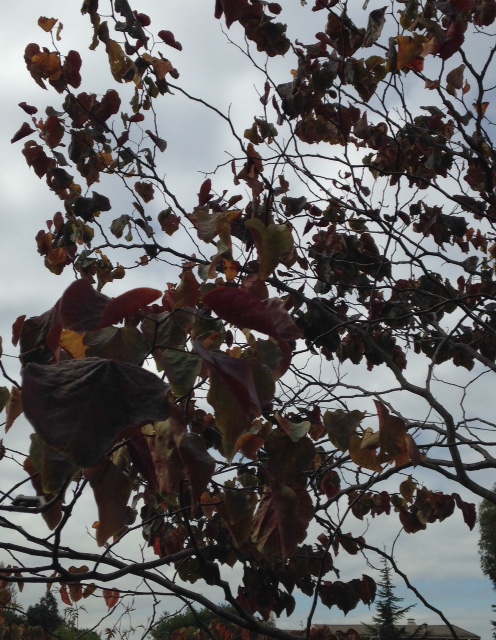
(pay attention to the passing moments of this season, summer becomes autumn…)

Pay Attention

Pay attention means “pay attention” to what is. To “pay attention” is to see things for what they are, without judgment. Someone new or something new –  may signal something wrong – or not.  Someone missing may mean something is wrong – or not.  A change in the way things work may mean something is wrong – or not.  “Pay attention” means only that: to see what is there, to give your life active attention – to what is, without categorizing it as “good,” or “bad,” but as it is.

Our minds fall easily into the trap of seeing what is “right” or “wrong.” Both are sides of the same coin. If we have done the work to “show up,” then the natural outcome will be that we are able to “pay attention.”

See what’s there! Notice!  Observe your life, your surroundings, from moment to moment.

Surely this is easier said than done, for all of us.

***

I love confession scenes – in books, in the movies.  One of my favorite confession scenes takes place in the movie, “Moonstruck.”  Cher plays a young woman who becomes infatuated with the brother of the man she is engaged to marry.   After a lovely date with said brother, Cher awakes to find herself in his bed.  Still engaged to his elder brother, she promptly goes to confession.  Although she sits behind the traditional barrier between herself and the priest, both she and the priest know that this priest has known her for her whole life; he is her parish priest.

The young woman begins her confession, naming a list of everyday happenings, like “talking back to her mother.”  She speaks as quickly as she can, and she makes sure she throws into the mix of sins, “I slept with the brother of my fiance.”  She rapidly continues, not stopping for breath.  But the priest has been paying attention!  He returns to that hidden sin!

Then, he says, simply and with kindness:  “Reflect on your life.”

The priest’s own attention turns the young woman’s attention back on what needs to be attended to in life.  Pay attention! – he could have said.  What are you doing?  What does this mean about your life, about who you love – and don’t love?  “Pay attention!!!!”  Stop what you are doing long enough to  pay attention to what it is you are doing.

***

“Pay attention” is not simply another rule for living.  To pay attention may be at the heart of what is needed, now, for your life, for my life, for the life of the world.  “Pay attention!” we say to our lawmakers.  “Pay attention!” we say to our leaders, our friends, and – most whole-heartedly – to ourselves.

One of my neighbors works all the time. I never see him. He’s got important work, I know. But as far as being a neighbor – well, he’s hasn’t shown up for a long time! When an ambulance drives, siren shouting, in the neighborhood, others “show up” to “pay attention” to what is happening. Which home is the ambulance for? Is there something that can be done for the folks in that home? Who will talk to the paramedics to see if someone can be called?  How can my neighbor pay attention if he is preoccupied with “life,”- with important things – and if he cannot even show up?

How can I do this?  Or you?  Or any one of us?

And so it follows:  show up – pay attention.  (Simple, but not easy… another practice for our spirit…)


Uncategorized

What Work Is…

One thing I have learned on this journey of life is what work is – and what work is not.

I come from a family of hard workers. My father worked long and hard hours in the gritty, noisy, dangerous land of a steel mill. On weekends, he had a second job as the security guard in an apartment building that was home to professionals. My grandfather worked in a foundry. Uncles grew crops, picked in orchards, and raised pigs. I loved them all, as different as I am from them.

I grew up in a different time – the generation after World War II, those privileged years, and even though I come from working class, hard-working roots, my work has been of a different sort. I have been privileged enough, and smart enough, to get an education and to land a professional job right after college.  I almost did not make it through college; I dropped out in my senior year, uncertain about what I really wanted to do as I entered the adult world.  When I graduated, I carried with me a BA in English, that “jack of all trades” degree.  Still, I was the first generation in my family to go to college.  My parents helped that happen by giving me room and board – at home – while I commuted to university.

By temperament, I didn’t fit into my working class family.  From the time I was young, I was a dreamer, and I loved words.  Mom couldn’t understand why I didn’t “go outside” during the summer, why instead I spent  hours melted  into a chair, a book in my lap, my eyes in the pages, my imagination immersed in the worlds I found there.  She understood my reading, and encouraged it.  She didn’t understand my introvert’s ability to lose myself in what I read, although she was an introvert herself.  Sometimes, though, we read the same books and talked about the characters as if they were real, pointing someone out on the street, the character we knew so well!

I grew up in a different time, when the values of the 50’s, of the nuclear family and what that meant were being questioned and even discarded.  In the spring of my first year of college, universities were closed during the spring semester after demonstrations against Vietnam grew violent across the country.  I loved university much more than high school.  In a way, my life began then, when my books gave way to intellectual thinking and exploration.  I was made for that world!  I was a free-thinker, and I was also careful and uncertain about my own life, and so I did not explore much of the world outside my intellect.

My world opened up, I think, when I began to explore the inner, rich world beyond my senses.  In my 30’s, uncertain about how to really live my life, how to engage in relationships, how to be happy, I began to explore my feelings and motives.  I discovered the spiritual world, a fit for me.  I made an adventure of going to 12 step meetings, retreats, healers, and therapy.  I was motivated by my pain, which is truly the door to inner exploration.  Something about life as others live it isn’t working, and so the inner world beckons.

To me, real work is inner exploration.  I call it growth.  I have come to see that as we grow outside the bounds of all the restrictions we were taught were “reality,” and “truth,” we actually grow, we expand, not only intellectually, but emotionally, and in power.  My journey has been a deep journey of inner exploration, and I join so many other spiritual and therapeutic teachers of the world – Merton, Helen Keller, Jung – in that regard.  My journey has not been easy for me, but I am grateful.  I know what it is to be grateful even when the times of my life are tough.

My real work has led me to one place, only.  My real work has led me, simply, profoundly, and beautifully, to myself.   I am grateful that I have companions on this journey, because to have no companions at all would be lonely, so lonely.  Some of my former companions, those who I love still, have not taken the journey, and so I find my ability to be with them limited not only in time but in content.  In a way, I miss them.   I love them, still.

My real work has led me to relate my life to God, whatever God is.  I surrender the ego, when I can, and when I reach the edge – again, and again, and again… >>>>…

long-journey-summer-season-22333227

For one thing I am eternally grateful.  I am grateful that I have found my call, and that although it is a lonely call in many ways, I am grateful that there is a community of fellow journeyers on my path.  Some I will never know personally, but I know they have taken the journey:  Dag Hammarskjold comes to mind; I know he is a fellow pilgrim.  And I am grateful that this journey has opened my heart to the world, to the suffering of all other human beings.  My journey has led me to understand that we are all the same, inside, and that we are perfect as we are.

You, too.


Uncategorized

“Practice makes perfect!” – Miss Schmidt, 3rd grade teacher

chalkboard

“Practice makes perfect” was Miss Schmidt’s mantra.  Miss Schmidt, third grade teacher, white-haired and in her navy blue dress with white polka-dots, black shoes.  Thank you, Miss Schmidt! I got the message, internalized it, translated the message to my own liking (we all do that), and lived a long time trying to be as “perfect” as I could be.  Thank God, “practice makes perfect” only lasted so long, and then?  Then, it “fizzled” out in my mind, and in my life.

Oh – freedom!

The first time I challenged my wanting to get things right was in a class I took for several years:  “Aikido as Spiritual Practice.”  The class was a combination of movement and dharma talks (The Intuitive Body: Discovering the Wisdom of Conscious Embodiment and Aikido [Wendy Palmer]).

We started each class on the mat, after we had entered the room, removed our shoes, and bowed to the gathering class, teacher and students.  Barefoot, we faced the mirrored wall, our teacher facing us, and moved together through a series of simple practices.  For some reason, “let’s practice,” the words spoken by the teacher as she led us through our warm-up, was in my mind on that one particular day.  I moved awkwardly, furtively watching the teacher and the other students.  Was I moving correctly?  Why did she look so graceful?  Can I do it like him?  Above all, am I doing it right???

I felt – awkward.  Check this out for yourself:  feeling awkward is a heavy thing.  It weighs you down.

Then, something snapped or switched or jerked in my mind.  I stopped watching the others, and I began to “practice” from the inside, rather than the outside.  I began to feel the movements.  I was free!  In my mind, I was 5 years old again, fully myself, my little girl legs dancing and thrashing, and it all coming out – perfectly!  I could feel that little girl, sense her insides, my insides.  I was free!

I have not forgotten that moment, that moment in time when I broke free from Miss Schmidt’s mantra:  practice makes perfect.  I expect that in many ways, Miss Schmidt was right.  But we all have our own translation of what we hear, of what comes into us, of what we remember, and value – or remember, and discard.

Practice means that:  simply practice.  When life is practice, we become free.  When life is practice, there is not getting it right or wrong.  When life is practice, there is movement.  When life is practice, we can move from one practice to the next, allowing what does not work, what has not worked, what will not work to freely move along.

We talk about spiritual practice.  Spiritual practice is like that, too.  Practice is only practice, not perfection.  There’s a  difference.  There are no perfect feelings, no perfect objects brought to completion.  What is perfect quickly loses its shine, and that’s part of life.  So – practice.  Don’t practice to become perfect.  Don’t wait for the perfect time.  Don’t expect to not have feelings that aren’t “perfect,” or “good,” or positive.  Just practice.

Make of your life, this:  practice.

Uncategorized

rounding out life…

question-mark-2-1409684289t9wI hope I’m a long way from dying.

We don’t know, do we? I am grateful to have lived this life that is mine, very grateful. I’m grateful not only for the “good” things, but even for the hard things. I count myself as privileged, in many, many, many… ways.

Now that I’m over 60, though, I am more and more aware that I am growing older. For the most part, my health has been good, all of my life. (I am grateful for this, also). Actually, I began to realize that I was growing older – like all of us! – when I turned 61. And so I can relate to those who are in denial.

That’s how I think of it. Sometimes, in an effort to sound positive and to not make that leap into a deep acceptance of growing older, I hear someone say: “I am in perfect health!” Well, maybe you are! But, like me at least, you are also growing older. You, too, will need the doctor more than you did in the past. Young people already look at you as if you are older – if they look at you at all.

Several years ago, I traveled with a small group to a wonderful retreat in Germany. On the plane flight home, I made my way to the back of the plane to use the restroom. When I left the restroom, several young men were in the aisle. They did not look at me at all, and they hardly moved so that I could make my way up the aisle.  I know the reality that “older” women are invisible.

Invisible!  How sad is that?  The wisdom-carriers, those who have lived, and not lived, and are alive to tell it…!  Invisible!

When the weather is warm and the days are long, I long for the days when I was young.  What a joy to bicycle to work, to spend long days in the sun, to enjoy a music festival under the long, long, sweet evenings, humid and languid.  What joy to walk barefoot in the streets, way past midnight!  What luxury to be a student, to set my schedule by classes and papers and interesting conversations in the Student Union.  What a joy to look at the young men – and to have them look at me!  What a joy to know that life lay ahead of me!

But those were hard times, too.  Things are always easier in hind-sight, aren’t they?  Those were fear-filled times, times of uncertainty, of not-knowing, of living with the anxiety of knowing I had to make that passage into being an adult, whatever that meant for me.  And there were the days of loneliness, of fears, of failed relationships, of being adrift in my life, until I began to realize I had to grow up, on my own terms, in my own way.  I had to take the road that was calling to me.

And – I did.  For that, I am grateful, too.  I am grateful.

One of the gifts of being “older” is that I know that when we take that step – when we step off the cliff to fall into the journey of trust in What Is, without seeing the safety net, without knowing the answers, without having someone’s hand to hold – except the hand of the great unseen, unknown one – the journey will not always be happy, or be easy.  It is in the nature of journey to have beginnings, and endings, like birth, and death.  And in the “in between,” in all those days and moments and years, there are lots of hard times.  I know it now.  I don’t expect to take a magic pill and be all happy, all the time.  Life – the spiritual journey included – is not happy all the time.  We do a dis-service to life, and to ourselves, by only expecting happy times, good times.

But I digress… or do I?  I am writing today about that ping, that small, silent, but strong ping that “pings” in my solar plexus, day after day, when I know I will never know those long evenings, that utter bliss – and terror – of being young.  I am older, now.  I am one who has lived for many years, now.  I am one who has known this life, my life, as it is.  I am one who now, as I am, must surrender again to the great expanse of time and distance and space.

Even now, I must say, “Yes!” to this time, to this call, to this journey.  Come what may.

And will I discover the wisdom in this falling, in this surrender?  I don’t know.  I really don’t know.  I’m not there, yet.  For now, all I have is the ping, that little ping that is the reality of this time, this age, this moment.