reflecting, Uncategorized

Season of Holidays

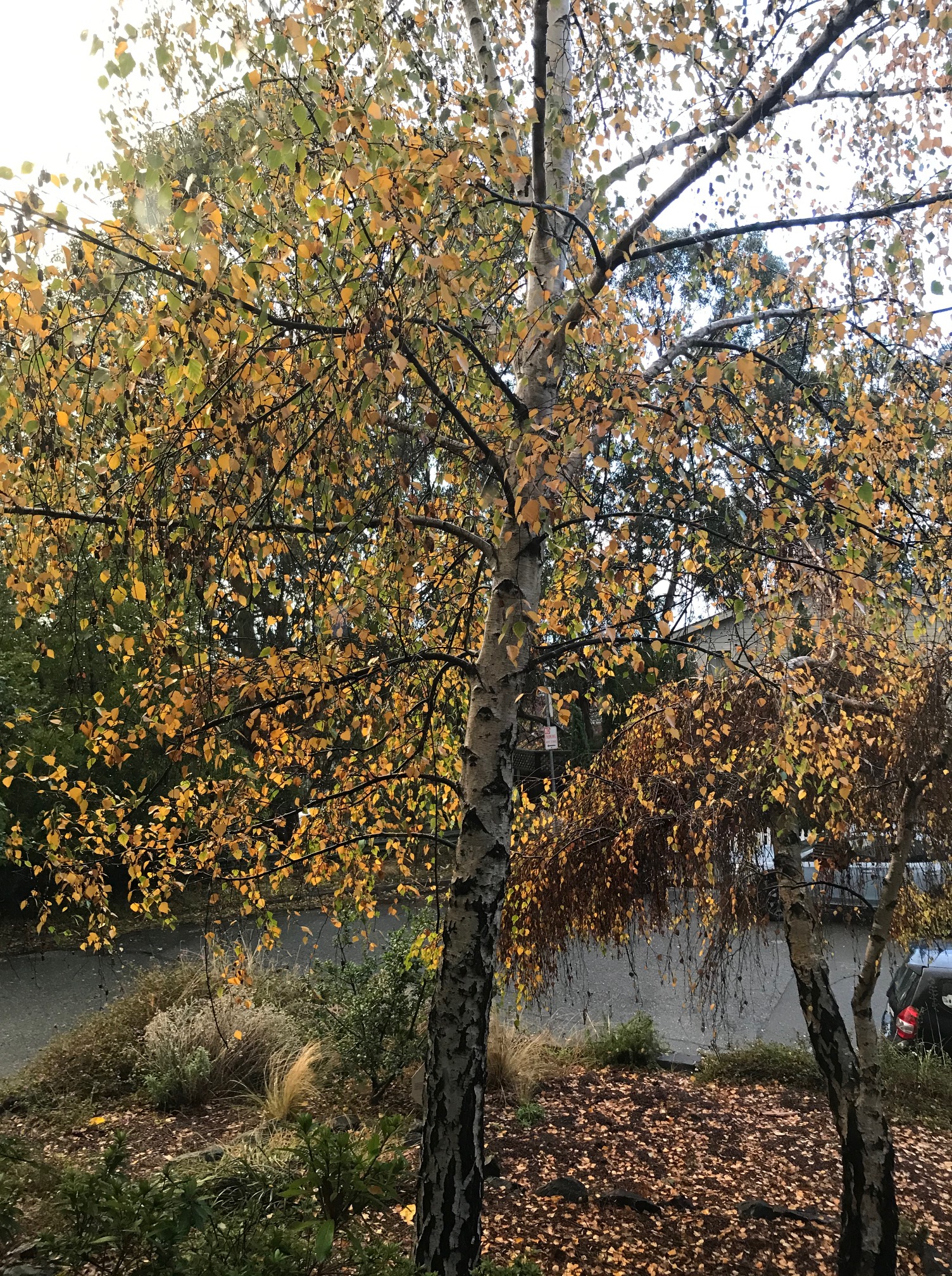
In the Mediterranean climate in the Bay Area, we know the weather, the sky, the light is changing, heralding the coming holiday time. The changes are subtle here, but the leaves fall from some of the trees, and the color is changing – the color not only of the trees, but the light in the sky, the early darkness. It’s winter now. The Season of Holidays has arrived.

The Bay Area is a diverse area of the country, and here we respect many traditions and the holidays they honor. Many of them reflect this time of darkness, this season. In my own faith tradition, we enter the liturgical season of Advent, four Sundays before Christmas Eve and Christmas Day, four Sundays filled with stories of those ancient, ancient people who longed for a Messiah – waited for the Coming of the Messiah. In the darkest time of year, we honor the Coming of the Light, the Holy One. In the darkest times of our lives, we long for someone to save us, for someone to come to us who will fulfill our longing.

I have always loved the time of Advent, those four Sundays before Christmas. As a pastor, I worked as hard as I could to have the good church folks “stay put” in the season of Advent, to have them hear the stories of the faith as if the Light had not come, to sing the songs that tell the story of the people who wait. As the autumn gives way to winter, we watch the days grow shorter. The sun falls earlier each day into the west. The last rays of each day come earlier, day by day, until we know the longest night. We are fully in the darkest time, then, we exist within it. Although we know the Light will come – as it has before – we still must live within this darkest time.

Advent is a time of darkness. In our lives, we know Advent well. A marriage ends. A depression has its hold on us – longer than we can bear, it seems. A relationship that is floundering goes on and on until its participants are exhausted with the ending. An illness has us in its grip, and though we long for it to end, it does not. The times of emptiness go on and on, without subsiding. We know so well these times of Advent, before we come to a time when we will breathe again.

And we are in that season, now. Of course the churches will begin to sing the Christmas Carols – soon. Too soon, for me. I want to honor, to respect this time of waiting, of preparation, of darkness. And there will be time for the lights to be hung on the tree, to be lit each evening as soon as the sky becomes dark. There will be a time for the Light. Are we afraid of the darkness? I want to write: of course we are. Who doesn’t want the times of sorrow, the grief, the depression, so hard to bear, to end? Who doesn’t want the light to come on so that we can see our way down the hall? But there is that moment of darkness, there is that season of darkness – when the promise is held before us – waiting in the wings – but not given.
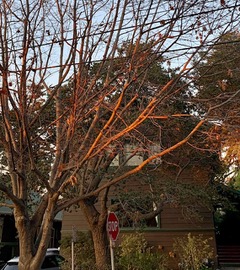
Early Sunset, Autumn. Photo by Mary Elyn Bahlert, November 17, 2022.
Uncategorized

Leaving home

In “Fiddler on the Roof,” there is a heart-wrenching scene of the Jewish people of the village Anetevka being forced to leave their beloved village, their home, during the Russian pogroms (massacre or persecution instigated by the government or by the ruling class against a minority group, particularly Jews). The people are packing the few belongings they can carry, along with animals, onto carts and make-shift vehicles. What to take? What can they leave behind? They will leave behind that place they loved – we all love our homes, don’t we? – not only the home, but the place, the land, the sight of light on those trees, the fragrance in spring – and walk away to where? Can somewhere else be home, surely? The tailor, a man with a young family, asks the Rabbi, then: “Rebbe, wouldn’t this be a good time for the Messiah to come?” The old Rabbi looks fully into his eyes and says: “We’ll just have to wait for him somewhere else.”

Wisdom, in the heart of tragedy, of horrific loss.

We wait for the Messiah these days, also, as the War on Ukraine – invaded by Russia – drives on, for many months. How long will the people suffer? We wait for the Messiah when we are ill, or when someone we love is ill, and there does not seem to be an end to it. We wait for the Messiah when the price of gas goes up an up and – up – and although it is expensive to us, it is too much for so many others. We wait for the Messiah to come into the lives of refugees fleeing from war in their own homeland or fleeing because there is no water in their land. Refugees who are walking now, today, this moment. They, too, must be waiting for someone to save them.

We wait for Someone – Something – to save us.

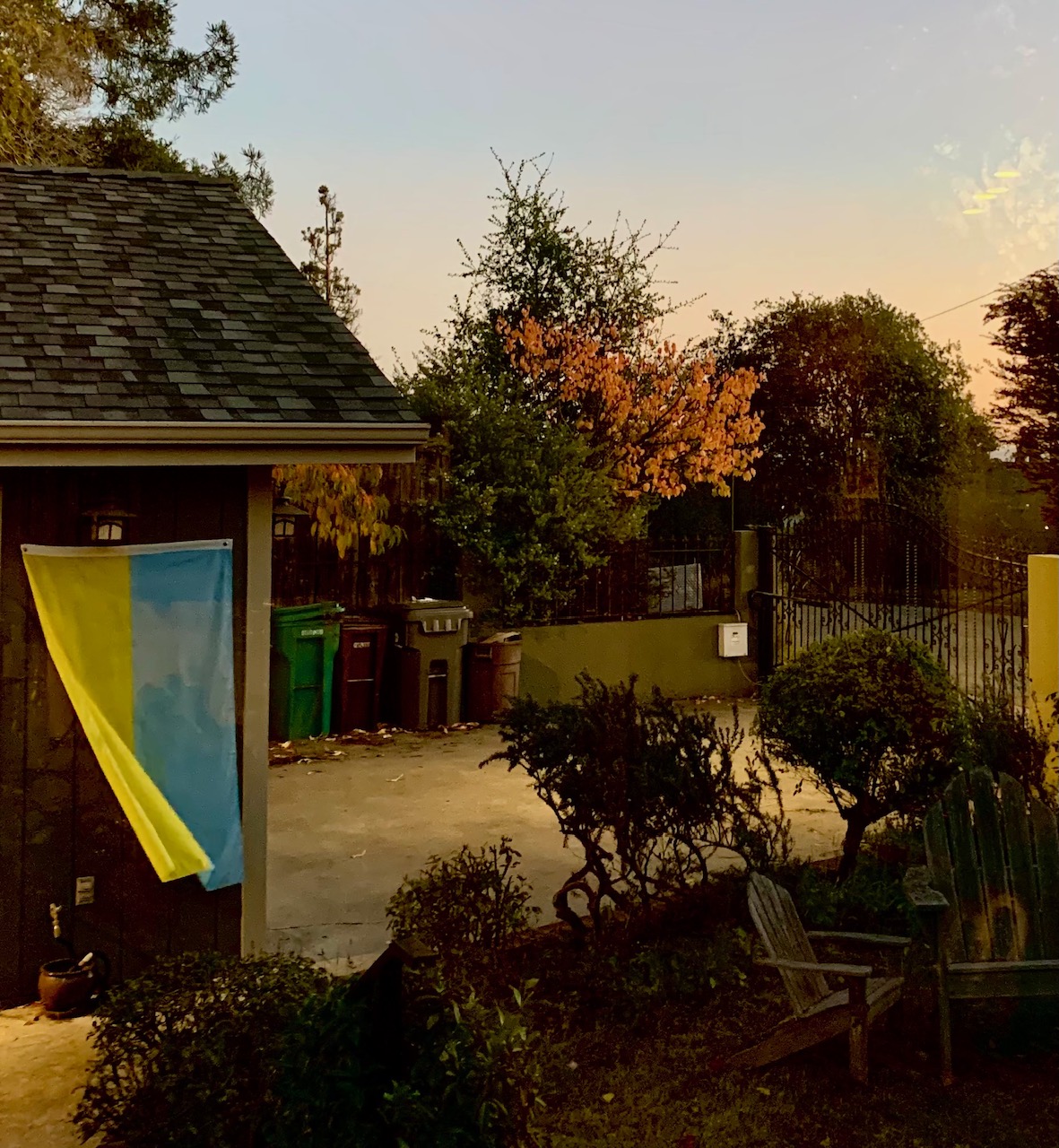
Deep Dusk, Oakland, 11/12/2022 – Mary Elyn Bahlert

Uncategorized

morning, evening

you put on a show-
your dancing leaves turn from green to gold -
                           magic!
shimmer in the breeze,
then fall - 
                           silent 
                           slow
to the waiting earth - participant in the silent drama.

you put on a show.
you wait
as the autumn wind removes your yellow dress
and your branches lift themselves - light -
into the air.

              -Mary Elyn Bahlert, 10/2022

Birch Companion: photo by Mary Elyn Bahlert, 2020

reflecting, remembering, Uncategorized

First memory

I like to ask people what their first memory in life is. I was touched by the first memory of Georgia O’Keeffe as she sat on a blanket on the grass in her childhood place, Sun Prairie, Wisconsin – the vividness of her sight, the colors, the shapes, the sky, the grass. Her first memory shaped – or was shaped by the artist she was/would become. I imagine it is so for each of us.

Mom was not with me. That would have made an impression on me. Instead, I was talking to Mom on the telephone, under the watchful presence of Agnes Hundreiser, my mother’s friend who had come to take care of me during the day when Ron was in school and Dad left for work at the steel mill. Mom told me I had a baby sister. And then she asked me: “what should we name her?” I answered “Ann,” giving the name of my mother’s own sister, my Auntie Anne. That must have been the name of a sister, in my mind. And my own mother’s name was Mary, so my thinking followed!

“How about Susan?” Mom asked. And so it was: I had a baby sister named Susan.

I expect siblings shape our lives in so many ways, conscious and unconscious ways. Was I jealous? I expect I was, my role as the “littlest one” suddenly changed to Big Sister. And I suppose that jealousy has played out in conscious and unconscious ways in my life. I was often protective of Suzie, a role given to me by my place in the family and a role taken up by me by temperament.

The trajectory of Suzie’s life has been much different than mine. We have so little in common. Still, when something goes wrong in our lives, sister is the first to know, after partner, of course. When Suzie was diagnosed with colon cancer at 65 – the same age our father had been diagnosed with colon cancer – I was the first person she called. And when I could not be with her at the doctor’s appointment, she taped the meeting so that I would know, and understand what she was facing.

I sat for a bit: should I name this post, “Little Sister,” or should I name this post, “First Memory.” For some reason – I don’t know the reason – “First Memory” won out. It’s hard to separate ourselves from the influence and the power of a sibling, that I know.

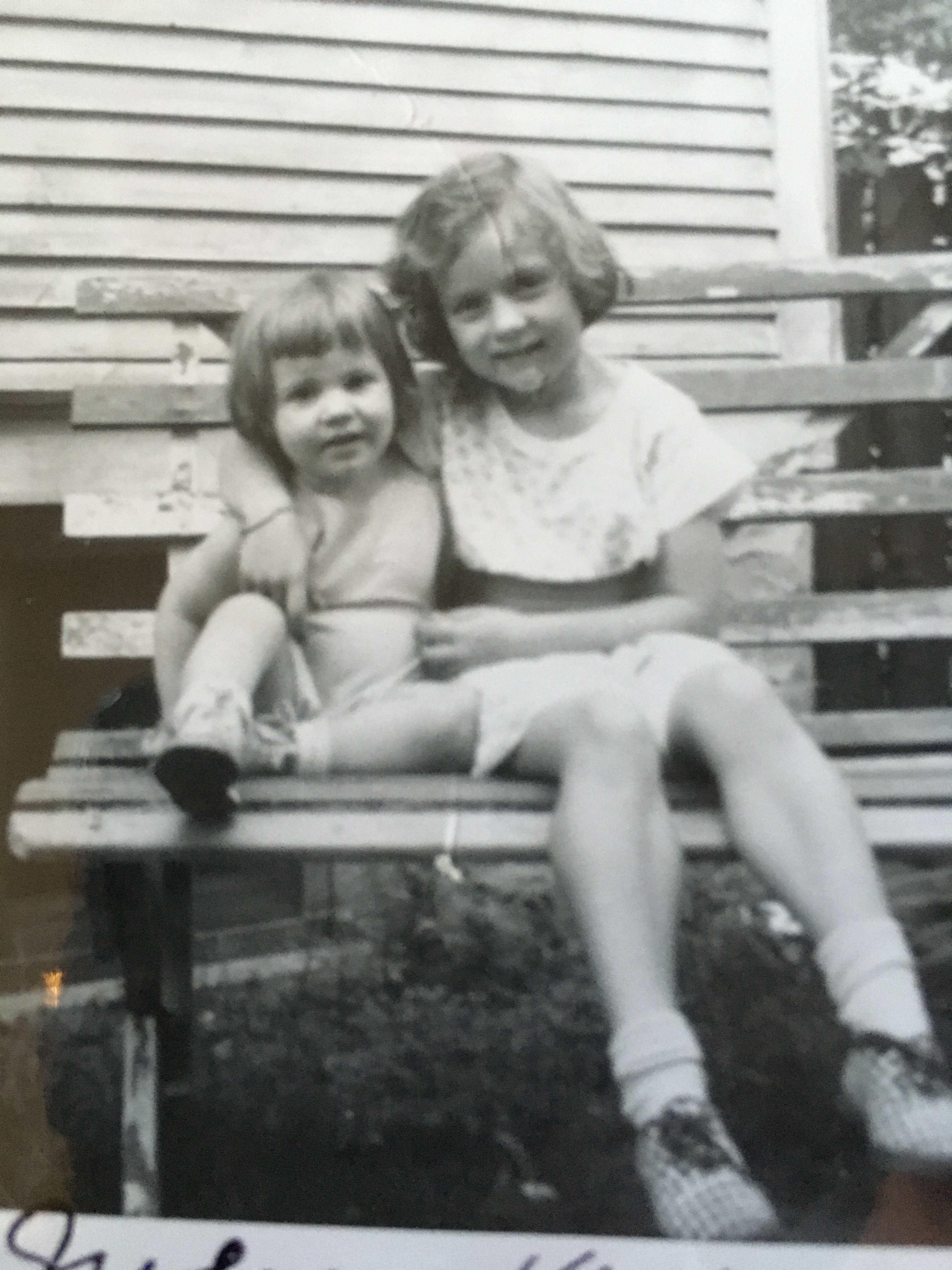
Little sister, big sister: Susan Lynne and Mary Elyn, photo, circa 1956, Milwaukee, Wisconsin

Uncategorized

“I don’t belong here.”

When I was in the early, early years of puberty, a moment in my life – happened? took place? I remember it – have always remembered it, with complete clarity.

I stood at the front screen door at the bottom of the steps that led from my family’s rented upper flat. I looked out at the street – 28 and Locust Street, our building facing 28 Street. From that house I walked to Peckham Junior High School, under the train tracks at the factory site of Master Lock Company, with my neighborhood friends. I was not a happy pre-teen child – my mother’s anxieties pushing against my own desires to grow up. But I have no memory of my mood that day, or what had brought me downstairs on that warm day.

As I looked out at the street, I had a thought: “I don’t belong here.”

In fact, since the time I was a young girl, I had not identified with my parents. In my memories, I am looking out at that world as if I am a stranger, passing through. I knew my parents loved me, saw that in Daddy’s eyes and his happiness in his family, and knew somewhere deep inside that Mom had her own fears and so she was afraid for me, a girl-child.

I did identify with my school teachers, old-world women with polka dotted dresses and hair that was set weekly at the beauty salon. From the time I was little, I used the small space in my bedroom to teach an imaginary class, full of the classmates who were my friends. I made an elaborate systems of attendance charts and folders with each child’s name. And I watched myself teach in the mirror at the back of bedroom door.

My life has been very different from my parents, who were old world people, my mother the first generation of an immigrant family to be born in the United States, Ukrainian her first language. She did not graduate from high school – she received her GED certificate when I was in college. My father went through the eighth grade in country schools, and my father spoke in a dialect of North Eastern Wisconsin that I still hear in the people who grow up there. They were solid working people, and my mother, who had been working at Cutler Hammer until she married my father, quit working when she married to take her proper role for that time and class and place: housewife. That was my world, and by the time I was in junior high, I was painfully aware of distinctions of class. I saw the nice clothes of my new friends and I looked with great interest at all the details of a friend’s one family bungalow house, which her parents owned. One day, Mr. O’Reilly, the Junior High Guidance Counselor who taught health classes, pulled me aside to ask where I lived as he spoke to another teacher; he wanted to show his ability to identify the social class of his students. I surprised him when I told him where I lived with my family. In a way, I’ve always felt as if I “pass” for middle class; my education and vocation match who I was becoming.

All of this is to ask: is that what I meant that day, looking out over the narrow city street, the sidewalks lined with elm trees that met like a canopy over the street?

I expect I’ll never know; I have not forgotten. I have not forgotten that moment, and I have not forgotten where I come from.

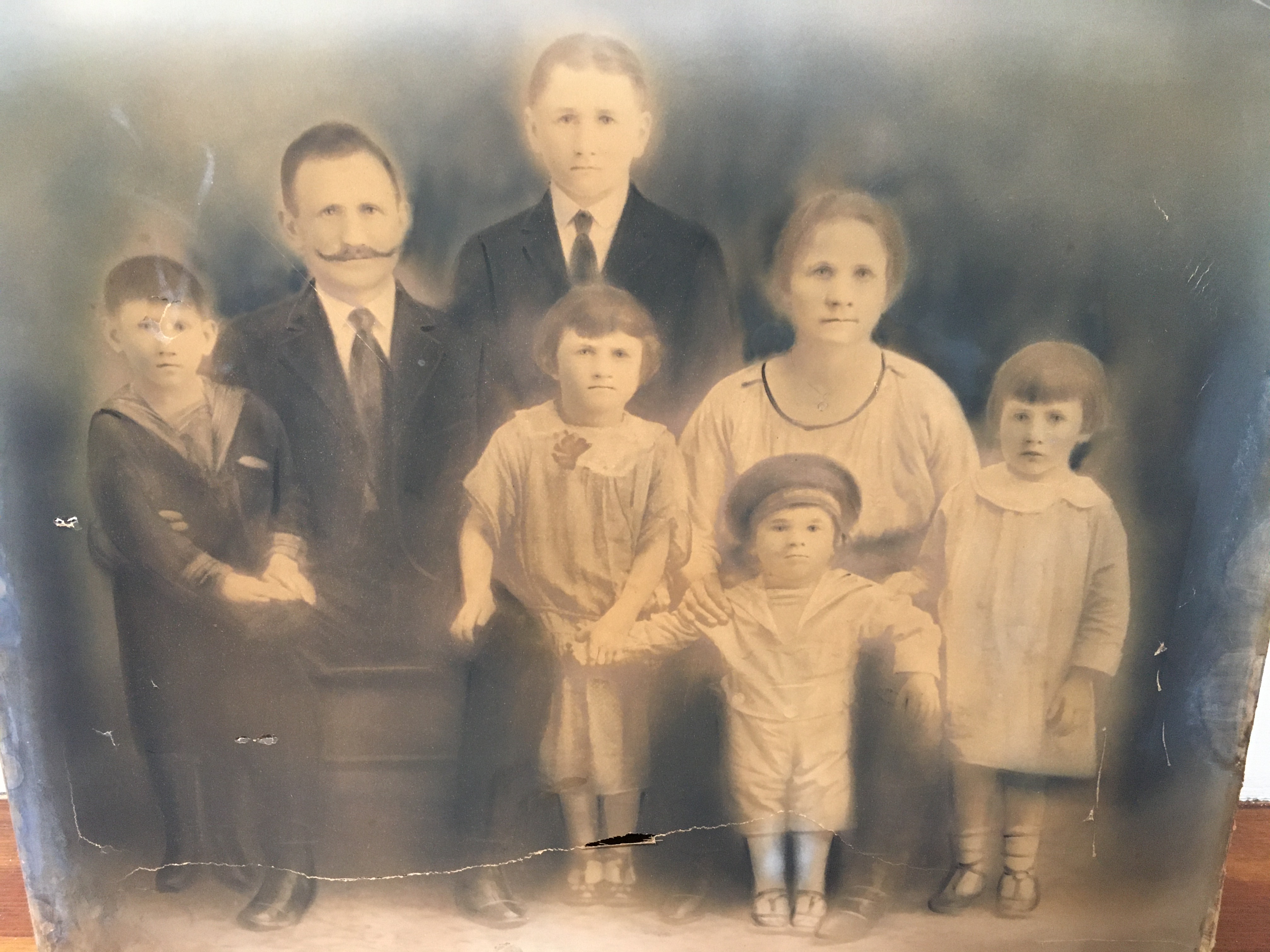
Vlas Markov Srebny and Feodosia Machsuda Srebna (Alex Markowski and Frances Markowski), with family, circa 1905. Mary Markowski Bahlert, my mother, the little girl with hand on her father’s knee.