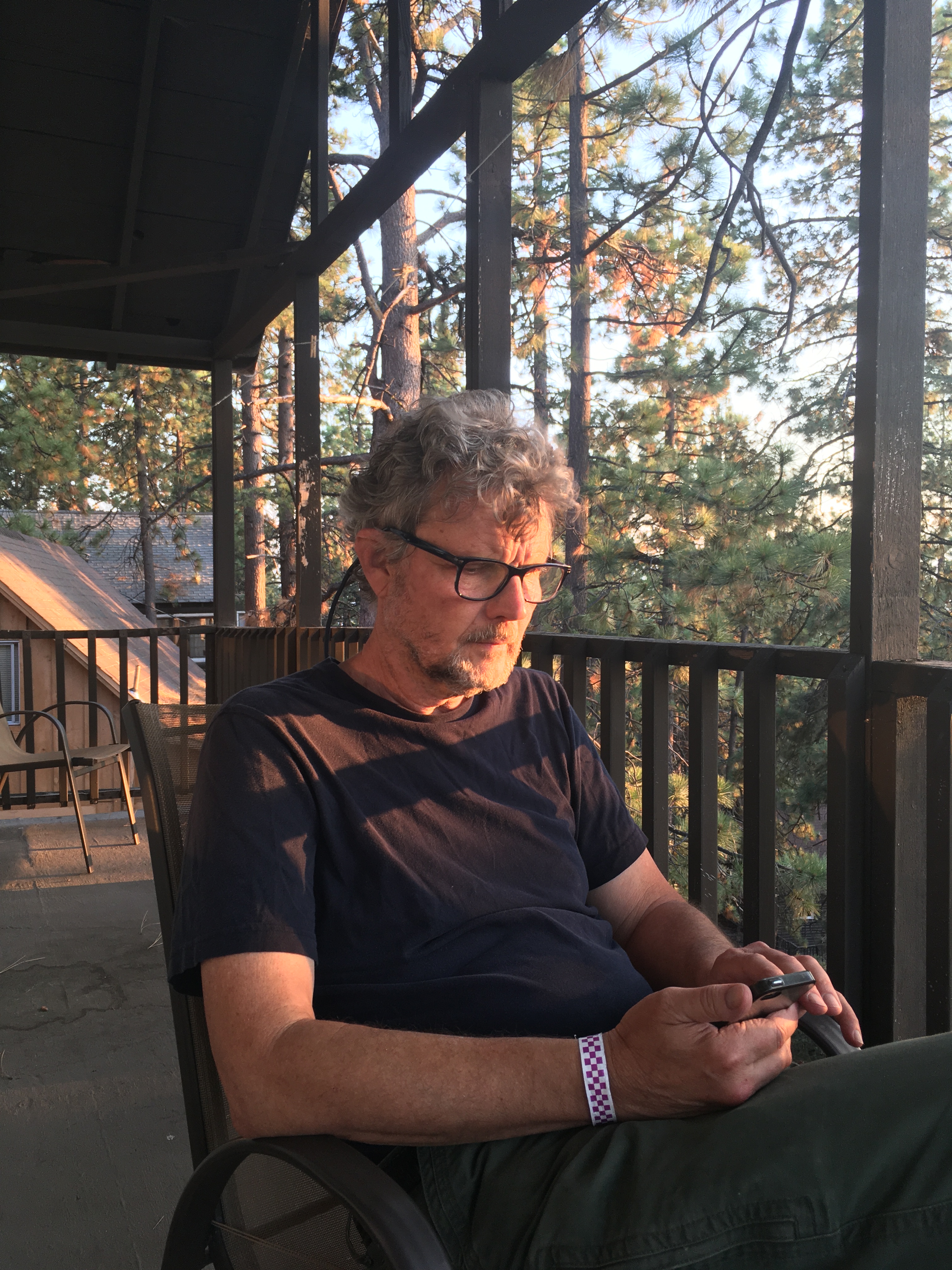
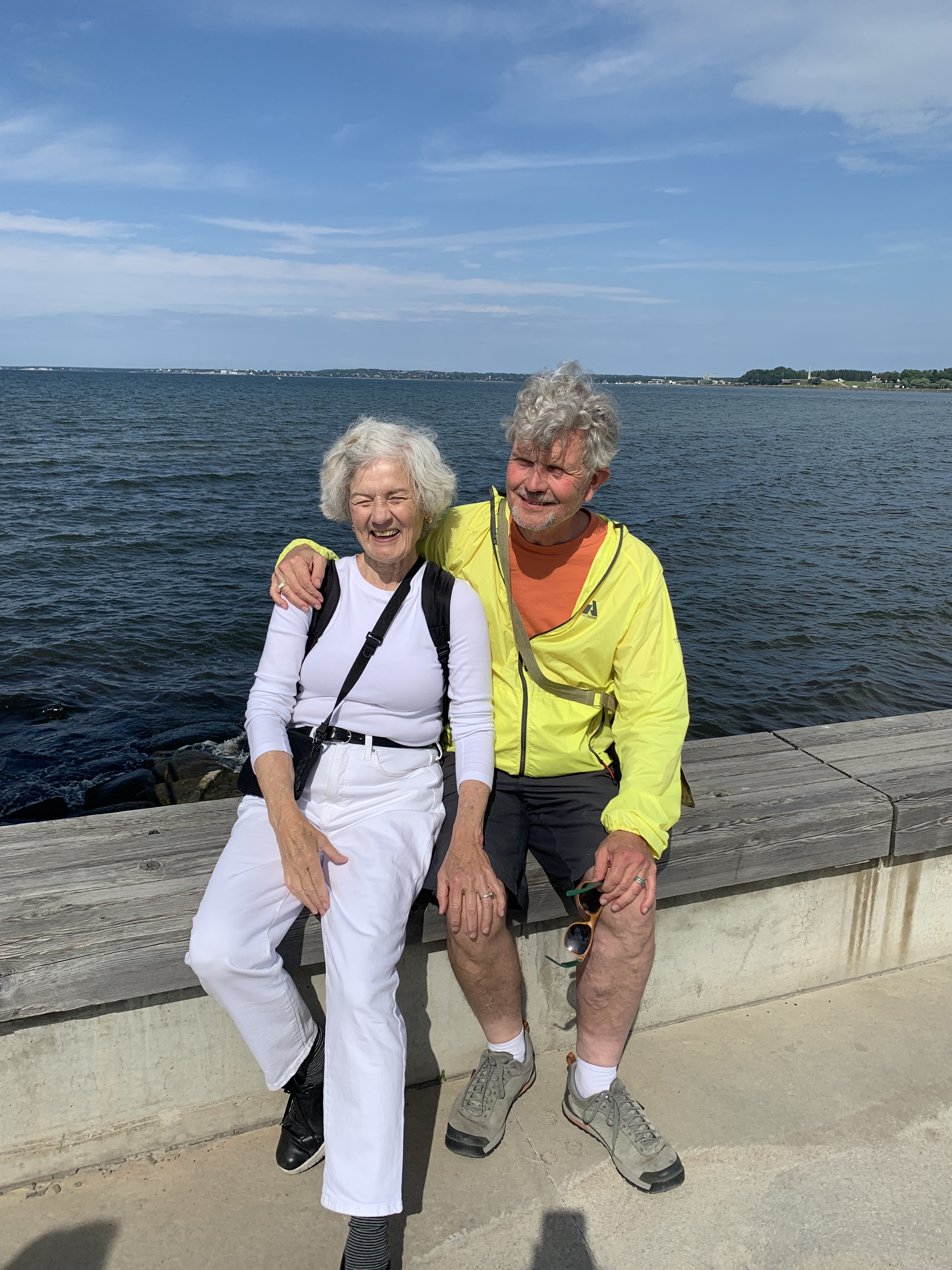
Sometimes in the morning or evening, when Jeff and I sit across the room from each other – he in his beloved leather chair, and me on our sofa, I look up to look at him. He is reading, or watching another series on the web. He doesn’t know I’m looking. I look up and take a few moments to look at his face, to study him, to enjoy him.
Jeff’s face has been in my life for a long time, although sometimes it seems as if all the time has gone by so quickly; it has gone by so quickly. We’ve had good times, sweet times, hard times, laughing times, gentle times, shouting times, quiet times. I am grateful to the Powers for having gifted me with Jeff as my partner in this life.
I love that Jeff is a man who makes sure to make time for relationship, time to nourish and be with one another, offering gratitude, remembering together, enjoying one another.
And so, today, this is an ode to Jeff’s face. “From the beginning of my life I have been looking for your face…” – Rumi
I think his kindness shows in his face, and I’m grateful for his kindness, through all of life’s journey.
When I was growing up in the 1950’s, children still went out to play with the other children in the neighborhood. From our upper flat, Mom could keep an eye out for me while I played. I expect most other Moms did the same. In the summer time, she could step into the back hall from the kitchen and take a look at me through the screen door that opened to a small porch on the second floor. Then, she could go back to her own day.
The streets and alleys were full of little people then, children riding tricycles, older children giving orders to younger ones. I can still picture the house where Michelle Froehlick lived – they had the whole house! – and I can see the back of Randy Larsen’s flat that faced the other street when we all met to play in the alley. Randy Larsen – who gave me my first kiss in the alley, and whose name is on the Vietnam Memorial in Washington, D.C.
One of my first memories is of me taking a bath, and Mom helping me to take a bath at the end of a day of playing. As she cleaned me up with a washcloth dripping with soap, Mom reached across me and without looking at me, as if her words were an aside, she said: “I saw you hit another little girl while you were playing today.”
I can touch the sense I still have of the little girl in that moment, her mind moving quickly, her clarity as she answered: “It must have been another little girl who looked just like me.”
And I saw the smile appear on Mom’s face as she turned her head away from me to hide that smile. I don’t remember another word spoken between us then.
Hoping to not get caught… photo by Mary Elyn Bahlert, 8/18/2024
“Until one is committed, there is hesitancy, the chance to draw back, always ineffectiveness. Concerning all acts of initiative and creation, there is one elementary truth the ignorance of which kills countless ideas and splendid plans: that the moment one definitely commits oneself, then providence moves too”. – William Hutchinson Murray
Every year during early August, my long-time friend Nancy and I choose a good restaurant and meet to celebrate our birthdays – both also in early August – with small gifts and with a good meal and always, dessert – shared. This year, we stayed for a long time in the booth in the dimly lit restaurant where we had finished our dinners and our dessert, talking about our long friendship and our long lives.
Nancy confided in me that through most of her life, she has gotten on most easily with men, and with me and one or two other women as exceptions, she still thinks of herself that way. On the other hand, I find that I have had long time friendships with both men and women, friendships I value to this time in my life.
The role of men in my life stands out in a particular way. Through the years, I have been helped in some way by some good man whose path crossed mine. As a college age woman, I took a semester off before graduation, not clear about my future. I was unclear in my choice of college major, and although I had help through the University, I still took a semester before I would return to graduate with my BA. I was confused, and so I continued to live at home – as I had throughout my undergraduate years – and landed a job in a public relations firm, my desk in a corner of the basement office without windows where other young women my age worked in the accounting office.
The firm had one copy machine, and one day, I found myself making copies as the President of the firm walked up, and as he waited to use the machine. We chatted for a few moments, and in that time, I told him that I’d been at university, but that I’d left before I received my degree.
A few months later, I decided to return to school for the last semester of study, in the fall of 1972. I told my supervisor about my decision, and I prepared myself to give up the job and to find some other part time work to continue to pay for school. When the news of my leaving traveled to the upper offices, where the important members of the staff sat in private rooms with windows, an offer came down the stairs and to my desk. I could continue working at the firm – part-time – as I finished school. A new position was formed for me to be able to work part time. Apparently, the President of the company had heard about my leaving and made this offer, a way to support my receiving my degree.
I graduated with my BA in January of 1973, and was offered a position as Claims Representative for the Social Security Administration, which was hiring that year to bring on enough staff to implement the Supplemental Security Income Program for low-income elderly and disabled folks (the SSI Program – a life-saver for many folks – continues today).
A few years later, I was working as a Claims Representative in the SSA office on Milwaukee’s South Side, interviewing recipients of both Social Security and SSI. When I could, I had accompanied the Claims Representative in the office to a Contact Station where members of the public could file for benefits without traveling to the District Office. And I was called on to give talks to the public from time to time.
What I also did surprises me, even now. When the end of the week rolled around and no more public interviews were expected of me, I’d make my way to the office – the door was always open – of the District Manager. I’d sit in a chair across from his desk and have a conversation, asking about what his work was like, what was difficult, what it was like to be a District Manager.
I expect relationships with my father and my older brother – both of whom liked me – gave me some confidence in myself.
In the fall of 1980, the position of Field Representative opened at the Waukesha District Office of SSA, and I applied for the job. My additional work – public contacts, public speaking – helped me land the job. As did the fact that the District Manager knew me personally. He was happy for me.
During my final year as a Claims Representative in that office, before I received the promotion to Field Rep, another good man, Larry Alt, was my supervisor. One day, Larry told me that I needed to meet his wife, Sue Alt. He thought that she and I could be friends. And after I met her, Sue became an important friend to me for many years. She’s gone now, and I still miss her.
Through the years, other men have lit the path on my way. I’m grateful.
I’m grateful for the positive, affirming friendships I’ve had with men over the years. I’m grateful for the loving father and brother who lit my path in a way they did not intend or understand. As I hear the stories of others, and as I’ve struggled with what I received – and did not receive – as a young person, I see how those relationships have shaped my life. Continue to shape who I am.
My niece Vicki Sue is a new grandma now, her first daughter, Heather, having provided her the title with the arrival of Savannah several weeks ago. Every day, I receive new photos on my phone, with Grandma and Grandpa holding the little one.
Which is why I share this Thanksgiving story, a story which takes place at the time when now Grandma Vicki was the smallest, the youngest member, of our family.
Our family – Mom, Dad, sister Suzie, brother Ronn and Sue and their family, which consisted at the time of David, Alicia – and Vicki Sue, were all together to enjoy the meal about to be served. Mom worked hard in the kitchen all morning, and, as was our custom, the table was set for the Thanksgiving Feast at about mid-afternoon. The upper flat on 49 Street on the North Side of Milwaukee was crowded, those little rooms stuffed with the adults and little ones as we awaited the feast.
Suddenly, someone noticed that the littlest member of our Happy Thanksgiving Gathering (the mood about to change…) was missing. Mom, Sue, Ronn walked through the front rooms and into the kitchen, and into the tiny hall where the bathroom and two small bedrooms emptied, calling out: “Vicki Sue!?” “Vicki Sue?!” Mom Sue or Dad Ronn – I don’t know which – heard a small voice, behind the closed door to the bathroom!
“She’s in the bathroom!” someone yelled.
The door handle was tried. The door didn’t budge. The door handle was tried – again. Then the real antics began. Mom Sue and Dad Ronn and Big Brother David and Big Sister Alicia and Grandma and Aunt Suzie and Aunt Shugie all gathered in the small hallway, all bending at the waist, mouths as close to the height of a toddler as we imagined, loudly giving the toddler – who was locked in the bathroom (!) – instructions for how to unlock the door.
We tried. We really did. As situations like these do, the moment escalated, the voices getting louder, and more voices joining in the yelling – the yelling that was an explanation, of course, to the little one on the other side of the door. She didn’t cry. After all, she had plenty of attention; it’s just that the attention was all on the other side of the – locked – door.
Grandpa must have stood on the outside of the crowd gathered in the small hallway outside the bathroom with the locked door. Sometimes, while he loved the little ones, loved to visit with them, hold them in his lap, talk to them – the noise that a house full of little ones provided was a bit much for him. It was now, anyway.
Grandpa marched from the hallway to sit at the head of the dining room table, his designated place for the holiday. He sat in this chair, picked up his knife and fork, which were carefully set in the appropriate places at the festive holiday table, and yelled: “Let’s eat!”
By this time, someone was dialing the phone that sat in the nook right inside the small hallway that led to the bedrooms and the bathroom. One or two adult voices continued to give instructions to the toddler, Vicki Sue, who was still locked on the other side of the bathroom door.
A few minutes later, a fire engine rumbled up to the front of the house. A couple of kids ran to the front window, and Grandma went down the front stairs to talk to the tall fireman at the door, doing his civic duty on the national holiday. In a few more minutes, we all heard the sound of a ladder being pushed against the side of the house, right up to the bathroom window. Which was easily opened, of course, and through which a tall, handsome fireman (they are always handsome) dropped from the ladder and into the bathtub. As he stepped out of the bathtub, he leaned over the little blond girl who was all alone in the bathroom. He unlocked the bathroom door.
I’m definitely a city person – a “city girl,” as my husband likes to say. In my early twenties, when I was in my first professional position in the Federal Government, I had been assigned to live in Green Bay, Wisconsin: too small for my taste, I tell others now, “I almost died in Green Bay.” A bit of an exaggeration, of course, but I like to tell the story that way so others get the drift of what living in that cold, gray place had meant to me. “Get the drift” – as in snow drift – I suppose.
I digress. Over the years as a pastor, I came to learn about many mission activities, some in the United States, others in places overseas. I spoke often about mission to the congregations I served; I reminded them, again and again, of how those of us who are privileged to live our lives in warm and clean houses, our tables set always with a warm meal, health care – now more than ever a privilege – everything we want and need to be safe in our lives, had not only the ability but the need to give to those others whose lives had not afforded them the luxuries we take for granted. And over the years I became familiar with ways – call them opportunities – for us to give.
A favorite of mine is Heifer Project International. I’ll tell you why it’s a favorite. HPI provides animals and education to people in impoverished circumstances by giving them animals, by giving them the education they need to care for the animals, and to give them a future that these animals provide. You can take a look at the website for HPI here: heifer.org
“Giving an animal gift at the holidays is like giving someone a small business, providing wool, milk, eggs and more. Every animal gift comes with a free honor card to let your gift recipient know their holiday gift is providing families access to medicine, school, food and a sustainable livelihood. Your animal gift will support the lives of families in need.” – from the HPI website
*
Once a year, HPI offered a weekend for women, “Women’s Lambing Weekend,” a gathering at the carefully timed birth of the lambs at the HPI farm outside of Little Rock, Arkansas. (As I checked out the HPI website to write this post, I found that they no longer ofter the Women’s Lambing Weekend. It’s a loss, I think). Joanne – my long time, faithful friend – who had grown up on a farm, and I were roommates that weekend. From the time we arrived, we attended classes that provided information about the mission and the people who HPI served. The work of Heifer Project came to life during those sessions. I was sold on their mission forever!
As the weekend progressed, we all waited for the lambing to begin. Veterinarians were on site, as teachers to our sessions, and available, always, to the animals.
One morning, the gathering of women sat in the chairs in the small classroom that was ours when we weren’t being introduced to the farm. The instructor had just begun when someone walked quickly into the room and in an excited tone of voice, yelled: “the lambs are here!”
We all jumped up from our seats and ran over to the field outside the main barn, where one of the vets was gently cradling a lamb in her arms, Mother Sheep lying close by, her eyes on her baby. As occupied she was with the beautiful lamb, the vet told us about the birth, and she told us how the mother and lamb would be cared for now.
I was so happy to see the new baby lamb! Even Joanne, with her years of growing up on the farm (where she and her brothers were usually out in the field, picking rocks), was happy to see the new lamb.
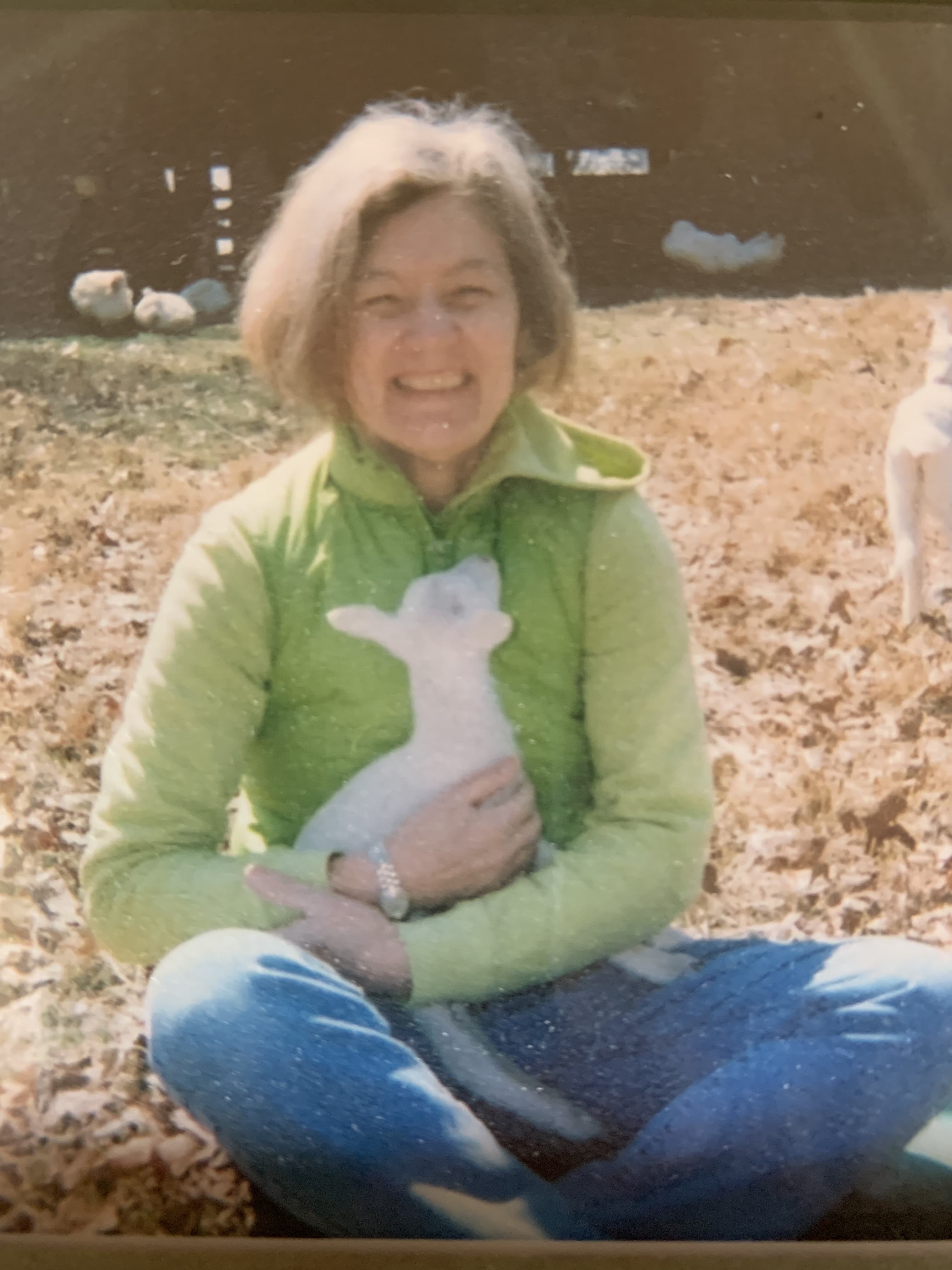
My weekend at Heifer Project was a joy I often remember. On our mantel, in front of the window above the fireplace, there’s a picture of me, holding a baby sheep – a lamb. I loved that moment, when the littlest lamb was placed into my arms.