Uncategorized

At the Cemetery Gate


marypraying_grande

I stop at the statue of Mary,
white marble dedicated a century ago.                                                                                                           There I pause – something in me turning to devotion at the sight of her –                                                             to behold this stone-cold effigy.
Together, we continue the silence that attached itself to me when I walked among the graves.

From there, I enter the gate, walk into the noisy city.                                                                                A dark-skinned post-man steps down from his truck,                                                                       sees her, too.

He genuflects, ancient devotion repeated for this stone-cold effigy.

meb, 2/1015


Uncategorized

Shining Through

This past week, I hiked with two other folks to Chimney Rock, from Ghost Ranch, NM in the desert north of Santa Fe. It was late afternoon, and as we walked, we moved from sun-sparked paths to shadowy places where the ground was covered with a layer of snow and ice, the dark side of the mountain that does not see the sun.

From time to time, we stopped to drink water at this altitude – over 6,000 feet – to stay hydrated and to chat about our rising view. It’s funny how close things look, and how far you have to hike to make it to the top. I didn’t know my companions well; we told stories about our lives as we walked. It’s good to have good companions on the journey.

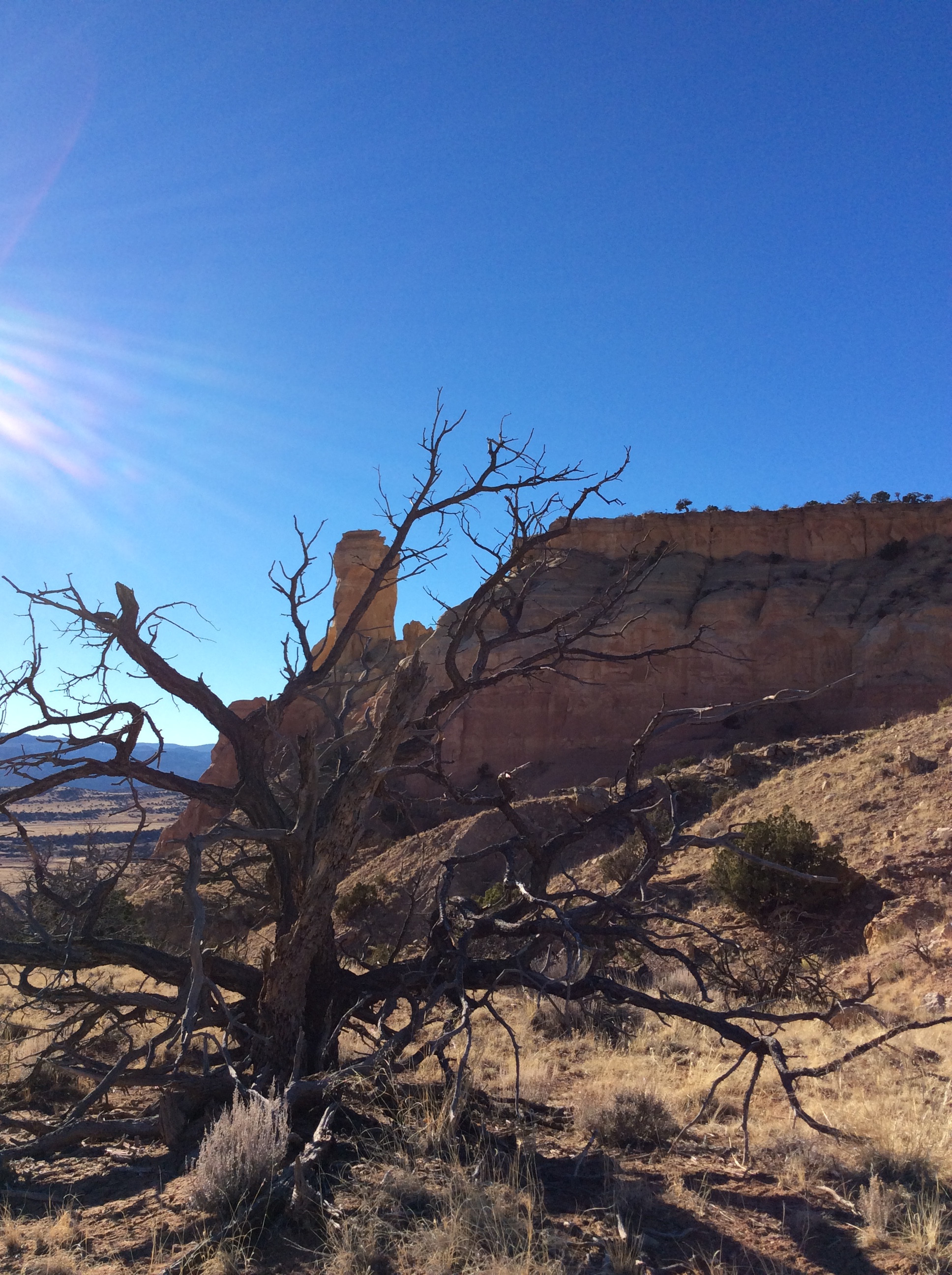
Near the top, I stopped to take the picture that accompanies this post. I have an eye for seeing things that don’t seem to go together, but do go together. I suppose that’s also useful in life, because sometimes the strangest things actually work together! Still, when I stopped to take this photo, I couldn’t see what I was trying to capture, with the sun reflecting on the lens.

Even so, here it is!

IMG_0529

In the background, you see Chimney Rock, the object of our afternoon hike. In the foreground, you see the tree that has suffered from several years of drought in these Western States.

These days, I often reflect on how a long journey has led to this place in life, and how, as often as life has seemed a struggle, the journey has led me back to the place where I began: my true self, my true being, me being myself, all the while struggling to be myself.

It’s true for all of us. What we present to the world is often such a brittle piece of ourselves, a dried-out self, trying too hard to be good, to be nice, to fit in, to be what we think is expected of us. Or we present a fearful self, exposed to the elements from the time we were young, pushed into a shape that does not suit us, a shape that is in the minds of others, but isn’t who we really are. We think we are our accomplishments, or our goodness, or our strongly held beliefs or preoccupations.

We are so much more. We are so much more real. We are so much bigger and stronger and full of beauty and strength and glory. We’re made of so much more, more power and light.

All the while we are offering our smaller selves, our larger self – our True Self – is there, all the time, shaped by larger things, by wind and rain and experience and light, the goal that is not the goal, the One, the Only One, the one we are seeking and cannot seek, the One who shapes us, the One we have always been.


Uncategorized

The Practice of Gratitude

wallpaper_storm_animaatjes-24

The practice of gratitude is a powerful, profound spiritual practice.
Often, gratitude is not offered in this deep way.

It’s easy to be grateful, to give thanks to The Powers, when things are good.  It’s easy to give thanks when you get the job, when the wound heals, when your kid gets into the school you wanted, when life feels abundant, when you are happy.

It’s another thing, entirely, to give thanks when life is not giving you what you want.  Then, the true practice of gratitude kicks in.

Corrie ten Boom writes of her years in a concentration camp during World War II.  During those years, she survived by being grateful.  How does a human being survive the most dire, the most hopeless,  of all of life experience by being grateful?

“Be joyful always, pray at all times, give thanks in all circumstances…”

The deep practice of gratitude comes from the deep knowing that you, your small self, your ego, your desires and plans, are not in your control.  The deep practice of gratitude comes from the wisdom that there may be some power at work – something outside your ability to understand or to know – in the very circumstances you are given, whatever they may be.

A long time ago, I visited a woman, then in her 90’s, who was hospitalized for a grave illness.  Surely she would not leave the hospital to go home again.  When I walked into the room and walked toward her bed, I saw her back turned to me.  When I walked around the bed to let her know that I was there to see her, she turned toward me and said:  “I was counting my blessings.”

“Give thanks in all circumstances…”

I’m not suggesting that this is easy.  The spiritual path, that deeper journey, is not easy.  It takes work.  It takes surrender.  The spiritual path may ask that you surrender your most heart-felt desire to What Is.  We all know this is not easy.  This is hard work.  This is the real work of life, whoever you are, wherever you are, whatever circumstances you may find yourself in at this moment.

This work involves your facing your feelings, and giving thanks, even for those difficult and even painful feelings.  This work involves saying “Yes!” to life, whatever life brings.  This life involves staying with what is happening – inside of you as well as outside of you – and knowing this is what you are given, this is a gift, this moment, this life.

So often we have been promised a spiritual path that is no more than positive thinking.  We want to believe the suggestion that if only we believe this or that, if only we think the right way, or that if we think positively, our lives will change, we will be different.  That approach avoids the work of surrender, of gratitude, come what may.  That promise points to an easy grace, a grace that does not exist.

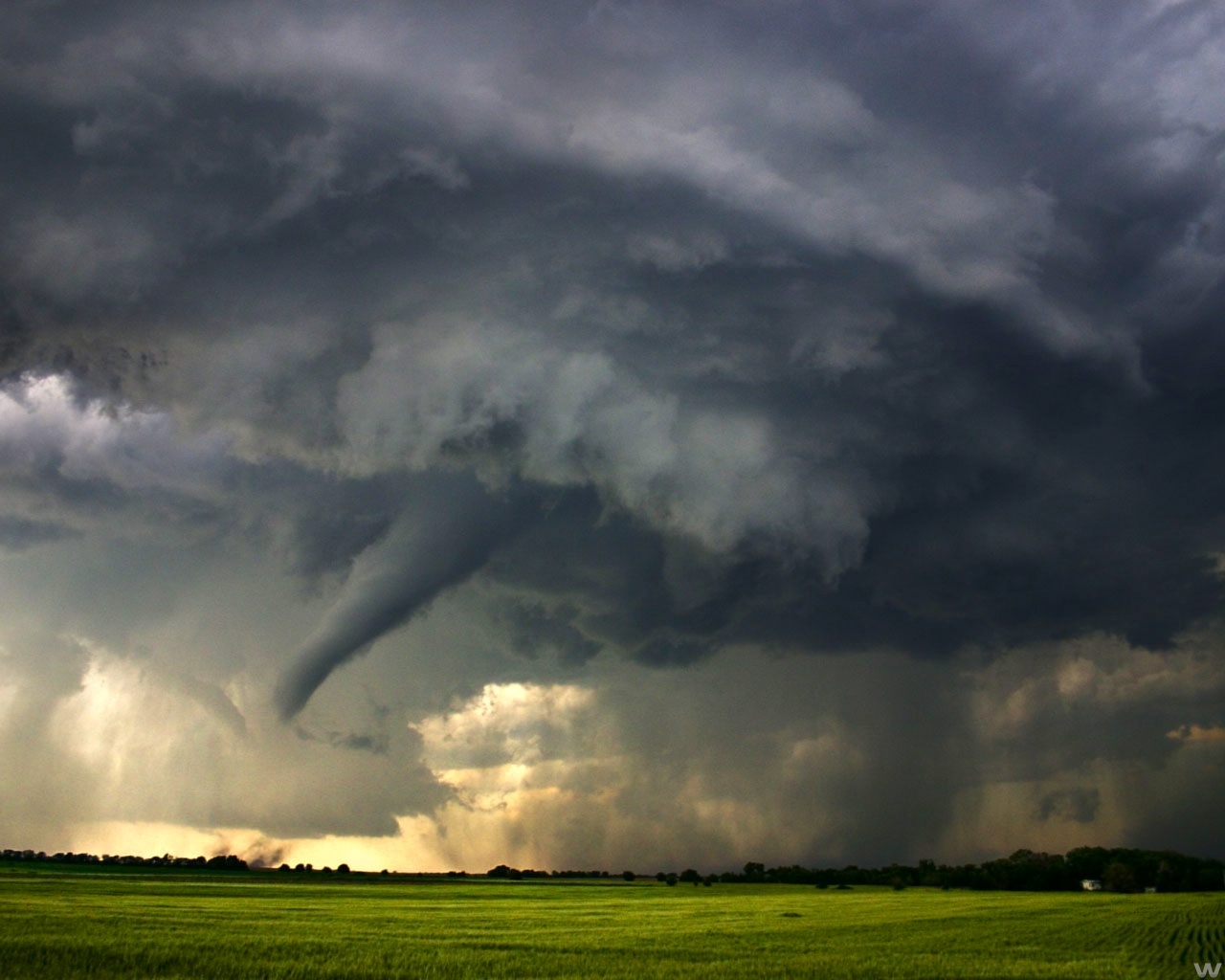
Without facing into the storm, you will not exit the storm.  This is truth, this is wisdom.

“For all that has been – thanks.  For all that shall be – Yes.”  – Dag Hammarskjold, Markings

 

Uncategorized

Share resources

photo

Yesterday I followed another car for about a mile, stopping at stop lights long enough for the logo in block print on the trunk to register with me: “Wheels when you need them.” City-cars are vehicles you can rent for a few hours or a day, only when needed. In some cities, parking is almost impossible for residents, in San Francisco, for example. Car-sharing of any sort is needed, to be sure.

A long time ago, an acquaintance mentioned his idea that tools and other implements could be shared, from neighbor to neighbor. For example, let’s say you need a lawn mower. Maybe one person on your block owns a lawn mower, so you use it when you need it, then return the lawn mower in the condition you received it. Why, my acquaintance asked, did every house on the street need a lawn mower, or a rake, or a bush trimmer? Why, indeed?

A close friend of mine “rents” her car to a friend one day a week. He has a set of keys, arrives at her house before she leaves for work on the regular day, and uses the car for the day to do errands, to take care of business he can’t make happen easily without a car. No, he doesn’t need a car all the time. No, it’s not a problem for my friend to walk to work on the day her car is otherwise in use. She gets to enjoy the mile walk down an interesting street to her office. At the end of the day, her friend fills the tank with gas and returns the car to its usual place in the driveway. Often, the two don’t see each other for weeks at a time.

Share resources. Such a simple idea. Share resources. Something we have not been accustomed to doing, in our consumer-driven, “each person for him/her self” culture. Why not share the resources we can? Deciding how to share resources can be a community decision. Why not have a few folks from the neighborhood over for a cup of tea one evening to share some ideas. “How can we share resources, the resources we already have?” In community, in a group, our ideas build on the ideas of others, and new ideas arise. This is how group-think works!

Maybe you’ve seen pictures or even a movie that portrayed “barn-raising.” Sometimes in the U.K. the day-long event was called a “raising bee.” On a given day, the community came together to build a barn – an essential for rural life, for animals and crops – to use the resources of the whole community. This custom still takes place in Amish and Old Order Mennonite communities in parts of the U.S. In depictions of “barn raisings” I have seen, the men work all day, “raising the barn,” while the women and children buzz around below, the women lifting colorful cloths from baskets filled with abundant food. All day, the men take time from their work to eat the wonderful food. At the end of the day, musicians magically appear to make music, and the worn-out workers, men and women, find second wind to dance into the night. That’s community. That’s sharing resources.

Sometimes it seems that we are people who have lost our creativity, as if we are marching along, all to the same, droning drummer. To share resources will require some creative thinking on our parts. We’ll have to begin to envision our resources and their use differently.

We’ll have to ask one another for help.

Posted in Uncategorized | Leave a comment