Uncategorized

What Rumi knew.


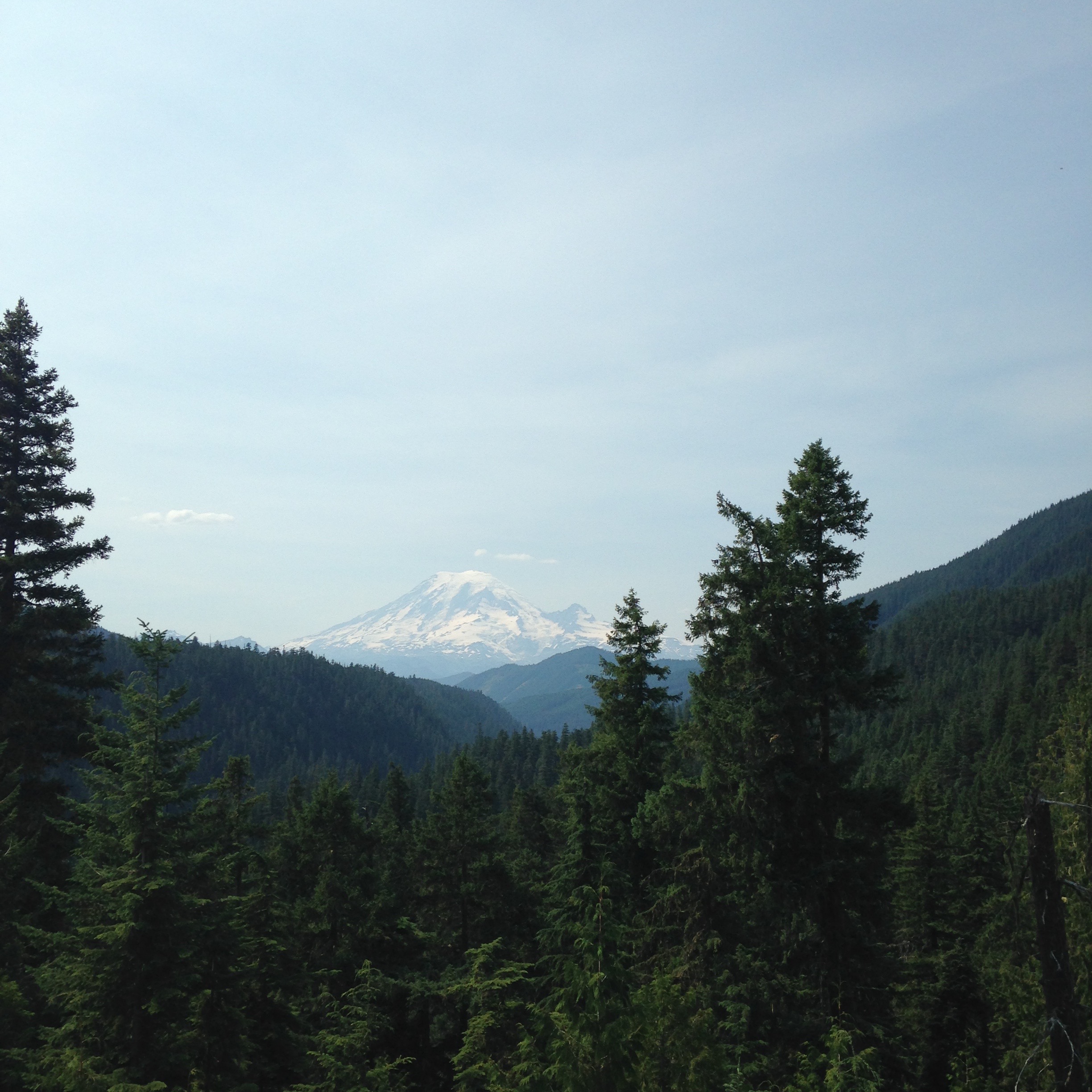
IMG_0459

“Beyond our ideas of right-doing and wrong-doing,
there is a field. I’ll meet you there.
When the soul lies down in that grass,
the world is too full to talk about.
Ideas, language, even the phrase ‘each other’
doesn’t make sense any more.” – Rumi

I’m not there with you, Rumi, but I can see that place – on the horizon, and beyond.

Some times, I have flashes of that field.  To my thinking mind, which is full of so many (unimportant) things, the field is empty.  To my thinking mind, the field is boring, and meaningless.

I know that place, that field, is there.  I can almost taste it.  My mind becomes restless with the thought; for every certain idea, another idea replaces it, in a nano-second.  My mind is restless, it is a place filled with words and opinions, and it keeps reaching for more.  Will it ever be full?  I think not.  In that place of certainty, there is right and wrong, there is good and bad, there are my values and the values of others, which may or may not agree.  What a place of judgment is the mind.  And, in a way, what a place of safety, that place of certainty.

But still – that field is there.  I know it, not with my mind, but with a deeper knowing.   It is an experience, not a thought, not a judgment, not something I know to be true, or right. Something there is, something there has been, something there will be… something…

**

The writings of Thomas Aquinas:  He was the foremost classical proponent of natural theology and the father of Thomism. His influence on Western thought is considerable, and much of modern philosophy was conceived in development or opposition of his ideas, particularly in the areas of ethics, natural law, metaphysics, and political theory.

Near the end of his life, Aquinas refused to write, after an experience of Christ.

Christ said to Thomas, “You have written well of me, Thomas. What reward would you have for your labor?” Thomas responded, “Nothing but you, Lord.” [49][50] After this exchange something happened, but Thomas never spoke of it or wrote it down. Because of what he saw, he abandoned his routine and refused to dictate to his socius Reginald of Piperno. When Reginald begged him to get back to work, Thomas replied: “Reginald, I cannot, because all that I have written seems like straw to me”[51] (mihi videtur ut palea).  (Wikipedia).

**

This I know:  all my doing, all my best intentions, all my “right” thinking, amounts to nothing in the realm of All That Is.  I cannot achieve this.  I cannot save enough to get it.  I cannot do enough to receive it.

Such knowledge is too wonderful for me, too lofty for me to attain.  Psalm 139:6



Uncategorized

What Work Is…

One thing I have learned on this journey of life is what work is – and what work is not.

I come from a family of hard workers. My father worked long and hard hours in the gritty, noisy, dangerous land of a steel mill. On weekends, he had a second job as the security guard in an apartment building that was home to professionals. My grandfather worked in a foundry. Uncles grew crops, picked in orchards, and raised pigs. I loved them all, as different as I am from them.

I grew up in a different time – the generation after World War II, those privileged years, and even though I come from working class, hard-working roots, my work has been of a different sort. I have been privileged enough, and smart enough, to get an education and to land a professional job right after college.  I almost did not make it through college; I dropped out in my senior year, uncertain about what I really wanted to do as I entered the adult world.  When I graduated, I carried with me a BA in English, that “jack of all trades” degree.  Still, I was the first generation in my family to go to college.  My parents helped that happen by giving me room and board – at home – while I commuted to university.

By temperament, I didn’t fit into my working class family.  From the time I was young, I was a dreamer, and I loved words.  Mom couldn’t understand why I didn’t “go outside” during the summer, why instead I spent  hours melted  into a chair, a book in my lap, my eyes in the pages, my imagination immersed in the worlds I found there.  She understood my reading, and encouraged it.  She didn’t understand my introvert’s ability to lose myself in what I read, although she was an introvert herself.  Sometimes, though, we read the same books and talked about the characters as if they were real, pointing someone out on the street, the character we knew so well!

I grew up in a different time, when the values of the 50’s, of the nuclear family and what that meant were being questioned and even discarded.  In the spring of my first year of college, universities were closed during the spring semester after demonstrations against Vietnam grew violent across the country.  I loved university much more than high school.  In a way, my life began then, when my books gave way to intellectual thinking and exploration.  I was made for that world!  I was a free-thinker, and I was also careful and uncertain about my own life, and so I did not explore much of the world outside my intellect.

My world opened up, I think, when I began to explore the inner, rich world beyond my senses.  In my 30’s, uncertain about how to really live my life, how to engage in relationships, how to be happy, I began to explore my feelings and motives.  I discovered the spiritual world, a fit for me.  I made an adventure of going to 12 step meetings, retreats, healers, and therapy.  I was motivated by my pain, which is truly the door to inner exploration.  Something about life as others live it isn’t working, and so the inner world beckons.

To me, real work is inner exploration.  I call it growth.  I have come to see that as we grow outside the bounds of all the restrictions we were taught were “reality,” and “truth,” we actually grow, we expand, not only intellectually, but emotionally, and in power.  My journey has been a deep journey of inner exploration, and I join so many other spiritual and therapeutic teachers of the world – Merton, Helen Keller, Jung – in that regard.  My journey has not been easy for me, but I am grateful.  I know what it is to be grateful even when the times of my life are tough.

My real work has led me to one place, only.  My real work has led me, simply, profoundly, and beautifully, to myself.   I am grateful that I have companions on this journey, because to have no companions at all would be lonely, so lonely.  Some of my former companions, those who I love still, have not taken the journey, and so I find my ability to be with them limited not only in time but in content.  In a way, I miss them.   I love them, still.

My real work has led me to relate my life to God, whatever God is.  I surrender the ego, when I can, and when I reach the edge – again, and again, and again… >>>>…

long-journey-summer-season-22333227

For one thing I am eternally grateful.  I am grateful that I have found my call, and that although it is a lonely call in many ways, I am grateful that there is a community of fellow journeyers on my path.  Some I will never know personally, but I know they have taken the journey:  Dag Hammarskjold comes to mind; I know he is a fellow pilgrim.  And I am grateful that this journey has opened my heart to the world, to the suffering of all other human beings.  My journey has led me to understand that we are all the same, inside, and that we are perfect as we are.

You, too.


Uncategorized

“Practice makes perfect!” – Miss Schmidt, 3rd grade teacher

chalkboard

“Practice makes perfect” was Miss Schmidt’s mantra.  Miss Schmidt, third grade teacher, white-haired and in her navy blue dress with white polka-dots, black shoes.  Thank you, Miss Schmidt! I got the message, internalized it, translated the message to my own liking (we all do that), and lived a long time trying to be as “perfect” as I could be.  Thank God, “practice makes perfect” only lasted so long, and then?  Then, it “fizzled” out in my mind, and in my life.

Oh – freedom!

The first time I challenged my wanting to get things right was in a class I took for several years:  “Aikido as Spiritual Practice.”  The class was a combination of movement and dharma talks (The Intuitive Body: Discovering the Wisdom of Conscious Embodiment and Aikido [Wendy Palmer]).

We started each class on the mat, after we had entered the room, removed our shoes, and bowed to the gathering class, teacher and students.  Barefoot, we faced the mirrored wall, our teacher facing us, and moved together through a series of simple practices.  For some reason, “let’s practice,” the words spoken by the teacher as she led us through our warm-up, was in my mind on that one particular day.  I moved awkwardly, furtively watching the teacher and the other students.  Was I moving correctly?  Why did she look so graceful?  Can I do it like him?  Above all, am I doing it right???

I felt – awkward.  Check this out for yourself:  feeling awkward is a heavy thing.  It weighs you down.

Then, something snapped or switched or jerked in my mind.  I stopped watching the others, and I began to “practice” from the inside, rather than the outside.  I began to feel the movements.  I was free!  In my mind, I was 5 years old again, fully myself, my little girl legs dancing and thrashing, and it all coming out – perfectly!  I could feel that little girl, sense her insides, my insides.  I was free!

I have not forgotten that moment, that moment in time when I broke free from Miss Schmidt’s mantra:  practice makes perfect.  I expect that in many ways, Miss Schmidt was right.  But we all have our own translation of what we hear, of what comes into us, of what we remember, and value – or remember, and discard.

Practice means that:  simply practice.  When life is practice, we become free.  When life is practice, there is not getting it right or wrong.  When life is practice, there is movement.  When life is practice, we can move from one practice to the next, allowing what does not work, what has not worked, what will not work to freely move along.

We talk about spiritual practice.  Spiritual practice is like that, too.  Practice is only practice, not perfection.  There’s a  difference.  There are no perfect feelings, no perfect objects brought to completion.  What is perfect quickly loses its shine, and that’s part of life.  So – practice.  Don’t practice to become perfect.  Don’t wait for the perfect time.  Don’t expect to not have feelings that aren’t “perfect,” or “good,” or positive.  Just practice.

Make of your life, this:  practice.

Uncategorized

Think of your life as a journey

700e6d9169e5ff416de09a054b2531c6Think of your life as a journey.

What do you take with you as you travel?

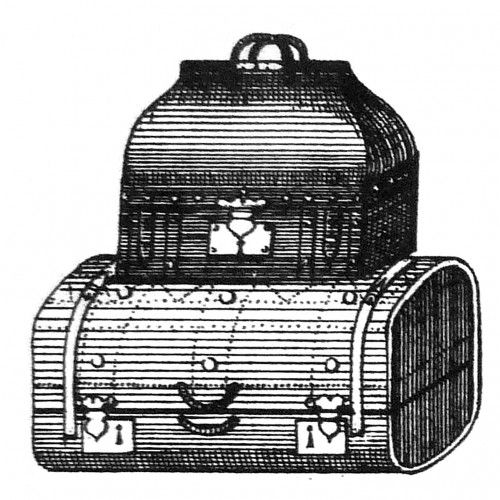
In earlier years, I think I carried way too much luggage with me when I traveled.  Now, I want to travel lighter.  In earlier years, I carried all the worries, all the troubles, all the made-up anxieties I could with me.  I didn’t set those things down.  I carried them with me, whether they belonged to me, or not.

As the years have passed, I have set many of those heavy things down as I have journeyed.  I set them down, and as I looked at them one last time, I saw that some of those things did not belong to me at all – never had!  Still, they had been a weight in my luggage, and so I noticed when I set them down.

Some of the things I carried belonged to my mother, and my father.  Some of the things I carried with me belonged to the older ancestors, to some whose faces I had never seen, whose names I do not even know.  I carried them with me, and I set them down.  Some of the things I carried with me belonged to others, not to me at all.  Somehow, I had snagged these things on my coat or in my hand, and so, I threw them into my luggage, along with all the rest.

As I get older, I not only want to carry less.  As I get older, I do not have the strength, I think, to carry as much.  And I don’t want to carry all that luggage, either.  I try to pack light now.

When I think of my life as a journey, I see a trajectory.  I look back, and I see the trajectory that was there, all the time, although I was not able to see it at the time.  I see that I could not take one step that truly led me away from my path, although sometimes I wondered.  I can see myself, in my younger years, wondering, wondering.  Am I on the right path?  Is this the way?  Is this the way, to what?  I see myself, younger, stopping often, wondering, confused, a question mark floating in the air above my head.  Wondering.

Some of the things I carried with me belonged not only to the ancestors, but to the others whose journeys intersected with mine.  Sometimes I was was confused, and I thought the things that belonged to them belonged to me:  their shame, their anger, their own confusion, their own maps for their own paths.  I set those things down as I came to travel lighter.

The things I carry now are so much lighter, and I choose more carefully, about what I will put into my luggage.  I don’t need all those things.  I need less, much less than I thought I needed when I was young.  I don’t want all those things.  All those things, I see, do not make me shine any more brightly; in fact, all those things cover, like a shadow, me – the real me, the one who has been on this journey, all along.

Sometimes I’ve been lonely on the journey.  Now, I see that the loneliness was good.  Sometimes I’ve been tired, for a long, long time.  I suppose that carrying all that heavy stuff made me tired.  Sometimes I have allowed my confusion to convince me that I must have made a wrong turn.  No, no, I am still on the journey, another part of me offered.

Now, I find, the journey has led me to this place.  The place is me.  That’s all.  Simply me.  Not much here but me!  And me – I have been me, truly, all along.  I see that I had to set those things down along the way, because they did not serve me, did not serve me at all.  Still, I had to make this journey.

The journey of return – to me.

“God saw all that he had made, and it was very good.” –  Genesis 1:31a, NIV

Uncategorized

“feelings, nothing more than feelings…” – Lou Lou Gaste’ and Morris Albert

emotion-clip-art-3

In 1989, I traveled to the then-Soviet Union to honor the 1000th anniversary of the Ukrainian Orthodox Church (The Church of Ukraine is an autonomous Orthodox church whose primate is confirmed by the Russian Orthodox Church. Its history extends to the introduction of Christianity into Kievan Rus’ with the baptism of Prince St. Vladimir of Kiev and his people in 988, known as the Baptism of Rus’.)

On that journey, I was privileged to travel in both Ukraine and Russia, to Kiev and Odessa and to Moscow and (then) Leningrad.  At that time, the U.S.S.R. was under the leadership of Mikhail  Gorbachev, and change was happening under the policies of glasnost and perestroika.  These changes were most apparent to me as an American of Ukrainian heritage when I traveled in Kiev and Odessa.  In those cities, the Ukrainian tour guides were empowered by the policies to speak about Ukrainian national heroes, and to show the travelers statues of these heroes.  Distinctions were made between Ukrainian and Russian signs and words.  It was an exciting time for the people in those places; in just a few years things would change dramatically.

One of my most distinct memories of the trip was that the song “Feelings,” which had been popular in the U.S. sometime before the visit, was a nightly “theme” song in all of the hotels in which we stayed.  Our group had most meals together in the restaurants of our hotels.   It was a matter of course that each restaurant was connected to a piano bar.  And so as we ate our Eastern European meals, we were serenaded, night after night, by some singer singing the words:  “feelings, nothing more than feelings,” during this time of tumultuous change for the Soviet Union and its people.

To me, that time in world history will always be accompanied with the song:  “Feelings.”

Times of change are always time of deep and powerful emotions.  For most of us, change can be difficult, probably mostly because of the feelings we experience.  Some of the feelings we have may be the same feelings we experienced during times of change when we were children.  And so those feelings bring with them other feelings – feelings of fear and shame – and powerlessness.  Change is a time when emotions sweep over us.

Some people say they like change, and I am certain that is true.  At the same time, these folks will not have any fewer of the feelings that arise during times of change.  Change always involves some grief, or loss.  Even though we may long for a change, and rejoice when that change happens, we are not exempt from the feelings that are companions to change.

What do we do with these feelings?  Culturally, we are a people who are more comfortable sharing our thoughts and our judgments than we are our feelings.  That’s just the way it is.  And so, it is also true that it is a “counter-cultural” to honor our feelings, to talk about our feelings, to reflect on our feelings, to have our feelings, and to accept our feelings as part of the whole picture of who we are, and to what we bring to the table.

In my experience, it takes practice to “honor one’s feelings.”  It takes years of practice!  And in that practice there is great freedom.  There is the promise of wholeness, there is the promise of remembering, and there is the process of grief.

I’m not an expert on feelings.  I have learned, in the course of my life, that it is healthier for me to “honor” my feelings – that is, to simply acknowledge my true feelings to myself – than to ignore my feelings.  I don’t have to shout out my feelings on every occasion.  What I have learned/am learning is that my feelings are road-signs, or markers, to me.  They are information for me.  No one has the power to  take them from me, and no one has the power to hurt my feelings.  I am the one in charge.  In a sense, I am the “adult” in the whole sense of who I am.  I am responsible for listening to my feelings, and for learning what each feeling may mean to me.

There is great power in learning this about my feelings.  I’ve discovered that.  I find that when I invite my feelings into my analysis of any situation, I make decisions and choices that are much more holistic – healthier for me and for others.

Many of us did not have our feelings reflected back to us as children.  In other words, we did not have a real adult who, when they saw what we were experiencing, simply “honored” our feelings:  “oh, you are sad now, aren’t you?”  If we had, I’m sure the world would need many fewer therapists!  And so, it is our journey, our need, and our growth to begin to reflect our own feelings back to ourselves, to be the adult we need, for ourselves.

“Feelings, nothing more than feelings” becomes part of the information in any moment, in any situation, in any happening, in any event, and in any relationship.  Are you with someone who hurts your feelings, again and again?  Do you need to “unfriend” that person?  If you do, it’s about you, not about them.  They are simply not a good fit for you, at this time, and in your life space.

I can say that one of my greatest life learnings began when I began to “honor,” to notice, to learn from my feelings.  And – I am grateful.