nostalgia

“Roll out those lazy, hazy, crazy days of summer…

those days of soda and pretzels and beer…”

Except for the beer, I did roll out those lazy, hazy, crazy days of summer in the Midwest. Here in Northern California, summer arrives gently, the rainy winter (hopefully a rainy winter in this often drought-parched place) giving way to the longer days of spring and summer.

In retirement, I’ve had the luxury to notice the lengthening days, to note the time of sunrise and sunset, to watch the sun setting over San Francisco Bay through the giant redwood trees to the West of our house on a hill. Having grown up in the harsh climate of the Midwest, I have not forgotten the preciousness of summer days and nights.

After the Fourth of July, summer seemed to disappear quickly in Wisconsin, and the hot days of July and August gave way quickly to the cooler evenings of September. By October, there might be a frost. Summer was precious, and I miss that preciousness, that sense that time is passing too quickly, that these blessed days will not last.

I loved the East Side of Milwaukee, where I went to university at the University of Wisconsin-Milwaukee, often driving my Dad’s ’67 Bel Air two door hardtop along the shore of Lake Michigan from the lower East Side to Capitol Drive. I thought those summer days would go on forever, and I expect that University didn’t last long enough – for me. I liked being a student, I liked the freedom of being a student, I liked choosing my own classes and walking across campus from one brick building to another.

And while I sometimes recall the winters – the cold winds, the blowing snow, the icy streets, the treacherous driving – I mostly remember with sadness the luscious summers of that time.
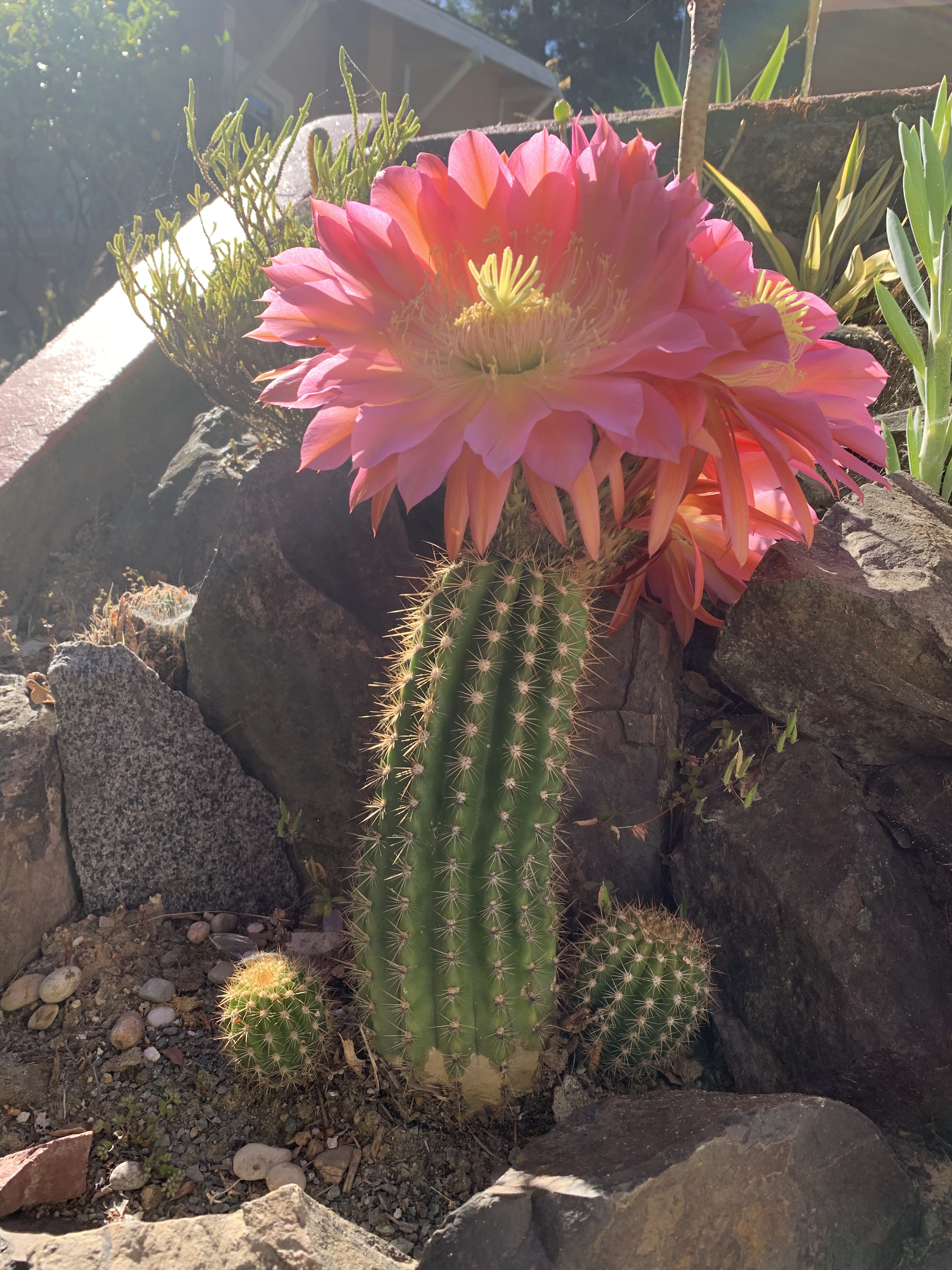
Budding cactus, 4454, Oakland, Spring, 2024 Photo by Mary Elyn Bahlert
memories, nostalgia

Fireworks

We’re coming up on the Fourth of July. The Fourth comes as just another day here in Northern California, so the Fourth has come as just another day for me for many years now, many more years than when the Fourth was a day of spectacles.

Milwaukee had an old-fashioned Fourth of July parade, downtown. Even when I had graduated college and was living on my own, I made sure to make it the parade along Wisconsin Avenue, the parade route lined with mostly families, little children holding flags, their eyes wide as they saw another float following the one they’d just seen, filled with loud music, animals, and waving strangers. I loved the Fourth of July parade, in particular the “20 horse hitch,” a team of horses whose driver held all twenty leather reins in his massive hands, his eyes on the team, who had arrived in the city for the day from the Circus World Museum in Baraboo.

One year, I was sick on the Fourth of July, and I watched the parade from my old black and white television set. I didn’t want to miss it.

A favorite memory is a relic of the Fourth of July: laying on a blanket in the grass on a in hill Washington Park, also home to the Milwaukee County Zoo – which has since moved, many years past. I was little. I lay with my Dad to my right, and as the night came on, and deep dusk surrounded us, we watched the fireworks flashing overhead. Dad “oooohed” and ahhhhed” at the sight, and from time to time, I looked over at him as he enjoyed the fireworks – apparently as much as I did. I had a safe feeling, then.

The Fourth of July passes like just another day here in the Bay Area. A few times, when we heard the booming begin in the distance, Jeff and I climbed to the top of a small hill on the strip of land we call The Panhandle, leading from our fence to the next street, and we looked at the fireworks flying across the San Francisco Bay, from cities up and down the Peninsula. I can’t replay the Fourth as I remember it from the Midwest, though, where summer is so precious, and when the Fourth means that in a month or so, it will be time to think about getting back to school.

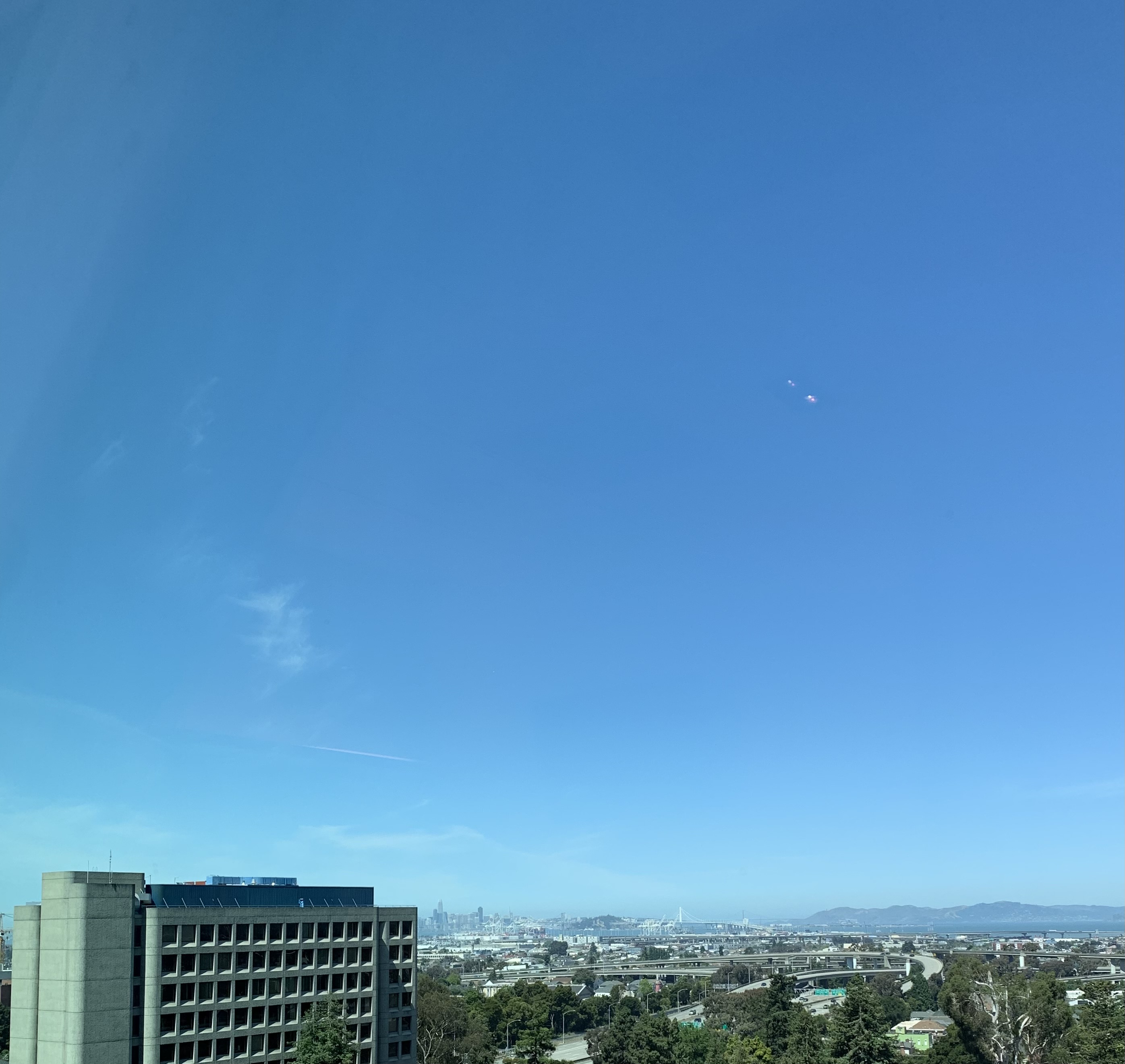
San Francisco Bay from Floor 9 of Kaiser Hospital, Oakland, 6/24, photo by Mary Elyn Bahlert

reflecting, Uncategorized, wisdom

Forever 17

When I was a young teenager, I began to long for the days when I would be 17. I had a “calling” to 17. Of course, 17 came and went, and my life went on and on until I am writing to you now, from the wisdom years, the elder years.

When I walk down the street now – and I walk often in my “walkable” neighborhood in Oakland – I know that I am a senior citizen: one young woman, pushing to get past me in a parking lot walkway, called me: “granny.” OK. I’m old now, or elderly, or “getting on in years,” as my Dad used to say. Jeff once heard the couple next door – overheard them over the tall fence that separates our yards – tell a friend that there was a “nice older couple” next door.

But I know that I’m stuck at 17 – inside. I’ve done the work: years of therapy, growing pains, coming to terms with my family of origin, self-help groups, classes in personal growth. I’ve done all that; maybe I’ve done too much of “that.” So I’ve done the work I needed to do to become an adult. I’m grateful for the work I had in life that required me to grow, to always grow, to look deeper into myself to find who I am. I’m truly grateful.

And I’m still 17.

Many years ago, I gathered a group of women to a meeting room in the church where I was Pastor, to see our way forward to begin a new women’s ministry. I started the group by asking everyone to think about how old they were inside. Around the table we went, listening to one another’s answers, nodding at what we heard. An “older” woman – probably about the age I am today – said: “I’m 18.” She looked at me. I looked at her. Yes, I thought, she is 18. I’d found a friend!

Sometimes now when I’m with friends, I wonder how old they think they are – inside. Through the years, I’ve asked. And the answers they have given resonate with who they are to me.

I haven’t asked him, but my husband is older than I am, by a few years. I know he thinks, probably even knows, that he isn’t, but he is. He’s in his late twenties. And I’m 17 – although I might not look it!

How old are you – inside?

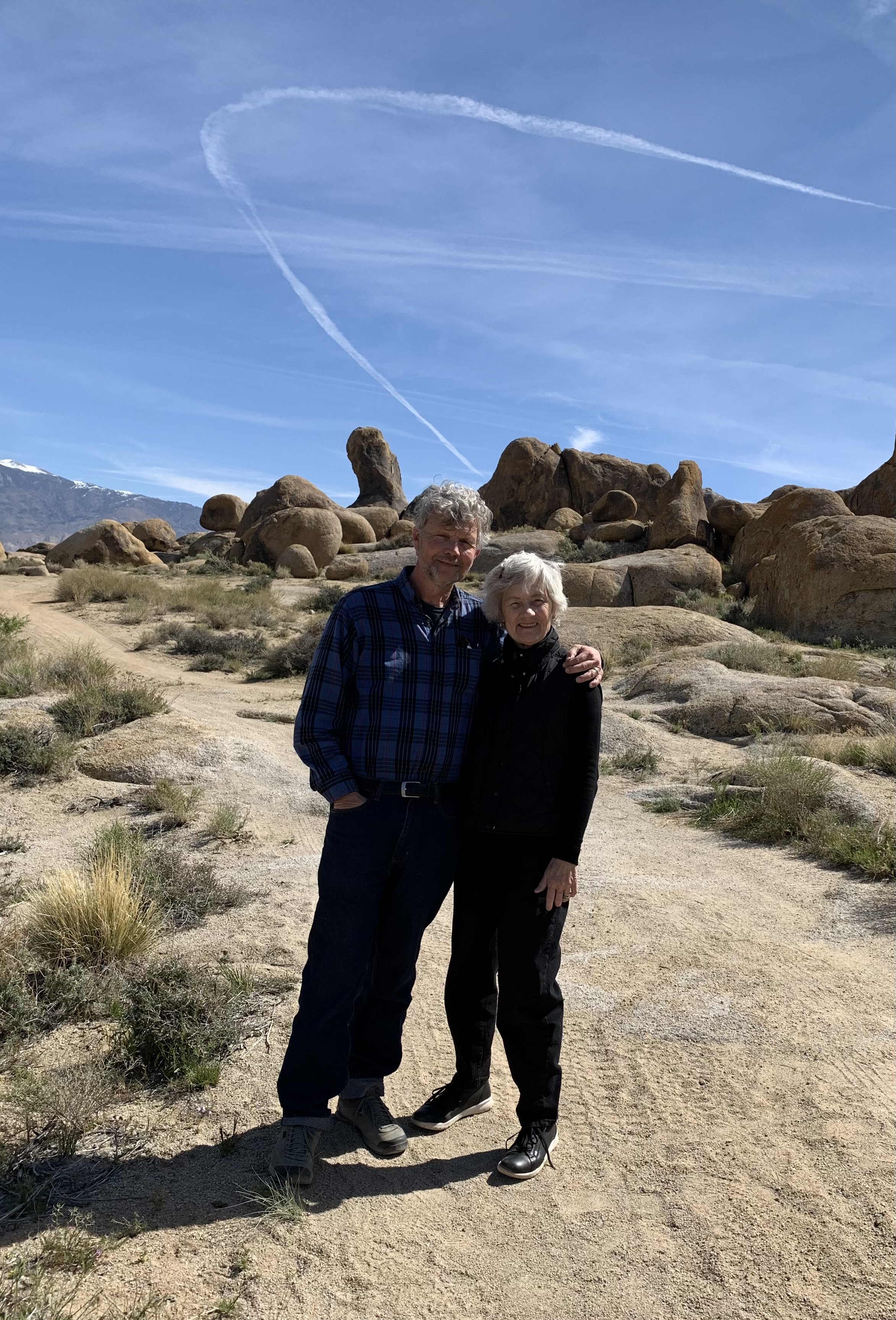
Jeff and Me at the Alabama Hills, Lone Pine, California, April, 2024

beauty, reflecting

Holy places

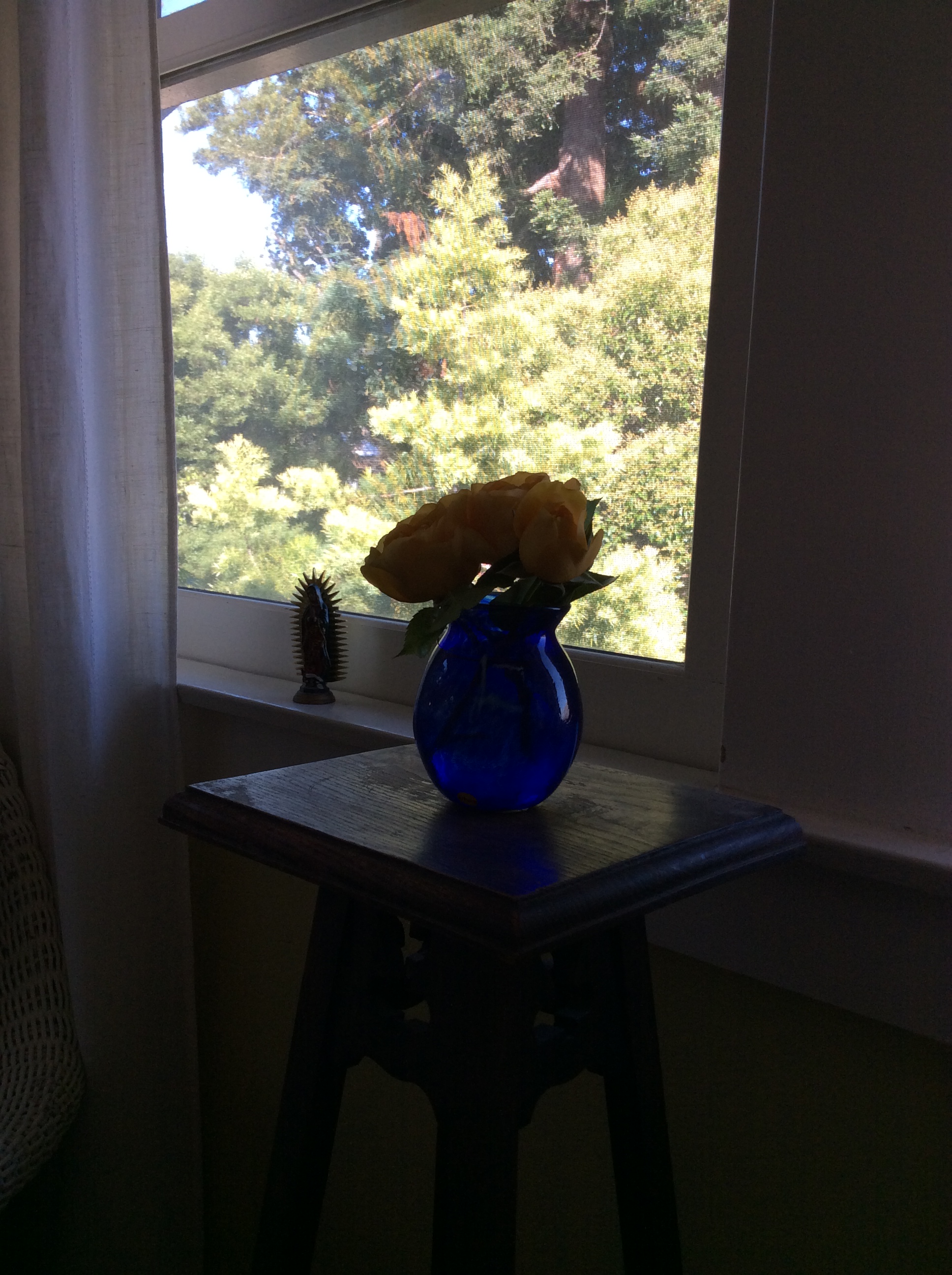
I am surrounded by holy places: shelves that hold cards, small enough to carry in my wallet, a picture of a saint on one side, the prayer of the saint on the other. On the window sill next to my bed is a rosary, gifted to me by a friend, a found rosary she discovered in a second hand store. On the walls of my little study are holy pictures: Mother Mary, holding a child, a copy of a painting created by a dear friend. A favorite: Mary, the Untier of Knots. I keep several of her in my kitchen drawer these days, to send them as gifts: to a friend who is undergoing treatment for cancer, to my cousin Rudy and his wife, Mary, who say the rosary together every day. On a ledge close to the ceiling of my living room, Guadalupe looks down on me and Jeff as we sit together in the morning, sipping our first cups of coffee. Sometimes as I empty out my desk, I find other saints; I find a stone given to me by a friend, I find a few words on a worn, ragged piece of paper – words of a poem: “I love Jesus, who said…” On my shelf above the bathroom sink lies a small cross, decorated with red glass, a gift from a friend who I see so seldom now. Like my rows of books of poetry, each of these items, some I have carried with me for many, many years, is a prayer said for me, spoken silently or not at all, a prayer on my behalf.

For each prayer, I am grateful.

Altar, photo by Mary Elyn Bahlert

Uncategorized

Little, little, little, little,

little Anali.

In the fall of 1990, Jeff and I traveled to Guatemala to meet for the first time a baby girl, Anali, whose mother had given her up for adoption, unable to care for her baby girl herself. Many women living in poverty in Guatemala had taken the same path with and for their children.

We returned home and waited until the proper paperwork was complete. Every day in our home in Tracy, I worked along with Jeff in the church we pastored together, and I told the story again and again of our meeting little Anali to curious folks in the congregation. They were waiting, it seemed, along with us.

And so we met the attorney who would facilitate the adoption of Anali – and many, many other children. We spent Thanksgiving that year around the dining table with other prospective parents – mothers-to-be from the United States, also in the country to meet their adoptive children

And every morning, as soon as I arose, I carried with me in my mind the baby girl we had met. We prepared a room for her in the big parsonage, and we told our friends the story of our meeting.

One day, we received a phone call from Guatemala with the news that little Anali’s birth mother – her mother – had decided to not give her baby up for adoption, that she had reclaimed her child. At the time, Jeff and I didn’t seem to have time to process the grief we felt. We set about completing forms again to receive a child. This time, we didn’t travel to meet the baby again. We waited at home for the news that our baby was ready to come with us to the United States.

A second time, the baby’s birth mother reclaimed her child, and so we took new adoption papers to the courthouse in Stockton. The day I drove to Stockton to deliver the papers, I felt as if I held a heavy weight in my arms. A woman from the congregation – whose adult son had disappeared many years before – kindly rode with me as I traveled to complete the transfer of papers – again.

After we received news that the third baby girl was not coming, I did not carry another heavy load of papers to the Courthouse in Stockton, and when Jeff and I announced to the congregation that we would be leaving that spring, the woman who had ridden with me to Stockton – came up to me, grief in her eyes, and said: “I can understand wanting to leave a place where something bad has happened to you.”

*

I remember distinctly the morning after we had received the news that little Analie’s mother had reclaimed her child. As soon as I rose from bed, and as I prepared for the day, a thought came to my mind, a thought I’d held for the months since we’d met the beautiful baby girl we’d awaited. “Little, little, little, little, little Analie,” I repeated to myself. And on that morning, when I began to recite the lovely refrain, I stopped, noticing my thoughts. Usually, I followed the refrain with images of the two of us as we grew together. I reminded myself that little Analie would not be coming to live with us. That was that.

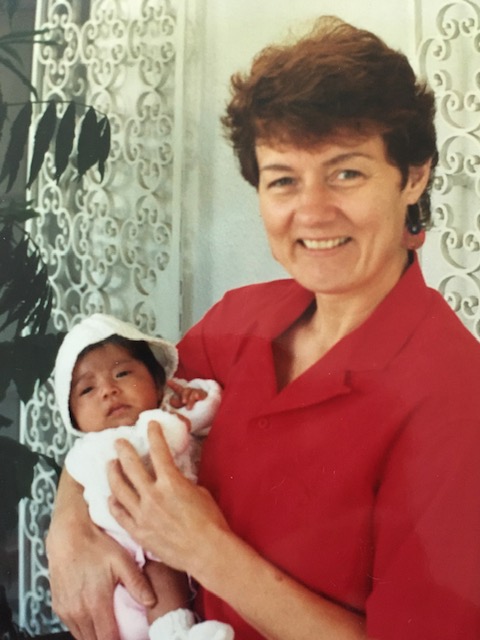
Little Anali and me, 1990, Guatemala City, Guatemala