Uncategorized

Four Rules for Living, #4, Don’t Be Attached to the Outcome

The anthropologist and spiritual teacher, Angeles Arrien, is credited with these four rules for living:  show up, pay attention, tell the truth, don’t be attached to the outcome.

***

Not one of these “Four Rules for Living” is easy.  Simple maybe, easy enough to understand (we think we understand, anyway), but not so easy to actually live.  If we are honest, and if we are looking to live a life based on our deepest self, we know these rules are not easy.  We find them challenging.  We know them to be a daily practice, a hard practice of letting go.  We know we do not choose to live our truest Self – instead, we fall into that Self, by letting go of ego.  Hard practice.  Hard – and life-giving, ultimately.

***

Don’t be attached to the outcome.

Now, this is a tough one! “Don’t be attached to the outcome.” Do your part, speak your truth –  and let it go. In other words, do your part and trust. In other words, do your part and watch what happens. In other words, do your part.

This matter of “letting go” is so often misunderstood. We do what we can. Sometimes what we choose to do will have noticeable results, and sometimes what we choose to do won’t make a significant ripple. What we “let go” of is our ego-involvement. “Let go” of controlling the outcome. Let go of your ego-attachment to what happens.

Fall into it.  Don’t swim against the tide of your ego.  Fall into it.  And what you will discover is this:  when you fall, you fall into your Self, your True Self, the Holy.

So much of life energy has been wasted – and destructive – by forcing itself on others.  Tribes force themselves on other tribes, nations on other nations.  We are critical of Russia’s military action in Syria; Russia is critical of the military action of the U.S. in Syria.  We see this waste of life energy in our own lives, in the lives of others, and we see this waste of life energy in the world.  And we know this:  life is not honored, truth is not honored, life is not nurtured by force.  And yet – we are all complicit in this waste of energy.  Not one of us is better than another.  We all act destructively, even doing so in the name of love, or honor, or nation, or religion.

If we’ve each done our work, the work of showing up, paying attention, and telling the truth, the possibility is that our work will succeed, although maybe not in the way we’ve imagined.

So often when we have ego-attachment to our actions and choices, we look for particular results. We think we’re in control, so if things go as planned, they’ll go the way we expect them to go. In that case, we also think we know what is the best way for things to work out.  We are strategists, and life does not allow for strategists!  To believe so is a kind of insanity!

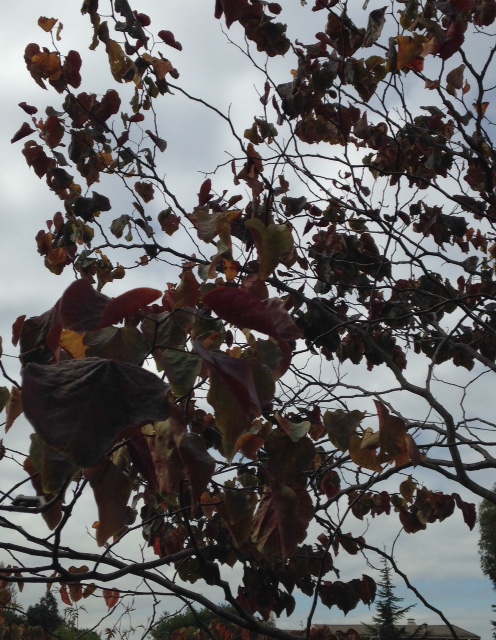
Trust is the word here. Trust as a tree trusts the earth it stands on. Trust as if your life depends on trust. Trust as if you understand that all the control in the world, all the care-ful-ness in the world, cannot assure the results you want. Trust that there is Something or Someone or Some-Other out there that is in charge of the results.  And that Something or Someone or Some-Other is not only “out there,” but animating you, bringing you to life – as you let go of your attachment.

This is the hardest work in the world.  More than ever, our world needs  people who have grown up, who have done their real work – which is the work to become adult.  And that work is the work of letting go, of “don’t be attached to the outcome.”

Trust as a tree trusts the earth it stands on. “Don’t be attached to the outcome.”
Uncategorized

The Cat Danced

IMG_0542

The small, black cat danced –   showed off her white bib!

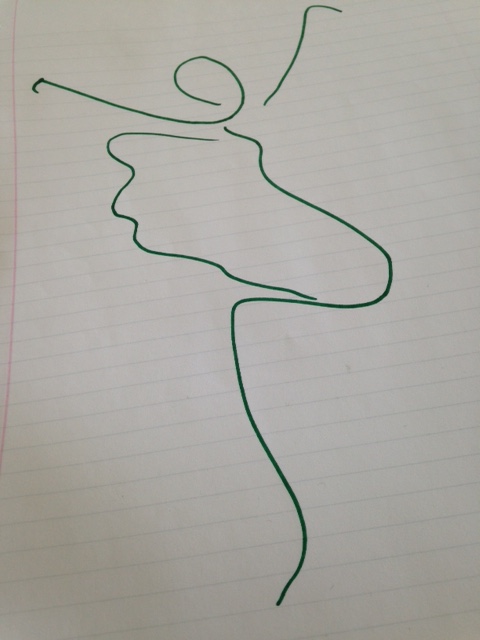
She danced on her back paws, twirled for her dinner.

I watched with joy from the window

as the little black cat danced on

the day before her death.

Witnesses say my mother danced, too,

days before her death.

Yellow with jaundice, unaware of  limits,

she stood – and – hands on the walker that guided her steps,

she danced!

***

I love to dance.

I too, face the day of my death.

Don’t you?

And, won’t you dance, too?

***

An image I have carried with me for a long time, the little black cat that danced the day before she died.  And I, I was a grateful witness to this small joy!

Uncategorized

Four Rules for Living, #3, Tell the Truth

The anthropologist and spiritual teacher, Angeles Arrien is credited with these 4 rules for living:  Show up.  Pay attention.  Tell the truth.  Don’t be attached to the outcome.

***

Tell the truth…  that’s something we were taught as children, wasn’t it?  I know I was.  I remember vividly one of the first times I did not tell the truth – to my mother – as a child.  I was playing with neighbor kids, far enough to be as independent as I could be at that age – about 5 – and close enough for Mom to keep a watchful eye out the front screen door that led onto the porch on our upper flat.  At some point, I slapped a little girl in the group.  I don’t know if it is a memory trick, or if it happened this way, but I saw my mother at that moment, checking to see that I was safe on the street.

When I got home that day, Mom asked me whether I had hit one of my playmates.  I said no, that it must have been another little girl who looked just like me.  Mom  must have been stunned – at my creativity and at my sense of being right – because I saw – and vividly remember – a look of enjoyment and understanding cross her face.  Nothing more was said.

We assert our independence as children by not following the rules our parents taught us, and if we are on the path to grow into conscious adults, we continue to assert our independence from our parents, over the course of our lives.  And as we assert our independence, hopefully, carefully, and with great discernment, we discover what is true, for us, for who we are, separate from our parents and what was true for them.

Telling the truth is not easy.  First of all, it means that one has come to know that we often do NOT tell the truth.  We remember and speak what was true for others.  We hide our feelings.  We ignore feelings we do not want to feel – are in the habit of not feeling – and so we cannot tell the truth of what we feel, in this moment, now.

Sometimes, if we are on a journey, and for awhile, we say someone else’s truth, because we do not yet know our own.  “I have to be positive,” we say to ourselves, and so we ignore what is true for ourselves and instead say what would go over well with our latest self-help guru.  Or we quote scripture, without having questioned its meaning, without having considered how and if it might apply to me in my own circumstances.  It’s easy to get stuck here, to not grow any more, because we think we have found “truth.”  All along, we still do not know what is true for ourselves.

In my own life, I remember coming to the place where I began to know and to feel – as if for the first time – my own feelings in response to something that happened.  I remember learning that I had to trust what I knew in my body as much – perhaps even more – than what my roiling thoughts were telling me.  I remember that when I first began to truly know what was true for me, I often could not say that truth without raising my voice.

Sometimes, I’m like that now.  Maybe I have to speak loudly enough so that I can hear!

But sometimes now, I speak truth that is truth to me, in this moment, in this circumstance, with this person, in this particular situation.  What is true is not some long-remembered “rule” from my childhood, or my religion, or someone I admire.  What is true is what is true for me.  I have learned that I can speak what is true quietly – very quietly – because what is true is what is meant for me, only.

And when I speak my truth, I can walk away without caring about how the other person responded.   Telling my truth is not about changing someone else’s mind.  When I “tell the truth,” I am complete.  I am not concerned about changing someone else’s mind – they have their own journey to the truth for themselves, after all, and I cannot know what that journey may be for them.  I am complete simply because I have honored truth, my truth, I have spoken it well, and I am complete.  When I speak my own truth, I respect myself, and I respect the other.  In fact, if I have honored my own truth, I can listen more fully to someone else’s truth.  I can listen for the deeper truth beneath the words, as I have done for myself.

***

I love these 4 rules for living.  I know it is not easy to live these rules.  Sometimes in life, I come across some idea or some short thought that fits.  I like to say that one could live their whole life, turning that thought over and over again, trying it on, seeing when it fits and when it does not fit.  These 4 rules are like that for me.  This is not the only truth I have held inside, turning over inside myself like one turns a stone over in the palm of one’s hand; one favorite for me, that I have returned to many times is this:  “give thanks in all circumstances.”

But these 4 rules for living are good, solid rules.  I like them because they are not easy.  They are not easily won, as if they can be honored without questioning our own thoughts and our own lives, as if they can be lived without hard work.  But they are good rules.

Next, “Don’t be attached to the outcome.”  (oh, noooooo!)


Uncategorized

Four Rules for Living, #2, Pay Attention

Show up. Pay attention. Tell the truth. Don’t be attached to the outcome.

FullSizeRender

(pay attention to the passing moments of this season, summer becomes autumn…)

Pay Attention

Pay attention means “pay attention” to what is. To “pay attention” is to see things for what they are, without judgment. Someone new or something new –  may signal something wrong – or not.  Someone missing may mean something is wrong – or not.  A change in the way things work may mean something is wrong – or not.  “Pay attention” means only that: to see what is there, to give your life active attention – to what is, without categorizing it as “good,” or “bad,” but as it is.

Our minds fall easily into the trap of seeing what is “right” or “wrong.” Both are sides of the same coin. If we have done the work to “show up,” then the natural outcome will be that we are able to “pay attention.”

See what’s there! Notice!  Observe your life, your surroundings, from moment to moment.

Surely this is easier said than done, for all of us.

***

I love confession scenes – in books, in the movies.  One of my favorite confession scenes takes place in the movie, “Moonstruck.”  Cher plays a young woman who becomes infatuated with the brother of the man she is engaged to marry.   After a lovely date with said brother, Cher awakes to find herself in his bed.  Still engaged to his elder brother, she promptly goes to confession.  Although she sits behind the traditional barrier between herself and the priest, both she and the priest know that this priest has known her for her whole life; he is her parish priest.

The young woman begins her confession, naming a list of everyday happenings, like “talking back to her mother.”  She speaks as quickly as she can, and she makes sure she throws into the mix of sins, “I slept with the brother of my fiance.”  She rapidly continues, not stopping for breath.  But the priest has been paying attention!  He returns to that hidden sin!

Then, he says, simply and with kindness:  “Reflect on your life.”

The priest’s own attention turns the young woman’s attention back on what needs to be attended to in life.  Pay attention! – he could have said.  What are you doing?  What does this mean about your life, about who you love – and don’t love?  “Pay attention!!!!”  Stop what you are doing long enough to  pay attention to what it is you are doing.

***

“Pay attention” is not simply another rule for living.  To pay attention may be at the heart of what is needed, now, for your life, for my life, for the life of the world.  “Pay attention!” we say to our lawmakers.  “Pay attention!” we say to our leaders, our friends, and – most whole-heartedly – to ourselves.

One of my neighbors works all the time. I never see him. He’s got important work, I know. But as far as being a neighbor – well, he’s hasn’t shown up for a long time! When an ambulance drives, siren shouting, in the neighborhood, others “show up” to “pay attention” to what is happening. Which home is the ambulance for? Is there something that can be done for the folks in that home? Who will talk to the paramedics to see if someone can be called?  How can my neighbor pay attention if he is preoccupied with “life,”- with important things – and if he cannot even show up?

How can I do this?  Or you?  Or any one of us?

And so it follows:  show up – pay attention.  (Simple, but not easy… another practice for our spirit…)


Uncategorized

Four Rules for Living, #1: Show Up

The anthropologist and spiritual teacher, Angeles Arrien is credited with these 4 rules for living:  Show up.  Pay attention.  Tell the truth.  Don’t be attached to the outcome.

Show Up

It’s easy to show up if you think it means you only have to be present in body. Yes, that’s easy. We do it all the time when we’re preoccupied with family issues at work, or when we wake up in the middle of the night thinking about a conversation we had the day before. We’re there “in body,” but we’re not really “there,” we haven’t really “shown up,” for our work or for ourselves.

Show up. Be present. Be there, now! See what’s in front of you. Feel what you feel. Show up for yourself in order to show up for others.

How do you “show up” for yourself? My first thought is that this takes work. “Showing up” means letting go of everything that isn’t working for you now. For example, how often do you react to someone else the way you reacted to your mother or father when you were 5 years old?

Are you working too hard in order to not pay attention to the nagging feeling you have about life?  Do you still live by the rules you were taught as a child, without ever questioning whether those “rules” are valid for you, for your life, for your times?  Are you drinking too much, or even every day? Are you letting your health go?  Are you too busy to connect with others?

The real work of life is to learn to let go of those things that don’t serve you now, and haven’t served you for a long time. If you’re preoccupied most of the time, then you have work to do. Maybe you need to talk to a trusted friend about what’s troubling you. Maybe you would be helped by talking to a therapist. Maybe you need to take some time alone to get back in touch with yourself and your own needs. Maybe you need to get up and move a bit!

Show up for yourself.  Breathe.  Notice your surroundings.  Notice how the light falls on the walls  of your room.  Notice how the light changes.  See what is outside your window.  Show up for this moment, show up for your surroundings.

Show up. The world needs some folks who are adults, who respond to life and its ordinary emergencies with clarity and presence. If you haven’t done the work, then our world needs you to do the work. None of us is perfect, but we all have work to do in order to “let go of childish ways,” to take on the ways of being an adult.

One of the important practices of life is to show up. I remember keenly – and with great fondness – those friends who have been there when there has been a loss in my family. I remember a good friend walking with me from my mother’s grave on the day of her burial – in the Midwest, in February – telling me that I had a wonderful family. I will not forget that my friend had shown up, nor will I forget that she shows up – again and again.

Moments like that one at my mother’s grave are the moments that remind me to show up. For me, to show up is a kind of practice, a way of being an adult, a true act of presence.

Are you showing up? Are you present when something important happens? Are you present for the important people in your life when they need you? Are you present when a transition, a turning point is being celebrated?

And, deeper:   when you show up, are you really, really there???!