Uncategorized

Me and the Cat

Sometimes, I lay on the grass in the yard, near the back door. Before I do this, I open the kitchen door wide. Then I call the cat, LiLi, who spends most of her days sleeping on the yellow quilt on our bed. She never fails to jump down from the bed, down the five stairs from the bedroom into the hall, through the kitchen, to rush out the back door to join me on the lawn. As she comes to sit with me, I watch her from the ground, my view of the earth close to hers.

LiLi is not an affectionate girl, but for a few minutes as we lay on the grass, she rumbles next to me, leaning in just so – just so she is in the shade that my arm forms. It seems to me that we must both enjoy the same things in those moments: the smell of the grass, watered for a few minutes before dawn, the sunshine, and the shade, the good company of another being.

I almost hold my breath when she’s with me; soon her nose is moving, down, down, down to the earth, and her eyes narrow into slits as she surveys her surroundings. She moves slowly, but she crawls away, her body close to the ground, her nose down, to the bushes a few feet from where I lay. Someone interesting must have visited that spot during the night, because she spends a few moments sniffing. Then, she places one foot gingerly in front of her, then another, and she moves into the shadow of the rose bushes or the rosemary bush.

She doesn’t come back to me. I’ll have to wait for her another day.

*

I think about these moments with the cat, in the winter, when it’s raining. When I pass the step into the yard, I turn my head to look at our place. I think about the sun shining, I think about the clear air, the smell of the earth, and I see the two of us – me and the cat – lying there, on the grass.

Uncategorized

Ring Street

When I was five years old – five years and one month old – I started the long walk from 11 and Ring Street in Milwaukee to 9 and Ring Street, where I entered kindergarten at LaFollette Grade School.  Those two blocks were long walks for a little girl.  I expect – although I don’t remember – that my mother must have anxiously walked with me the first day or so, pushing in a stroller my baby sister, Susan, who had been born that March.  After that first day or two or three, I walked those blocks with the other children from my neighborhood.

When I return to drive down Ring Street now, I see how short the blocks were, moving west to east, toward “the Lake:”  Lake Michigan.  I think of myself as growing up on the shores of Lake Michigan; it’s not too much of a stretch to think that way.  The shore of Lake Michigan formed my compass-point, my sense of direction,  for many, many years.  “The Lake is on the east,” I think, “so I must be facing north, and to get there, I have to turn left, to the west…”  etc.  Years later, when I land in the Bay Area of California, I find that directions are expressed differently.  “Turn right at the second gas station, then get in the left lane.  You’ll turn left at the next stop light.”  When I work at my first job in graduate school, someone hears me giving directions and says:  “You must be from the Midwest.”  Good guess.

That’s how our lives grow, how the edges of our lives expand, by walking those few blocks to kindergarten, leaving home for the first time.  The edges widen by talking to kids whose lives inside their narrow flats are different.  I hear about dads who are mean, for example, and I hear about mothers who laugh a lot.  Until I leave my house in September of 1954 to walk those few blocks, my imagination does not hold space for those possibilities.

I am nostalgic for those streets, for those city spaces, for the shadows under the big elms that line the sidewalks, for those steep stairs that lead to the second story flat with its small front room, tall and narrow windows, its square bathroom with the clawfoot tub that was used by 5 people without a thought that it could be otherwise.   My nostalgia wants to be satisfied, so I ride my laptop via google earth from the front of that flat to La Follette School.  I see the beauty that was there, and I see the poverty, the simplicity of those flats, as well.

On the way to school one day, I learn that I am not Catholic.  Michelle, my neighbor who lives across the alley which runs next to my house, and who is a year older, asks me one day, as we walk to school:  “Are you a Catholic?”  I don’t know.  That night, I ask my mother if I am Catholic, and she tells me no.  I do not know the fraught history that lies behind her answer, and I will not know, for many years, the shadowed history and longing that goes with not being Catholic, in me.

At LaFollette School, I am introduced to a kind of diversity, for the first time.  I sit near the front, always, our seats assigned alphabetically by teachers in navy blue polka dotted dresses.  In those narrow rows, in those wooden desks with holes for ink pots still marking the right hand side, I sit beside the children of first and second generation immigrants.  I do not know that many of my classmates speak a different language at home.  In my house, I often hear Ukrainian words, spoken with a kind of mysterious wink; when my grandma visits, she and my mother speak their native tongue.

In the autumn, the elm trees that line Ring Street turn bright colors, and as I walk, I often try to catch a maple seed – a helicopter to enchant children – as it floats to the ground.  Over the street, the trees meet to form a ceiling that arches from one block to the next.  In later years, Dutch Elm disease would take the elms away, and when I see these streets now they are just beginning to be tree-lined again, after many years. 

In winter, snowbanks form a path for children, four foot high, on the strip of land between the road and the sidewalk.  After a winter storm, the tops of the snowbanks form a hardened, frozen, flat sidewalk parallel to the cement sidewalk.   At the corner, I climb that tall bank of snow and stand taller than an adult, until I take the steps – made by other children – down again, at the place the alley meets the street.  After the alley, I climb the snowbank again.

In spring, I walk to school as the glorious, wide, lilac bushes float their purple flowers, their scent into the air from the front lawns of the narrow houses.
*
The streets are not nearly as pretty now as they are in my memory.  Milwaukee can be a bleak place, from December to late May.  Grey clouds hang over the streets, over the city, for way too long each year.  And the houses that line the streets – 50 or more years old when I lived in upper flats – are 100 years old now.

Those streets formed me.  I did not leave a mark. I left them behind, many years ago.   Still, they are my home.

Uncategorized

A long journey, a long, long time…

When I was almost 12, I spent most of the days of summer curled up on a comfy chair in the small room that led from the living room, that opened onto the front porch of our upstairs, rented flat. I spent so many days curled in that chair, reading, reading, reading the books that would open their pages to a large world outside of that old flat in the inner city, Milwaukee, that working class street lined with flats, flats filled with families whose parents and grandparents had come from the Old Country. I spent so much time in the chair that my mother would yell from the kitchen several times a day: “go outside!” Summer is short in the Midwest, she knew that, and maybe she wanted some time alone in the house.

My imagination was at work in that chair, also, and I remember, have always remembered, a fantasy I had that took me from that little room with the dark, varnished woodwork, “outside,” to another place. From my porch, a few feet away from where I sat, I stepped into a glass tube, large enough for me and fellow travelers, that moved like an escalator from that rented flat, a tube that floated above my neighborhood, headed west clear across the country to a place I had never been: South San Francisco, California.

 In fact, I had never been out of the State of Wisconsin except for the occasional Sunday afternoon family drive south across the state line into Illinois to buy “oleo” – margarine in large plastic bags. At the time, Wisconsin was still “The Dairy State;” it was illegal to sell margarine in Wisconsin, and so, we law-abiding people left the state to buy contraband margarine.  We drove back across the state line with oleo in the trunk.

I had never been to South San Francisco, but a favorite uncle, my Uncle Pete, and his family lived there. I don’t remember conjuring up an image of South San Francisco in my mind, but I do remember the trip across the country in my glass tube; the vehicle arced over the Midwest, the plains, and rose higher to accommodate the Rocky Mountains, as I peered out the windows. I knew its destination: xxx Alta Mesa Drive, South San Francisco.  I knew the address by heart, imagined that place, without a picture to grease my imagination.

My journey did not include an arrival; the trip was the thing. Was my fantasy an escape from an often unhappy mother and a father who loved us all beyond measure, his eyes sparkling whenever he looked at my mother, my sister, and me? I don’t know. My world was small, but that’s how the worlds of children begin; those childhood places and people populate us for the rest of our lives.        (3/22/2018)

***

In the  spring of 1995, my husband decided to take a sabbatical.  That is, one day he came home and announced to me that he was going to take a year’s sabbatical from being a pastor, to try his hand and heart at his art.  I was on leave of absence from my own work as a pastor, so I had no church, no community, no income. 

How did we manage that time?  I remember driving in the rain all that spring, shopping for an apartment to rent in South Berkeley.  It did rain all spring!  I also made a phone call to the Bishop’s representative in our area, to let them know I’d like to be placed in a church on July 1, the day my husband’s sabbatical would begin.  It was late in the year, late to let the Bishop know, but they would try.  That’s all the certainty I was given.

We found a flat in a part of Oakland we did not know, a lovely old upper flat with railroad bedrooms, on a street called Sunnyslope.  All that spring, I had only one prayer:  that God find a place for us to live, a sunny place.  The day we saw the flat, after weeks of walking through places we didn’t want to live, we sat down on the couch in the living room and watched the other home-seekers walk through the place.  We hardly dared to hope that it would be ours, as we saw the line of home-seekers.  When we moved in at the end of June, we didn’t know we’d live there for 11 years. 

After we had secured a place to live, we still waited for a call about a church placement.  One day, that call came.  The superintendent told me that this was the only place left that needed a pastor.  She set up an appointment for me the following week, to meet with the leadership of the congregation. 

Jeff and I drove over the Bay Bridge, through San Francisco, to South San Francisco, that Tuesday evening.  We drove over the hill on the east of South City, and onto the flats.  We had directions to the church, which we had never seen.  When we arrived, we met together with the leadership team, and within an hour, the deal was set.  I would  be their new pastor.

Life is odd, sometimes, don’t you think?  What I didn’t know that night was that the little church which would bring me back into life as a parish pastor had been built as part of the development of South San Francisco after World War II.  And in that development was a street called Alta Mesa Drive.  My beloved uncle and aunt still lived in the little house on that street, the street I had imagined so many years before, a few blocks from my new job.

Life is odd, sometimes.  Surprising, too.  And a bit of a mystery, I would guess. (03/21/2019).

*


Uncategorized

Comfort

lVy5z23xRYKw8m3jO7gvog

Comfort was sitting in Mom’s living room

for years after Dad was gone.

From our soft chairs

we watched the pine tree fill the front window:

day and night,

it shielded Mom from the sounds of traffic,

muffled by snow in winter.

Comfort was sitting, laughing, listening –

not forever, as time turned.

Comfort is sitting with my husband, forever fresh-faced, toe to toe,

on the couch, our feet covered with a gifted afghan,

each day.

Comfort is reading Rumi, laughing, listening.

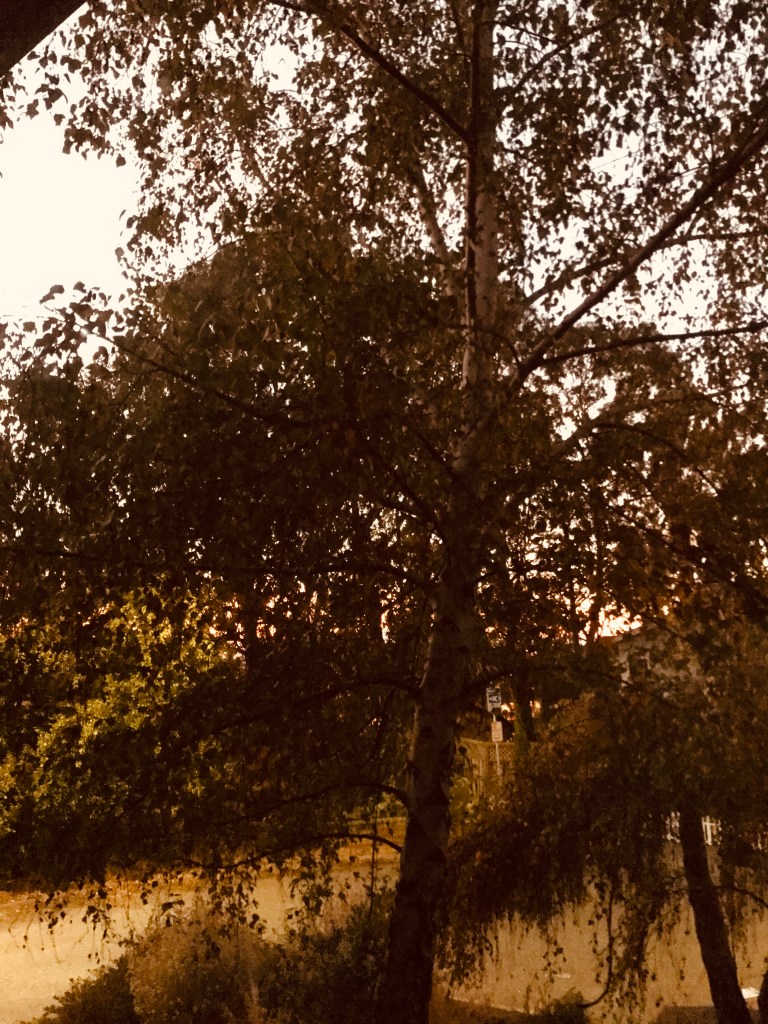
Comfort is the listing birch that graces my view,

a forever friend, happy, lovely.

Comfort is quiet, deep, still,

and gone,

forever.

Mary Elyn Bahlert 2/29/2019

Uncategorized

Liga

William Liga was my mother’s godfather, so I was told. Every time he arrived at our house, he was dressed in a suit, like a retired businessman. I remember his presence – he seemed kind – although I think I did not ever have a conversation with him. Liga rode the Milwaukee buses in his suit, with a top coat and hat in the winter. In his final years, he lived in an old, narrow apartment close to downtown. The place was dark, made darker by the sounds of the busy street it faced.

Liga died in the bathtub of that old apartment. Days later, my parents went to check on him. My father found him, dead. Later, Dad told me that he couldn’t sleep for several days after finding Liga’s body. “I loved Liga,” he said.

Liga worked in the foundry with other men who arrived in steerage from Eastern Europe in the early years of the 20th century. When I knew him, he was alone. Somewhere, I found a picture – a formal portrait – of Liga and a woman. I’m sure it was taken in “the old country.” A formally dressed Liga sat in a chair, looking sternly into the distance, and the woman, buxom, dressed in a white blouse and a long, dark skirt, belted at the waist, peered into the distance, also. Her dark eyes held something – what? – a part of the mystery of who this old man was, had been. For a long time, that photo was pinned onto the front of my refrigerator, as if seeing it, again and again, would unlock the mystery of who Uncle Liga was.

Many Ukrainians who fled Ukraine for work and food – and an education for their children – arrived in the New World, and settled in the industrial cities of the Midwest – Chicago, Detroit, Milwaukee. Others settled in Canada. They brought with them their hard work, their ability to live simply – the grandchildren of freed serfs – and a need to drink.

He spent most holidays with our family, and so Uncle Liga was there, too, at Christmas dinner, and at Easter, when we tapped the ends of colored painted eggs together to see which would crack first. The one that didn’t crack was the winner!

Every few months, the front doorbell rang. In the summer, I ran down the front hall steps to find Uncle Liga at the door. He greeted me, shyly and gently. He and Mom sat together at the kitchen table. She read to him the latest letter from his family in Canada, which he carried carefully in the pocket of his pants. Sometimes a photo – black and white, of a favorite niece – was included with the letter. Then, Liga told my mother, line by line, what to write in return to his family. She translated his Ukrainian into English. He always included some money in the small white envelopes – a few dollars from a poor man.

When I think of Uncle Liga, a small place in my heart is warm.

sunflowers