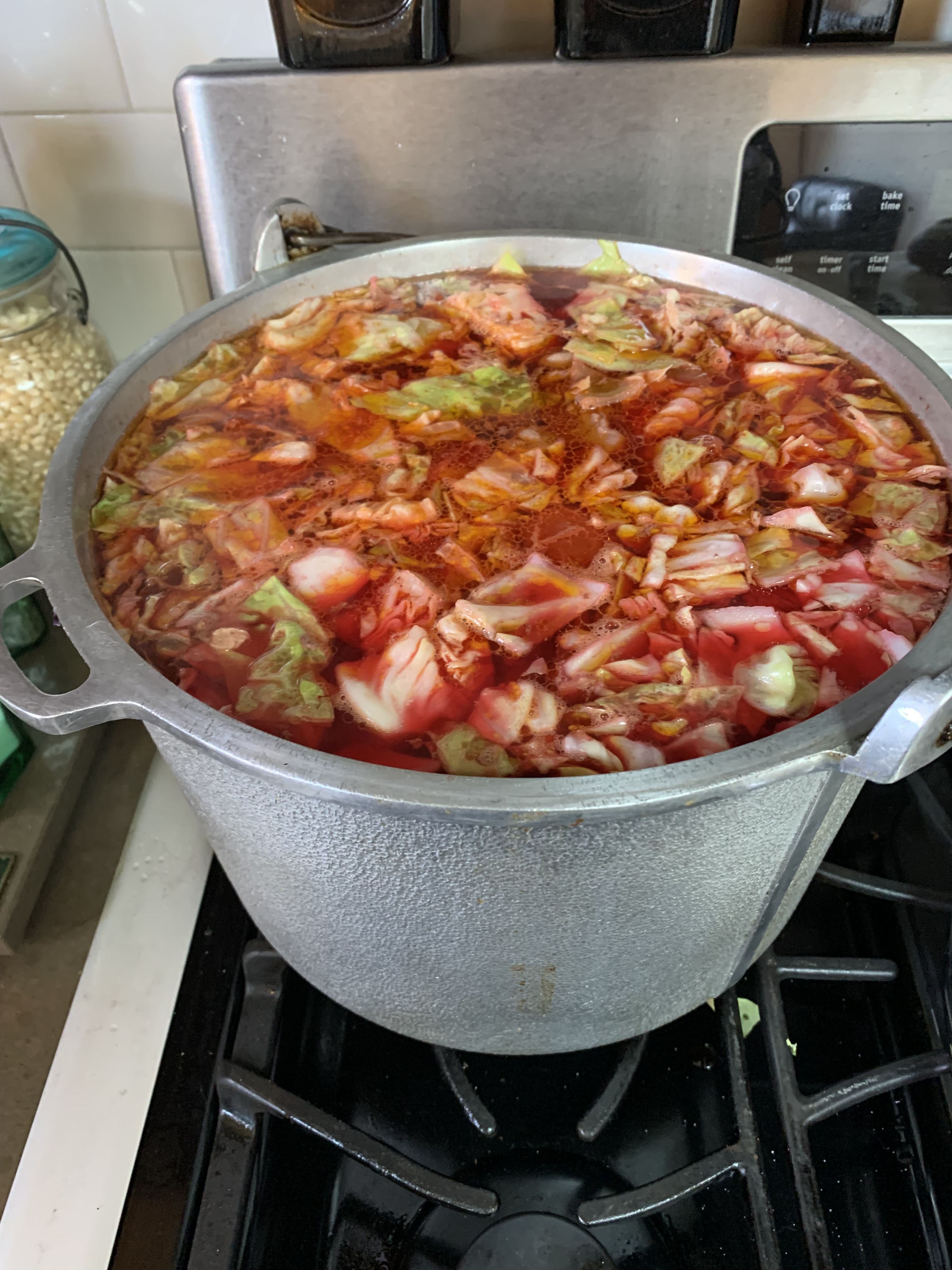
I make the best borscht in the world. Period. And I only make the best borscht in the world once a year. And I only make borscht in the winter.
During the cozy winter months in Milwaukee, my mother would make soup – her soups. There was barley soup and chicken soup and there was borscht. From the time I was little, I loved borscht. I’ve ordered borscht in restaurants in several places in the world, but there is no other borscht than the deep red, tart soup my mother made. My Uncle Johnny, too, would make borscht, and it tasted like Mom’s. That is borscht to me.
Over the years, I’ve come to call my mother’s rendition of borscht, “peasant borscht,” to distinguish it from meatless borscht served in Jewish delis. Mom’s borscht was a deep, deep red, colored by the large beets, sliced just so, and rich with beef and pork and cabbage and onions and potatoes and tomatoes. One bowl is a complete meal. And a good pot of borscht can last through almost a week of suppers at our place.
When I make borscht, I use the recipe my mother penned to me several years before she died, in her hand. I treasure the book with her distinctive handwriting, and her self drawn illustration of how to cut the cabbage. As in: “then add the beets – sliced thusly”, in parentheses. Followed by an illustration of the proper cut.
When I was a child, Mom would call me into the kitchen to suck the marrow out of the spare ribs. Nothing like it in the world – in my world. I loved her borscht then, and I love it now. When Suzie and I remember specific details of the days of our growing up in Milwaukee, we mention the food, of course. Suzie disliked borscht then, and she hasn’t ever made it. She preferred the barley soup.
For me, offering a meal of borscht to a friend is a great gift. One day a few years before she passed, I invited my dear friend Bonnie to join me for lunch at my place, so she could enjoy the pot of borscht I’d made during the days leading up to Christmas. We sat at the table in the dining room, eating the borscht with dark rye bread covered in sour cream, salt sprinkled across the top, and talking.
The next time I saw Bonnie, she shared with me an elaborate account of why she didn’t eat beets, hadn’t her whole life after a bad experience as a child. So she’d dutifully eaten her bowl of borscht because she had seen how excited I was to offer it to her! A true friend must be someone who eats your borscht!
The rains are falling this year, and we are already into March, without a sign of letting up. I haven’t made the huge pot of borscht that we’ll enjoy for several days, sitting in the dining room across from the black and white photo of my grandparents from Ukraine along with my mother’s eldest brother, Johnny, a photo taken over a century ago. So it’s time to enjoy that secret recipe another time.
Maybe it’s time, also, to invite the ancestors to join us at the table as we eat. At the end of her hand-written borscht recipe, dated May 13, 1992, she wrote:
“Enjoy! Any questions – just call! Mom Bahlert”