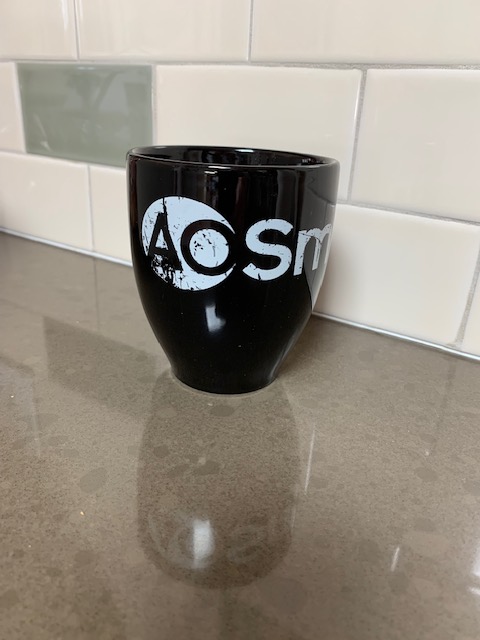
Like a person at the table, Steelworkers Union 19806 was always in my life when I was growing up. From time to time, my father would come home from work with rumors that a strike was in the works, that there might be a day when the local Steelworkers would strike, and he’d be on the picket line, proudly holding a sign, doing his part for himself and the rest of the union members.
I grew up with the language of labor unions spoken at the table, words like “strike” and “collective bargaining,” and “walk out.” My father, Frank Bahlert, was a hard working inspector at A.O. Smith Corporation in Milwaukee. He spent his days crawling over steel frames, measuring – showing up to work, to work hard. Being part of the Union was part of showing up.
My uncles, although they did not always understand my father, respected him. They respected that he was a hard-working laborer. He’d been grateful to get a job at all after the Depression years which dragged into the 1940’s, and he didn’t look for a wife until after he’d landed that Union job with good wages. He was already 38 years old when he married my mother; after the wedding, Mom quit her job. Now, I think her earning power was greater than my father’s, but they worked out their life as a married couple – a working class married couple of the 1950’s.
My father was proud of me when I graduated college and started working for the Federal Government. He was proud of what I earned – my beginning salary for the year higher than his hourly wage at A.O.Smith brought him at the end of his working days. He retired at 65, still strong after recovering from a heart attack. For years afterward, he would dream about work.
The men who worked with my father saw his work ethic, and they trusted his work. When he suffered the heart attack, a man who’d worked on the floor with my father came to the house to use the big clippers to trim the hedges that lined the walk up to the porch, part of my father’s work as a renter in a Milwaukee flat. Another showed up another day to cut the lawn. Dad watched his fellow union workers from the upstairs front window, hoping he’d be back to doing the job some day. And he was.
In the years before he retired, Dad’s union colleagues made sure he had a job and a title in the union; he checked to see that all the members were in the union hall and seated before he gave the nod for the sergeant at arms to call the meeting to order. I remember his face the day he went off to the first meeting in his new role, his hands shaking as he walked out the door in a clean shirt, his union badge pinned to the front pocket. He was nervous, and he was eager, also, to do what he could as a member. His fellow union men had shown their respect for his work ethic by giving him a role in union proceedings.
Once a year, the union would sponsor a picnic, and so the families of these hard working steel workers met one another. When I was in Junior High, I bowled each Saturday morning with the young sons and daughters of other members of Steelworkers Union 19806.
After I graduated college and before I took my first job that required a degree, I worked for a few months at A.O. Smith Corporation. Assigned to an office, I started that job by learning the file systems – and by doing the filing for the large office staff. In the morning, as I walked from the street into the building, I stood in line with the rest of my co-workers, clocking in at the machine on the wall. The steps from the street to the door that led to the corporation offices led through that steel mill, and I saw for the first time that loud and dirty place where Dad spent his days.
He loved his work. Every day, he came home with stories, telling mom, recounting in his animated way what the men had talked about at morning break. In front of the television in the evenings, sometimes he’d show us a steel sliver in his hand, and Suzie, my younger sister, would kneel in front of his chair, working the sliver out. Some days, Dad would tell us in a low voice that a man had been killed that day in the steel mill. At the door of the factory stood a large sign announcing the number of days since there’d been an accident.
*
I like to drive past what used to be the A.O. Smith Corporation in Milwaukee, when I’m able to return. The streets around the plant are empty now, deserted, the building that once buzzed with hard working life 24 hours a day, quiet. I think about Dad. I remember his face. I remember how he loved his work, how he loved being able to work at a steady job that allowed him to start a family. I remember the pride in his voice when he reminded us of how many years he’d been at that work as an inspector. I see his eyes, shining.
And when I read in the news that the United Auto workers are striking across the country, I quietly agree. They are my people.